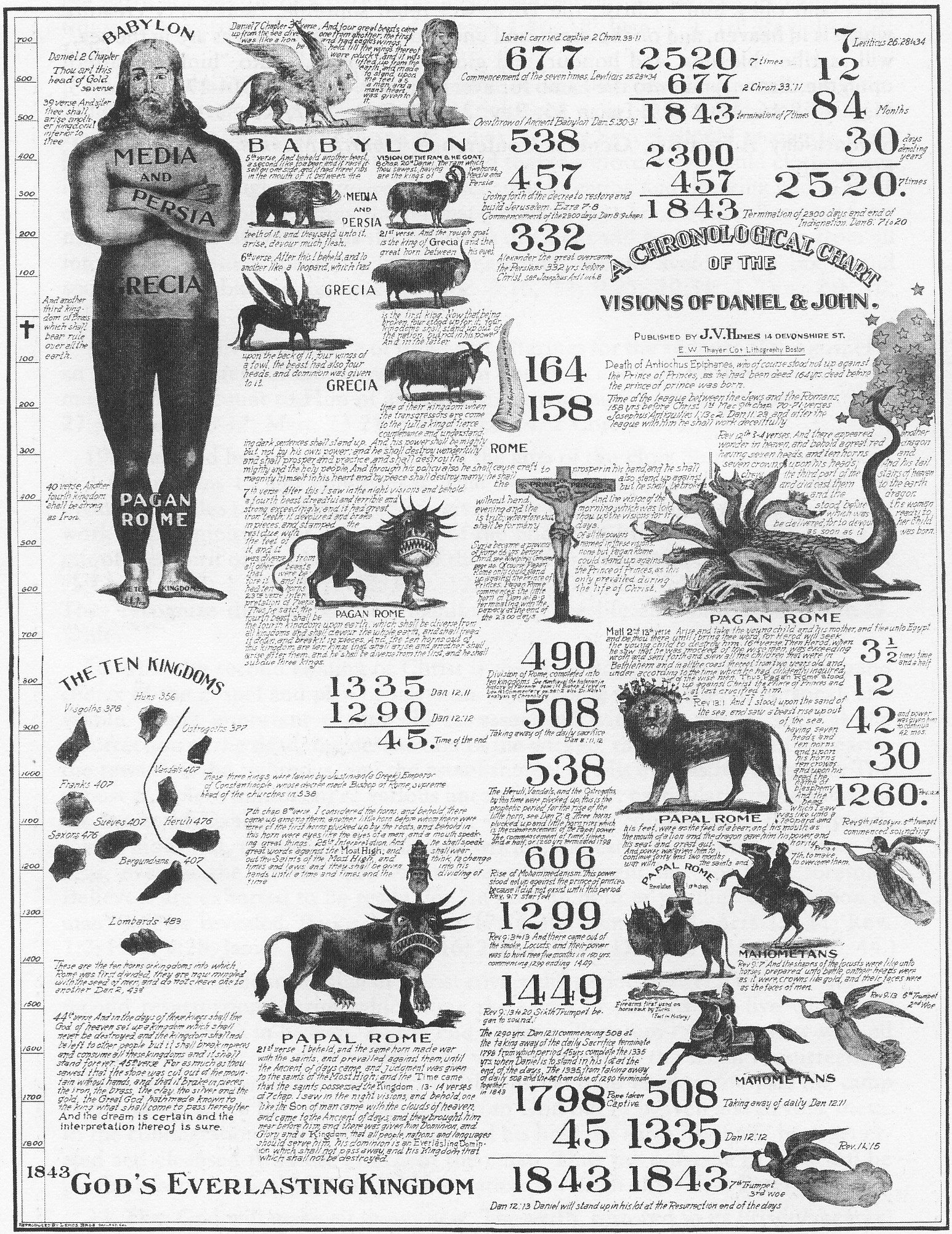
Last Day Events is a compilation, and the White Estate that assembled it said plainly that it does not claim to list future events in the exact order of their occurrence. This article takes up that invitation: it separates the moments that really are sequential from the processes that overlap, and shows five places where the book’s chapter order suggests a sequence its own sources do not contain.
Table of Contents
Why This Article Exists
Last Day Events is one of the most-read books in Adventism, and one of the most misread. It was published in 1992 by the Ellen G. White Estate. It is not a book Ellen White wrote. It is a compilation…a collection of passages gathered out of her books, her letters, her manuscripts and her periodical articles, sorted into twenty topical chapters by a committee working seventy-seven years after her death.
That is not a criticism. It is simply what the book is, and the compilers said so plainly. In the preface, under the heading “To the Reader,” the Trustees of the Ellen G. White Estate wrote this:
“We have attempted to present Ellen White’s teachings on end-time events in a logical arrangement. However, we do not claim that we have listed all future events in the exact order of their occurrence.”
The Trustees of the Ellen G. White Estate · Last Day Events, p. iii
Read that again. The people who assembled the book told you it is not a timeline. They arranged it logically, by subject. They did not claim the chapters run in the order the events will happen.
And yet that is exactly how the book gets used. Chapter 12 is “The Shaking.” Chapter 13 is “The Latter Rain.” Chapter 14 is “The Loud Cry.” It is the most natural thing in the world for a reader to conclude that the shaking happens, and then the latter rain falls, and then the loud cry goes out, in that order, like three beads on a string. Thousands of sermons have been preached on precisely that assumption.
The sources do not support it. As we will see, two of those three chapters describe the same event under two different names, and the third describes a process that runs underneath all of them from beginning to end.
So this article takes up the invitation the compilers left open. They said they were not claiming exact order. We are going to ask what the order actually is…and, just as importantly, where the sources refuse to give us one.
First, Let Us Be Fair To The Book
It has become fashionable in some circles to dismiss Last Day Events as hopelessly jumbled. That is not honest either. Look at the actual table of contents:
- 1–3 — Earth’s Last Crisis; Signs of Christ’s Soon Return; “When Shall These Things Be?”
- 4–8 — God’s Last Day Church; Devotional Life; Lifestyle; Country Living; The Cities
- 9 — Sunday Laws
- 10 — The Little Time of Trouble
- 11 — Satan’s Last Day Deceptions
- 12 — The Shaking
- 13 — The Latter Rain
- 14 — The Loud Cry
- 15 — The Seal of God and the Mark of the Beast
- 16 — The Close of Probation
- 17–18 — The Seven Last Plagues (the wicked, then the righteous)
- 19 — Christ’s Return
- 20 — The Inheritance of the Saints
Chapters 15 through 20 are in flawless chronological order. Sealing, then the close of probation, then the plagues, then the Second Coming, then the inheritance. Nobody could improve on that.
Chapters 1 through 8 are not chronological at all, and were never meant to be. They describe conditions and preparation…what the world looks like, what the church is, how to live, where to live. You cannot put “Country Living” on a timeline. It is not an event.
So the arrangement is far better than its critics allow. The trouble is concentrated in a narrow band…chapters 9 through 14. That is where the compilation takes a set of deeply interlocked, overlapping realities and lays them out as six separate topics in a row. And that is where readers get lost.
This article is mostly about those six chapters.
The Method: Gates And Tracks
Here is the single idea that untangles the whole subject.
Not everything on a prophetic timeline is the same kind of thing. Some are gates. Some are tracks.
A gate is a single, datable, irreversible moment. It happens once. Before it, one set of conditions holds; after it, a different set holds; and nothing ever goes back. The close of probation is a gate. There is a last second in which mercy pleads for sinners, and a first second in which it does not, and there is no third option.
A track is a process. It runs for a long time. It has a beginning, it intensifies, it has a climax, and it overlaps freely with other tracks. The shaking is a track. It has been running for well over a century, and it will still be running when the last gate closes.
Almost every argument about the order of last-day events comes from treating a track as if it were a gate. People ask “does the shaking come before or after the latter rain?” as though both were dated points. It is like asking whether sunrise comes before or after morning. The question has no answer because it is built wrong.
Last Day Events, by giving each of these a chapter of equal weight in a numbered sequence, quietly turns every track into a gate. That is the compilation’s one structural flaw, and nearly all the confusion flows from it.
The gates, in order
These are the moments the sources treat as genuinely sequential and genuinely irreversible. Everything else hangs off them:
- A national Sunday law in the United States — the image to the beast is formed.
- A universal decree — the same enforcement goes worldwide. “The last act in the drama.”
- The sealing is finished and probation closes — Christ leaves the sanctuary. The single greatest divide in the whole timeline.
- The seven last plagues begin to fall.
- The death decree comes due — and God’s voice delivers His people at midnight.
- The special resurrection.
- The Second Coming.
Seven gates. Notice how few there are, and notice what is missing from the list. The shaking is not a gate. The latter rain is not a gate. The loud cry is not a gate. The little time of trouble is not a gate. Those are all tracks, and they run across the gates rather than sitting between them.
The tracks, running underneath
- The shaking — begins with the straight testimony, intensifies under the Sunday-law test, completes at the close of probation.
- The sealing — running now, finishes exactly at gate 3.
- The latter rain and the loud cry — one event, two names. Begins around gate 1, swells through gate 2, ends at gate 3.
- Persecution — begins before gate 1 in places, becomes systematic between gates 1 and 3, becomes lethal after gate 3.
- Satan’s deceptions — running now, climaxing after gate 3 in the counterfeit second advent.
Hold those two lists in your mind and the rest of this article will assemble itself.
Where We Are Standing Right Now
Before the first gate, there is us. Last Day Events gives eight chapters to this, and they are the least controversial part of the book because nothing in them has to be sequenced. They describe a condition, and the condition is the one you can look out the window and see.
“They observe the intensity that is taking possession of every earthly element and they recognize that something great and decisive is about to take place—that the world is on the verge of a stupendous crisis.”
Ellen G. White · Prophets and Kings, p. 537
And one line that every student of this subject should have memorised, because it governs how fast everything else will move:
“Great changes are soon to take place in our world, and the final movements will be rapid ones.”
Ellen G. White · Testimonies for the Church, vol. 9, p. 11
That sentence is doing more work than most readers notice. It is telling you that the tidy, well-spaced timeline you are about to read will not feel tidy or well-spaced. The gates may fall very close together. A reader who expects to have years between each one is reading his own comfort into the text.
The Shaking: A Track, Not A Stage
Chapter 12 of Last Day Events sits between “Satan’s Last Day Deceptions” and “The Latter Rain,” which puts the shaking in a very specific-looking slot. The sources do not put it in a slot. They describe something that has two different causes operating at two different times, which is the signature of a track rather than an event.
Cause one: the straight testimony
The earliest and most famous statement on the subject was written in 1857, and it names the cause without any ambiguity:
“I asked the meaning of the shaking I had seen, and was shown that it would be caused by the straight testimony called forth by the counsel of the True Witness to the Laodiceans. This will have its effect upon the heart of the receiver, and will lead him to exalt the standard and pour forth the straight truth. Some will not bear this straight testimony. They will rise up against it, and this will cause a shaking among God’s people.”
Ellen G. White · Testimonies for the Church, vol. 1, p. 181
The counsel of the True Witness to the Laodiceans is Revelation 3:14–22. That message has been in the church’s hands since the beginning. So has the shaking. This is not a future event waiting for a trigger…it is a process that began the moment the straight testimony was first borne, and it has been separating people ever since.
Ellen White said so directly in 1900: “We are in the shaking time.” Present tense. In 1900.
Cause two: the Sunday-law test
But a second cause appears in the sources, and it belongs to a much later moment:
“The time is not far distant when the test will come to every soul. The mark of the beast will be urged upon us. Those who have step by step yielded to worldly demands and conformed to worldly customs will not find it a hard matter to yield to the powers that be, rather than subject themselves to derision, insult, threatened imprisonment, and death…. In this time the gold will be separated from the dross in the church.”
Ellen G. White · Testimonies for the Church, vol. 5, p. 81
And in The Great Controversy, describing the crisis itself:
“As the storm approaches, a large class who have professed faith in the third angel’s message, but have not been sanctified through obedience to the truth, abandon their position and join the ranks of the opposition.”
Ellen G. White · The Great Controversy, p. 608
So: a shaking now, from the straight testimony. A far heavier shaking later, from persecution. Same track, two peaks, more than a century apart.
This is why the endless argument over whether the shaking comes “before” or “after” the latter rain never resolves. Both answers are right, because the shaking is not a point. It began before the latter rain, it will still be under way during the latter rain, and it will not finish until probation closes.
One sentence that does fix an order
There is, however, one statement that ties the two together in a definite direction, and it deserves more attention than it usually gets. Writing in 1886 about the coming Sunday-law crisis, Ellen White said it:
“The great issue so near at hand will weed out those whom God has not appointed and He will have a pure, true, sanctified ministry prepared for the latter rain.”
Ellen G. White · Selected Messages, book 3, p. 385 — cited in Last Day Events, p. 121
Weed out…then…prepared for the latter rain. The purging of the ministry precedes the outpouring. So Last Day Events is not wrong to put chapter 12 before chapter 13. It is right, as far as it goes. What it cannot show, in a numbered chapter list, is that the same track also started long before and continues long after.
And there is a mercy hidden in this that is easy to miss. The ranks do not simply thin:
“Some had been shaken out and left by the way…. their places were immediately filled by others taking hold of the truth and coming into the ranks.”
Ellen G. White · Early Writings, p. 271
The church does not shrink to nothing. It is emptied of one kind of member and filled with another. “The church may appear as about to fall, but it does not fall.”
Gate One: A National Sunday Law
Here is the first genuine gate, and here is where Last Day Events does its readers the least favor…not by getting anything wrong, but by putting four different things in one chapter.
Chapter 9 is called “Sunday Laws,” singular topic, twenty-odd pages. Inside it, without any dividing line, sit four separate stages of the same conflict:
- Local and state agitation. Already history. The 1880s and 1890s, the Blair Sunday-Rest Bill, prosecutions of Adventist farmers in Tennessee and Arkansas.
- A national Sunday law in the United States. Still future. This is the gate.
- A universal decree, worldwide. Later still.
- A universal death decree. Later again, and mostly on the far side of the close of probation.
A reader who does not already know these are four things will finish chapter 9 believing they are one. That single flattening is responsible for more confused Adventist eschatology than any other feature of the book.
What the national law actually is
The prophetic significance is not the inconvenience of a closed shop. It is that a specific prophecy of Revelation 13 comes true:
"11 And I beheld another beast coming up out of the earth; and he had two horns like a lamb, and he spake as a dragon.

12 And he exerciseth all the power of the first beast before him, and causeth the earth and them which dwell therein to worship the first beast, whose deadly wound was healed.

14 ...saying to them that dwell on the earth, that they should make an image to the beast, which had the wound by a sword, and did live."

Revelation 13:11-14  KJV
“When the leading churches of the United States, uniting upon such points of doctrine as are held by them in common, shall influence the state to enforce their decrees and to sustain their institutions, then Protestant America will have formed an image of the Roman hierarchy, and the infliction of civil penalties upon dissenters will inevitably result…. the enforcement of Sundaykeeping in the United States would be an enforcement of the worship of the beast and his image.”
Ellen G. White · The Great Controversy, pp. 445, 449
Note the mechanism carefully, because it is regularly misdescribed. The image is not formed when the Roman church seizes power. It is formed when Protestant churches ask the state to enforce their religion. The image is made in the likeness of the original by doing what the original did.
And the political route is depressingly ordinary. No conspiracy is required:
“Political corruption is destroying love of justice and regard for truth, and even in free America rulers and legislators, in order to secure public favor, will yield to the popular demand for a law enforcing Sunday observance.”
Ellen G. White · The Great Controversy, p. 592
Politicians chasing votes. That is all it takes.
National apostasy, then national ruin
The sources attach a consequence to this gate, and they attach it with unusual consistency across more than twenty years of writing. The formula is always the same two words in the same order:
“The national apostasy is the signal for national ruin.”
Ellen G. White · Selected Messages, book 2, p. 373 — cited in Last Day Events, p. 134
And in Testimonies volume 5, the sign is given its meaning:
“As the approach of the Roman armies was a sign to the disciples of the impending destruction of Jerusalem, so may this apostasy be a sign to us that the limit of God’s forbearance is reached.”
Ellen G. White · Testimonies for the Church, vol. 5, p. 451
That is a deliberate and rather sobering parallel. When the disciples saw the armies encircle Jerusalem, that was their cue to leave…and the ones who obeyed lived. The sign was not the destruction. The sign came first, and it was a signal to act.
One more statement fixes this gate on the correct side of the close of probation, and it settles a question people argue about constantly:
“The Lord has shown me clearly that the image of the beast will be formed before probation closes, for it is to be the great test for the people of God, by which their eternal destiny will be decided.”
Ellen G. White · Selected Messages, book 2, p. 81 — cited in Last Day Events, p. 200
That is decisive. Gate 1 is before gate 3, and it must be, because it is the test by which people are sorted. A test administered after probation closes would sort nobody.
The Little Time Of Trouble
Chapter 10 of Last Day Events is called “The Little Time of Trouble.” The phrase does not appear in Ellen White’s writings. It is a convenient label the church coined for a period she described very precisely, and the definition is worth quoting in full because everything else depends on it.
In 1854 she was explaining a vision she had been given in 1847, and she stopped to define her terms:
“‘The commencement of that time of trouble,’ here mentioned, does not refer to the time when the plagues shall begin to be poured out, but to a short period just before they are poured out, while Christ is in the sanctuary. At that time, while the work of salvation is closing, trouble will be coming on the earth, and the nations will be angry, yet held in check so as not to prevent the work of the third angel.”
Ellen G. White · Early Writings, pp. 85, 86
Four facts in one paragraph, and each is load-bearing:
- It is before the plagues.
- Christ is still in the sanctuary — so probation has not closed.
- The nations are angry but held in check.
- The restraint has a purpose: so as not to prevent the work of the third angel.
That last point is the one almost everyone reads past, and it is the key to the entire middle section of the timeline. The trouble is restrained on purpose, and the purpose is to let the preaching finish. God is holding the storm off the church long enough for the church to do its last work.
Which is exactly the picture in Revelation 7:
"1 And after these things I saw four angels standing on the four corners of the earth, holding the four winds of the earth, that the wind should not blow on the earth, nor on the sea, nor on any tree.

2 And I saw another angel ascending from the east, having the seal of the living God: and he cried with a loud voice to the four angels, to whom it was given to hurt the earth and the sea,

3 Saying, Hurt not the earth, neither the sea, nor the trees, till we have sealed the servants of our God in their foreheads."

Revelation 7:1-3  KJV
“As yet the four winds are held until the servants of God shall be sealed in their foreheads. Then the powers of earth will marshal their forces for the last great battle.”
Ellen G. White · Testimonies for the Church, vol. 6, p. 14
So the winds are not released when the persecution starts. They are released when the sealing finishes…which is gate 3. Everything between gate 1 and gate 3 happens with the brakes still on.
What it looks like on the ground
Restrained does not mean gentle. The sources are blunt about what this period costs:
“As the defenders of truth refuse to honor the Sunday-sabbath some of them will be thrust into prison, some will be exiled, some will be treated as slaves.”
Ellen G. White · The Great Controversy, p. 608
“Those who honor the Bible Sabbath will be denounced as enemies of law and order, as breaking down the moral restraints of society, causing anarchy and corruption, and calling down the judgments of God upon the earth.”
Ellen G. White · The Great Controversy, p. 592
And the economic squeeze, which is the boycott of Revelation 13:17:
“In the last great conflict of the controversy with Satan those who are loyal to God will see every earthly support cut off. Because they refuse to break His law in obedience to earthly powers, they will be forbidden to buy or sell.”
Ellen G. White · The Desire of Ages, pp. 121, 122
Prison, exile, confiscation, unemployment, public loathing. That is the little time of trouble. The adjective is doing comparative work, not absolute work. It is small only beside what follows it.
The correction the compilation obscures
Now look at what the chapter numbering has done. “The Little Time of Trouble” is chapter 10. “The Latter Rain” is chapter 13. Three chapters apart, which reads as three stages apart.
But turn back to the passage in Early Writings that Last Day Events itself uses to open chapter 10. Ellen White is quoting her own 1847 vision, and here is the sentence she is explaining:
“At the commencement of the time of trouble, we were filled with the Holy Ghost as we went forth and proclaimed the Sabbath more fully.”
Ellen G. White · Early Writings, p. 33, quoted at Early Writings, p. 85
And a page later, in the same explanation:
“At that time the ‘latter rain,’ or refreshing from the presence of the Lord, will come, to give power to the loud voice of the third angel, and prepare the saints to stand in the period when the seven last plagues shall be poured out.”
Ellen G. White · Early Writings, p. 86
“At that time.” Which time? The commencement of the little time of trouble.
So the little time of trouble and the latter rain begin together. They are not chapter 10 and chapter 13. They are two descriptions of the same window…one describing what the world is doing to the church, the other describing what God is doing in the church, at the same moment and for the same reason.
The pressure and the power arrive together. That is not a small correction. It changes the emotional shape of the whole period, and it is invisible in the compilation’s arrangement.
The Latter Rain And The Loud Cry Are One Event
This is the clearest case in the book of a chapter division inventing a sequence that the sources do not contain.
Chapter 13, “The Latter Rain.” Chapter 14, “The Loud Cry.” Two chapters, one after the other, thirteen pages apart. Every instinct says: first one, then the other.
Here is Ellen White describing what she saw, and identifying it:
“I heard those clothed with the armor speak forth the truth with great power. It had effect…. I asked what had made this great change. An angel answered, ‘It is the latter rain, the refreshing from the presence of the Lord, the loud cry of the third angel.’”
Ellen G. White · Early Writings, p. 271
Three names, one “it.” The angel is not listing three consecutive events. He is answering a single question—what made this change?—with a single answer given three ways.
The relationship is cause and effect, not before and after. The latter rain is the power given. The loud cry is the message that power produces. You cannot have an interval between them any more than you can have an interval between a fire and its heat.
Last Day Events actually says this itself, but it says it inside chapter 13, where a reader looking for the loud cry will not be:
“At that time the ‘latter rain’ … will come, to give power to the loud voice of the third angel.”
Ellen G. White · Early Writings, p. 86
To give power to the loud cry. The rain is what makes the cry loud.
When does it begin?
We have already seen one answer: at the commencement of the little time of trouble. A second statement says the same thing from the other direction, and names the trigger:
“When the storm of persecution really breaks upon us, … then will the message of the third angel swell to a loud cry, and the whole earth will be lightened with the glory of the Lord.”
Ellen G. White · Testimonies for the Church, vol. 6, p. 401
Persecution first, then the loud cry. This is worth stating plainly because it cuts against a popular version of the story in which a great revival sweeps the church and then the world turns hostile. The sources have it the other way round. The storm comes first, and the glory comes into the storm.
It also explains something that would otherwise look cruel. Why would God let the persecution begin before He empowers His people? He does not. They arrive together…but the pressure is what creates the platform. Believers hauled before councils and courts are believers with an audience.
“Servants of God, with their faces lighted up and shining with holy consecration, will hasten from place to place to proclaim the message from heaven. By thousands of voices, all over the earth, the warning will be given. Miracles will be wrought, the sick will be healed, and signs and wonders will follow the believers.”
Ellen G. White · The Great Controversy, pp. 611, 612
What the message actually is
One more correction, and it matters more than any question of sequence.
It is easy to picture the loud cry as a louder warning…more urgency about the beast, the mark, the Sabbath, the papacy. Those are in it. But asked directly what the heart of the message is, Ellen White gave an answer that surprises people:
“Several have written to me, inquiring if the message of justification by faith is the third angel’s message, and I have answered, ‘It is the third angel’s message in verity.’”
Ellen G. White · Selected Messages, book 1, p. 372 — cited in Last Day Events, p. 200
The message that lightens the earth is the gospel. Righteousness by faith, preached with power. The warnings about the beast are the setting; the righteousness of Christ is the substance.
And a sober footnote for anyone confident they would recognize it:
“Unless we are daily advancing in the exemplification of the active Christian virtues, we shall not recognize the manifestations of the Holy Spirit in the latter rain. It may be falling on hearts all around us, but we shall not discern or receive it.”
Ellen G. White · Testimonies to Ministers and Gospel Workers, p. 507
It is possible to be standing in the rain and stay dry.
The Seal And The Mark: A Track You Are Already On
Chapter 15 of Last Day Events sits between the loud cry and the close of probation, which puts the seal and the mark in a late slot, near the end. In one sense that is right: the sealing finishes late. In a much more important sense it is misleading, because the sealing is a track, and it has been running for a very long time.
The image comes from Ezekiel:
"4 And the LORD said unto him, Go through the midst of the city, through the midst of Jerusalem, and set a mark upon the foreheads of the men that sigh and that cry for all the abominations that be done in the midst thereof."

Ezekiel 9:4  KJV
Ellen White’s extended treatment of this passage is in Testimonies volume 5, and it is worth reading in full because it is far more searching than the popular version of the doctrine. A sample:
“The seal of God will be placed upon the foreheads of those only who sigh and cry for the abominations done in the land.”
Ellen G. White · Testimonies for the Church, vol. 5, p. 212
And then the sentence that should stop every Adventist reader:
“Not all who profess to keep the Sabbath will be sealed. There are many even among those who teach the truth to others who will not receive the seal of God in their foreheads.”
Ellen G. White · Testimonies for the Church, vol. 5, p. 213
That is a direct strike at the most comfortable misreading available to us. The seal is not a denominational membership marker. Sabbathkeeping is not the seal; it is what the seal is about. The seal is a settled character, and it is being formed now:
“Those who are distrustful of self, who are humbling themselves before God and purifying their souls by obeying the truth—these are receiving the heavenly mold and preparing for the seal of God in their foreheads.”
Ellen G. White · Testimonies for the Church, vol. 5, p. 216
Preparing for the seal. Present tense, ordinary life, no crisis required. The sealing work is not something that switches on after the Sunday law. It is the quiet business of every day between now and gate 3, and the crisis only reveals what it has already produced.
The mark works the same way in reverse, which is why the sources are so careful about a question that worries people enormously. Can you receive the mark by accident? By keeping your shop shut on a Sunday? The answer given is no, and it is given repeatedly:
“Refraining from work on Sunday is not receiving the mark of the beast.”
Ellen G. White · The Southern Work, pp. 69, 70 — cited in Last Day Events, p. 94
Ellen White’s counsel during the Sunday-law prosecutions of the 1890s was, to many people’s surprise, not to make a point of working on Sunday. She advised using the day for missionary work, open-air meetings and writing. “Give them no occasion to call you lawbreakers.” Defiance for its own sake, she said, would only strengthen the zealots.
The mark is received by a deliberate act of allegiance in the face of clear light—not by an accident of scheduling. Last Day Events makes this point well in chapter 15 under the heading “Motive Gives Character to Actions,” and it is one of the most pastorally valuable things in the book.
The Counterfeit Comes Before The Genuine
We touched on this above; it deserves its own treatment, because it is the one place where I think Last Day Events’ ordering does real damage.
Chapter 11, “Satan’s Last Day Deceptions,” is placed between the little time of trouble and the shaking—that is, comfortably before the close of probation. Much of its content genuinely belongs there: false revivals, spiritualism, the counterfeit gifts. Those are running now.
But the chapter also carries the climax of the whole deception, and that belongs much later:
“As the crowning act in the great drama of deception, Satan himself will personate Christ…. In different parts of the earth, Satan will manifest himself among men as a majestic being of dazzling brightness, resembling the description of the Son of God given by John in the Revelation.”
Ellen G. White · The Great Controversy, p. 624
In The Great Controversy that passage stands in chapter 39, “The Time of Trouble”—the chapter that begins after Christ has left the sanctuary. It is the last effort against a people who can no longer be reached any other way, and its whole force depends on there being no mediator left to appeal to.
Read at chapter 11 of the compilation, it looks like a mid-timeline deception. Read where it actually belongs, it is the final assault of the great controversy. Those are not the same thing, and a reader who files it early will be looking for the counterfeit at the wrong moment entirely.
There is one detail that protects against it, and it is worth committing to memory. The counterfeit appears “in different parts of the earth.” It is local. It moves about. The genuine return is not:
"27 For as the lightning cometh out of the east, and shineth even unto the west; so shall also the coming of the Son of man be."

Matthew 24:27  KJV
Anything that appears in one place, and then another, and can be travelled to, is by that fact disqualified. The test is not theological subtlety. It is geography.
Babylon Falls And The Great Multitude Comes Out
Running alongside the loud cry is a movement in the opposite direction from the shaking. While one group leaves, a far larger group arrives.
"1 And after these things I saw another angel come down from heaven, having great power; and the earth was lightened with his glory.

2 And he cried mightily with a strong voice, saying, Babylon the great is fallen, is fallen...

4 And I heard another voice from heaven, saying, Come out of her, my people, that ye be not partakers of her sins, and that ye receive not of her plagues."

Revelation 18:1-4  KJV
Here Last Day Events is genuinely helpful. In an editorial footnote in chapter 4 the compilers point out that Revelation distinguishes two bodies of God’s people…the visible remnant of Revelation 12:17, and “My people” who are still inside Babylon in Revelation 18:4. Chapter 4 deals with the first. Chapter 14 deals with the second.
That is a real insight, and it is buried in a bracketed note on page 44.
“Notwithstanding the spiritual darkness and alienation from God that exist in the churches which constitute Babylon, the great body of Christ’s true followers are still to be found in their communion.”
Ellen G. White · The Great Controversy, p. 390
Which produces one of the most important and least comfortable facts in the whole timeline: at this moment, most of God’s people are not Seventh-day Adventists. The loud cry is not primarily a call to the already-convinced. It is a call to them.
Note also that the fall of Babylon is itself a track, not a gate:
“The change is a progressive one, and the perfect fulfillment of Revelation 14:8 is yet future.”
Ellen G. White · The Great Controversy, pp. 389, 390
The second angel’s message was first given in 1844. It is still being fulfilled. The announcement of Revelation 18 is that same message repeated with additional weight, once the union of church and state has done its work.
Gate Two: The Decree Goes Worldwide
The American law is not the end of the legislative story. It is the model.
“Foreign nations will follow the example of the United States. Though she leads out, yet the same crisis will come upon our people in all parts of the world.”
Ellen G. White · Testimonies for the Church, vol. 6, p. 395
“As America, the land of religious liberty, shall unite with the papacy in forcing the conscience and compelling men to honor the false sabbath, the people of every country on the globe will be led to follow her example.”
Ellen G. White · Testimonies for the Church, vol. 6, p. 18
And when it becomes universal, a specific threshold is crossed:
“The substitution of the laws of men for the law of God, the exaltation, by merely human authority, of Sunday in place of the Bible Sabbath, is the last act in the drama. When this substitution becomes universal God will reveal Himself. He will arise in His majesty to shake terribly the earth.”
Ellen G. White · Testimonies for the Church, vol. 7, p. 141
“The last act in the drama” is not the American law. It is the universal one. Two different gates, and Last Day Events prints statements about both on facing pages of the same chapter with nothing to tell you they are different moments.
This distinction matters practically. A reader who fuses them will expect the world to end almost immediately after a law passes in Washington. The sources describe a further stage, and a further spread, and only then the revealing.
Gate Three: The Sealing Finishes And Probation Closes
This is the hinge of the entire subject. Everything before it belongs to one world; everything after it belongs to another.
And here is a correction that Last Day Events’ chapter structure actively works against. Chapter 15 is “The Seal of God and the Mark of the Beast.” Chapter 16 is “The Close of Probation.” Two chapters…which reads as two events.
They are the same moment. The completion of the sealing is the close of probation. Watch:
“An angel with a writer’s inkhorn by his side returned from the earth and reported to Jesus that his work was done, and the saints were numbered and sealed. Then I saw Jesus, who had been ministering before the ark containing the ten commandments, throw down the censer. He raised His hands, and with a loud voice said, ‘It is done.’”
Ellen G. White · Early Writings, p. 279
“An angel returning from the earth announces that his work is done; the final test has been brought upon the world, and all who have proved themselves loyal to the divine precepts have received ‘the seal of the living God.’ Then Jesus ceases His intercession in the sanctuary above. He lifts His hands, and with a loud voice says, ‘It is done.’”
Ellen G. White · The Great Controversy, p. 613
One angel. One report. One declaration. Sealing complete and mediation ended in the same breath, described in almost identical words fifty-three years apart.
So gate 3 is a single event with three simultaneous faces: the sealing finishes, Christ leaves the most holy place, and the four winds are let go.
Nobody notices
The strangest feature of the most consequential moment in human history is that it happens in total silence:
“When the irrevocable decision of the sanctuary has been pronounced, and the destiny of the world has been forever fixed, the inhabitants of the earth will know it not. The forms of religion will be continued by a people from whom the Spirit of God has been finally withdrawn.”
Ellen G. White · The Great Controversy, p. 615
Churches still meet. Sermons are still preached. Hymns are still sung. And there is nobody home.
The parallel Ellen White reaches for is Noah. God shut the door, and for seven days the world went on eating and drinking and mocking, not knowing that the verdict was already in.
“Probation is ended a short time before the appearing of the Lord in the clouds of heaven.”
Ellen G. White · The Great Controversy, p. 490
A short time. That is as close to a duration as the sources ever come, and it is deliberately imprecise. Anyone who tells you the interval is a specific number of days is adding to what is written.
What changes at that instant
For the righteous, the change is terrifying in a way that has nothing to do with persecution:
“In that fearful time the righteous must live in the sight of a holy God without an intercessor.”
Ellen G. White · The Great Controversy, p. 614
Not unforgiven. Their sins are blotted out and their cases decided. But no longer mediated…standing in the open before God with nothing between. This is the theological engine of the time of Jacob’s trouble, and we will come back to it.
For the wicked, the restraint is gone:
“Unsheltered by divine grace, they have no protection from the wicked one.”
Ellen G. White · The Great Controversy, p. 614
Gate Four: The Seven Last Plagues
Last Day Events splits the plagues into two chapters—17 for the wicked, 18 for the righteous—and subtitles them “The Great Time of Trouble, Part 1” and “Part 2.” That is a genuinely good editorial decision. The same period is experienced in two completely different ways, and separating them makes both clearer.
"1 And I heard a great voice out of the temple saying to the seven angels, Go your ways, and pour out the vials of the wrath of God upon the earth."

Revelation 16:1  KJV
The plagues are not evangelistic. Nobody repents under them, because nobody can…the door is shut. They are judgment on a world that has already made its final choice.
Chapter 18’s very first heading states the boundary correctly, and it is one of the most useful lines in the book: “The Great Time of Trouble Begins After Probation’s Close.” Hold that against chapter 10’s heading—“A Time of Trouble Before Probation Closes”—and the two troubles are properly separated.
Credit where it is due: the compilation gets this one exactly right.
The Time Of Jacob’s Trouble Is Not The Great Time Of Trouble
These two get fused constantly, including in ordinary Adventist conversation, and the distinction is worth being precise about.
The great time of trouble is the external situation…the plagues falling, society collapsing, a death decree standing against God’s people. It is what is happening around them.
The time of Jacob’s trouble is an internal anguish, and it is a different thing entirely. The name comes from Jeremiah:
"7 Alas! for that day is great, so that none is like it: it is even the time of Jacob's trouble; but he shall be saved out of it."

Jeremiah 30:7  KJV
Jacob at the Jabbok was not afraid of Esau’s army in the ordinary way. He was afraid that his own old sin—the deception of his father, the stolen blessing—had finally caught up with him and that God had no reason left to protect him. He wrestled until dawn for the assurance that he was accepted.
That is the experience the sources describe for God’s people after probation closes. Not fear of death. Fear that some unconfessed sin remains. And they must face it with no mediator in the sanctuary to appeal to…which is precisely why this anguish belongs after gate 3 and cannot happen before it.
The resolution is the beautiful part. They are wrong about their danger, and Satan is wrong about his opportunity:
“In the time of trouble Satan stirs up the wicked, and they encircle the people of God to destroy them. But he does not know that ‘pardon’ has been written opposite their names in the books of heaven.”
Ellen G. White · The Review and Herald, November 19, 1908 — cited in Last Day Events, p. 161
The verdict was entered before the anguish began. The wrestling does not earn the pardon…it discovers it.
Gate Five: The Death Decree And The Voice Of God
The final legislative act is not about commerce or employment. It sets a date for execution.
“Though a general decree has fixed the time when commandment keepers may be put to death, their enemies will in some cases anticipate the decree, and before the time specified, will endeavor to take their lives.”
Ellen G. White · The Great Controversy, p. 631
By now God’s people have scattered:
“As the decree issued by the various rulers of Christendom against commandment keepers shall withdraw the protection of government, and abandon them to those who desire their destruction, the people of God will flee from the cities and villages and associate together in companies, dwelling in the most desolate and solitary places.”
Ellen G. White · The Great Controversy, p. 626
And then the deliverance, at the last possible moment, in the way God has always preferred:
“It is at midnight that God manifests His power for the deliverance of His people.”
Ellen G. White · The Great Controversy, p. 636
“In the midst of the angry heavens is one clear space of indescribable glory, whence comes the voice of God like the sound of many waters, saying: ‘It is done.’”
Ellen G. White · The Great Controversy, p. 636
Notice that “It is done” is said twice in this story. Once by Christ in the sanctuary at gate 3, ending mediation. Once by the Father from heaven at gate 5, ending the plagues and the persecution. The same words close two different doors.
And then something no other moment in Scripture contains:
“The voice of God is heard from heaven, declaring the day and hour of Jesus’ coming, and delivering the everlasting covenant to His people.”
Ellen G. White · The Great Controversy, p. 640
The day and the hour…the very thing Jesus said no man knew…is finally announced. But notice when. Not to us, now. To a delivered people, after probation has closed, when the information can no longer be used to postpone repentance.
That is a quiet but complete answer to every date-setter in history.
Gate Six: A Resurrection Before The Resurrection
Between the voice of God and the appearing of Christ, a limited resurrection takes place. It is the fulfilment of Daniel 12:2, and it is not the general resurrection of the righteous.
"2 And many of them that sleep in the dust of the earth shall awake, some to everlasting life, and some to shame and everlasting contempt."

Daniel 12:2  KJV
Many, not all. And both classes rise together, which cannot describe the resurrection at the Second Coming, where the wicked stay in their graves for a thousand years.
“All who have died in the faith of the third angel’s message come forth from the tomb glorified, to hear God’s covenant of peace with those who have kept His law. ‘They also which pierced Him’ (Revelation 1:7), those that mocked and derided Christ’s dying agonies, and the most violent opposers of His truth and His people, are raised to behold Him in His glory.”
Ellen G. White · The Great Controversy, p. 637
Last Day Events handles this well, placing it as the opening section of chapter 19 under the heading “The Seventh Plague and the Special Resurrection.” The ordering is right.
Who exactly comes up
The passage above says “all who have died in the faith of the third angel’s message.” That is a large category, and the sources contain a specific case that shows just how large.
In 1850 Ellen White wrote to a grieving husband about his wife, who had recently died:
“I saw that she [Mrs. Hastings] was sealed and would come up at the voice of God and stand upon the earth, and would be with the 144,000. I saw we need not mourn for her; she would rest in the time of trouble.”
Ellen G. White · Selected Messages, book 2, p. 263 — cited in Last Day Events, pp. 222, 223
Read that slowly, because it settles several arguments at once. Mrs. Hastings died in 1850. She never saw a Sunday law, never faced the mark, never lived through the plagues. And yet she was already sealed; she will come up at the voice of God—which is gate 5, the midnight deliverance; she will stand upon the earth; and she will be with the 144,000.
So the special resurrection is not a footnote. It is how a whole class of people who died before the crisis are brought to stand with the company that lives through it.
And that has a striking application to Ellen White herself. In her very first vision, in December 1844, she was shown the earth made new and begged to be allowed to stay. The answer she was given was this:
“Then the angel said, ‘You must go back, and if you are faithful, you, with the 144,000, shall have the privilege of visiting all the worlds and viewing the handiwork of God.’”
Ellen G. White · Early Writings, pp. 39, 40; also Christian Experience and Teachings, p. 98
You, with the 144,000. Ellen White died on 16 July 1915. If that promise holds, then she is not among the living who are translated—she is among those raised at the voice of God, exactly as she said Mrs. Hastings would be.
She appears to have understood it that way. The consolation she offered a bereaved family was not “you will see her at the end of the thousand years.” It was that the sealed dead will be raised early, in time to stand on the earth and see the Lord come.
A tension worth stating honestly
This does not tie up as neatly as it first appears, and it would be dishonest to pretend otherwise.
Elsewhere the 144,000 are described as the living:
“These, having been translated from the earth, from among the living, are counted as ‘the first fruits unto God and to the Lamb.’”
Ellen G. White · The Great Controversy, pp. 648, 649
And in the earliest vision: “The living saints, 144,000 in number, knew and understood the voice.” Living, translated, from among the living—that language does not obviously accommodate somebody who died in 1850.
There is a reading that harmonises them, and it turns on the order we have already established. The voice of God comes first; the special resurrection follows immediately; and only then do the delivered people stand together on the earth. Anyone raised at that voice is alive again before the company is counted. Mrs. Hastings does not join the 144,000 as a dead saint—she stands upon the earth with them, living, having been raised moments before.
That harmonisation is reasonable and I think it is right. But note what it is: an inference of mine from the sequence, not a statement anyone made. No passage in Ellen White’s writings says “the specially resurrected are counted among the living saints.” I am joining two texts that were never joined for us, and a reader is owed that distinction.
Which makes the next statement the right place to stop. Asked about precisely this question, Ellen White declined to settle it:
“It is not His will that they shall get into controversy over questions which will not help them spiritually, such as, Who is to compose the hundred and forty-four thousand? This those who are the elect of God will in a short time know without question.”
Ellen G. White · Selected Messages, book 1, p. 174 — cited in Last Day Events, p. 269
So: the special resurrection demonstrably includes people who died long before the last crisis, and by her own account it includes Ellen White. Beyond that, the membership of the company is a question the sources deliberately leave open, and we should leave it open too.
Gate Seven: He Comes
"7 Behold, he cometh with clouds; and every eye shall see him, and they also which pierced him: and all kindreds of the earth shall wail because of him. Even so, Amen."

Revelation 1:7  KJV
Everything in the preceding sixteen chapters of the compilation exists to get here. And the single most useful thing to say about the Second Coming in an article about order is that it is the one event in the list that requires no interpretation at all. It is literal, visible, audible, global and unmistakable. There is no possibility of it happening secretly, and no possibility of anyone missing it.
Which is exactly why the counterfeit has to come first. Chapter 11 of Last Day Events, “Satan’s Last Day Deceptions,” contains the crowning deception—Satan personating Christ—and the compilation places that chapter at number 11, well before the close of probation.
This is the one place where I think the arrangement is genuinely misleading rather than merely flattened. The impersonation described in The Great Controversy chapter 39 belongs with the events after probation closes, in the great time of trouble, as the final effort against a people who can no longer be reached any other way. Placing it at chapter 11, between the little time of trouble and the shaking, invites the reader to file it far too early.
Five Corrections, Collected
If you take nothing else from this article, take these.
1. The latter rain and the loud cry are one event, not two
Chapters 13 and 14 describe the same outpouring from two angles—the power given, and the message that power produces. Early Writings 271 names all three terms as one “it.” There is no interval between them and no waiting for the second after the first.
2. The little time of trouble and the latter rain begin together
Chapters 10 and 13 are three chapters apart, but Early Writings 85–86 places the outpouring “at the commencement of the time of trouble.” The persecution and the power arrive at the same moment. Expect them together, not in sequence.
3. “Sunday laws” is four events, not one
Chapter 9 contains historical state agitation, a future national law, a later universal decree, and a final death decree, with no dividing line between them. Only the second and third are gates on this timeline, and the phrase “the last act in the drama” belongs to the universal decree, not the American one.
4. The sealing’s completion and the close of probation are the same instant
Chapters 15 and 16 read as consecutive stages. Early Writings 279 and Great Controversy 613 describe one angel making one report, followed immediately by one declaration. Sealing finished, mediation ended, four winds released…one moment with three faces.
5. The shaking is a track that spans the whole timeline
Chapter 12 gives it a slot. It has no slot. It began with the straight testimony to Laodicea, it intensifies under the Sunday-law test, and it finishes only at the close of probation. “Before or after the latter rain” is a malformed question.
The Whole Thing At A Glance
Here is the reconstruction in one pass. Gates are the numbered points; the tracks running through them are noted alongside.
Now. The world on the verge of a stupendous crisis. Within the church, the shaking is already under way, caused by the straight testimony to Laodicea. The sealing work is already under way, forming character. Local Sunday agitation has already happened, historically, and will recur.
Gate 1 — a national Sunday law in the United States. Protestant churches obtain state enforcement of their religion; the image to the beast is formed. National apostasy is registered, and it is the signal for national ruin. This is the great test, and it falls before probation closes.
Immediately, together: the little time of trouble begins and the latter rain falls. Persecution, courts, prison, exile, loss of employment, the buy-and-sell boycott. At the same moment the third angel’s message swells into the loud cry, righteousness by faith is preached with power, the earth is lightened with glory, miracles are wrought. The shaking intensifies sharply: a large class abandons the faith while a far larger multitude comes out of Babylon to replace them. Through all of it the four winds are still held, deliberately, so the work can finish.
Gate 2 — the decree goes worldwide. Foreign nations follow America’s example until the substitution is universal. “The last act in the drama.”
Gate 3 — the sealing finishes and probation closes. One angel reports the work done; Christ throws down the censer and says “It is done”; the four winds are released. The world does not notice. Churches keep meeting. From this instant the righteous live without an intercessor and the wicked without restraint.
Gate 4 — the seven last plagues. The great time of trouble proper. For the righteous, the same period is the time of Jacob’s trouble: anguish not over death but over whether any unconfessed sin remains. Satan personates Christ in different parts of the earth. God’s people scatter to desolate places.
Gate 5 — the death decree comes due, and God delivers at midnight. The voice of God says “It is done” a second time, and announces the day and hour of Jesus’ coming.
Gate 6 — the special resurrection. Those who died in the third angel’s message rise glorified; those who pierced Him rise to behold Him.
Gate 7 — the Second Coming. Literal, visible, audible, global. Every eye.
Seven gates. Five tracks. No dates anywhere, and a warning that the final movements will be rapid ones.
Why There Is No Date, And Never Will Be
Chapter 3 of Last Day Events carries the disciples’ question as its title: “When Shall These Things Be?” It is the right question to ask, and the sources give it an answer that most people do not expect. The answer is not “soon.” The answer is that the question has been permanently closed.
Look again at the chart at the head of this article. It is a magnificent piece of work — every kingdom, every beast, every prophetic period set out in order by men who had studied Daniel and Revelation until they could draw them from memory. And every column on it runs down to the same year: 1843.
They were right about the order. They were wrong about the date, and the disappointment that followed nearly destroyed the movement. That is the cost of fusing the two, and it is why this article gives you a sequence and refuses to give you a schedule.
After 1844 a number of Adventists went looking for a new date. It is a very human thing to do. Ellen White’s response was categorical, and she gave it early:
“Time has not been a test since 1844, and it will never again be a test.”
Ellen G. White · Early Writings, p. 74
Not “we do not know the date.” Something stronger: time will never again function as a test of faith. The category itself is retired.
“The Lord has shown me that the message of the third angel must go, and be proclaimed to the scattered children of the Lord, but it must not be hung on time.”
Ellen G. White · Early Writings, p. 75
And the reason, which is really a matter of confidence rather than caution:
“I saw that this message can stand on its own foundation and needs not time to strengthen it; and that it will go in mighty power, and do its work, and will be cut short in righteousness.”
Ellen G. White · Early Writings, p. 75
A date is a crutch. A message that needs a deadline to be urgent is a message that has stopped believing in itself. She noticed that time-preaching produced “a false excitement”—a rush of feeling that burns hot, collapses on the appointed morning, and leaves people worse off than before.
Fifty years later she was still saying it, and by then with a sharper edge:
“Let all our brethren and sisters beware of anyone who would set a time for the Lord to fulfill His word in regard to His coming, or in regard to any other promise He has made of special significance.”
Ellen G. White · Testimonies to Ministers and Gospel Workers, p. 55
Beware of anyone. Not “be sceptical of the date”—be wary of the person. Date-setting is treated as a character symptom, not merely an interpretive mistake.
This has a direct bearing on how the timeline in this article should be used. A sequence is not a schedule. Knowing that gate 2 follows gate 1 tells you nothing whatever about how long the gap is, and the only measurement offered anywhere is the warning that the movements at the end will be rapid.
There is a hard-edged irony here worth naming. The one moment when the day and the hour are finally announced comes at gate 5—from the voice of God, after probation has closed. By then the information is useless for repentance and good only for joy. God will tell us the date at the exact point where knowing it can no longer be a substitute for being ready.
What The Sources Refuse To Tell Us
An honest timeline has to be as clear about its gaps as about its content. Here is what this reconstruction cannot tell you, and where anyone claiming otherwise has gone beyond the evidence.
No dates, and no duration for anything
Not one gate has a date. Not one interval has a length. The nearest thing to a measurement in the entire body of material is “a short time” between the close of probation and the appearing, and that phrase is doing no arithmetic.
“God has not revealed to us the time when this message will close or when probation will have an end.”
Ellen G. White · Selected Messages, book 1, p. 191 — cited in Last Day Events, p. 155
No mechanism, and no named actors
The sources describe what a national Sunday law does prophetically. They do not describe what it will be called, which body will pass it, what its stated justification will be, or what exemptions it will carry. Every confident identification of a current bill, treaty, encyclical or politician as “this is it” is an addition to the record, not a reading of it.
The one hint given about mechanism cuts against most speculation anyway. It is not a coup. It is legislators yielding to popular demand to secure public favor.
The order is not guaranteed to be linear
This is the caution the compilers themselves gave, and it applies to this article too. I have argued that seven gates are sequential. I am confident about that ordering because each one is stated in relation to the others. But the tracks running between them overlap in ways no diagram fully captures, and “the final movements will be rapid ones” warns that the spacing may compress in ways that make neat staging useless in practice.
Some of this is one writer’s testimony, and some of it is Scripture
It is worth being clear about which is which. The framework—a final crisis over worship, a mark, a seal, a close of probation, seven plagues, a literal return—is Scripture: Daniel 12, Revelation 7, 13, 14, 16, 18. The detail—that the crisis begins in the United States, that the image is formed by Protestant churches petitioning the state, that deliverance comes at midnight—comes from Ellen White.
If you accept her prophetic gift, the detail is evidence. If you do not, the framework still stands on the Bible alone. Either way, the two should not be quietly merged, and a reader is owed the distinction.
A Note On Sources And Method
Every Ellen White quotation in this article was checked against a primary text rather than copied from a website, because her writings are heavily misquoted online and a drifted quote is worse than no quote at all.
Quotations fall into three classes, and the citations tell you which is which:
- Cited to a book, with a page number — verified word for word against the published text of that book (The Great Controversy, Testimonies vols. 1, 5, 6, 7, 9, Early Writings, Prophets and Kings, The Desire of Ages, Testimonies to Ministers).
- Cited with “cited in Last Day Events” — these come from Manuscript Releases, Selected Messages, the SDA Bible Commentary, letters and periodical articles. They are quoted here exactly as the White Estate’s own compilation credits them, and the wording has been checked against the White Estate edition of Last Day Events, but the underlying volumes were not independently consulted.
- Scripture — Authorized (King James) Version throughout.
Two page numbers deserve a note. Ellen White’s paragraphs frequently straddle a page break, so a quotation can begin on one printed page and finish on the next; where that happens the citation gives a span, as with Early Writings, pp. 85, 86. And the statement about legislators yielding to popular demand is often cited to Great Controversy 578–579, because Last Day Events prints it as part of a composite drawn from pages 578, 579 and 592. The sentence itself is on page 592, and that is where it is cited here.
The Point Of Knowing The Order
There is a way of studying this subject that does nobody any good—the chart on the wall, the arguments about which decree comes third, the certainty that the man on television is the beast. Ellen White had no patience with it, and neither should we.
But there is a reason the order matters, and it is intensely practical.
If you believe the latter rain comes before the trouble, you will wait for a revival before you get serious, and the trouble will find you waiting. If you believe the shaking is a future event, you will not recognize that it has had hold of your own congregation for years. If you fuse the national law and the universal decree, you will either panic too early or dismiss the whole thing when the world does not end on your schedule. If you think the sealing is a separate stage after probation closes, you will assume there is time you do not have.
Bad chronology produces bad expectations, and bad expectations produce people who are not ready.
And the sources are relentless on the point that the preparation is not informational. Not one statement anywhere suggests that knowing the order will carry anybody through. What they say, over and over, is this:
“We need not worry about the latter rain. All we have to do is to keep the vessel clean and right side up and prepared for the reception of the heavenly rain, and keep praying, ‘Let the latter rain come into my vessel.’”
Ellen G. White · The Upward Look, p. 283 — cited in Last Day Events, p. 195
Keep the vessel clean and right side up. That is the whole preparation, and it does not require a chart.
The order is worth getting right so that we stop being surprised by the wrong things, and stop waiting for signals that have already been given. Beyond that, the timeline has done its work when it puts us back where the True Witness stands…at the door, knocking, asking to come in.
"20 Behold, I stand at the door, and knock: if any man hear my voice, and open the door, I will come in to him, and will sup with him, and he with me."

Revelation 3:20  KJV
That verse is addressed to Laodicea. It is the counsel of the True Witness…the same counsel whose straight testimony starts the shaking, at the very beginning of everything described in this article.
The last-day events begin and end at the same door.
