God tells a farming nation to plow ground that has gone hard, then shows Jeremiah the whole earth emptied back to the second verse of Genesis. Between the two, He asks for one honest man in the city and cannot be shown one.
A study in Jeremiah 4-6 · Arthur Baldwin · StandUp4Jesus.Org · 14 min read
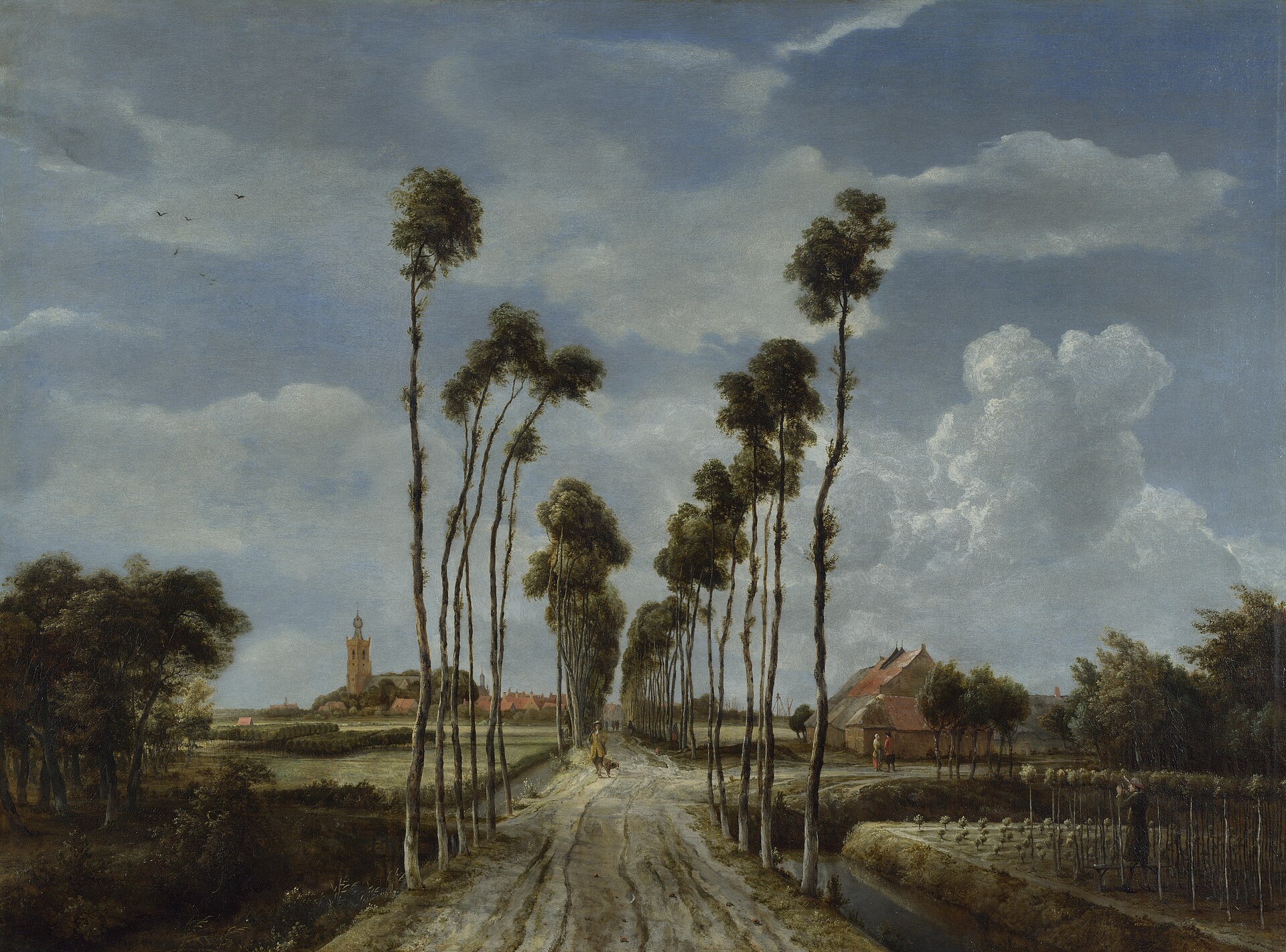
Break Up Your Fallow Ground
“For thus saith the LORD to the men of Judah and Jerusalem, Break up your fallow ground, and sow not among thorns. Circumcise yourselves to the LORD, and take away the foreskins of your heart.”
Jeremiah 4:3, 4
Fallow ground is not barren ground. It is good land that has been left alone long enough to set hard — a field that was farmed once, and has been resting so long the crust will turn a plow.
That is the diagnosis, and it is worth noticing that it is not the one we would expect. God does not tell them their soil is bad. He tells them it has gone hard from disuse. The problem is not that nothing could grow there. It is that nothing has been asked of it for years.
Then “sow not among thorns” — because the alternative to breaking the ground is scattering seed on top of a field that already has something growing in it. That is not a neutral choice. The seed goes in, and the thorns win, and the farmer can tell himself he sowed.
Verse 4 moves the same command from the field to the body, and it is startling: circumcise yourselves to the LORD, and take away the foreskins of your heart. Circumcision was the sign of the covenant, performed on the eighth day, in the flesh — the one credential every man in Judah could produce.
God says the sign has to be repeated somewhere it cannot be inspected. The outward mark had been kept perfectly by people whose hearts were untouched, and He is telling them so to their faces. Moses had said the same thing centuries earlier, and Paul would say it again to Rome. It is one of the oldest arguments in Scripture, and it has never stopped being necessary.
The Lion Is Come Up From His Thicket
“The lion is come up from his thicket, and the destroyer of the Gentiles is on his way; he is gone forth from his place to make thy land desolate; and thy cities shall be laid waste, without an inhabitant.”
Jeremiah 4:7
The image is chosen for its timing. A lion in a thicket is a lion you cannot see, in cover, doing nothing — until the moment it is out in the open and the distance is closing.
Every verb here is past or present. Is come up. Is on his way. Is gone forth. Nothing is conditional. From the first chapter’s boiling pot to this, the movement has already started; what remains is travel time.
And the description is worse than an army. The destroyer of the Gentiles — the one who has already finished with everyone else. Judah is not first on the list. She is late on it, and has watched the earlier entries fall.
Wise To Do Evil
“For my people is foolish, they have not known me; they are sottish children, and they have none understanding: they are wise to do evil, but to do good they have no knowledge.”
Jeremiah 4:22
This is not a verse about a stupid nation. Read the second half again: they are wise to do evil. The intelligence is not in question. It is fully operational, and it is pointed in one direction.
What they lack is knowledge of how to do good — and the verse locates the reason in its own first clause: they have not known me. Not they have not known the rules. Knowing the rules was Judah’s specialty. The gap is personal.
It is a sobering thing to hold against any age that considers itself advanced. Cleverness is not evidence of anything. A civilization can be increasingly capable and decreasingly good at the same time, and Jeremiah says the two are not in tension — they grow together, once God is no longer known.
Without Form, And Void
“I beheld the earth, and, lo, it was without form, and void; and the heavens, and they had no light. I beheld the mountains, and, lo, they trembled, and all the hills moved lightly. I beheld, and, lo, there was no man, and all the birds of the heavens were fled. I beheld, and, lo, the fruitful place was a wilderness, and all the cities thereof were broken down at the presence of the LORD, and by his fierce anger.”
Jeremiah 4:23-26
Four times I beheld, and the vision goes backwards.
“Without form, and void.” Those are not Jeremiah’s words. They are the second verse of the Bible, the state of the earth before God said let there be light — and Jeremiah is looking at them again.
Then set the two passages side by side, because the vision undoes the creation week in reverse order:
- The earth is without form and void again — back before day one.
- The heavens had no light — the first thing spoken into existence, gone.
- There was no man — the sixth day undone.
- All the birds of the heavens were fled — the fifth day emptied.
- The fruitful place was a wilderness — the third day reversed, the land that was told to bring forth grass and fruit.
This is the most severe thing in the first six chapters, and it is severe in a particular way. God is not threatening to punish His creation. He is showing what it looks like when He withdraws the work of the six days — because everything in Genesis 1 was spoken, and nothing in it is self-sustaining. Take away the speaking and you do not get a damaged world. You get verse 2 again.
Which quietly settles something about the doctrine of creation. A universe that runs itself could be abandoned and would carry on. This one cannot. The same God who made it holds it, and Jeremiah is shown the alternative.
It should also be said what this vision is not. The land was not literally emptied to formlessness in 586 BC; people survived, and the book records them. Jeremiah is being shown the true weight of what is coming in the only language large enough for it. When a nation that was made by a word decides it will not hear the word, this is the direction it is traveling.
If Ye Can Find A Man
“Run ye to and fro through the streets of Jerusalem, and see now, and know, and seek in the broad places thereof, if ye can find a man, if there be any that executeth judgment, that seeketh the truth; and I will pardon it.”
Jeremiah 5:1
The offer is enormous and the terms are almost absurdly generous. One man. Not a majority, not a reform movement. Find one person doing right and seeking truth, and the city is pardoned.
The instructions are those of a genuine search: run, see, know, seek, and try the broad places — the open squares where everyone gathers, the likeliest ground. God is not setting a trap. He is asking them to look properly.
Anyone who knows Genesis will hear Abraham at Sodom, bargaining God down from fifty righteous to ten, and God agreeing every time. Here the number has fallen to one, and the city is Jerusalem — the temple city, the covenant city, the one with the ark and the priesthood and the law.
And no one is produced. Sodom was destroyed for want of ten. Jerusalem cannot supply one.
The chapter has already explained why correction stopped working: “thou hast stricken them, but they have not grieved” (5:3). The blows landed and nothing was felt. That is a more frightening condition than rebellion, because rebellion at least registers.
The Sand For The Bound Of The Sea
“Fear ye not me? saith the LORD: will ye not tremble at my presence, which have placed the sand for the bound of the sea by a perpetual decree, that it cannot pass it: and though the waves thereof toss themselves, yet can they not prevail; though they roar, yet can they not pass over it?”
Jeremiah 5:22
In the middle of the indictment God offers an argument from the beach, and it is one of the loveliest in the book.
The sea is the strongest thing anyone in the ancient world could point to. It cannot be fought, farmed or fenced. And it is held back by sand — the weakest material available, a boundary a child can dig through with both hands.
The sand has no power of its own. It holds because of a perpetual decree, and the ocean has been throwing itself at that line without a day off since the world began. Though they roar, yet can they not pass over it.
The argument is aimed straight at the people who will not tremble at God’s presence: the sea does. The most ungovernable thing in creation keeps a limit that has nothing to enforce it but God’s word — and Judah, who can read, will not.
My People Love To Have It So
“A wonderful and horrible thing is committed in the land; The prophets prophesy falsely, and the priests bear rule by their means; and my people love to have it so: and what will ye do in the end thereof?”
Jeremiah 5:30, 31
Three clauses, and the third is the one that changes the case.
Corrupt prophets could be a scandal done to a people. Priests ruling by the false prophets’ authority could be a conspiracy at the top. Either would leave the nation as a victim of its leadership — which is how such things are usually told.
Then: and my people love to have it so.
Not tolerate. Not fail to notice. Love. The false prophets were not imposed on Judah; they were popular, and they were popular because of what they said. A comfortable message needs a market, and the verse says the market was enthusiastic.
That is why the chapter ends with a question rather than a sentence: “what will ye do in the end thereof?” If the leaders were the whole problem, the leaders could be replaced. When the congregation prefers the lie, there is nobody left to appeal to.
Peace, Peace; When There Is No Peace
“They have healed also the hurt of the daughter of my people slightly, saying, Peace, peace; when there is no peace. Were they ashamed when they had committed abomination? nay, they were not at all ashamed, neither could they blush.”
Jeremiah 6:14, 15
Healed… slightly is the language of a physician treating a serious wound as though it were a scratch. The treatment is not refused; it is given, and it is inadequate, and the patient is told everything is fine.
That is a specific kind of false teaching, and it is worth naming precisely because it does not look like opposition to God. Nobody in this verse is preaching against Him. They are preaching a smaller version of the problem, and peace, peace is a lovely thing to say. It is only wrong because it is not true.
Then verse 15 gives the symptom that shows how far the disease has gone: “neither could they blush.” Not would not. Could not. Shame is a reflex, and it had stopped working — which is what happens after the hurt has been healed slightly for long enough.
Ask For The Old Paths
“Thus saith the LORD, Stand ye in the ways, and see, and ask for the old paths, where is the good way, and walk therein, and ye shall find rest for your souls. But they said, We will not walk therein.”
Jeremiah 6:16
After two and a half chapters of indictment, the remedy arrives — and it is four unhurried verbs, in order.
- Stand. Stop first. Nothing else on the list can be done at speed.
- See. Look at where the roads actually go, rather than at the one you happen to be on.
- Ask for the old paths. Enquire. The information exists and somebody has it.
- Walk therein. The other three are worth nothing without this one.
Notice the qualifier in the middle, because it is what keeps the verse from being mere nostalgia. God does not say the old paths are good because they are old. He says ask for the old paths, where is the good way — the old road is commended because it is the right one, and the test is still goodness, not age. There were old paths in Judah that led to Baal, and nobody is being sent down those.
What is promised is not success or safety. It is rest for your souls — and if that phrase sounds familiar, it is because Jesus used it. “Take my yoke upon you, and learn of me… and ye shall find rest unto your souls” (Matthew 11:29). The same offer, in the same words, to people who had also been carrying something too heavy for too long.
And then the sentence that makes this the saddest verse in the first six chapters:
“But they said, We will not walk therein.”
Not they did not understand. Not they could not find it. The directions were given, the road was identified, the rest was promised — and the answer was a flat refusal, stated out loud.
That is the whole tragedy of Jeremiah in nine words, and it is why the four verbs are still worth doing. Stand, see, ask, walk. The invitation was never withdrawn. It was declined.
Next in this study: The Temple Of The LORD, Are These — Jeremiah 7 and 8, where a slogan is repeated three times at the gate of a building that is about to be destroyed.
