Standing on the castle stairs, bruised and chained, in front of the very mob that just tried to kill him, Paul does not defend himself with legal argument. He simply tells his own story — in Hebrew, to a crowd that falls silent to hear it — all the way up to the one word that sets them screaming again.
A study in Acts 22 · Arthur Baldwin · StandUp4Jesus.Org · 15 min read
I Am Verily A Man Which Am A Jew
“Men, brethren, and fathers, hear ye my defence which I make now unto you. (And when they heard that he spake in the Hebrew tongue to them, they kept the more silence: and he saith,)”
Acts 22:1-2
“At the sound of the familiar Hebrew words, ‘they kept the more silence,’ and in the universal hush he continued.”
Ellen G. White · The Acts of the Apostles, p. 408
Paul could easily have addressed this crowd in Greek, the language he has just used with the Roman commander only moments earlier. Choosing Hebrew instead is itself a first, wordless argument — proof to a mob that just accused him of teaching “against the people” that he remains, in the most basic sense, one of them.
“I am verily a man which am a Jew, born in Tarsus, a city in Cilicia, yet brought up in this city at the feet of Gamaliel, and taught according to the perfect manner of the law of the fathers, and was zealous toward God, as ye all are this day.”
Acts 22:3
“None could deny the apostle’s statements, as the facts that he referred to were well known to many who were still living in Jerusalem.”
Ellen G. White · The Acts of the Apostles, p. 409
Naming Gamaliel by name is a deliberate credential, not incidental detail — this study’s own ninth-chapter research already established Gamaliel’s own reputation, from chapter 5, as the most respected rabbi of his generation. Paul is reminding a hostile crowd that his own training sits at the very top of their own religious establishment.
“And I persecuted this way unto the death, binding and delivering into prisons both men and women. As also the high priest doth bear me witness, and all the estate of the elders: from whom also I received letters unto the brethren, and went to Damascus, to bring them which were there bound unto Jerusalem, for to be punished.”
Acts 22:4-5
Paul does not minimize or soften his own record; he states it in the starkest terms possible — “unto the death” — and then names the very authorities in the crowd’s own leadership who could confirm every word, since it was their own letters he once carried.
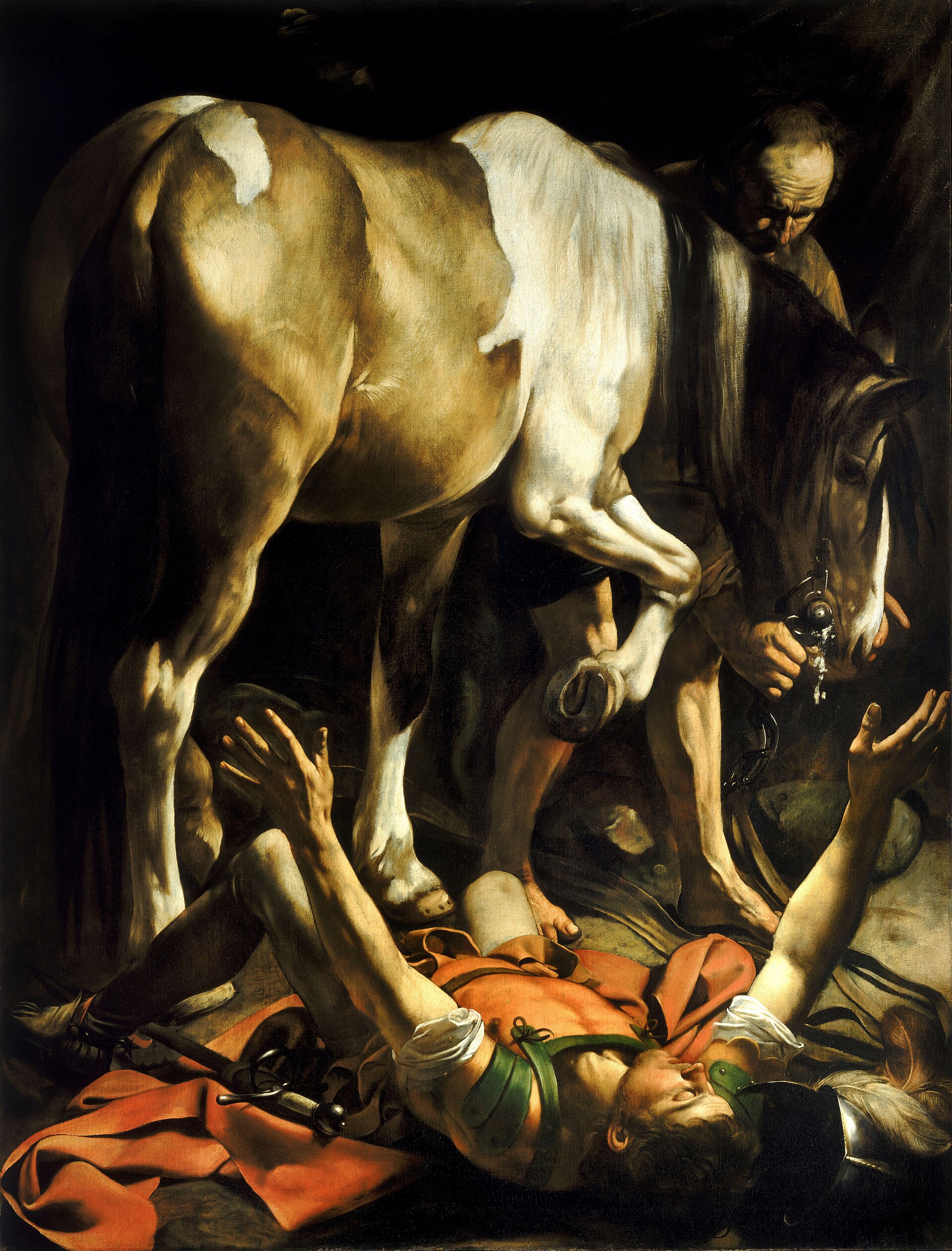
“And it came to pass, that, as I made my journey, and was come nigh unto Damascus about noon, suddenly there shone from heaven a great light round about me. And I fell unto the ground, and heard a voice saying unto me, Saul, Saul, why persecutest thou me?”
Acts 22:6-7
“And I answered, Who art thou, Lord? And he said unto me, I am Jesus of Nazareth, whom thou persecutest. And they that were with me saw indeed the light, and were afraid; but they heard not the voice of him that spake to me.”
Acts 22:8-9
“He then spoke of his former zeal in persecuting the disciples of Christ, even unto death; and he narrated the circumstances of his conversion, telling his hearers how his own proud heart had been led to bow to the crucified Nazarene. Had he attempted to enter into argument with his opponents, they would have stubbornly refused to listen to his words; but the relation of his experience was attended with a convincing power that for the time seemed to soften and subdue their hearts.”
Ellen G. White · The Acts of the Apostles, p. 409
This study’s own source makes a shrewd observation about rhetoric itself: Paul does not argue theology with a crowd already primed to reject it. He simply tells them what happened to him, a category of testimony far harder to dismiss with a counter-argument than any doctrinal claim would have been.
Brother Saul, Receive Thy Sight
“And when I could not see for the glory of that light, being led by the hand of them that were with me, I came into Damascus. And one Ananias, a devout man according to the law, having a good report of all the Jews which dwelt there.”
Acts 22:11-12
Paul’s own description of Ananias here is carefully chosen for this specific audience — not simply “a Christian,” which is exactly what this crowd already despises, but “a devout man according to the law,” a description any orthodox Jew listening would have to respect on its own terms.
“Came unto me, and stood, and said unto me, Brother Saul, receive thy sight. And the same hour I looked up upon him.”
Acts 22:13
“Brother Saul” is the exact same greeting this study’s own ninth chapter already recorded Ananias using, word for word, spoken to a man he had every reason to fear rather than welcome. Paul quotes it back now, years later, to an entirely different audience, apparently still able to feel the weight of being addressed that way by someone he had come to Damascus intending to persecute.
“And he said, The God of our fathers hath chosen thee, that thou shouldest know his will, and see that Just One, and shouldest hear the voice of his mouth. For thou shalt be his witness unto all men of what thou hast seen and heard.”
Acts 22:14-15
“The God of our fathers” is, again, deliberate common ground — Ananias’s own commission to Saul is framed entirely in language a devout Jew in this crowd could not object to, right up until the specific content of what Saul is now commissioned to witness.
“And now why tarriest thou? arise, and be baptized, and wash away thy sins, calling on the name of the Lord.”
Acts 22:16
This is one of only a few places in the whole New Testament where baptism itself is explicitly described as washing sins away rather than merely symbolizing that washing — Ananias’s own urgency (“why tarriest thou?”) treating the ceremony not as a formality to schedule later but as something with nothing left to wait for.
I Will Send Thee Far Hence Unto The Gentiles
“And it came to pass, that, when I was come again to Jerusalem, even while I prayed in the temple, I was in a trance; And saw him saying unto me, Make haste, and get thee quickly out of Jerusalem: for they will not receive thy testimony concerning me.”
Acts 22:17-18
This particular vision — in the temple, in Jerusalem itself — appears nowhere else in this book; Paul reveals it here, for the first time on record, at exactly the moment it becomes most relevant: standing in this same city, addressing this same kind of resistance the vision itself predicted years in advance.
“And I said, Lord, they know that I imprisoned and beat in every synagogue them that believed on thee: And when the blood of thy martyr Stephen was shed, I also was standing by, and consenting unto his death, and kept the raiment of them that slew him.”
Acts 22:19-20
Paul’s own objection to Christ’s instruction is worth pausing on — a kind of reasonable argument offered back to the Lord Himself: surely his own dramatic, well-known conversion would be the single most persuasive testimony this exact city could hear. He is, in effect, arguing that he is too useful a witness to be sent away.
“And he said unto me, Depart: for I will send thee far hence unto the Gentiles.”
Acts 22:21
Christ’s answer overrides Paul’s own reasoning without ever explaining it — a redirection this entire book has been showing fulfilled, chapter after chapter, ever since. The whole second half of Acts, everything from Cyprus to Ephesus to Corinth to this very moment, traces directly back to this single, unexplained “depart.”
Away With Such A Fellow From The Earth
“And they gave him audience unto this word, and then lifted up their voices, and said, Away with such a fellow from the earth: for it is not fit that he should live.”
Acts 22:22
“Hitherto the people had listened with close attention, but when Paul reached the point in his history where he was appointed Christ’s ambassador to the Gentiles, their fury broke forth anew. Accustomed to look upon themselves as the only people favored by God, they were unwilling to permit the despised Gentiles to share the privileges which had hitherto been regarded as exclusively their own.”
Ellen G. White · The Acts of the Apostles, p. 409
Notice exactly which word breaks the silence, “unto this word.” Not the account of persecuting Christians, not the vision, not even the claim that Jesus appeared to him — the crowd tolerates all of that. The single unforgivable word is “Gentiles,” a single sentence undoing everything the Hebrew opening and the careful, common-ground testimony had built.
“And as they cried out, and cast off their clothes, and threw dust into the air, The chief captain commanded him to be brought into the castle, and bade that he should be examined by scourging; that he might know wherefore they cried so against him.”
Acts 22:23-24
Claudius Lysias never actually understood a word of the Hebrew speech that just caused this new uproar; his own solution is simply to torture a confession out of the prisoner rather than ask anyone what was actually said — standard, efficient Roman procedure, applied here to a man he does not yet realize he has no legal right to touch this way.
“And as they bound him with thongs, Paul said unto the centurion that stood by, Is it lawful for you to scourge a man that is a Roman, and uncondemned? When the centurion heard that, he went and told the chief captain, saying, Take heed what thou doest: for this man is a Roman.”
Acts 22:25-26
“Then the chief captain came, and said unto him, Tell me, art thou a Roman? He said, Yea. And the chief captain answered, With a great sum obtained I this freedom. And Paul said, But I was free born.”
Acts 22:27-28
This one exchange quietly outranks Claudius Lysias in the empire’s own social order — he bought his citizenship at “a great sum,” while Paul, born free, has held the same legal status his entire life without ever needing to spend a coin on it.
“Then straightway they departed from him which should have examined him: and the chief captain also was afraid, after he knew that he was a Roman, and because he had bound him.”
Acts 22:29
This is the second time in three chapters Paul’s own Roman citizenship has halted an unlawful punishment mid-motion — the same detail Philippi’s jailer had to reckon with (chapter 16) now saving him again, one legal fact quietly doing the protective work no crowd’s goodwill ever managed to do.
“On the morrow, because he would have known the certainty wherefore he was accused of the Jews, he loosed him from his bands, and commanded the chief priests and all their council to appear, and brought Paul down, and set him before them.”
Acts 22:30
The chapter closes with Paul about to face an even more formal tribunal than the mob he has just survived — the Sanhedrin itself, the very council that once, before his conversion, counted him among its own most zealous members.
