Chapter 1 closed with a list of sins ugly enough that any reasonable person would nod along in judgment of the people who commit them. Chapter 2 turns around and points the same finger back at the reader — especially the reader who was nodding hardest. Nobody gets to sit this one out as a spectator, Jew or Gentile, moral or immoral, law-keeper or law-breaker.
A study in Romans 2 · Arthur Baldwin · StandUp4Jesus.Org · 13 min read
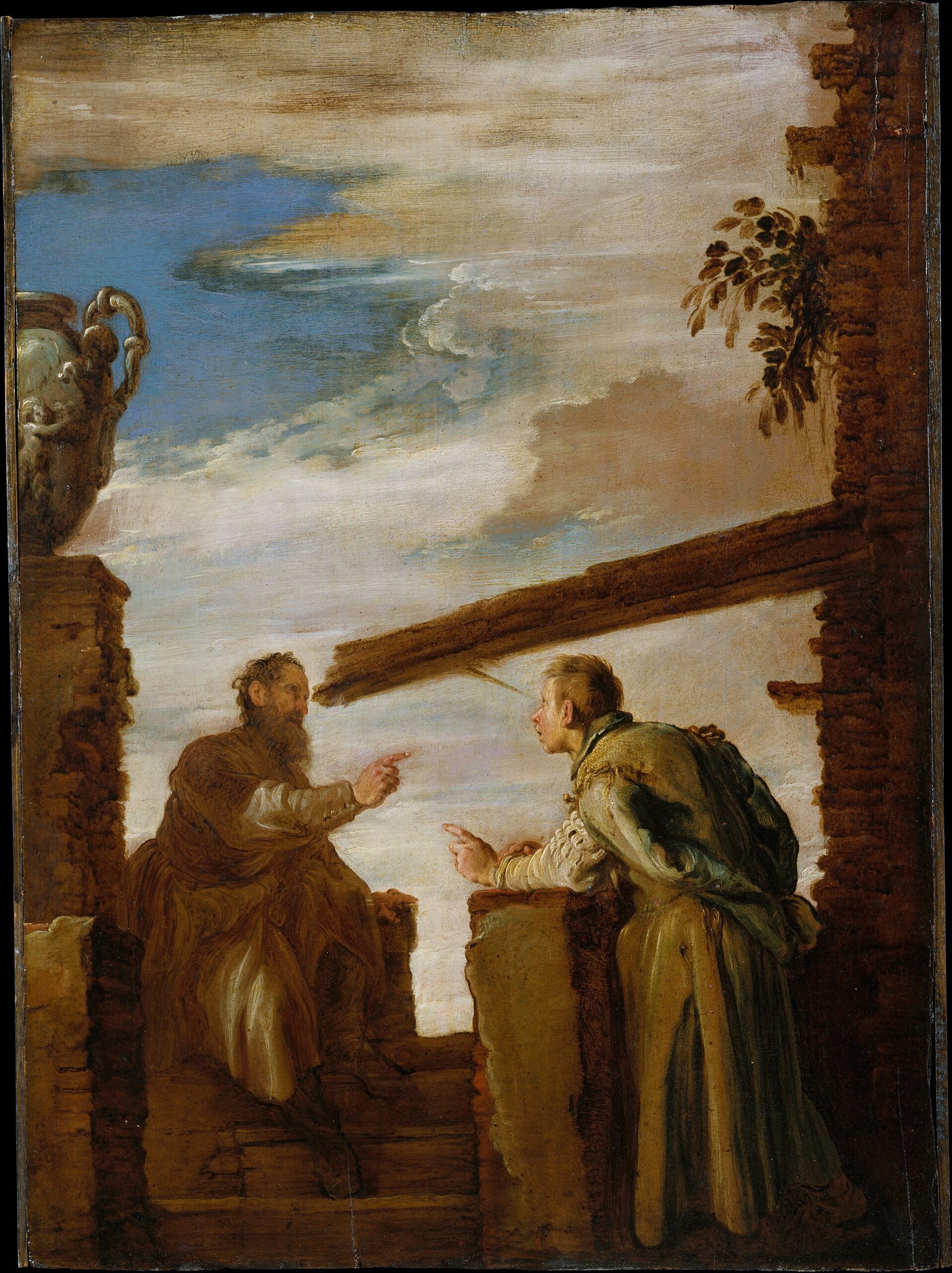
Thou Art Inexcusable, O Man
“Therefore thou art inexcusable, O man, whosoever thou art that judgest: for wherein thou judgest another, thou condemnest thyself; for thou that judgest doest the same things.”
Romans 2:1
“We cannot read the heart. Ourselves faulty, we are not qualified to sit in judgment upon others. … Thus those who condemn or criticize others, proclaim themselves guilty, for they do the same things. In condemning others, they are passing sentence upon themselves, and God declares that this sentence is just. He accepts their own verdict against themselves.”
Ellen G. White · Thoughts From the Mount of Blessing, p. 124
“Therefore” is the word that links these two chapters together, and it is doing real work — chapter 1’s vice list was never written so a righteous reader could survey it from a safe distance. The very act of reading it with approval, nodding along at how wicked “they” are, is itself the specific sin this verse now names.
“But we are sure that the judgment of God is according to truth against them which commit such things. And thinkest thou this, O man, that judgest them which do such things, and doest the same, that thou shalt escape the judgment of God?”
Romans 2:2-3
The logic here is airtight and uncomfortable in equal measure: if God judges by truth, and the one judging is doing the same things being condemned, there is no reading of “the judgment of God is according to truth” that lets the judge quietly exempt himself.
“Or despisest thou the riches of his goodness and forbearance and longsuffering; not knowing that the goodness of God leadeth thee to repentance?”
Romans 2:4
“So it is the assurance of God’s love that constrains the sinner to return to God. ‘The goodness of God leadeth thee to repentance.’ … A golden chain, the mercy and compassion of divine love, is passed around every imperiled soul.”
Ellen G. White · Christ’s Object Lessons, p. 202
This study’s own source ties this exact verse to the prodigal son’s own turning point — not fear of punishment but the pull of a father’s remembered love, the same “goodness” Paul says is meant to lead toward repentance rather than simply being taken for granted or, worse, mistaken for permission.
“But after thy hardness and impenitent heart treasurest up unto thyself wrath against the day of wrath and revelation of the righteous judgment of God; Who will render to every man according to his deeds.”
Romans 2:5-6
“Paul testifies that the sinner is treasuring up unto himself ‘wrath against the day of wrath and revelation of the righteous judgment of God; who will render to every man according to his deeds;’ ‘tribulation and anguish upon every soul of man that doeth evil.’”
Ellen G. White · The Great Controversy, p. 540
“Treasurest up” is a strange, deliberate image for wrath — not something that simply accumulates by accident, but something a person actively stores away, deposit by deposit, every time patience is mistaken for acquittal.
No Respect Of Persons
“To them who by patient continuance in well doing seek for glory and honour and immortality, eternal life: But unto them that are contentious, and do not obey the truth, but obey unrighteousness, indignation and wrath.”
Romans 2:7-8
“Patient continuance” is worth pausing on — not a single dramatic act of faith, but an ordinary, sustained direction over time, the same kind of patient endurance Paul’s own life is going to model chapter after chapter in the book of Acts.
“Tribulation and anguish, upon every soul of man that doeth evil, of the Jew first, and also of the Gentile; But glory, honour, and peace, to every man that worketh good, to the Jew first, and also to the Gentile: For there is no respect of persons with God.”
Romans 2:9-11
“‘There is no respect of persons with God,’ … declared Paul.”
Ellen G. White · Gospel Workers, p. 397
“To the Jew first” appears twice in these three verses, in both directions — first in line for judgment, and first in line for glory. Whatever privilege belongs to being God’s chosen people, this passage insists it never functions as an exemption from the same standard everyone else is held to.
“For as many as have sinned without law shall also perish without law: and as many as have sinned in the law shall be judged by the law; (For not the hearers of the law are just before God, but the doers of the law shall be justified.”
Romans 2:12-13
“The apostle Paul declares: ‘As many as have sinned in the law shall be judged by the law, … in the day when God shall judge the secrets of men by Jesus Christ.’ And he says that ‘the doers of the law shall be justified.’”
Ellen G. White · The Great Controversy, p. 435
“Not the hearers… but the doers” is a distinction that costs the Jewish reader something real — possessing the law, even prizing it, was never itself the thing that mattered. Only obedience was ever going to count, a standard that will, later in this same letter, expose the doers themselves as falling short too.
“For when the Gentiles, which have not the law, do by nature the things contained in the law, these, having not the law, are a law unto themselves: Which shew the work of the law written in their hearts, their conscience also bearing witness, and their thoughts the mean while accusing or else excusing one another.”
Romans 2:14-15
Even a Gentile who has never once read Moses’ law still has a working conscience — imperfect, sometimes wrong, but real enough that Paul can call it a witness of its own, accusing or excusing from the inside exactly what the written law does from the outside.
Teachest Thou Not Thyself?
“Behold, thou art called a Jew, and restest in the law, and makest thy boast of God, And knowest his will, and approvest the things that are more excellent, being instructed out of the law.”
Romans 2:17-18
Every credential Paul lists here is, on its own terms, genuinely good — knowing God’s will, being trained in the law, approving what is excellent. The problem this section is about to expose is never the credentials themselves, only the gap between holding them and living by them.
“And art confident that thou thyself art a guide of the blind, a light of them which are in darkness, An instructor of the foolish, a teacher of babes, which hast the form of knowledge and of the truth in the law.”
Romans 2:19-20
“The form of knowledge” is a carefully chosen phrase — not knowledge itself denied, but its outward shape without the substance, an accusation that will echo later, almost word for word, in Paul’s warning to Timothy about people holding “a form of godliness, but denying the power thereof.”
“Thou therefore which teachest another, teachest thou not thyself? thou that preachest a man should not steal, dost thou steal? Thou that sayest a man should not commit adultery, dost thou commit adultery? thou that abhorrest idols, dost thou commit sacrilege?”
Romans 2:21-22
Three rapid-fire questions, each built the same way — a public standard proclaimed, then a private practice exposed — and Paul never actually answers any of them himself. He does not need to; the pattern of the questions makes the answer obvious enough on its own.
“Thou that makest thy boast of the law, through breaking the law dishonourest thou God? For the name of God is blasphemed among the Gentiles through you, as it is written.”
Romans 2:23-24
The damage this section describes is never purely private. A teacher’s own hypocrisy does not simply fail to help; Paul says it actively causes God’s own name to be mocked by the very outsiders that teacher was supposed to be drawing toward Him.
Circumcision Is That Of The Heart
“For circumcision verily profiteth, if thou keep the law: but if thou be a breaker of the law, thy circumcision is made uncircumcision. Therefore if the uncircumcision keep the righteousness of the law, shall not his uncircumcision be counted for circumcision?”
Romans 2:25-26
This is a genuinely startling reversal for a first-century Jewish reader to sit with — the very rite that marked out God’s own covenant people is described here as capable of being nullified, while a Gentile who has never received it can, in effect, be credited with it instead.
“And shall not uncircumcision which is by nature, if it fulfil the law, judge thee, who by the letter and circumcision dost transgress the law?”
Romans 2:27
An uncircumcised Gentile who keeps the law’s own heart becomes, in this verse, a witness standing in judgment over the circumcised Jew who does not — the outsider’s obedience exposing the insider’s disobedience, rank reversed by conduct rather than by birth.
“For he is not a Jew, which is one outwardly; neither is that circumcision, which is outward in the flesh: But he is a Jew, which is one inwardly; and circumcision is that of the heart, in the spirit, and not in the letter; whose praise is not of men, but of God.”
Romans 2:28-29
The chapter’s own closing line quietly relocates the whole definition of belonging — from bloodline to heart, from a mark on the body to a mark in the spirit, from what other people can see and approve to what only God can see and reward. Nothing here yet explains how that inward change actually happens; that explanation, the doctrine this whole letter is famous for, is still one chapter away.
