Having just laid out the doctrine of justification by faith in the space of six verses, Paul reaches immediately for exhibit A: Abraham, the one man every Jewish reader would already claim as the whole nation’s own father. If righteousness by faith, apart from works, is really a new idea, Paul has to explain how it produced their own founding patriarch four hundred years before the law of Moses ever existed.
A study in Romans 4 · Arthur Baldwin · StandUp4Jesus.Org · 14 min read
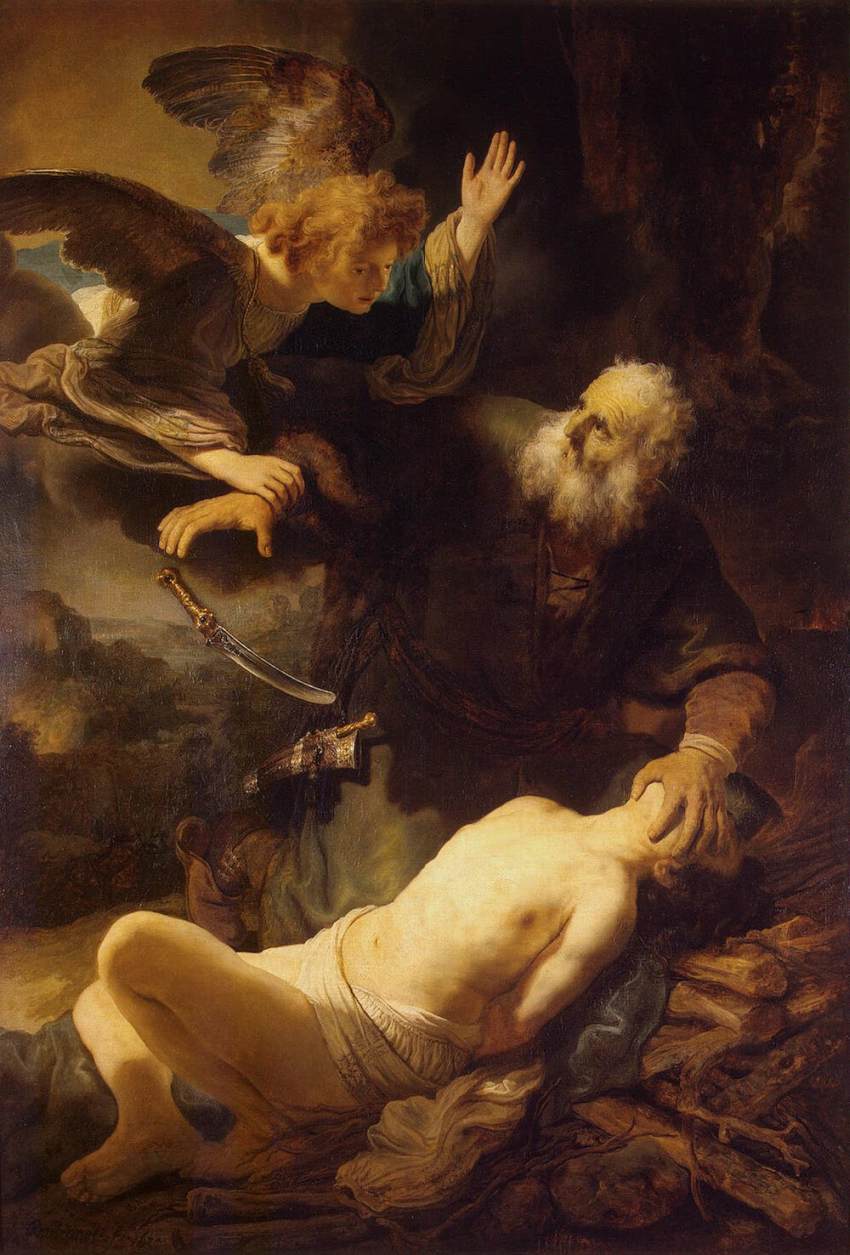
Abraham Believed God
“What shall we say then that Abraham our father, as pertaining to the flesh, hath found? For if Abraham were justified by works, he hath whereof to glory; but not before God.”
Romans 4:1-2
“All boasting of merit in ourselves is out of place. … The reward is not of works, lest any man should boast; but it is all of grace. ‘What shall we say then that Abraham our father, as pertaining to the flesh, hath found? For if Abraham were justified by works, he hath whereof to glory; but not before God.’”
Ellen G. White · Christ’s Object Lessons, p. 401
Even Abraham, the single most revered figure in all of Jewish history, is not exempt from chapter 3’s own rule that boasting is excluded. If even the father of the faithful cannot glory in his own works before God, no one descended from him can hope to either.
“For what saith the scripture? Abraham believed God, and it was counted unto him for righteousness.”
Romans 4:3
“Then he was led outside his tent, and told to look up to the unnumbered stars glittering in the heavens; and as he did so, the words were spoken, ‘So shall thy seed be.’ ‘Abraham believed God, and it was counted unto him for righteousness.’”
Ellen G. White · Patriarchs and Prophets, p. 136
This study’s own source restores the original scene behind Paul’s own proof text — an old, childless man standing under a night sky, told his descendants will outnumber what he can count. There is no work in this moment at all, only a promise received and believed exactly as spoken.
“Now to him that worketh is the reward not reckoned of grace, but of debt. But to him that worketh not, but believeth on him that justifieth the ungodly, his faith is counted for righteousness.”
Romans 4:4-5
“Justifieth the ungodly” is a startling phrase to plant in the middle of an argument built around Abraham, of all people — not the righteous, not the nearly-righteous, but explicitly the ungodly, described here as the very target of God’s justifying faith.
“Even as David also describeth the blessedness of the man, unto whom God imputeth righteousness without works, Saying, Blessed are they whose iniquities are forgiven, and whose sins are covered.”
Romans 4:6-7
“Blessed is the man to whom the Lord will not impute sin.”
Romans 4:8
Paul reaches for a second witness after Abraham, and the choice is pointed: David, a man whose own worst failures — adultery, murder, a cover-up — were a matter of public record by the time Paul’s readers first heard this letter. If David’s own words describe a blessedness that has nothing to do with a clean record, the doctrine cannot be limited to unusually righteous men.
The Father Of All Them That Believe
“Cometh this blessedness then upon the circumcision only, or upon the uncircumcision also? for we say that faith was reckoned to Abraham for righteousness. How was it then reckoned? when he was in circumcision, or in uncircumcision? Not in circumcision, but in uncircumcision.”
Romans 4:9-10
This is a detail of timing most readers of Genesis skim past without noticing: Abraham’s faith is credited as righteousness in Genesis 15, and the actual rite of circumcision does not happen until Genesis 17 — a full chapter, and by most reckonings well over a decade, later. Whatever circumcision did for Abraham, it could not have been the thing that made him righteous, since he already was, years beforehand.
“And he received the sign of circumcision, a seal of the righteousness of the faith which he had yet being uncircumcised: that he might be the father of all them that believe, though they be not circumcised; that righteousness might be imputed unto them also.”
Romans 4:11
“At this time the rite of circumcision was given to Abraham as ‘a seal of the righteousness of the faith which he had yet being uncircumcised.’ … It was to be observed by the patriarch and his descendants as a token that they were devoted to the service of God and thus separated from idolaters, and that God accepted them as His peculiar treasure.”
Ellen G. White · Patriarchs and Prophets, p. 138
“Seal” is a precise word, and Paul relies on the precision. A seal authenticates something that already exists; it does not create the thing it marks. Circumcision confirmed a righteousness Abraham already possessed by faith, which is exactly why it can function, for every later Gentile believer, as a sign rather than a requirement.
“And the father of circumcision to them who are not of the circumcision only, but who also walk in the steps of that faith of our father Abraham, which he had being yet uncircumcised.”
Romans 4:12
“Of Abraham it is written that ‘he was called the friend of God,’ ‘the father of all them that believe.’”
Ellen G. White · Patriarchs and Prophets, p. 140
Abraham ends up fathering two distinct groups by two different means — physical descendants through Isaac, and a far larger spiritual family through nothing but the pattern of his own faith, a family this letter’s own readers in Rome, Gentile and Jew alike, are being told they already belong to.
Calleth Those Things Which Be Not As Though They Were
“For the promise, that he should be the heir of the world, was not to Abraham, or to his seed, through the law, but through the righteousness of faith.”
Romans 4:13
“The heritage that God has promised to His people is not in this world. … The gift to Abraham and his seed included not merely the land of Canaan, but the whole earth. So says the apostle, ‘The promise, that he should be the heir of the world, was not to Abraham, or to his seed, through the law, but through the righteousness of faith.’”
Ellen G. White · Patriarchs and Prophets, p. 169
Abraham himself, this study’s own source is careful to note, never owned so much as a burial plot in the land he was promised without paying the Canaanites for it. The real inheritance was never Canaan at all — it was the whole earth, made new, and it was never going to be reached by the law’s own methods in the first place.
“For if they which are of the law be heirs, faith is made void, and the promise made of none effect: Because the law worketh wrath: for where no law is, there is no transgression.”
Romans 4:14-15
Paul’s logic here is almost mathematical: if the law could make anyone an heir, faith would be unnecessary, and the promise itself would collapse, because the law’s only real function — already established in chapter 3 — is to expose transgression, not to grant inheritance.
“Therefore it is of faith, that it might be by grace; to the end the promise might be sure to all the seed; not to that only which is of the law, but to that also which is of the faith of Abraham; who is the father of us all.”
Romans 4:16
“(As it is written, I have made thee a father of many nations,) before him whom he believed, even God, who quickeneth the dead, and calleth those things which be not as though they were.”
Romans 4:17
“He ‘calleth those things which be not as though they were’ … for when He calls them, they are.”
Ellen G. White · Education, p. 254
This is the exact same creative power at work in both halves of this verse — the God who quickens the dead and the God who calls nonexistent things into being are not two separate powers but one, which is precisely why an old man with a barren wife could be promised innumerable descendants without the promise being absurd.
Against Hope Believed In Hope
“Who against hope believed in hope, that he might become the father of many nations; according to that which was spoken, So shall thy seed be.”
Romans 4:18
“Against hope believed in hope” is not a contradiction but a precise description — every ordinary, circumstantial reason for hope was gone, and Abraham believed anyway, anchored to a hope with no basis except the character of the One who spoke the promise.
“And being not weak in faith, he considered not his own body now dead, when he was about an hundred years old, neither yet the deadness of Sara’s womb: He staggered not at the promise of God through unbelief; but was strong in faith, giving glory to God.”
Romans 4:19-20
Paul does not pretend the biological facts were anything but discouraging — “his own body now dead,” “the deadness of Sara’s womb” — the language is deliberately blunt. Faith here is not a refusal to see the facts clearly; it is seeing them clearly and trusting God’s word more than the facts anyway.
“And being fully persuaded that, what he had promised, he was able also to perform. And therefore it was imputed to him for righteousness.”
Romans 4:21-22
“Fully persuaded” is the hinge this whole example turns on — not that Abraham never wrestled with doubt (Genesis itself records moments when he clearly did), but that his settled confidence rested specifically on God’s own ability to perform, not on any assessment of how likely the promise looked.
Raised Again For Our Justification
“Now it was not written for his sake alone, that it was imputed to him; But for us also, to whom it shall be imputed, if we believe on him that raised up Jesus our Lord from the dead.”
Romans 4:23-24
The whole preceding argument turns out to have been aimed past Abraham the entire time — a real historical account, but recorded specifically so that every later reader could see their own faith mirrored in his, and their own righteousness credited by the very same means.
“Who was delivered for our offences, and was raised again for our justification.”
Romans 4:25
The chapter’s own closing sentence pairs two events with two distinct purposes — delivered for sins, raised for justification — a structure carefully balanced enough that neither the cross nor the empty tomb alone completes the picture. Abraham believed a God who could bring life out of a womb as good as dead; this final verse asks Roman believers to believe the same God, now proven able to bring life out of an actual grave.
