Chapter 10 closed on an open hand, held out all day long to a disobedient people. Chapter 11 asks the question that hand’s own patience raises: has that people, then, been cast off for good? Paul’s answer is his most emphatic “God forbid” yet, and he spends this whole chapter proving it — through a faithful remnant, a wild olive tree grafted where it never grew, and a doxology that finally gives up trying to explain the mystery and simply worships it.
A study in Romans 11 · Arthur Baldwin · StandUp4Jesus.Org · 18 min read
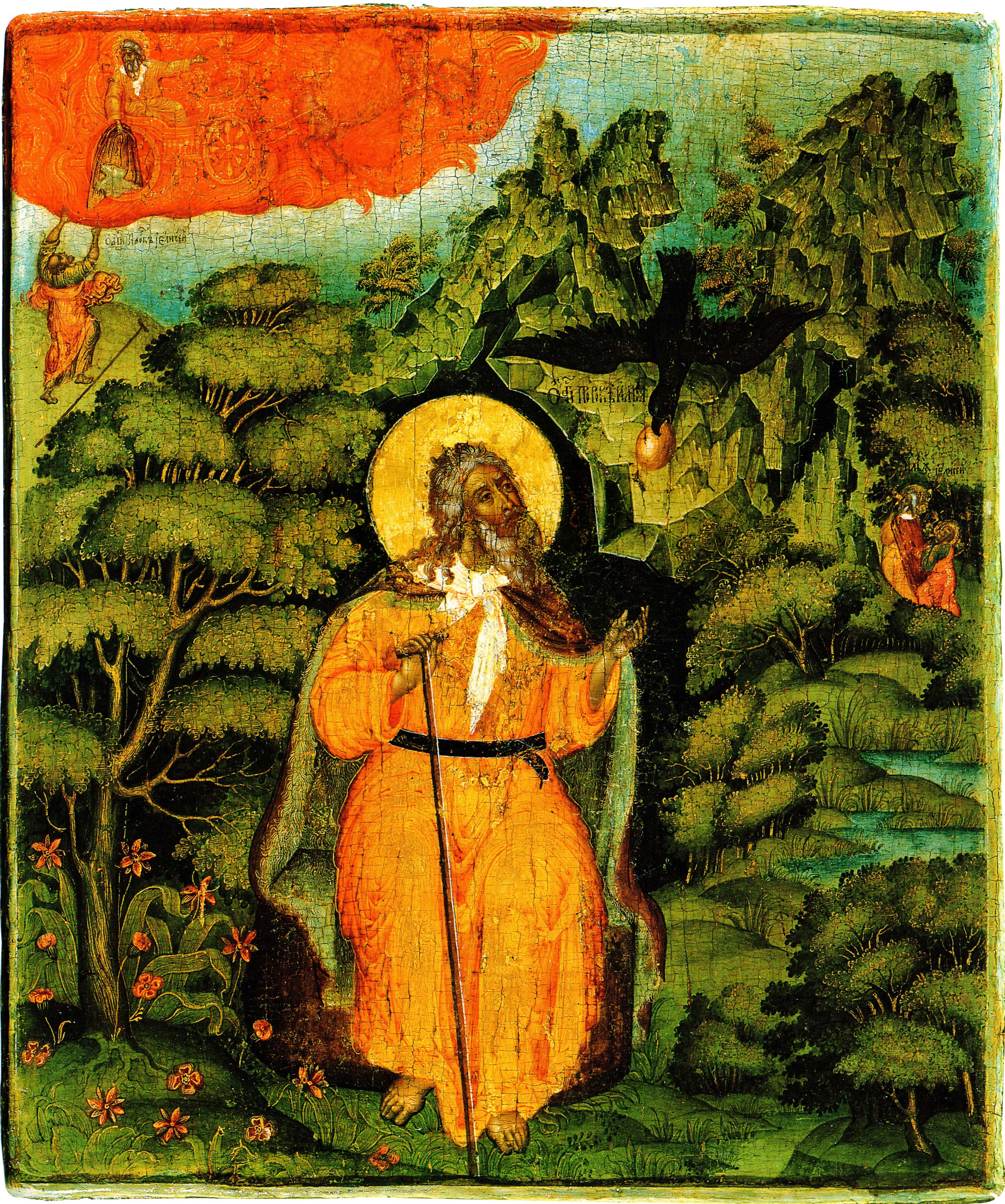
Hath God Cast Away His People?
“I say then, Hath God cast away his people? God forbid. For I also am an Israelite, of the seed of Abraham, of the tribe of Benjamin. God hath not cast away his people which he foreknew.”
Romans 11:1-2
Paul offers himself as living proof before he offers any argument — an Israelite, of Benjamin’s own tribe, and a former persecutor of the church besides, now standing inside the very grace he is describing. If God had cast Israel away, Paul’s own calling would be a contradiction in terms.
“Wot ye not what the scripture saith of Elias? how he maketh intercession to God against Israel, saying, Lord, they have killed thy prophets, and digged down thine altars; and I am left alone, and they seek my life.”
Romans 11:2-3
Paul reaches back to Elijah’s own lowest hour under the juniper tree — a prophet so certain he stood alone in his loyalty that he asked God to take his life. Paul is about to show that Elijah, for all his despair, was simply wrong about the numbers.
“But what saith the answer of God unto him? I have reserved to myself seven thousand men, who have not bowed the knee to the image of Baal.”
Romans 11:4
“I have reserved to myself” — the preserving is entirely God’s own doing, not the seven thousand’s own vigilance. They did not manage to stay hidden from Baal’s altars on their own strength; God kept them, mostly without their even knowing of one another.
A Remnant According To The Election Of Grace
“Even so then at this present time also there is a remnant according to the election of grace. And if by grace, then is it no more of works: otherwise grace is no more grace.”
Romans 11:5-6
“Israel had stumbled and fallen, but this did not make it impossible for them to rise again.”
Ellen G. White · The Acts of the Apostles, p. 375
Elijah’s seven thousand and Paul’s own remnant are the same principle stated twice, seven centuries apart — God has never once been left without a faithful witness, even when His own prophets could not see one another and concluded, wrongly, that they stood alone.
“What then? Israel hath not obtained that which he seeketh for; but the election hath obtained it, and the rest were blinded (According as it is written, God hath given them the spirit of slumber, eyes that they should not see, and ears that they should not hear;) unto this day.”
Romans 11:7-8
The blinding here is a consequence, not a cause — a spirit of slumber given to eyes that had already chosen, again and again, not to open. Scripture elsewhere calls this same pattern a hardening that follows a hardening, never the reverse.
“And David saith, Let their table be made a snare, and a trap, and a stumblingblock, and a recompence unto them: Let their eyes be darkened, that they may not see, and bow down their back alway.”
Romans 11:9-10
Paul reaches for David’s own imprecatory language here, harsh as it sounds, to show that this particular judgment was not an improvisation forced on God by unexpected events — the psalmist had already described its shape a thousand years before Paul’s own generation lived it.
Through Their Fall Salvation Is Come
“I say then, Have they stumbled that they should fall? God forbid: but rather through their fall salvation is come unto the Gentiles, for to provoke them to jealousy.”
Romans 11:11
“In answer to the question, ‘Have they stumbled that they should fall?’ the apostle replies: ‘God forbid: but rather through their fall salvation is come unto the Gentiles, for to provoke them to jealousy.’”
Ellen G. White · The Acts of the Apostles, p. 375
A stumble and a fall are not the same event — the first is recoverable, the second is not, and Paul is careful all through this chapter to insist Israel has only ever done the first. Even the Gentiles’ own salvation, on this reading, is designed to circle back and provoke Israel’s own jealousy rather than to leave them permanently behind.
“Now if the fall of them be the riches of the world, and the diminishing of them the riches of the Gentiles; how much more their fulness? For I speak to you Gentiles, inasmuch as I am the apostle of the Gentiles, I magnify mine office.”
Romans 11:12-13
Paul’s own logic runs from lesser to greater, a favorite pattern of his since chapter 5’s own “much more” argument about Adam and Christ: if Israel’s diminishing already enriched the whole Gentile world, their eventual fulness can only mean something greater still.
“If by any means I may provoke to emulation them which are my flesh, and might save some of them. For if the casting away of them be the reconciling of the world, what shall the receiving of them be, but life from the dead?”
Romans 11:14-15
“Life from the dead” is a striking phrase to land on — Paul is not merely hoping for Israel’s return but describing it in resurrection language, the same vocabulary chapter 6 already used for what happens to anyone buried and raised with Christ.
Graffed Contrary To Nature
“For if the firstfruit be holy, the lump is also holy: and if the root be holy, so are the branches. And if some of the branches be broken off, and thou, being a wild olive tree, wert graffed in among them, and with them partakest of the root and fatness of the olive tree; boast not against the branches.”
Romans 11:16-18
“Paul likens the remnant in Israel to a noble olive tree, some of whose branches have been broken off. He compares the Gentiles to branches from a wild olive tree, grafted into the parent stock.”
Ellen G. White · The Acts of the Apostles, p. 377
A wild olive was worthless for oil-bearing fruit on its own; only grafted into a cultivated root did it become productive at all. Every Gentile believer’s own standing, on this image, is entirely borrowed — drawing life from a root it did not grow and cannot claim credit for.
“But if thou boast, thou bearest not the root, but the root thee. Thou wilt say then, The branches were broken off, that I might be graffed in. Well; because of unbelief they were broken off, and thou standest by faith. Be not highminded, but fear.”
Romans 11:18-20
“Thou standest by faith” is deliberately paired with “be not highminded, but fear” — the very ground of the Gentile branch’s own security, faith rather than merit, is also the reason it has nothing to be proud of. Faith by definition holds on to someone else’s strength, not its own.
“For if God spared not the natural branches, take heed lest he also spare not thee. Behold therefore the goodness and severity of God: on them which fell, severity; but toward thee, goodness, if thou continue in his goodness: otherwise thou also shalt be cut off.”
Romans 11:21-22
Goodness and severity are named here as two faces of the same God, not a contradiction to resolve — the very kindness that grafted a wild branch in at all is the same holiness that will not leave an unfaithful branch, wild or natural, in place forever.
“The words of God to ancient Israel have a solemn warning to the church and its leaders today. … Shall the warnings from God be passed by unheeded? Shall the opportunities for service be unimproved? Shall the world’s scorn, the pride of reason, conformity to human customs and traditions, hold the professed followers of Christ from service to Him? Will they reject God’s word as the Jewish leaders rejected Christ? The result of Israel’s sin is before us. Will the church of today take warning?”
Ellen G. White · Christ’s Object Lessons, p. 306
The warning is not left safely in the first century — this study’s own source turns it, deliberately, on any church reading it today. The wild branch that forgets it was grafted in “contrary to nature” is no less vulnerable to being cut off than the natural branch that was.
“And they also, if they abide not still in unbelief, shall be graffed in: for God is able to graff them in again. For if thou wert cut out of the olive tree which is wild by nature, and wert graffed contrary to nature into a good olive tree: how much more shall these, which be the natural branches, be graffed into their own olive tree?”
Romans 11:23-24
“Contrary to nature” is Paul’s own name for the Gentile graft — a genuinely strange, unnatural operation, a wild branch spliced into cultivated stock. If God can already do the harder, backward graft, restoring the natural branches to their own native tree is, by Paul’s own logic, the easier work by far.
All Israel Shall Be Saved
“For I would not, brethren, that ye should be ignorant of this mystery, lest ye should be wise in your own conceits; that blindness in part is happened to Israel, until the fulness of the Gentiles be come in.”
Romans 11:25
Paul calls this a “mystery” precisely to keep his readers from thinking they have it fully mapped out — Israel’s blindness is “in part,” not total, and has a stated endpoint, “until,” not a permanent sentence.
“And so all Israel shall be saved: as it is written, There shall come out of Sion the Deliverer, and shall turn away ungodliness from Jacob: For this is my covenant unto them, when I shall take away their sins.”
Romans 11:26-27
“All Israel,” in Paul’s own usage across this letter, has never meant every physical descendant of Abraham regardless of faith — chapter 9 already drew that distinction plainly. It means the full number, Jew and grafted-in Gentile together, that answers this covenant’s own call before the Deliverer comes.
“As concerning the gospel, they are enemies for your sakes: but as touching the election, they are beloved for the fathers’ sakes. For the gifts and calling of God are without repentance.”
Romans 11:28-29
“Without repentance” here means God does not take His own promises back — the covenant made to Abraham, Isaac, and Jacob was never contingent on Israel’s own later unbelief, and Paul will not let his readers imagine God abandoning a promise simply because its recipients strayed.
“For as ye in times past have not believed God, yet have now obtained mercy through their unbelief: Even so have these also now not believed, that through your mercy they also may obtain mercy. For God hath concluded them all in unbelief, that he might have mercy upon all.”
Romans 11:30-32
“Thus Paul shows that God is abundantly able to transform the hearts of Jew and Gentile alike, and to grant to every believer in Christ the blessings promised to Israel.”
Ellen G. White · The Acts of the Apostles, p. 379
Everyone in this closing argument, Jew and Gentile alike, arrives at mercy by the identical door — unbelief first exposed, mercy extended afterward. Neither group’s own history gives it any higher ground to stand on than the other’s.
O The Depth Of The Riches
“O the depth of the riches both of the wisdom and knowledge of God! how unsearchable are his judgments, and his ways past finding out! For who hath known the mind of the Lord? or who hath been his counsellor?”
Romans 11:33-34
“Men of the greatest intellect cannot understand the mysteries of Jehovah as revealed in nature. … Could men fully understand the ways and works of God, they would not then believe Him to be the infinite One. He is not to be comprehended by man in His wisdom, and reasons, and purposes.”
Ellen G. White · The SDA Bible Commentary, vol. 3, p. 1141
Three full chapters of Paul’s own careful, closely reasoned argument about Israel’s election, fall, and future restoration end, finally, not in one more argument but in worship — a doxology that stops trying to fully explain the mystery and simply bows before it instead.
“Or who hath first given to him, and it shall be recompensed unto him again? For of him, and through him, and to him, are all things: to whom be glory for ever. Amen.”
Romans 11:35-36
“Of him, and through him, and to him” traces everything — Israel’s calling, the Gentiles’ grafting, the whole long argument of these three chapters — back to a single source and a single destination. Nothing in this mystery originated with human merit, and nothing in it will end anywhere but in God’s own glory. Chapter 12 will now ask what response such mercy is owed; for now, the only fitting word is “Amen.”
