Chapter 1 ended by tearing down the whole idea of glorying in a preacher’s name; chapter 2 explains what Paul actually did instead, on the ground, in Corinth itself. He had tried dialoguing with the philosophers at Athens, matching logic with logic, and watched it accomplish almost nothing. In Corinth he changes his whole approach — no eloquence, no philosophy, nothing but Christ crucified, delivered in what he calls weakness, fear, and much trembling. And out of that unimpressive method comes something no lecture on wisdom could ever produce: a demonstration of the Spirit and of power.
A study in 1 Corinthians 2 · Arthur Baldwin · StandUp4Jesus.Org · 15 min read
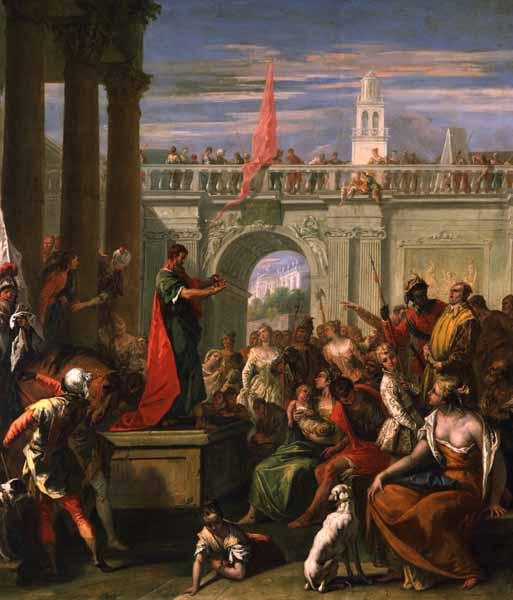
Not With Excellency Of Speech
“And I, brethren, when I came to you, came not with excellency of speech or of wisdom, declaring unto you the testimony of God. For I determined not to know any thing among you, save Jesus Christ, and him crucified.”
1 Corinthians 2:1-2
“In preaching the gospel in Corinth, the apostle followed a course different from that which had marked his labors at Athens. While in the latter place, he had sought to adapt his style to the character of his audience; he had met logic with logic, science with science, philosophy with philosophy. As he thought of the time thus spent, and realized that his teaching in Athens had been productive of but little fruit, he decided to follow another plan of labor in Corinth.”
Ellen G. White · The Acts of the Apostles, p. 244
This is Paul explaining, after the fact, why he changed his method between one city and the next. Athens got his best argument, matched point for point against its own philosophers, and the results were thin. Corinth gets something almost defiantly plain by comparison — not because Paul had run out of arguments, but because he had concluded that arguments were never the actual power behind conversion in the first place.
“And I was with you in weakness, and in fear, and in much trembling. And my speech and my preaching was not with enticing words of man’s wisdom, but in demonstration of the Spirit and of power.”
1 Corinthians 2:3-4
“Though Paul had a measure of success in Corinth, yet the wickedness that he saw and heard in that corrupt city almost disheartened him. The depravity that he witnessed among the Gentiles, and the contempt and insult that he received from the Jews, caused him great anguish of spirit. He doubted the wisdom of trying to build up a church from the material that he found there.”
Ellen G. White · The Acts of the Apostles, p. 250
“Weakness,” “fear,” “much trembling” are not false modesty on Paul’s part. Corinth was, by every account, a genuinely discouraging assignment — a wealthy, corrupt, famously immoral port city, and this study’s own source records Paul close to giving up on it entirely before an encouragement from heaven kept him there a year and a half.
“That your faith should not stand in the wisdom of men, but in the power of God.”
1 Corinthians 2:5
Verse 5 states the whole strategy in a single sentence: a faith built on a preacher’s cleverness stands or falls with that preacher, but a faith built on a demonstration of God’s own power has a foundation nothing about the messenger can undermine. This is the same argument chapter 1 already made about the cross itself, now applied to Paul’s own method of delivering it.
In Demonstration Of The Spirit And Of Power
“Howbeit we speak wisdom among them that are perfect: yet not the wisdom of this world, nor of the princes of this world, that come to nought: But we speak the wisdom of God in a mystery, even the hidden wisdom, which God ordained before the world unto our glory.”
1 Corinthians 2:6-7
Paul is careful here not to let “not with excellency of speech” collapse into “there is no wisdom at all.” There is a wisdom he does teach, to those mature enough to receive it — it is simply not the wisdom this world’s own power structures recognize or produce, and it was settled long before any of those power structures existed.
“Which none of the princes of this world knew: for had they known it, they would not have crucified the Lord of glory.”
1 Corinthians 2:8
This one verse holds an entire theology of the crucifixion in a single conditional clause — the rulers who condemned Christ were not simply evil, they were also, in the most consequential sense possible, ignorant. Had Pilate, Caiaphas, or Herod actually understood who stood before them, the one act that made salvation possible would never have happened. God’s wisdom used their blindness to accomplish what their sight would have prevented.
“But as it is written, Eye hath not seen, nor ear heard, neither have entered into the heart of man, the things which God hath prepared for them that love him.”
1 Corinthians 2:9
Among the most quoted single verses in the whole New Testament, and for good reason — it names its own limitation. Whatever is being described here is, by definition, beyond the reach of every human sense available for describing it. Paul is not offering a preview so much as a promise that a preview would be inadequate.
The Deep Things Of God
“But God hath revealed them unto us by his Spirit: for the Spirit searcheth all things, yea, the deep things of God. For what man knoweth the things of a man, save the spirit of man which is in him? even so the things of God knoweth no man, but the Spirit of God.”
1 Corinthians 2:10-11
“‘We speak wisdom among them that are perfect,’ Paul afterward declared; ‘yet not the wisdom of this world, nor of the princes of this world, that come to nought: but we speak the wisdom of God in a mystery, even the hidden wisdom, which God ordained before the world unto our glory: which none of the princes of this world knew: for had they known it, they would not have crucified the Lord of glory. But as it is written, Eye hath not seen, nor ear heard, … the things which God hath prepared for them that love Him. But God hath revealed them unto us by His Spirit: for the Spirit searcheth all things, yea, the deep things of God.’”
Ellen G. White · The Acts of the Apostles, p. 250
Verse 11’s own analogy is disarmingly simple: a person’s own thoughts are private to that person alone, known from the inside in a way no outside observer can access directly. God’s own thoughts work the same way, on an infinitely larger scale — which is exactly why they can only be known at all because God’s own Spirit chooses to reveal them, not because any level of human effort or intellect could eventually work them out unassisted.
“Now we have received, not the spirit of the world, but the spirit which is of God; that we might know the things that are freely given to us of God. Which things also we speak, not in the words which man’s wisdom teacheth, but which the Holy Ghost teacheth; comparing spiritual things with spiritual.”
1 Corinthians 2:12-13
“Paul realized that his sufficiency was not in himself, but in the presence of the Holy Spirit, whose gracious influence filled his heart, bringing every thought into subjection to Christ. … Instead of indulging in poetic descriptions and fanciful representations, which might please the senses and feed the imagination, but which would not touch the daily experience, Paul sought by the use of simple language to bring home to the heart the truths that are of vital importance.”
Ellen G. White · The Acts of the Apostles, p. 251
“Freely given” in verse 12 is the same grace-logic running through this whole letter so far — nothing here is earned by superior spiritual aptitude, only received. And this study’s own source draws a sharp practical line from that theology straight into Paul’s actual speaking style: a man capable of real eloquence, by his own former habit, chooses simple language on purpose, because dazzling an audience and actually reaching one turn out to be two very different projects.
We Have The Mind Of Christ
“But the natural man receiveth not the things of the Spirit of God: for they are foolishness unto him: neither can he know them, because they are spiritually discerned.”
1 Corinthians 2:14
“Jealousy, evil surmising, and accusation had closed the hearts of many of the Corinthian believers against the full working of the Holy Spirit, which ‘searcheth all things, yea, the deep things of God.’ … However wise they might be in worldly knowledge, they were but babes in the knowledge of Christ. … At that time they were unable to comprehend the mysteries of salvation; for ‘the natural man receiveth not the things of the Spirit of God: for they are foolishness unto him: neither can he know them, because they are spiritually discerned.’”
Ellen G. White · The Acts of the Apostles, p. 271
This study’s own source turns verse 14 back onto the very readers receiving this letter: the Corinthians’ own party spirit, jealousy, and evil surmising are named as the actual barrier keeping them “babes” rather than mature believers, worldly-wise but spiritually undeveloped. The natural man in this verse is not a distant unbeliever somewhere else — the pattern was already visibly at work inside the very congregation Paul is writing to.
“But he that is spiritual judgeth all things, yet he himself is judged of no man. For who hath known the mind of the Lord, that he may instruct him? But we have the mind of Christ.”
1 Corinthians 2:15-16
The chapter’s final verse quietly answers Isaiah’s own rhetorical question — “who hath known the mind of the Lord” was originally posed as unanswerable, and Paul answers it anyway. Not because believers have somehow matched God’s own intellect, but because Christ’s mind has been given to them by the same Spirit this whole chapter has been describing. The wisdom Paul refused to bring to Corinth in his own words turns out to be the very thing the Spirit supplies instead — not human eloquence improved, but a mind entirely different from it.
