Three chapters have now built the case: no faction is worth glorying in, no foundation exists but Christ, and no minister is anything more than a fellow-laborer God alone empowers. Chapter 4 draws the personal conclusion Paul wants the Corinthians to reach about how they should actually regard him and Apollos — not judges to be ranked against each other, but stewards, accountable to one Master alone. And then, almost without transition, Paul lets them see exactly what that stewardship has cost him: hunger, nakedness, homelessness, and a public reputation as fools, while the very believers he wrote it all for sit comfortably calling themselves rich.
A study in 1 Corinthians 4 · Arthur Baldwin · StandUp4Jesus.Org · 15 min read
Stewards Of The Mysteries Of God
“Let a man so account of us, as of the ministers of Christ, and stewards of the mysteries of God. Moreover it is required in stewards, that a man be found faithful.”
1 Corinthians 4:1-2
“The apostle refers to ‘the ministers of Christ’ as ‘stewards of the mysteries of God,’ and of their work he declares: ‘It is required in stewards, that a man be found faithful.’”
Ellen G. White · The Acts of the Apostles, p. 276
“Steward” resets the whole question the Corinthians had been arguing over. A steward is measured by one single standard — faithfulness to the master who owns the household — not by comparison with the household’s other stewards. Rank Paul against Apollos by that standard and the entire comparison becomes meaningless; both are simply being asked whether they were faithful with what was actually entrusted to them.
“But with me it is a very small thing that I should be judged of you, or of man’s judgment: yea, I judge not mine own self. For I know nothing by myself; yet am I not hereby justified: but he that judgeth me is the Lord.”
1 Corinthians 4:3-4
Paul is not claiming a clear conscience proves his innocence — he says the opposite. Even his own self-examination is not the final court; “he that judgeth me is the Lord” alone. This is a striking piece of humility from a man perfectly capable of defending his own record point by point, and he declines to.
“Therefore judge nothing before the time, until the Lord come, who both will bring to light the hidden things of darkness, and will make manifest the counsels of the hearts: and then shall every man have praise of God.”
1 Corinthians 4:5
“The hidden things of darkness” and “the counsels of the hearts” are, by definition, information no human judge in Corinth could ever access — which is exactly Paul’s point. Any verdict the Corinthians reach now, comparing one minister’s motives against another’s, is necessarily working from an incomplete file. Only the Lord’s own coming judgment will finally have all the facts.
What Hast Thou That Thou Didst Not Receive?
“And these things, brethren, I have in a figure transferred to myself and to Apollos for your sakes; that ye might learn in us not to think of men above that which is written, that no one of you be puffed up for one against another.”
1 Corinthians 4:6
“The apostle, continuing, referred directly to the comparisons that had been made between his labors and those of Apollos: ‘These things, brethren, I have in a figure transferred to myself and to Apollos for your sakes; that ye might learn in us not to think of men above that which is written, that no one of you be puffed up for one against another.’”
Ellen G. White · The Acts of the Apostles, p. 276
Paul admits something worth noticing here: he has been speaking about himself and Apollos specifically because naming real people makes the lesson land, but the actual target was never just those two men. Every reader who has ever ranked one Christian leader over another “for your sakes” is meant to recognize themselves in this verse.
“For who maketh thee to differ from another? and what hast thou that thou didst not receive? now if thou didst receive it, why dost thou glory, as if thou hadst not received it?”
1 Corinthians 4:7
Three questions, each one closing off the same escape route. Whatever gift, insight, or advantage anyone in Corinth might point to as reason to feel superior, verse 7 traces it back to a source outside themselves entirely. A received gift is not a personal accomplishment, and boasting over one makes no more sense than a steward boasting that the household’s silver is particularly fine.
“Now ye are full, now ye are rich, ye have reigned as kings without us: and I would to God ye did reign, that we also might reign with you.”
1 Corinthians 4:8
The irony in this verse is heavy enough to taste. “Full,” “rich,” “reigned as kings” — a congregation still riddled with the divisions of chapters 1 through 3 has somehow already decided it has arrived. Paul’s closing wish is not sarcasm so much as genuine longing: if it were actually true, he says, he would be right there reigning alongside them. It plainly is not true yet.
A Spectacle Unto The World
“For I think that God hath set forth us the apostles last, as it were appointed to death: for we are made a spectacle unto the world, and to angels, and to men.”
1 Corinthians 4:9
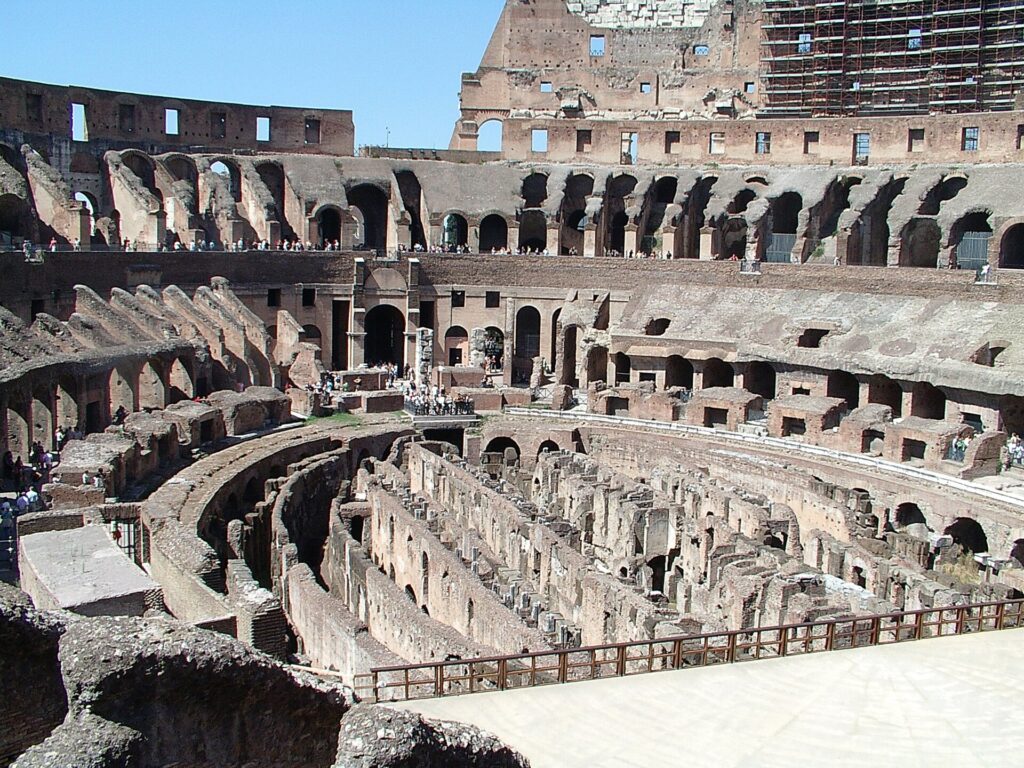
Paul is almost certainly drawing on an image every reader in the Roman world would instantly recognize — the arena’s own closing act, when the condemned were brought out last, after the gladiators and the animal hunts, appointed to certain death in front of the whole watching crowd. That, Paul says, is a fair picture of what apostleship has actually looked like from the outside: last in the procession, watched by the world, by angels, and by men, appointed to death rather than glory.
“We are fools for Christ’s sake, but ye are wise in Christ; we are weak, but ye are strong; ye are honourable, but we are despised.”
1 Corinthians 4:10
Three matched contrasts, and the Corinthians come out ahead in every one of them by their own estimate — wise, strong, honourable, against Paul’s fools, weak, despised. The verse is not bitter so much as pointed: whatever comfortable status this congregation has settled into, it did not come from following the apostles’ own example.
“Even unto this present hour we both hunger, and thirst, and are naked, and are buffeted, and have no certain dwellingplace; And labour, working with our own hands: being reviled, we bless; being persecuted, we suffer it.”
1 Corinthians 4:11-12
“Although an eloquent speaker, and chosen by God to do a special work, he was never above labor, nor did he ever weary of sacrificing for the cause he loved. ‘Even unto this present hour,’ he wrote to the Corinthians, ‘we both hunger, and thirst, and are naked, and are buffeted, and have no certain dwelling place; and labor, working with our own hands: being reviled, we bless; being persecuted, we suffer it.’”
Ellen G. White · The Acts of the Apostles, p. 354
This study’s own source draws out a detail easy to miss reading the list quickly: Paul, “an eloquent speaker” fully capable of commanding respect and support, chose manual labor with his own hands rather than lean on the very churches he had planted. “Being reviled, we bless” is not passive endurance; it is an active choice to answer cruelty with the opposite of cruelty, repeated as a settled habit rather than a one-time act of restraint.
“Being defamed, we intreat: we are made as the filth of the world, and are the offscouring of all things unto this day.”
1 Corinthians 4:13
“Offscouring” is about as low a word as the language offers — the scraped-off residue nobody wants, thrown out with the rest of the waste. Paul is not exaggerating his own suffering for effect; he is describing, quite plainly, the actual social status apostleship carried in the eyes of the world he lived in.
With A Rod, Or In Love
“I write not these things to shame you, but as my beloved sons I warn you. For though ye have ten thousand instructers in Christ, yet have ye not many fathers: for in Christ Jesus I have begotten you through the gospel.”
1 Corinthians 4:14-15
Paul explicitly names the tone he intends behind everything written so far in this letter — not shame, but warning, and warning of a specifically parental kind. Instructors can be hired, replaced, or ranked against one another the way the Corinthians had been doing with Paul and Apollos; a father who begot the church through the gospel occupies a different category entirely, one no rival teacher can actually claim.
“Wherefore I beseech you, be ye followers of me. For this cause have I sent unto you Timotheus, who is my beloved son, and faithful in the Lord, who shall bring you into remembrance of my ways which be in Christ, as I teach every where in every church.”
1 Corinthians 4:16-17
“Be ye followers of me” only makes sense after everything chapter 4 has just described — hunger, homelessness, labor, blessing under abuse. Paul is not asking the Corinthians to imitate his authority or his eloquence; he is asking them to imitate the costly, self-emptying pattern of life his whole ministry has actually consisted of.
“Now some are puffed up, as though I would not come to you. But I will come to you shortly, if the Lord will, and will know, not the speech of them which are puffed up, but the power. For the kingdom of God is not in word, but in power.”
1 Corinthians 4:18-20
“Puffed up” is the same phrase chapter 4 already used twice about factional pride, now aimed at whoever has been telling the Corinthians that Paul is all talk and no follow-through. His answer is simple and testable: he is coming, and when he arrives it will not be the puffed-up ones’ fine speech he weighs against his own, but actual power — the same category chapter 2 already said the whole gospel runs on.
“What will ye? shall I come unto you with a rod, or in love, and in the spirit of meekness?”
1 Corinthians 4:21
The whole chapter’s warmth and warning meet in this single closing question, and Paul genuinely leaves the answer up to them. He is not threatening a beating; he is naming the two postures a father can take toward children still in need of correction, and telling the Corinthians plainly that which one they receive depends on what they do between now and his arrival.
