Chapter 13 named love as the more excellent way; chapter 14 applies it directly to the very dispute that opened chapter 12 — tongues, prized in Corinth as the most impressive gift, set against prophecy, which Paul ranks higher because it actually edifies a hearer instead of only the speaker. From there the chapter moves into the practical shape of an orderly worship service, closing with a principle broad enough to cover far more than tongues and prophecy alone: God is not the author of confusion, but of peace.
A study in 1 Corinthians 14 · Arthur Baldwin · StandUp4Jesus.Org · 20 min read
Greater Is He That Prophesieth
“Follow after charity, and desire spiritual gifts, but rather that ye may prophesy. For he that speaketh in an unknown tongue speaketh not unto men, but unto God: for no man understandeth him; howbeit in the spirit he speaketh mysteries.”
1 Corinthians 14:1-2
“Follow after charity” opens the chapter by tying it directly back to the one just finished — every instruction about spiritual gifts that follows is meant to be read through that lens. Paul does not forbid tongues; he simply observes what an unintelligible tongue actually accomplishes on its own: real communication with God, but none at all with the people listening.
“But he that prophesieth speaketh unto men to edification, and exhortation, and comfort. He that speaketh in an unknown tongue edifieth himself; but he that prophesieth edifieth the church.”
1 Corinthians 14:3-4
Verse 4 states the whole comparison in one clean contrast — self-edification against church-edification. Neither is dismissed as worthless, but the standard chapter 12 already set (every gift given “to profit withal,” meaning the whole body) makes prophecy, in a gathered assembly, the more valuable gift by that very standard.
“I would that ye all spake with tongues, but rather that ye prophesied: for greater is he that prophesieth than he that speaketh with tongues, except he interpret, that the church may receive edifying.”
1 Corinthians 14:5
Paul’s own preference is generous rather than dismissive — he genuinely wishes all of them spoke in tongues, and immediately adds the one condition that would make tongues just as valuable as prophecy in a public setting: interpretation. The gift is never the problem; an interpreted tongue accomplishes exactly what prophecy does.
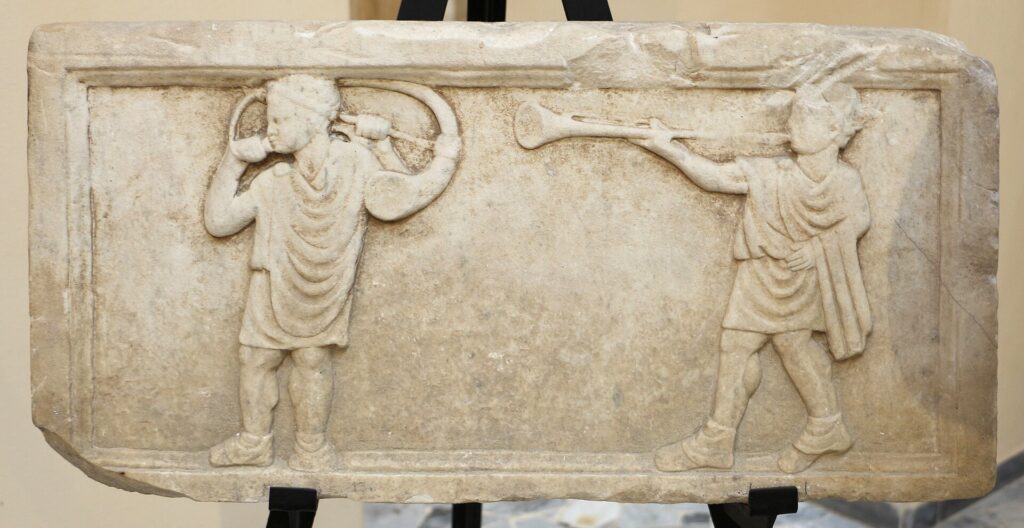
“And even things without life giving sound, whether pipe or harp, except they give a distinction in the sounds, how shall it be known what is piped or harped? For if the trumpet give an uncertain sound, who shall prepare himself to the battle?”
1 Corinthians 14:7-8
“‘Even things without life giving sound, whether pipe or harp, except they give a distinction in the sounds, how shall it be known what is piped or harped? For if the trumpet give an uncertain sound, who shall prepare himself to the battle?’ … So likewise ye, except ye utter by the tongue words easy to be understood, how shall it be known what is spoken? for ye shall speak into the air.”
Ellen G. White · Christian Education, p. 129
Every reader in Paul’s own day would have known instantly what an uncertain trumpet call meant on a battlefield — not caution, but disaster, soldiers left unsure whether to advance, retreat, or hold their position. This study’s own source applies the same illustration to something far less dramatic than battle: ordinary public speech, prayer, and reading, urging every believer to speak with the same clarity a trumpet call actually requires to be useful at all.
“There are, it may be, so many kinds of voices in the world, and none of them is without signification. Therefore if I know not the meaning of the voice, I shall be unto him that speaketh a barbarian, and he that speaketh shall be a barbarian unto me.”
1 Corinthians 14:10-11
“Barbarian” originally described anyone whose speech sounded like meaningless babble to Greek ears — not an insult in Paul’s use here, simply an accurate description of what an untranslated language reduces every speaker to, regardless of how sophisticated the message might actually be.
“Even so ye, forasmuch as ye are zealous of spiritual gifts, seek that ye may excel to the edifying of the church.”
1 Corinthians 14:12
Paul does not rebuke the Corinthians’ zeal for spiritual gifts; he redirects it. Ambition itself is not the problem this chapter corrects, only its target — personal display exchanged for the church’s actual edification.
I Will Pray With The Understanding Also
“Wherefore let him that speaketh in an unknown tongue pray that he may interpret. For if I pray in an unknown tongue, my spirit prayeth, but my understanding is unfruitful.”
1 Corinthians 14:13-14
“‘Wherefore let him that speaketh in an unknown tongue pray that he may interpret. For if I pray in an unknown tongue, my spirit prayeth, but my understanding is unfruitful. What is it then? I will pray with the spirit, and I will pray with the understanding also….’”
Ellen G. White · Christian Education, p. 129
Paul’s own solution is not to abandon spirit-led prayer, but to insist that it come paired with understanding rather than replacing it. Emotion and intelligibility, in his own practice, were never rivals to be chosen between.
“What is it then? I will pray with the spirit, and I will pray with the understanding also: I will sing with the spirit, and I will sing with the understanding also.”
1 Corinthians 14:15
Both halves of this verse matter equally to Paul — he never treats “understanding” as the cold, lesser alternative to spirit-filled worship. Genuine devotion, in his own stated practice, engages both at once, prayer and song alike.
“I thank my God, I speak with tongues more than ye all: Yet in the church I had rather speak five words with my understanding, that by my voice I might teach others also, than ten thousand words in an unknown tongue.”
1 Corinthians 14:18-19
Paul heads off any suspicion that he is simply jealous of a gift he lacks — he has it, in greater measure than anyone he is correcting. The ratio he offers, five understood words against ten thousand incomprehensible ones, is deliberately extreme, making the underlying priority impossible to miss.
“Wherefore tongues are for a sign, not to them that believe, but to them that believe not: but prophesying serveth not for them that believe not, but for them which believe.”
1 Corinthians 14:22
Paul assigns each gift its own proper audience, reversing what Corinth had apparently assumed — tongues functioned historically as a sign aimed outward, toward unbelief, while prophecy builds up the believing community already gathered.
“But if all prophesy, and there come in one that believeth not, or one unlearned, he is convinced of all, he is judged of all: And thus are the secrets of his heart made manifest; and so falling down on his face he will worship God, and report that God is in you of a truth.”
1 Corinthians 14:24-25
Here is the practical case for Paul’s whole preference, told as a real scenario rather than an abstract rule — an outsider walking into an orderly, understandable service is far more likely to be genuinely converted, “the secrets of his heart made manifest,” than one walking into a room full of unintelligible speech he can only conclude is madness.
God Is Not The Author Of Confusion
“How is it then, brethren? when ye come together, every one of you hath a psalm, hath a doctrine, hath a tongue, hath a revelation, hath an interpretation. Let all things be done unto edifying.”
1 Corinthians 14:26
“‘How is it then, brethren? when ye come together, every one of you hath a psalm, hath a doctrine, hath a tongue, hath a revelation, hath an interpretation. Let all things be done unto edifying.’ … In our devotional social meetings, our voices should express by prayer and praise our adoration of our heavenly Father, that all may know that we worship God in simplicity and truth, and in the beauty of holiness.”
Ellen G. White · Christian Education, p. 131
This snapshot of an actual Corinthian gathering shows genuine abundance, not scarcity — psalms, teaching, tongues, revelation, interpretation, everyone apparently eager to contribute. The problem chapter 14 corrects was never a lack of spiritual activity, only its lack of order, and Paul’s single governing rule for sorting through all of it is stated in six words: “let all things be done unto edifying.”
“If any man speak in an unknown tongue, let it be by two, or at the most by three, and that by course; and let one interpret. But if there be no interpreter, let him keep silence in the church; and let him speak to himself, and to God.”
1 Corinthians 14:27-28
Paul does not ban tongues outright; he sets a concrete limit and a clear condition — a fixed number of speakers, taking turns, always paired with interpretation. Without that condition met, the instruction is equally concrete: silence in the assembly, private prayer instead.
“Let the prophets speak two or three, and let the other judge. If any thing be revealed to another that sitteth by, let the first hold his peace. For ye may all prophesy one by one, that all may learn, and all may be comforted.”
1 Corinthians 14:29-31
Prophecy gets the identical treatment tongues just received — a fixed cap, real turn-taking, an active discernment process from the rest of the assembly. No gift in this chapter, however genuinely from the Spirit, is exempted from orderly regulation.
“And the spirits of the prophets are subject to the prophets. For God is not the author of confusion, but of peace, as in all churches of the saints.”
1 Corinthians 14:32-33
“Even ‘the spirits of the prophets,’ he declared, ‘are subject to the prophets. For God is not the author of confusion, but of peace, as in all churches of the saints.’ … With Peter, he taught that all united in church capacity should be ‘subject one to another.’”
Ellen G. White · The Acts of the Apostles, p. 200
Verse 32 is a striking claim in itself — a genuine spiritual gift, even prophecy, remains under the prophet’s own self-control rather than seizing them against their will. This study’s own source draws out the pattern behind that claim: Paul, personally taught by God in extraordinary ways, still submitted to church counsel and mutual accountability rather than claiming an authority above correction.
Let All Things Be Done Decently And In Order
“Let your women keep silence in the churches: for it is not permitted unto them to speak; but they are commanded to be under obedience, as also saith the law. And if they will learn any thing, let them ask their husbands at home: for it is a shame for women to speak in the church.”
1 Corinthians 14:34-35
This instruction sits in genuine tension with chapter 11, which assumed without objection that women were praying and prophesying aloud in this very congregation. Most careful readers of this letter conclude Paul is addressing a specific disruptive habit here — the “ask their husbands at home” detail suggests interruption by unlearned questions during the service, precisely the kind of disorder this whole chapter has been correcting in every other gift as well, rather than a categorical ban on the vocal ministry chapter 11 had already assumed.
“What? came the word of God out from you? or came it unto you only? If any man think himself to be a prophet, or spiritual, let him acknowledge that the things that I write unto you are the commandments of the Lord.”
1 Corinthians 14:36-37
Paul anticipates resistance from precisely the people most likely to feel qualified to overrule him — those confident in their own prophetic gift — and answers with a direct claim to apostolic authority. Whatever else is debatable in this chapter, Paul insists these instructions themselves are not optional local custom but “the commandments of the Lord.”
“Wherefore, brethren, covet to prophesy, and forbid not to speak with tongues.”
1 Corinthians 14:39
Paul’s closing balance sums up the whole chapter in a single sentence — a clear preference stated plainly, and an equally clear refusal to prohibit the lesser-preferred gift altogether. Neither gift is condemned; both are simply put in their rightly ordered place.
“Let all things be done decently and in order.”
1 Corinthians 14:40
Seven words close a chapter that has spent forty verses working out exactly what those words mean in practice — tongues capped and interpreted, prophecy taking turns, women’s disruptive questions redirected, every single contribution measured against the edification of the whole body rather than the display of the individual gift. It is, in the end, the same “more excellent way” chapter 13 already named, translated into the concrete shape of an actual worship service.
