Some in Corinth, apparently prompted by rival teachers, had begun asking Paul for the kind of formal letters of recommendation traveling ministers often carried. Paul’s answer reaches for something far more concrete than a written reference — the Corinthians’ own transformed lives are the only letter he needs, written not on paper but on the heart. From there the chapter builds into one of Paul’s richest arguments: the old covenant, glorious as it was, could not compare to the new, and the very veil that once covered Moses’s face still covers the minds of everyone who reads the old covenant without turning to Christ.
A study in 2 Corinthians 3 · Arthur Baldwin · StandUp4Jesus.Org · 16 min read
Ye Are Our Epistle
“Do we begin again to commend ourselves? or need we, as some others, epistles of commendation to you, or letters of commendation from you?”
2 Corinthians 3:1
“As some others” is a pointed jab at the rival teachers apparently circulating through Corinth armed with exactly this kind of formal paperwork. Paul’s own question is not defensive so much as genuinely rhetorical — he is about to explain why he needs no such letter at all.
“Ye are our epistle written in our hearts, known and read of all men: Forasmuch as ye are manifestly declared to be the epistle of Christ ministered by us, written not with ink, but with the Spirit of the living God; not in tables of stone, but in fleshy tables of the heart.”
2 Corinthians 3:2-3
“The apostle Paul says to the disciples of Jesus, ‘Ye are manifestly declared to be the epistle of Christ,’ ‘known and read of all men.’ … In every one of His children, Jesus sends a letter to the world. If you are Christ’s follower, He sends in you a letter to the family, the village, the street, where you live.”
Ellen G. White · Steps to Christ, p. 115
Paul’s image reverses the usual direction of a letter of recommendation. Rather than a document he carries about himself, the Corinthians’ own transformed character is a letter Christ Himself has written, through Paul’s ministry, for the watching world to read directly off their lives. This study’s own source extends the same image to every believer, not only to Paul’s own converts — wherever a Christian actually lives, Christ is sending a letter to that specific street, whether or not anyone there ever opens a Bible.
“And such trust have we through Christ to God-ward: Not that we are sufficient of ourselves to think any thing as of ourselves; but our sufficiency is of God.”
2 Corinthians 3:4-5
Paul’s confidence is real, but he is careful to locate its source precisely — not in his own natural ability, but entirely outside himself, in God. This is the same answer chapter 2 already gave to “who is sufficient for these things,” now stated as a settled conviction rather than a rhetorical question.
“Who also hath made us able ministers of the new testament; not of the letter, but of the spirit: for the letter killeth, but the spirit giveth life.”
2 Corinthians 3:6
“The letter killeth, but the spirit giveth life” is easy to misread as a dismissal of Scripture itself; Paul’s actual target is a covenant kept as bare external law, with no accompanying inward transformation. A written code, obeyed only outwardly, can accuse and condemn; only the Spirit can actually change the heart it addresses.
The Ministration Of The Spirit
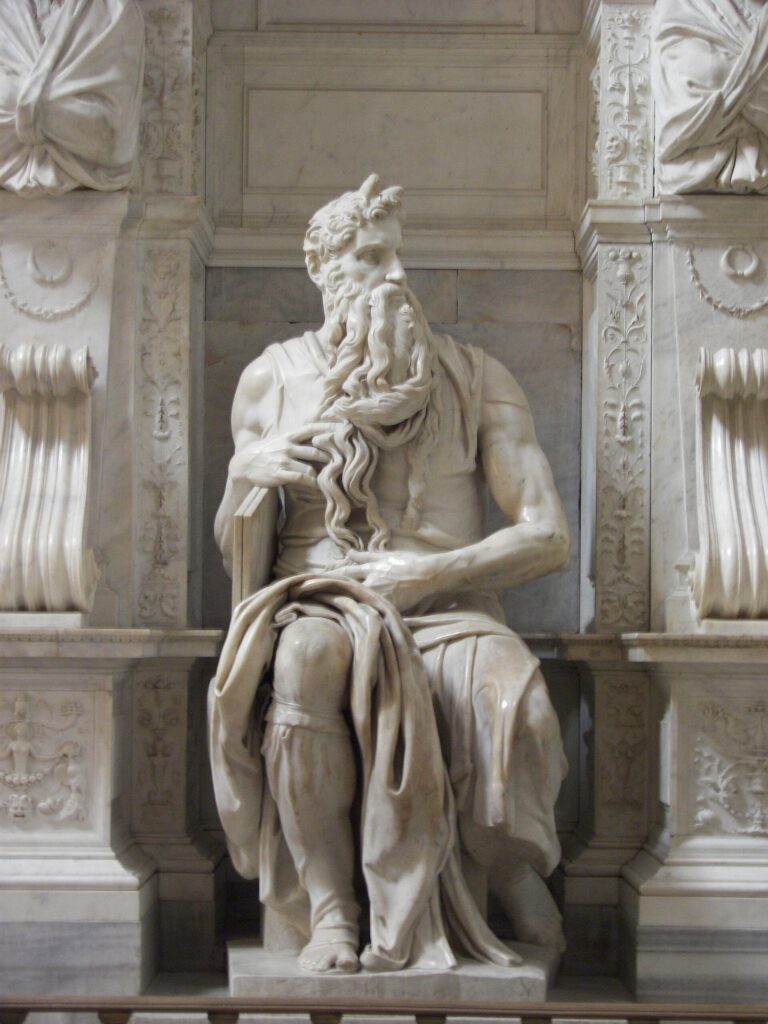
“But if the ministration of death, written and engraven in stones, was glorious, so that the children of Israel could not stedfastly behold the face of Moses for the glory of his countenance; which glory was to be done away: How shall not the ministration of the spirit be rather glorious?”
2 Corinthians 3:7-8
Paul’s argument works from lesser to greater, not from good to bad. The old covenant genuinely was glorious — glorious enough that Moses’s own face physically shone from having been near it — and Paul’s whole point is that if even a “ministration of death” carried that much glory, the ministry that actually gives life must carry far more.
“For if the ministration of condemnation be glory, much more doth the ministration of righteousness exceed in glory. For even that which was made glorious had no glory in this respect, by reason of the glory that excelleth.”
2 Corinthians 3:9-10
Verse 10’s paradox is deliberate — the old covenant’s glory is not erased by the comparison, only outshone so thoroughly that, set beside the new, it no longer looks glorious by contrast. A candle is not extinguished by daylight; it simply stops looking bright once the sun has risen.
“For if that which is done away was glorious, much more that which remaineth is glorious.”
2 Corinthians 3:11
“Done away” describes the old covenant’s own temporary, transitional purpose, not a mistake to be ashamed of. Every temporary arrangement in Scripture existed to prepare for something permanent; the old covenant’s very obsolescence is itself proof that it succeeded at pointing toward the covenant that “remaineth.”
The Vail Is Done Away In Christ
“Seeing then that we have such hope, we use great plainness of speech: And not as Moses, which put a vail over his face, that the children of Israel could not stedfastly look to the end of that which is abolished.”
2 Corinthians 3:12-13
“Great plainness of speech” is Paul’s own contrast to Moses’s literal veil — where the old covenant’s own glory had to be shielded from a people who could not bear its fading brilliance, the new covenant’s ministers speak with nothing held back or obscured.
“But their minds were blinded: for until this day remaineth the same vail untaken away in the reading of the old testament; which vail is done away in Christ. But even unto this day, when Moses is read, the vail is upon their heart.”
2 Corinthians 3:14-15
The veil, in Paul’s own extended metaphor, has moved from Moses’s literal face onto the minds of every reader who approaches the old covenant without recognizing Christ as its fulfillment. The same ancient text, read two different ways, either stays veiled in obscurity or, read in light of Christ, becomes fully clear.
“Nevertheless when it shall turn to the Lord, the vail shall be taken away.”
2 Corinthians 3:16
The remedy Paul offers is simple and immediate, not a matter of study or argument — a turning, a change of direction toward the Lord, and the same veil that blinded is instantly removed. Understanding, in this account, follows conversion rather than preceding it.
Changed Into The Same Image
“Now the Lord is that Spirit: and where the Spirit of the Lord is, there is liberty.”
2 Corinthians 3:17
“He taught principles which struck at the very foundation of slavery and which, if carried into effect, would surely undermine the whole system. ‘Where the Spirit of the Lord is, there is liberty,’ he declared.”
Ellen G. White · The Acts of the Apostles, p. 459
This study’s own source finds a strikingly concrete application for what might otherwise sound like an abstract spiritual principle. Writing in a Roman world built on institutional slavery, Paul never called for open political revolt, yet the very gospel principle stated here — genuine liberty wherever the Spirit of the Lord actually is — carried within it the seed that would eventually undermine slavery’s whole moral foundation.
“But we all, with open face beholding as in a glass the glory of the Lord, are changed into the same image from glory to glory, even as by the Spirit of the Lord.”
2 Corinthians 3:18
“But let us keep our eyes fixed upon Christ, and He will preserve us. Looking unto Jesus, we are safe. Nothing can pluck us out of His hand. In constantly beholding Him, we ‘are changed into the same image from glory to glory, even as by the Spirit of the Lord.’”
Ellen G. White · Steps to Christ, p. 72
The chapter’s closing verse completes its own governing contrast — where Moses’s veiled, fading glory could only be glimpsed indirectly, believers now behold the Lord’s glory “with open face,” unveiled. This study’s own source draws out the practical mechanism behind that transformation: not effort applied directly to one’s own character, but simple, sustained attention fixed on Christ, which quietly and gradually reshapes the one who keeps looking, “from glory to glory,” into the very image being beheld.
