Paul continues the collection appeal begun in chapter 8, this time revealing a genuinely practical worry — he has already boasted to the Macedonians about the Corinthians’ own readiness to give, and he does not want that boast embarrassed if Macedonian representatives arrive in Corinth and find nothing prepared. From that concern he moves into the chapter’s real center of gravity: giving not as an obligation to be calculated, but as sowing seed, generous by nature, cheerful by design, and certain to multiply back to the giver in ways money alone could never measure.
A study in 2 Corinthians 9 · Arthur Baldwin · StandUp4Jesus.Org · 15 min read
That Ye May Be Ready
“For as touching the ministering to the saints, it is superfluous for me to write to you: For I know the forwardness of your mind, for which I boast of you to them of Macedonia, that Achaia was ready a year ago; and your zeal hath provoked very many.”
2 Corinthians 9:1-2
Paul has, in a real sense, already used the Corinthians as his own example to spur on the Macedonians, the very reverse of chapter 8’s own use of the Macedonians to spur on Corinth. Encouragement toward generosity, in this exchange, has clearly been flowing in both directions between these churches.
“Yet have I sent the brethren, lest our boasting of you should be in vain in this behalf; that, as I said, ye may be ready: Lest haply if they of Macedonia come with me, and find you unprepared, we (that we say not, ye) should be ashamed in this same confident boasting.”
2 Corinthians 9:3-4
Paul’s own reputation is genuinely at stake here, and he says so plainly — if the Corinthians are caught unprepared, the embarrassment falls first on him, for having boasted, rather than on them for having failed. This entirely practical concern is what actually prompted sending advance messengers ahead of his own visit.
“Therefore I thought it necessary to exhort the brethren, that they would go before unto you, and make up beforehand your bounty, whereof ye had notice before, that the same might be ready, as a matter of bounty, and not as of covetousness.”
2 Corinthians 9:5
“As a matter of bounty, and not as of covetousness” is a carefully chosen phrase — Paul wants the gift ready ahead of time precisely so it will look, and actually be, generous rather than grudging, the difference between a genuine offering and money extracted reluctantly under pressure of a visitor’s arrival.
God Loveth A Cheerful Giver
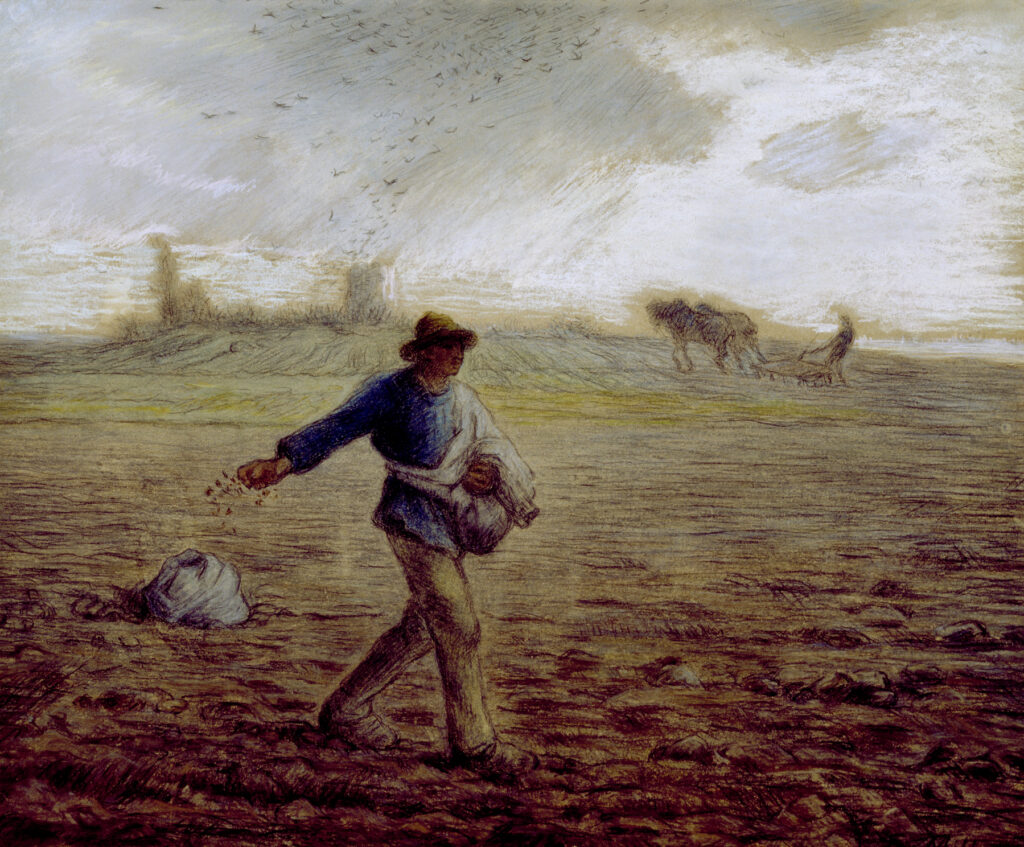
“But this I say, He which soweth sparingly shall reap also sparingly; and he which soweth bountifully shall reap also bountifully.”
2 Corinthians 9:6
“In speaking to the elders of Ephesus of his former labors among them, he said, ‘I have showed you all things, how that so laboring ye ought to support the weak, and to remember the words of the Lord Jesus, how He said, It is more blessed to give than to receive.’ ‘He which soweth sparingly,’ he wrote to the Corinthians, ‘shall reap also sparingly; and he which soweth bountifully shall reap also bountifully.’”
Ellen G. White · The Acts of the Apostles, p. 342
The agricultural image is chosen deliberately — a farmer who scatters seed thinly across the field, hoping to save it, simply guarantees a thinner harvest. This study’s own source ties this exact principle straight back to Christ’s own words to the Ephesian elders, “it is more blessed to give than to receive,” treating both statements as the same settled conviction expressed to two different congregations.
“Every man according as he purposeth in his heart, so let him give; not grudgingly, or of necessity: for God loveth a cheerful giver.”
2 Corinthians 9:7
The disposition behind a gift matters to Paul as much as the amount — “not grudgingly, or of necessity” rules out both reluctant compliance and coerced obligation, leaving only free, cheerful purpose as the standard God actually loves.
“And God is able to make all grace abound toward you; that ye, always having all sufficiency in all things, may abound to every good work.”
2 Corinthians 9:8
Paul answers the obvious anxiety behind generous giving — what if I run out? — not by promising material riches, but by promising sufficiency, always enough for the giver’s own needs even while giving continues to flow outward toward good work.
The Fruits Of Your Righteousness
“(As it is written, He hath dispersed abroad; he hath given to the poor: his righteousness remaineth for ever. Now he that ministereth seed to the sower both minister bread for your food, and multiply your seed sown, and increase the fruits of your righteousness.)”
2 Corinthians 9:9-10
“The little that is wisely and economically used in the service of the Lord of heaven will increase in the very act of imparting. In the hand of Christ the small supply of food remained undiminished until the famished multitude were satisfied.”
Ellen G. White · The Desire of Ages, p. 371
God is described here as the ultimate source behind both the seed a farmer plants and the bread a family eats, actively multiplying whatever is given away for His purposes. This study’s own source draws the connection directly to the feeding of the five thousand — the same principle of a small supply increasing precisely through the act of giving it away, not through withholding it, that Christ demonstrated visibly in His own hands.
“Being enriched in every thing to all bountifulness, which causeth through us thanksgiving to God.”
2 Corinthians 9:11
Enrichment, in Paul’s own accounting, exists specifically for the purpose of further bountifulness, not as an end goal in itself. The whole cycle terminates in thanksgiving to God rather than in the giver’s own accumulated wealth.
His Unspeakable Gift
“For the administration of this service not only supplieth the want of the saints, but is abundant also by many thanksgivings unto God; Whiles by the experiment of this ministration they glorify God for your professed subjection unto the gospel of Christ, and for your liberal distribution unto them, and unto all men.”
2 Corinthians 9:12-13
The collection accomplishes something well beyond meeting Jerusalem’s material need — it becomes, for the Jewish believers receiving it, living proof that Gentile converts have genuinely submitted themselves to the gospel of Christ, evidence visible enough to produce their own thanksgiving to God.
“And by their prayer for you, which long after you for the exceeding grace of God in you.”
2 Corinthians 9:14
The relationship this gift builds runs both directions across a real geographical and cultural divide — Jewish believers in Jerusalem, once perhaps suspicious of Gentile converts, now praying for them and genuinely longing after them because of grace made visible through an act of generosity.
“Thanks be unto God for his unspeakable gift.”
2 Corinthians 9:15
The chapter closes with a single short sentence that reaches beyond the collection entirely, back to the gift underneath every other gift this letter has described. Every act of Corinthian generosity this whole passage has been urging is, in the end, simply an echo of a far larger, genuinely “unspeakable” gift already given first.
