Some in Thessalonica had become convinced that the day of Christ had already arrived. Paul writes to calm them, and in doing so gives one of the most important prophecies in the New Testament. Before the Lord returns, he says, there must come a great falling away, and a power he calls “that man of sin” must be revealed — a power that would rise within the church itself, exalt itself above God, and continue its work until it is destroyed by the brightness of Christ’s coming. Paul’s answer to that danger is simple: love the truth, and stand fast.
A study in 2 Thessalonians 2 · Arthur Baldwin · StandUp4Jesus.Org · 22 min read
Be Not Soon Shaken In Mind
“Now we beseech you, brethren, by the coming of our Lord Jesus Christ, and by our gathering together unto him, That ye be not soon shaken in mind, or be troubled, neither by spirit, nor by word, nor by letter as from us, as that the day of Christ is at hand.”
2 Thessalonians 2:1-2
“At hand” here means “already present.” Someone was telling the Thessalonians that the day of the Lord had begun. The claim came in three possible forms: a supposed prophetic revelation (“by spirit”), a teaching (“by word”), or even a forged letter carrying Paul’s name (“by letter as from us”). Some believers were so unsettled — “shaken” like a ship torn from its mooring — that they had stopped working (3:11). Paul’s first letter had been misunderstood.
“The instruction that Paul sent the Thessalonians in his first epistle regarding the second coming of Christ, was in perfect harmony with his former teaching. Yet his words were misapprehended by some of the Thessalonian brethren. They understood him to express the hope that he himself would live to witness the Saviour’s advent. This belief served to increase their enthusiasm and excitement.”
Ellen G. White · The Acts of the Apostles, p. 264
It is worth noticing what Paul does not do. He does not tell them the coming of Christ is unimportant, or far away and therefore irrelevant. He appeals to them “by the coming of our Lord Jesus Christ.” The hope is real. The mistake was in the timing.
Except There Come A Falling Away First
“Let no man deceive you by any means: for that day shall not come, except there come a falling away first, and that man of sin be revealed, the son of perdition; Who opposeth and exalteth himself above all that is called God, or that is worshipped; so that he as God sitteth in the temple of God, shewing himself that he is God. Remember ye not, that, when I was yet with you, I told you these things?”
2 Thessalonians 2:3-5
Two things must happen before the day of Christ. First, “a falling away” — in Greek, apostasia, apostasy, a departure from the faith. Paul is not describing the unbelieving world becoming more wicked; the world had never held the faith to depart from. He is describing a rebellion within the church. Second, out of that apostasy a power will emerge, which Paul calls “that man of sin” and “the son of perdition” (the same title Jesus gave Judas, the disciple who betrayed Him from the inside, John 17:12).
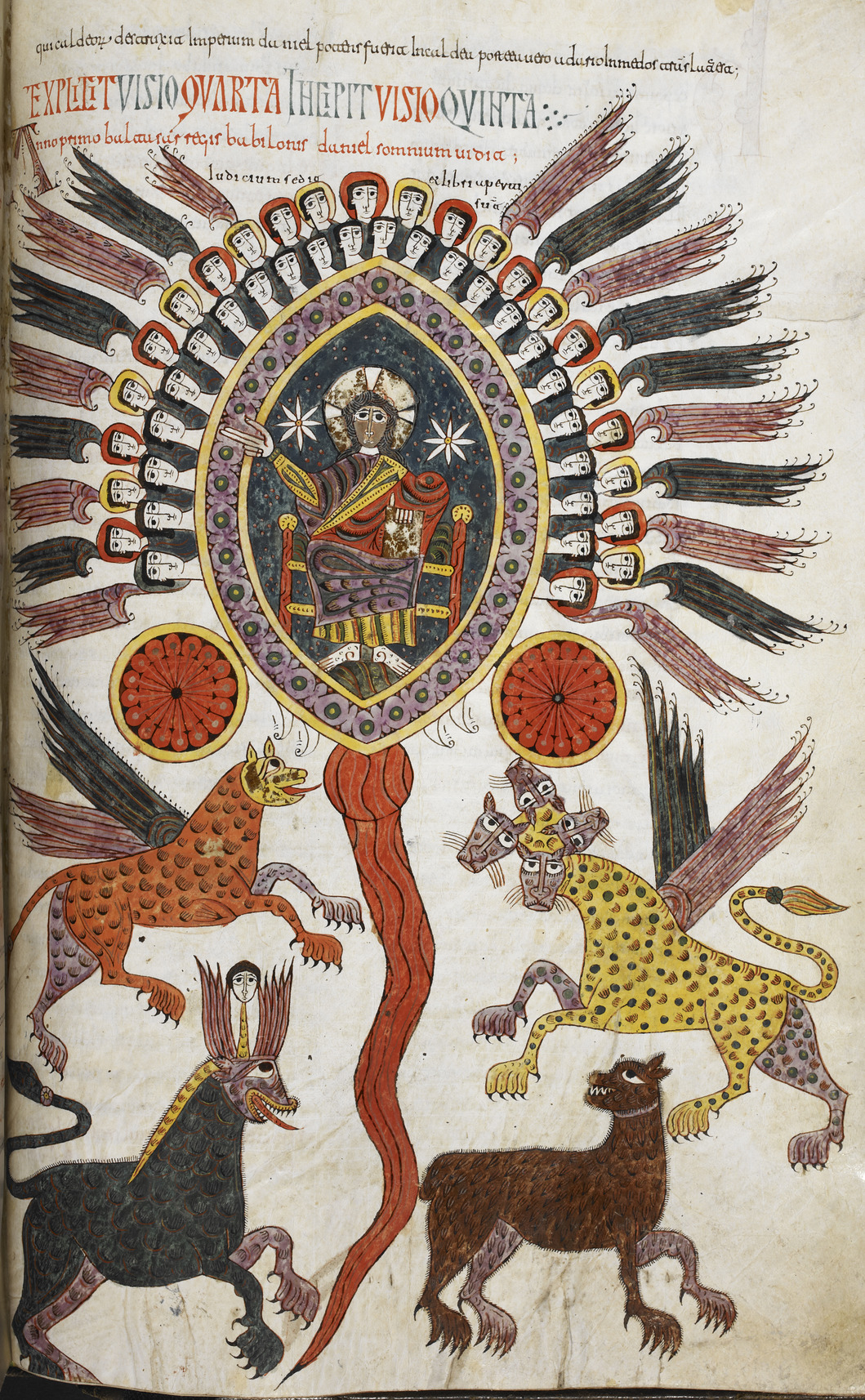
Paul describes this power in language drawn straight from the book of Daniel. Daniel saw a “little horn” that rose among the horns of the fourth beast, Rome, with “a mouth speaking great things”:
“And he shall speak great words against the most High, and shall wear out the saints of the most High, and think to change times and laws: and they shall be given into his hand until a time and times and the dividing of time.”
Daniel 7:25
Daniel’s little horn and Paul’s man of sin are the same power: a religious-political power that arises from Rome after the empire, claims divine prerogatives, persecutes God’s people, and presumes to change God’s law. The Protestant Reformers, from Luther to the translators of the King James Bible, identified it with one voice. And the site’s article The Dragon And The Beast traces the same power in Revelation 13.
“The apostle Paul warned the church not to look for the coming of Christ in his day. ‘That day shall not come,’ he says, ‘except there come a falling away first, and that man of sin be revealed.’ 2 Thessalonians 2:3. Not till after the great apostasy, and the long period of the reign of the ‘man of sin,’ can we look for the advent of our Lord. The ‘man of sin,’ which is also styled ‘the mystery of iniquity,’ ‘the son of perdition,’ and ‘that wicked,’ represents the papacy, which, as foretold in prophecy, was to maintain its supremacy for 1260 years. This period ended in 1798.”
Ellen G. White · The Great Controversy, p. 356
It is important to be clear about what this does and does not mean. Prophecy identifies a system and its claims, not the sincerity of the people within it.
“It is true that there are real Christians in the Roman Catholic communion. Thousands in that church are serving God according to the best light they have.”
Ellen G. White · The Great Controversy, p. 565
He Who Now Letteth
“And now ye know what withholdeth that he might be revealed in his time. For the mystery of iniquity doth already work: only he who now letteth will let, until he be taken out of the way.”
2 Thessalonians 2:6-7
“Letteth” is old English for “hinders” or “restrains.” Something was holding the man of sin back, and the Thessalonians knew what it was, because Paul had told them in person. He does not name it in writing, perhaps because it was dangerous to do so. The early Christian writers who lived closest to Paul’s time, such as Tertullian, said plainly what the church understood: the restraining power was the Roman Empire. As long as the emperor ruled from Rome, no bishop could take his place. When the empire in the West collapsed, the bishop of Rome stepped into the vacuum.
Yet even in Paul’s day, “the mystery of iniquity doth already work.” The apostasy did not arrive all at once. It crept in.
“Even at that early date he saw, creeping into the church, errors that would prepare the way for the development of the papacy. Little by little, at first in stealth and silence, and then more openly as it increased in strength and gained control of the minds of men, ‘the mystery of iniquity’ carried forward its deceptive and blasphemous work. Almost imperceptibly the customs of heathenism found their way into the Christian church. The spirit of compromise and conformity was restrained for a time by the fierce persecutions which the church endured under paganism.”
Ellen G. White · The Great Controversy, p. 49
Above All That Is Called God
How does a power exalt itself “above all that is called God”? Not necessarily by claiming to be God in words, but by claiming the authority that belongs only to God: to forgive sins, to rule over conscience, and to alter God’s own law. Daniel said the little horn would “think to change times and laws.” Of all the Ten Commandments, only one deals with time: the fourth, which sets apart the seventh day as the Sabbath, the memorial of God as Creator.
“The great apostate had succeeded in exalting himself ‘above all that is called God, or that is worshiped.’ 2 Thessalonians 2:4. He had dared to change the only precept of the divine law that unmistakably points all mankind to the true and living God. In the fourth commandment, God is revealed as the Creator of the heavens and the earth, and is thereby distinguished from all false gods. It was as a memorial of the work of creation that the seventh day was sanctified as a rest day for man.”
Ellen G. White · The Great Controversy, p. 53, 54
Here, too, the charge is against a claim, not against people. Countless sincere Christians have kept Sunday in good conscience.
“But Christians of past generations observed the Sunday, supposing that in so doing they were keeping the Bible Sabbath; and there are now true Christians in every church, not excepting the Roman Catholic communion, who honestly believe that Sunday is the Sabbath of divine appointment.”
Ellen G. White · The Great Controversy, p. 449
The Brightness Of His Coming
“And then shall that Wicked be revealed, whom the Lord shall consume with the spirit of his mouth, and shall destroy with the brightness of his coming: Even him, whose coming is after the working of Satan with all power and signs and lying wonders, And with all deceivableness of unrighteousness in them that perish; because they received not the love of the truth, that they might be saved.”
2 Thessalonians 2:8-10
Notice how long this power lasts. It is not a short-lived figure who appears for a few years at the very end. It rises after the restrainer is removed, and it continues until Christ Himself destroys it “with the brightness of his coming.” In other words, it spans the centuries between the fall of Rome and the second advent.
“Paul states plainly that the ‘man of sin’ will continue until the second advent. 2 Thessalonians 2:3-8. To the very close of time he will carry forward the work of deception.”
Ellen G. White · The Great Controversy, p. 578
And its power is “after the working of Satan.” Behind it stands the great deceiver, and his weapons are “signs and lying wonders” — real supernatural manifestations, used to deceive. The final deception will not rely on arguments alone. It will come with miracles.
“Paul testifies that before the second advent of Christ there will be similar manifestations of satanic power. The coming of the Lord is to be preceded by ‘the working of Satan with all power and signs and lying wonders, and with all deceivableness of unrighteousness.’ 2 Thessalonians 2:9, 10. … No mere impostures are here foretold. Men are deceived by the miracles which Satan’s agents have power to do, not which they pretend to do.”
Ellen G. White · The Great Controversy, p. 553
The Love Of The Truth
“And for this cause God shall send them strong delusion, that they should believe a lie: That they all might be damned who believed not the truth, but had pleasure in unrighteousness.”
2 Thessalonians 2:11-12
Who is deceived? Not people who never had a chance, but those who “received not the love of the truth.” The protection against deception is not cleverness. It is love for the truth — a heart that wants what is true more than what is comfortable or popular. When people persistently refuse that love, God eventually allows them to have what they have chosen. The “strong delusion” is not God tricking the innocent. It is God stepping back from those who have pushed Him away.
“Men cannot with impunity reject the warnings that God in mercy sends them. From those who persist in turning from these warnings, God withdraws His Spirit, leaving them to the deceptions that they love.”
Ellen G. White · The Acts of the Apostles, p. 266
“Every conceivable form of error will be accepted by those who willfully reject the truth. He who looks with horror upon one deception will readily receive another. … With such a warning before us it behooves us to be on our guard as to what doctrines we receive.”
Ellen G. White · The Great Controversy, p. 523, 524
Stand Fast
“But we are bound to give thanks alway to God for you, brethren beloved of the Lord, because God hath from the beginning chosen you to salvation through sanctification of the Spirit and belief of the truth: Whereunto he called you by our gospel, to the obtaining of the glory of our Lord Jesus Christ.”
2 Thessalonians 2:13-14
After the dark picture comes a burst of thanksgiving. The Thessalonians are not among the deceived. God chose them for salvation, and notice the two means Paul names: “sanctification of the Spirit and belief of the truth.” The same truth that others refused to love, they believed. God’s choice and their faith go together.
“Therefore, brethren, stand fast, and hold the traditions which ye have been taught, whether by word, or our epistle. Now our Lord Jesus Christ himself, and God, even our Father, which hath loved us, and hath given us everlasting consolation and good hope through grace, Comfort your hearts, and stablish you in every good word and work.”
2 Thessalonians 2:15-17
“Hold the traditions.” The word means “what is handed down,” and Paul defines exactly which traditions he means: those “ye have been taught, whether by word, or our epistle” — the apostles’ own teaching, given in person and in writing. Today we have that teaching in the Scriptures. Paul is not endorsing later church traditions added over the centuries. He is saying the opposite: the safeguard against the coming apostasy is to hold on to what the apostles delivered. When later traditions conflict with that original teaching, the apostolic word stands. Jesus Himself warned against those who make “the word of God of none effect through your tradition” (Mark 7:13).
“Thus Paul outlined the baleful work of that power of evil which was to continue through long centuries of darkness and persecution before the second coming of Christ. The Thessalonian believers had hoped for immediate deliverance; now they were admonished to take up bravely and in the fear of God the work before them.”
Ellen G. White · The Acts of the Apostles, p. 266
So the chapter that describes the greatest deception in history ends with comfort. God loves His people. He has given them “everlasting consolation and good hope through grace.” The man of sin will rise and do his work, but his end is already written: he will be destroyed by the brightness of Christ’s coming. Until then, the believer’s safety lies in three things Paul has named: a love for the truth, a firm hold on the apostles’ teaching in Scripture, and a heart established by the God who loves us.