Hebrews opens without a greeting, without even the writer’s name, and plunges straight into its great theme. God has spoken before, through the prophets. Now He has spoken finally and fully “by his Son” — the Creator of the worlds, the brightness of the Father’s glory, the One who purged our sins and sat down at God’s right hand. The rest of the chapter shows, from the Old Testament itself, that this Son is far greater than the angels.
A study in Hebrews 1 · Arthur Baldwin · StandUp4Jesus.Org · 16 min read
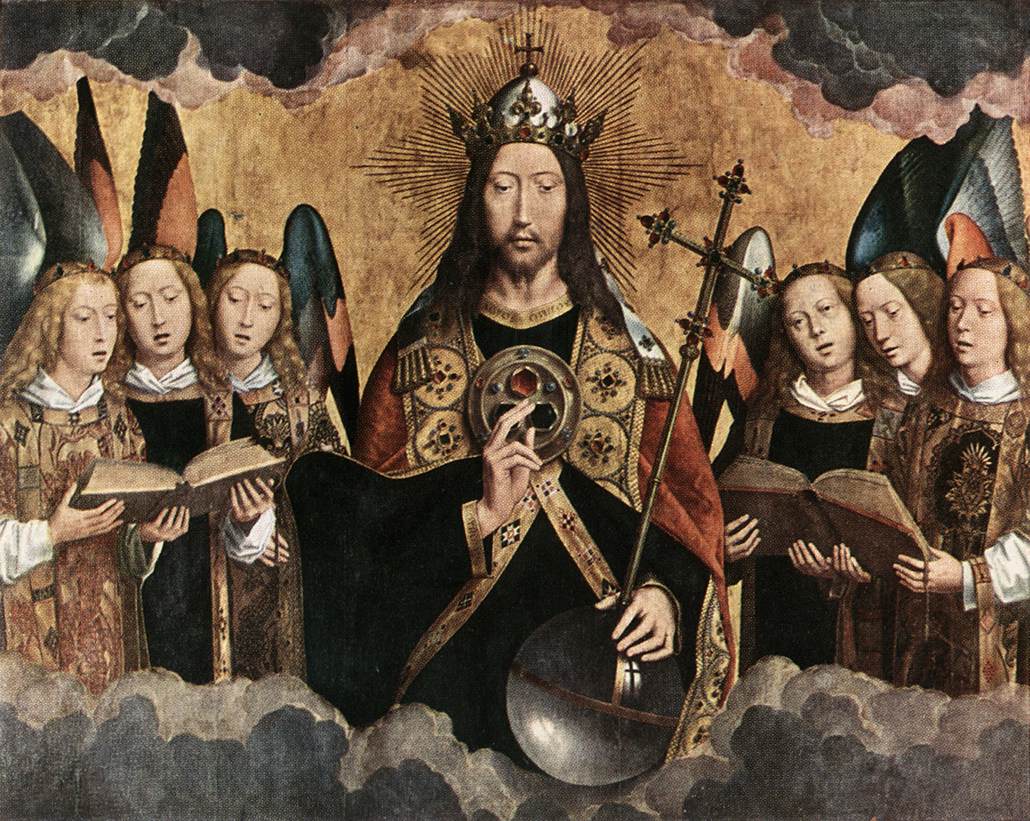
God Hath Spoken Unto Us By His Son
“God, who at sundry times and in divers manners spake in time past unto the fathers by the prophets, Hath in these last days spoken unto us by his Son, whom he hath appointed heir of all things, by whom also he made the worlds;”
Hebrews 1:1-2
The first word is “God.” The letter begins, as the whole Bible begins, with God taking the initiative. He is a God who speaks. He spoke “at sundry times” — in many portions, a little here and a little there — and “in divers manners”: through dreams and visions, through laws and sacrifices, through psalms and prophets. Every word was true. But none of it was the whole picture.
Now “in these last days” God has spoken “by his Son.” Literally, “in Son” — in one who is Son by nature. The prophets carried God’s message. Jesus is God’s message. That is why He could say, “he that hath seen me hath seen the Father” (John 14:9).
Notice the two things said of the Son in verse 2. He is the “heir of all things”: everything will one day belong to Him. And He is the One “by whom also he made the worlds.” The Son was not created with the world. He is its Creator. The same truth rings through John 1:3 and Colossians 1:16.
“The Father wrought by His Son in the creation of all heavenly beings. ‘By Him were all things created, … whether they be thrones, or dominions, or principalities, or powers: all things were created by Him, and for Him.’ Colossians 1:16. Angels are God’s ministers, radiant with the light ever flowing from His presence and speeding on rapid wing to execute His will. But the Son, the anointed of God, the ‘express image of His person,’ ‘the brightness of His glory,’ ‘upholding all things by the word of His power,’ holds supremacy over them all.”
Ellen G. White · Patriarchs and Prophets, p. 34
The Brightness Of His Glory
“Who being the brightness of his glory, and the express image of his person, and upholding all things by the word of his power, when he had by himself purged our sins, sat down on the right hand of the Majesty on high; Being made so much better than the angels, as he hath by inheritance obtained a more excellent name than they.”
Hebrews 1:3-4
Verse 3 is one of the fullest statements of who Jesus is anywhere in Scripture. He is “the brightness of his glory” — the radiance streaming out from God, as light streams from the sun. You never have the sun without its light; the Father has never been without the Son. He is “the express image of his person” — the exact imprint, like the image a seal leaves in wax. Everything that God is, the Son perfectly represents. And He is “upholding all things by the word of his power.” The universe does not run by itself. It is held together, moment by moment, by the word of Christ.
Then comes the astonishing turn. This One, the Creator and Sustainer of all things, “by himself purged our sins.” He did it alone; no one helped Him. And having finished it, He “sat down on the right hand of the Majesty on high.” Sitting down means the sacrifice is complete. As we will see later in the letter, He now ministers there as our High Priest, applying that one finished sacrifice for us.
Because He is the Son, He has life in Himself. It was never given to Him, never begun. Ellen White put it in a single sentence:
“In Christ is life, original, unborrowed, underived.”
Ellen G. White · The Desire of Ages, p. 530
So Much Better Than The Angels
“For unto which of the angels said he at any time, Thou art my Son, this day have I begotten thee? And again, I will be to him a Father, and he shall be to me a Son? And again, when he bringeth in the firstbegotten into the world, he saith, And let all the angels of God worship him. And of the angels he saith, Who maketh his angels spirits, and his ministers a flame of fire.”
Hebrews 1:5-7
“Better” is the key word of Hebrews, and it appears here for the first time. Why begin by comparing Jesus with angels? Because the Jewish believers honoured angels highly: the law itself had been delivered with the ministry of angels (Acts 7:53; Hebrews 2:2). If Jesus is greater than the angels, He is greater than everything that came through them.
The writer proves it from the Old Testament, quoting seven passages in a row. God never said to any angel, “Thou art my Son” (Psalm 2:7). “This day have I begotten thee” does not mean that the Son had a beginning; Paul applied this very verse to Christ’s resurrection, when God declared Him to be the Son with power (Acts 13:33; Romans 1:4). “Firstbegotten” is likewise a title of rank, the first place in the family, as when God called Israel “my firstborn” (Exodus 4:22).
And when the Son enters the world, God commands, “let all the angels of God worship him.” Angels refuse worship for themselves (Revelation 22:8-9). Yet God commands them to worship the Son. Only God may be worshipped. The conclusion is inescapable.
“When the great sacrifice had been consummated, Christ ascended on high, refusing the adoration of angels until He had presented the request: ‘I will that they also, whom Thou hast given Me, be with Me where I am.’ John 17:24. Then with inexpressible love and power came forth the answer from the Father’s throne: ‘Let all the angels of God worship Him.’ Hebrews 1:6. Not a stain rested upon Jesus.”
Ellen G. White · The Great Controversy, p. 501
Thy Throne, O God, Is For Ever
“But unto the Son he saith, Thy throne, O God, is for ever and ever: a sceptre of righteousness is the sceptre of thy kingdom. Thou hast loved righteousness, and hated iniquity; therefore God, even thy God, hath anointed thee with the oil of gladness above thy fellows. And, Thou, Lord, in the beginning hast laid the foundation of the earth; and the heavens are the works of thine hands: They shall perish; but thou remainest; and they all shall wax old as doth a garment; And as a vesture shalt thou fold them up, and they shall be changed: but thou art the same, and thy years shall not fail.”
Hebrews 1:8-12
“But unto the Son he saith, Thy throne, O God.” Here the Father Himself addresses the Son as God, quoting Psalm 45:6-7. The angels are servants; the Son sits on an eternal throne and rules with “a sceptre of righteousness.”
Then the writer quotes Psalm 102:25-27, a psalm addressed to the LORD, Jehovah, and applies it directly to Jesus: “Thou, Lord, in the beginning hast laid the foundation of the earth.” The heavens and earth will wear out like old clothes and be changed. “But thou remainest… thou art the same.” The unchanging Creator of Psalm 102 is Jesus Christ.
The Son “loved righteousness, and hated iniquity,” and so God “anointed thee with the oil of gladness.” Ellen White connected that anointing with the cross itself:
“His abasement was the pledge of His exaltation. The blood drops of agony that from His wounded temples flowed down His face and beard were the pledge of His anointing with ‘the oil of gladness’ (Hebrews 1:9.) as our great high priest.”
Ellen G. White · The Desire of Ages, p. 734
Ministering Spirits
“But to which of the angels said he at any time, Sit on my right hand, until I make thine enemies thy footstool? Are they not all ministering spirits, sent forth to minister for them who shall be heirs of salvation?”
Hebrews 1:13-14
The final quotation is Psalm 110:1, the Old Testament verse most often quoted in the New. The Son sits at God’s right hand, waiting for the final victory over every enemy. The angels, by contrast, are not seated. They are “sent forth,” always on the move, serving.
And whom do they serve? “Them who shall be heirs of salvation.” That means us. The same mighty beings who worship the Son are sent by Him to guard and help the people He came to save. It is one of the most comforting verses in the Bible.
Notice too what angels are: created spirits, made by the Son (verse 7), not the souls of people who have died. Scripture never says that the dead become angels. The dead “know not any thing” and rest until the resurrection (Ecclesiastes 9:5; 1 Thessalonians 4:16).
“There is a growing tendency to disbelief in the existence of evil spirits, while the holy angels that ‘minister for them who shall be heirs of salvation’ (Hebrews 1:14) are regarded by many as spirits of the dead. But the Scriptures not only teach the existence of angels, both good and evil, but present unquestionable proof that these are not disembodied spirits of dead men.”
Ellen G. White · The Great Controversy, p. 511
So the letter’s opening chapter sets the stage for everything that follows. God has spoken His final word in His Son. That Son is the Creator, the radiance of God’s glory, the One who purged our sins, the eternal King addressed as God, and the Lord of the angels. If that is who Jesus is, then turning away from Him to anything else — even to the good things of the old system — can only be a step down. That is the warning the next chapter will sound.
