Hebrews 9 walks us through the earthly sanctuary, room by room, and then lifts our eyes to the heavenly one. The tabernacle’s two apartments, the daily service and the yearly Day of Atonement, all pointed to Christ. He entered heaven “by his own blood,” obtaining eternal redemption. “Without shedding of blood is no remission,” and even “the heavenly things themselves” must be purified by His better sacrifice. And the chapter ends with the great hope: “unto them that look for him shall he appear the second time without sin unto salvation.”
A study in Hebrews 9 · Arthur Baldwin · StandUp4Jesus.Org · 20 min read
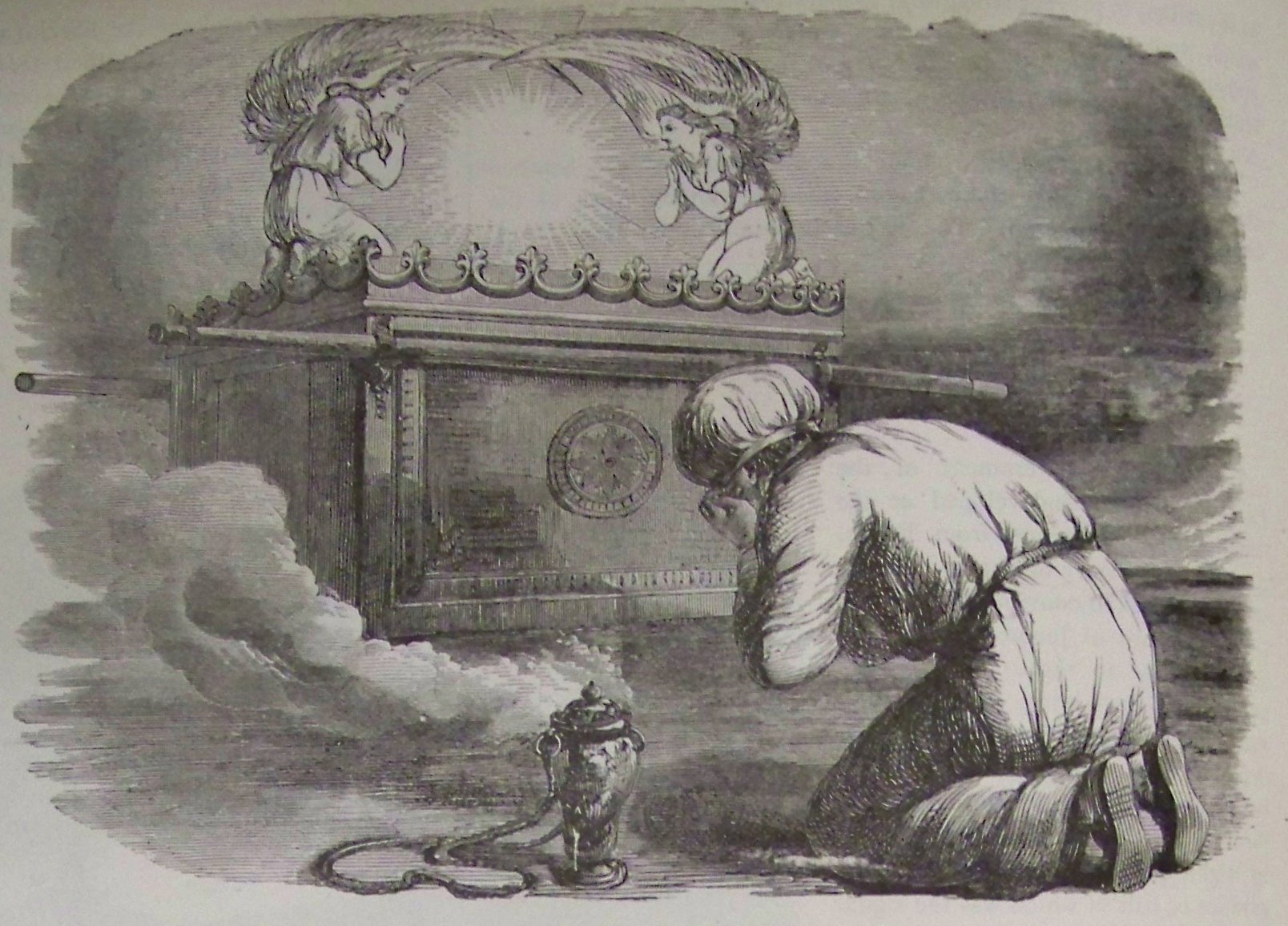
A Worldly Sanctuary
“Then verily the first covenant had also ordinances of divine service, and a worldly sanctuary. For there was a tabernacle made; the first, wherein was the candlestick, and the table, and the shewbread; which is called the sanctuary. And after the second veil, the tabernacle which is called the Holiest of all; Which had the golden censer, and the ark of the covenant overlaid round about with gold, wherein was the golden pot that had manna, and Aaron’s rod that budded, and the tables of the covenant; And over it the cherubims of glory shadowing the mercyseat; of which we cannot now speak particularly.”
Hebrews 9:1-5
“A worldly sanctuary” means an earthly one, a sanctuary belonging to this world. The writer describes its two rooms. The first, the holy place, held the golden candlestick and the table with the shewbread. Beyond the second veil lay the most holy place, “the Holiest of all,” with the ark of the covenant. Inside the ark were the tables of the covenant — the Ten Commandments written by God’s own finger — and above them was the mercy seat, overshadowed by golden cherubim. There God’s presence dwelt.
(The “golden censer” in verse 4 is probably the golden altar of incense. It stood in the holy place, just before the veil, but was closely tied to the most holy place and its yearly service, Exodus 30:6; Leviticus 16:12-13.)
“Now when these things were thus ordained, the priests went always into the first tabernacle, accomplishing the service of God. But into the second went the high priest alone once every year, not without blood, which he offered for himself, and for the errors of the people: The Holy Ghost this signifying, that the way into the holiest of all was not yet made manifest, while as the first tabernacle was yet standing: Which was a figure for the time then present, in which were offered both gifts and sacrifices, that could not make him that did the service perfect, as pertaining to the conscience; Which stood only in meats and drinks, and divers washings, and carnal ordinances, imposed on them until the time of reformation.”
Hebrews 9:6-10
The two rooms had two kinds of service. Every day the priests ministered in the first apartment. But only once a year, on the Day of Atonement, the high priest alone entered the second, “not without blood.”
“The ministration of the earthly sanctuary consisted of two divisions; the priests ministered daily in the holy place, while once a year the high priest performed a special work of atonement in the most holy, for the cleansing of the sanctuary. Day by day the repentant sinner brought his offering to the door of the tabernacle and, placing his hand upon the victim’s head, confessed his sins, thus in figure transferring them from himself to the innocent sacrifice. The animal was then slain.”
Ellen G. White · The Great Controversy, p. 418
The whole system was “a figure for the time then present.” Its sacrifices “could not make him that did the service perfect, as pertaining to the conscience.” They could cleanse ritually, but they could not cleanse the heart. They were “carnal ordinances” — regulations about food, drink and ceremonial washings — “imposed on them until the time of reformation,” until Christ came to set things right.
By His Own Blood
“But Christ being come an high priest of good things to come, by a greater and more perfect tabernacle, not made with hands, that is to say, not of this building; Neither by the blood of goats and calves, but by his own blood he entered in once into the holy place, having obtained eternal redemption for us. For if the blood of bulls and of goats, and the ashes of an heifer sprinkling the unclean, sanctifieth to the purifying of the flesh: How much more shall the blood of Christ, who through the eternal Spirit offered himself without spot to God, purge your conscience from dead works to serve the living God?”
Hebrews 9:11-14
“But Christ.” Everything the earthly high priest did in a tent made with hands, Christ does in “a greater and more perfect tabernacle, not made with hands.” The earthly priest brought the blood of animals; Christ entered “by his own blood.” The earthly priest had to repeat his work every year; Christ “entered in once,” obtaining “eternal redemption.”
“The holy place” in verse 12 translates a Greek plural, literally “the holy places,” the same word used for the sanctuary as a whole (8:2). At His ascension Christ entered the heavenly sanctuary to begin His ministry there as our High Priest.
“After His ascension our Saviour began His work as our high priest. Says Paul: ‘Christ is not entered into the holy places made with hands, which are the figures of the true; but into heaven itself, now to appear in the presence of God for us.’ Hebrews 9:24.”
Ellen G. White · The Great Controversy, p. 420
And His blood does what animal blood never could: it purges “your conscience from dead works to serve the living God.” The guilt is truly taken away, and the forgiven sinner is set free to serve.
The Mediator Of The New Testament
“And for this cause he is the mediator of the new testament, that by means of death, for the redemption of the transgressions that were under the first testament, they which are called might receive the promise of eternal inheritance. For where a testament is, there must also of necessity be the death of the testator. For a testament is of force after men are dead: otherwise it is of no strength at all while the testator liveth. Whereupon neither the first testament was dedicated without blood. For when Moses had spoken every precept to all the people according to the law, he took the blood of calves and of goats, with water, and scarlet wool, and hyssop, and sprinkled both the book, and all the people, Saying, This is the blood of the testament which God hath enjoined unto you. Moreover he sprinkled with blood both the tabernacle, and all the vessels of the ministry. And almost all things are by the law purged with blood; and without shedding of blood is no remission.”
Hebrews 9:15-22
The same Greek word means both “covenant” and “testament,” a will. A will takes effect only when the one who made it dies. Christ’s death put the new covenant into force. And notice verse 15: His death reached backward too, “for the redemption of the transgressions that were under the first testament.” Every believer before the cross was saved by the same sacrifice, looked forward to in faith.
Even the first covenant was sealed with blood. At Sinai Moses read the law, the people pledged to obey, and he sprinkled them and the book with blood, saying, “This is the blood of the testament” (Exodus 24:8). Jesus used almost the same words at the Last Supper: “this is my blood of the new testament” (Matthew 26:28). And then the principle behind it all: “without shedding of blood is no remission.” Sin is so serious that it costs a life. Forgiveness is free to us, but it was never cheap.
The Heavenly Things Themselves
“It was therefore necessary that the patterns of things in the heavens should be purified with these; but the heavenly things themselves with better sacrifices than these. For Christ is not entered into the holy places made with hands, which are the figures of the true; but into heaven itself, now to appear in the presence of God for us:”
Hebrews 9:23-24
Verse 23 is remarkable. The earthly sanctuary, “the patterns of things in the heavens,” had to be purified with animal blood. That happened every year on the Day of Atonement, when the sanctuary was cleansed of the sins that had been brought into it through the daily sacrifices (Leviticus 16:16, 30). “But the heavenly things themselves” must also be purified, “with better sacrifices than these” — that is, with the blood of Christ.
“But can there be anything in heaven to be cleansed? In Hebrews 9 the cleansing of both the earthly and the heavenly sanctuary is plainly taught. … The cleansing, both in the typical and in the real service, must be accomplished with blood: in the former, with the blood of animals; in the latter, with the blood of Christ.”
Ellen G. White · The Great Controversy, p. 417
Why would heaven need cleansing? Not because anything there is impure in itself, but because the record of confessed sins has been carried there through the blood of Christ, just as the sins of repentant Israelites were carried into the earthly sanctuary through the blood of the offerings. Before sin is finally put away forever, that record must be dealt with. Daniel’s prophecy of the 2,300 days pointed to the time when that work would begin: “then shall the sanctuary be cleansed” (Daniel 8:14).
“As anciently the sins of the people were by faith placed upon the sin offering and through its blood transferred, in figure, to the earthly sanctuary, so in the new covenant the sins of the repentant are by faith placed upon Christ and transferred, in fact, to the heavenly sanctuary. And as the typical cleansing of the earthly was accomplished by the removal of the sins by which it had been polluted, so the actual cleansing of the heavenly is to be accomplished by the removal, or blotting out, of the sins which are there recorded.”
Ellen G. White · The Great Controversy, p. 421
And through it all, Christ is there “now to appear in the presence of God for us.” Not for Himself. For us.
He Shall Appear The Second Time
“Nor yet that he should offer himself often, as the high priest entereth into the holy place every year with blood of others; For then must he often have suffered since the foundation of the world: but now once in the end of the world hath he appeared to put away sin by the sacrifice of himself. And as it is appointed unto men once to die, but after this the judgment: So Christ was once offered to bear the sins of many; and unto them that look for him shall he appear the second time without sin unto salvation.”
Hebrews 9:25-28
Christ’s sacrifice is never repeated. “Once” is the key word of these verses. He appeared once to put away sin. He was once offered. Any teaching that Christ must be sacrificed again and again denies what this chapter so plainly says.
“It is appointed unto men once to die, but after this the judgment.” We live once and die once. There is no reincarnation, and no second chance after death. The dead do not drift through purgatory or wander as spirits; they rest until the resurrection, and their eternal destiny has been settled by the life they lived and the Saviour they trusted or rejected.
Notice the three “appearings” in these verses. Christ “hath appeared” once, at the cross (verse 26). He is appearing “now… in the presence of God for us” (verse 24). And He “shall appear the second time” (verse 28). Just as Israel waited outside the tabernacle on the Day of Atonement for the high priest to come out again, so God’s people today wait for their High Priest to come out of the heavenly sanctuary and return.
“In the typical service the high priest, having made the atonement for Israel, came forth and blessed the congregation. So Christ, at the close of His work as mediator, will appear, ‘without sin unto salvation’ (Hebrews 9:28), to bless His waiting people with eternal life.”
Ellen G. White · The Great Controversy, p. 485
When He comes the second time, it will be “without sin” — not to deal with sin again, for that was finished at the cross and in His ministry above, but “unto salvation,” to bring His people home. And the promise is for “them that look for him.” May we be among them.