2 Peter 1 is the apostle’s farewell. Knowing that he must shortly “put off this my tabernacle,” Peter reminds the believers of what God has already given them: “exceeding great and precious promises,” by which they may become “partakers of the divine nature.” He sets before them a ladder of Christian growth, from faith up to love. And he points them to two unshakeable foundations: what he saw with his own eyes on the holy mount, and “a more sure word of prophecy,” given by holy men “moved by the Holy Ghost.”
A study in 2 Peter 1 · Arthur Baldwin · StandUp4Jesus.Org · 16 min read
Like Precious Faith
“Simon Peter, a servant and an apostle of Jesus Christ, to them that have obtained like precious faith with us through the righteousness of God and our Saviour Jesus Christ: Grace and peace be multiplied unto you through the knowledge of God, and of Jesus our Lord, According as his divine power hath given unto us all things that pertain unto life and godliness, through the knowledge of him that hath called us to glory and virtue: Whereby are given unto us exceeding great and precious promises: that by these ye might be partakers of the divine nature, having escaped the corruption that is in the world through lust.”
2 Peter 1:1-4
Peter now signs himself “Simon Peter”: the old name from the fishing boats, and the new name Jesus gave him. He is “a servant” first and “an apostle” second. And he writes to people who have “obtained like precious faith with us.” The believers of the next generation, who never saw Jesus in the flesh, have not received a second-class faith. It is the same faith, equally precious, as that of the men who walked with Him.
That faith comes “through the righteousness of God and our Saviour Jesus Christ.” In the Greek, as in Titus 2:13, one article governs both titles: our God-and-Saviour, Jesus Christ. Peter, a Jew who had recited “the LORD our God is one LORD” all his life, calls Jesus God in the first sentence of his last letter.
Then comes a remarkable claim. God’s “divine power hath given unto us all things that pertain unto life and godliness.” Nothing needed for a godly life is missing. And through His “exceeding great and precious promises,” believers may become “partakers of the divine nature.” That does not mean human beings become God. It means that God’s own character, His holiness and His love, is reproduced in us by His Spirit, as we escape “the corruption that is in the world through lust.”
Add To Your Faith
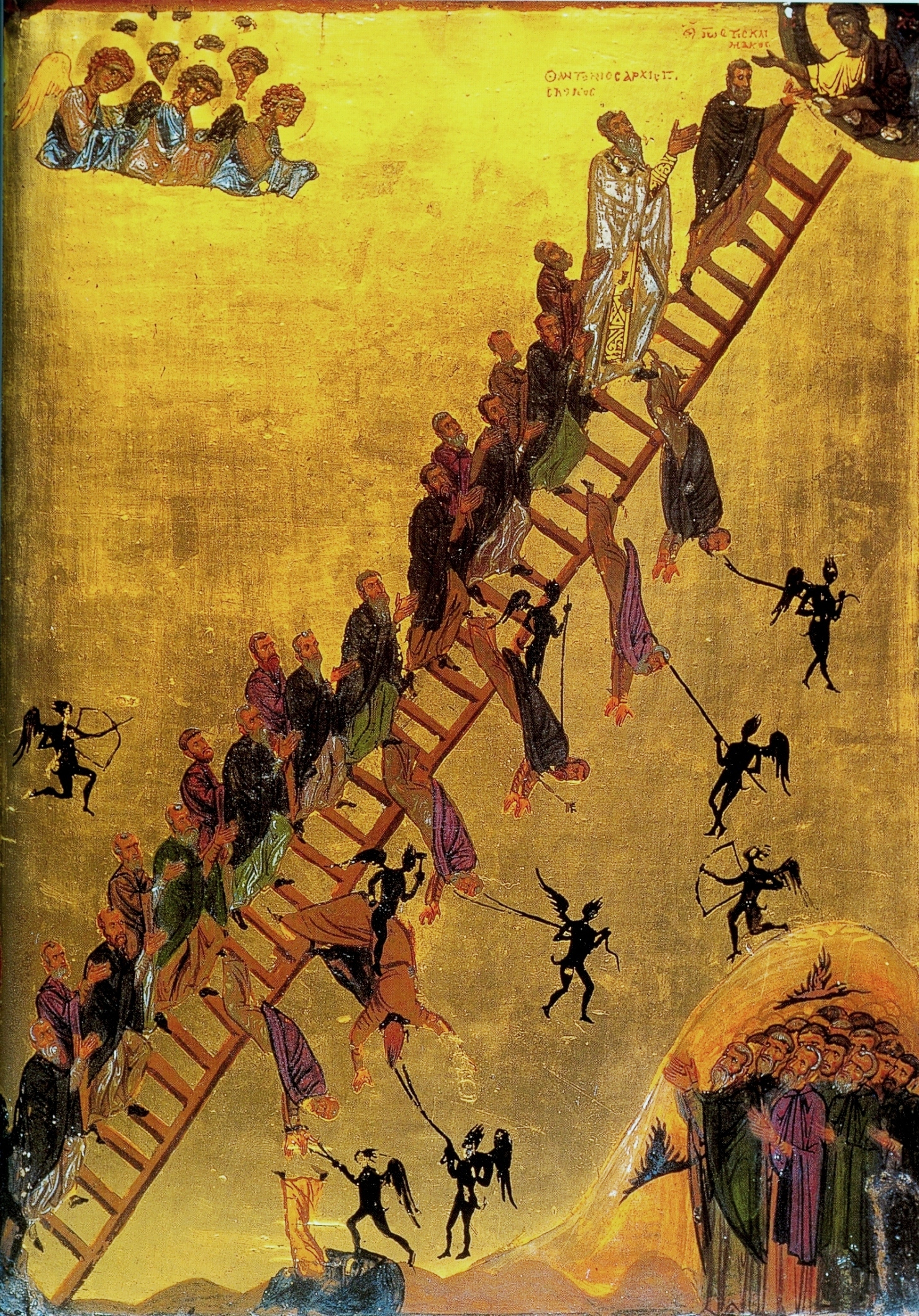
“And beside this, giving all diligence, add to your faith virtue; and to virtue knowledge; And to knowledge temperance; and to temperance patience; and to patience godliness; And to godliness brotherly kindness; and to brotherly kindness charity. For if these things be in you, and abound, they make you that ye shall neither be barren nor unfruitful in the knowledge of our Lord Jesus Christ. But he that lacketh these things is blind, and cannot see afar off, and hath forgotten that he was purged from his old sins. Wherefore the rather, brethren, give diligence to make your calling and election sure: for if ye do these things, ye shall never fall: For so an entrance shall be ministered unto you abundantly into the everlasting kingdom of our Lord and Saviour Jesus Christ.”
2 Peter 1:5-11
God has given everything. “And beside this,” Peter says, because of it, “giving all diligence,” add. Grace is not a reason to sit still. It is the power to grow. Faith is the first step, and to it the believer adds seven more: virtue (moral courage and excellence), knowledge, temperance (self-control), patience (steady endurance), godliness, brotherly kindness, and finally charity, the self-giving love of God Himself.
“These words are full of instruction, and strike the keynote of victory. The apostle presents before the believers the ladder of Christian progress, every step of which represents advancement in the knowledge of God, and in the climbing of which there is to be no standstill.”
Ellen G. White · The Acts of the Apostles, p. 530
The ladder does not earn salvation; the first rung is faith, and the believer has already been “purged from his old sins.” But a faith that never grows is in danger. The one who “lacketh these things is blind, and cannot see afar off.” He has forgotten what he was saved from. And who does the growing? Both God and the believer. We add; God multiplies. That is exactly how Peter began: “Grace and peace be multiplied unto you.”
“The work of transformation from unholiness to holiness is a continuous one. Day by day God labors for man’s sanctification, and man is to co-operate with Him, putting forth persevering efforts in the cultivation of right habits. He is to add grace to grace; and as he thus works on the plan of addition, God works for him on the plan of multiplication.”
Ellen G. White · The Acts of the Apostles, p. 532
“Give diligence to make your calling and election sure.” God’s calling is certain on His side. Peter urges believers to make it certain on theirs, by living it out. And the promise is magnificent: “if ye do these things, ye shall never fall,” and “an entrance shall be ministered unto you abundantly into the everlasting kingdom.” Not a narrow escape, but a rich welcome.
As Long As I Am In This Tabernacle
“Wherefore I will not be negligent to put you always in remembrance of these things, though ye know them, and be established in the present truth. Yea, I think it meet, as long as I am in this tabernacle, to stir you up by putting you in remembrance; Knowing that shortly I must put off this my tabernacle, even as our Lord Jesus Christ hath shewed me. Moreover I will endeavour that ye may be able after my decease to have these things always in remembrance.”
2 Peter 1:12-15
Peter’s readers already knew these things. But knowing is not the same as remembering, and remembering is not the same as living. So the old apostle keeps “putting you in remembrance.” He wants them “established in the present truth,” the truth God is emphasising for their own time. Every generation has a present truth. For Peter’s it was Christ crucified, risen and coming again, held fast against false teachers. For the last generation it includes the three angels’ messages of Revelation 14.
Peter calls his body a “tabernacle,” a tent, something temporary. “Shortly I must put off this my tabernacle, even as our Lord Jesus Christ hath shewed me.” Jesus had told him by the Sea of Galilee how he would die (John 21:18-19). Peter is not afraid. He does not speak of his soul flying off to heaven at death. His hope, all through these letters, is the day when Christ is revealed and the faithful receive “an entrance… into the everlasting kingdom” (compare 1 Peter 1:7, 13; 5:4). Until then, he wants these truths written down so that “after my decease” the church will still have them. We are reading the result.
Eyewitnesses Of His Majesty
“For we have not followed cunningly devised fables, when we made known unto you the power and coming of our Lord Jesus Christ, but were eyewitnesses of his majesty. For he received from God the Father honour and glory, when there came such a voice to him from the excellent glory, This is my beloved Son, in whom I am well pleased. And this voice which came from heaven we heard, when we were with him in the holy mount.”
2 Peter 1:16-18
The pagan world was full of myths: gods who came down, heroes who went up. Peter insists that the gospel is not one of them. “We have not followed cunningly devised fables.” He is not passing on a story he heard. He was there.
Of all the things Peter saw, he chooses the Transfiguration (Matthew 17:1-8). And he chooses it to prove one thing in particular: “the power and coming of our Lord Jesus Christ.” On that mountain the three disciples were given a preview of the second coming. They saw Jesus in the glory in which He will return, and with Him two men who represented the two groups of the redeemed on that day.
“Moses upon the mount of transfiguration was a witness to Christ’s victory over sin and death. He represented those who shall come forth from the grave at the resurrection of the just. Elijah, who had been translated to heaven without seeing death, represented those who will be living upon the earth at Christ’s second coming…. Upon the mount the future kingdom of glory was represented in miniature,—Christ the King, Moses a representative of the risen saints, and Elijah of the translated ones.”
Ellen G. White · The Desire of Ages, p. 421
Peter had wanted to build three tabernacles and stay on that mountain (Matthew 17:4). Now, at the end of his life, about to put off his own tabernacle, he understands. The glory he saw was a promise of what is coming, and he was only a witness. The voice he heard said, “This is my beloved Son, in whom I am well pleased.”
A More Sure Word Of Prophecy
“We have also a more sure word of prophecy; whereunto ye do well that ye take heed, as unto a light that shineth in a dark place, until the day dawn, and the day star arise in your hearts: Knowing this first, that no prophecy of the scripture is of any private interpretation. For the prophecy came not in old time by the will of man: but holy men of God spake as they were moved by the Holy Ghost.”
2 Peter 1:19-21
Here is something surprising. Peter has just described the most glorious experience of his life. Yet he says there is something “more sure”: the written word of prophecy. An experience, however real, belongs to one moment and a few witnesses. The prophetic word is open to every believer in every age, and its fulfilments can be checked against history. Experiences must be tested by the word, not the word by experiences.
The world is “a dark place,” and prophecy is “a light” shining in it, “until the day dawn, and the day star arise in your hearts.” The day star is Christ Himself (Revelation 22:16), and the dawn is His coming. Until then, the believer walks by the lamp of the prophetic word. In the 1840s, ordinary men and women who studied the prophecies of Daniel and Revelation came to understand the times they were living in, when many learned theologians did not.
“Had these been faithful watchmen, diligently and prayerfully searching the Scriptures, they would have known the time of night; the prophecies would have opened to them the events about to take place.”
Ellen G. White · The Great Controversy, p. 312
“No prophecy of the scripture is of any private interpretation.” The next verse explains what Peter means. He is talking about where prophecy came from. It did not originate in the prophet’s own ideas or his own reading of events. “The prophecy came not in old time by the will of man: but holy men of God spake as they were moved by the Holy Ghost.” The word Peter uses for “moved” describes a ship carried along by the wind. The prophets were real men who wrote in their own words and styles, but the Spirit carried them. That is also why no one is free to twist prophecy to suit himself. Scripture must be read in the light of Scripture, because the same Spirit stands behind it all.
“By the plan of redemption, however, a way has been opened whereby the inhabitants of the earth may still have connection with heaven. God has communicated with men by His Spirit, and divine light has been imparted to the world by revelations to His chosen servants.”
Ellen G. White · The Great Controversy, Introduction
Peter’s farewell leaves the church with two anchors: the testimony of those who saw Christ’s majesty, and the prophetic word the Holy Spirit gave. Both point to the same day, when the day star rises and the kingdom Peter glimpsed on the mountain comes in full.
