In Ecclesiastes 2 Solomon tells how he tested every source of satisfaction a king could command. He tried mirth and wine. He “made me great works”: houses, vineyards, gardens, orchards, pools of water. He gathered servants, herds, silver and gold, singers and “musical instruments, and that of all sorts.” Whatever his eyes desired, he did not refuse himself. And when he looked at it all, “behold, all was vanity and vexation of spirit, and there was no profit under the sun.” Even wisdom could not save him from the grave. Only at the end does he glimpse the answer: enjoyment itself is “from the hand of God.”
A study in Ecclesiastes 2 · Arthur Baldwin · StandUp4Jesus.Org · 15 min read
I Will Prove Thee With Mirth
“I said in mine heart, Go to now, I will prove thee with mirth, therefore enjoy pleasure: and, behold, this also is vanity. I said of laughter, It is mad: and of mirth, What doeth it? I sought in mine heart to give myself unto wine, yet acquainting mine heart with wisdom; and to lay hold on folly, till I might see what was that good for the sons of men, which they should do under the heaven all the days of their life.”
Ecclesiastes 2:1-3
Knowledge had failed to satisfy (1:16-18), so Solomon tried the opposite: pleasure. “Go to now, I will prove thee with mirth.” He deliberately set out to enjoy himself, to see whether laughter, parties and wine could give life meaning. He would keep his head, he thought, “yet acquainting mine heart with wisdom,” using pleasure without being mastered by it.
It did not work. “I said of laughter, It is mad: and of mirth, What doeth it?” Laughter that has no deeper joy beneath it is hollow. The party ends, and the emptiness is still there in the morning. And the wine, far from leaving his wisdom intact, weakened it. Solomon knew better; his own proverbs warn, “Wine is a mocker” (Proverbs 20:1). But knowing was not enough.
“Solomon was conscious of the evil growing out of the indulgence of perverted appetite, yet seemed powerless to work the required reformation. He was aware that physical strength, calm nerves, and sound morals can only be secured through temperance.”
Ellen G. White · The SDA Bible Commentary, vol. 3, p. 1165
I Made Me Great Works
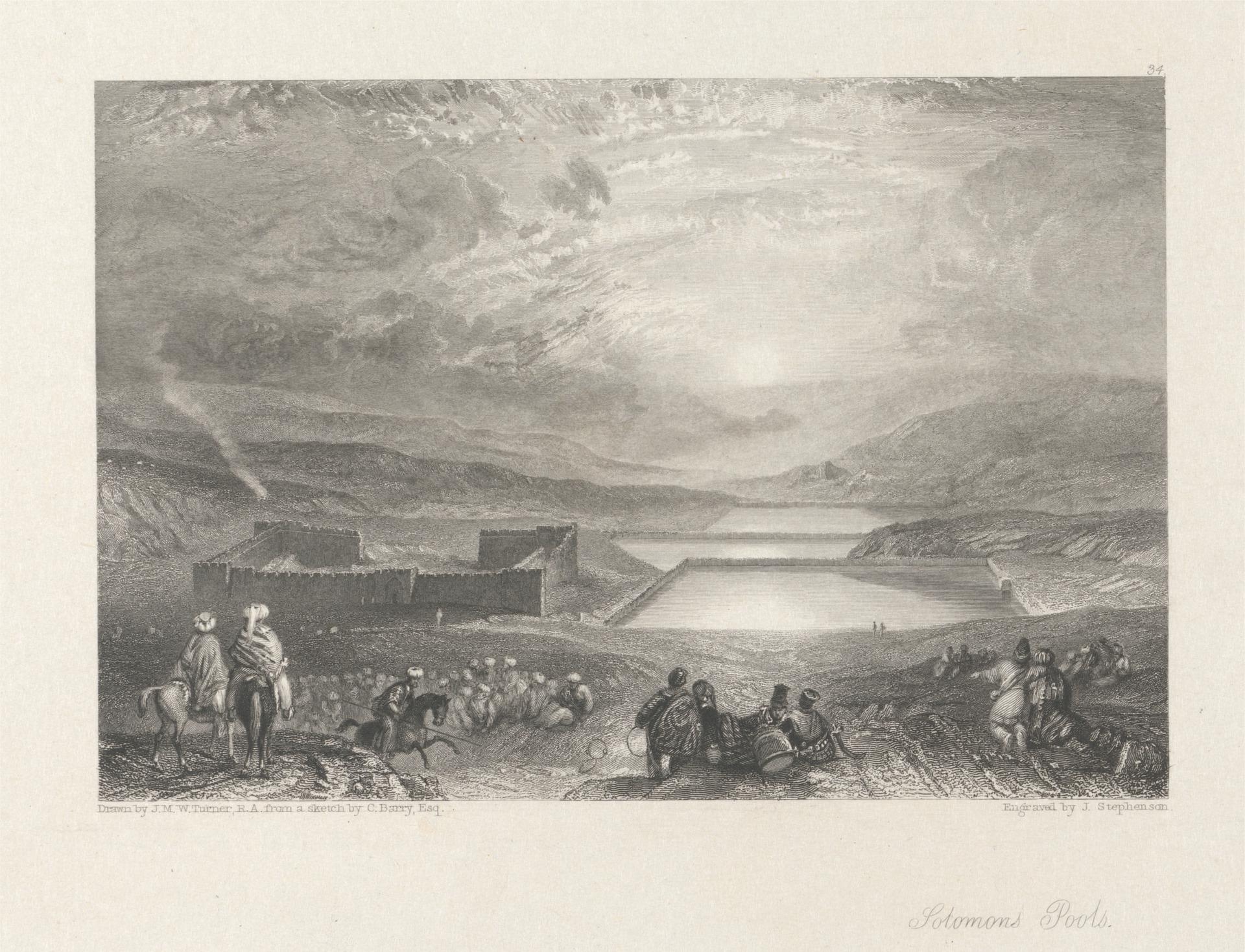
“I made me great works; I builded me houses; I planted me vineyards: I made me gardens and orchards, and I planted trees in them of all kind of fruits: I made me pools of water, to water therewith the wood that bringeth forth trees: I got me servants and maidens, and had servants born in my house; also I had great possessions of great and small cattle above all that were in Jerusalem before me: I gathered me also silver and gold, and the peculiar treasure of kings and of the provinces: I gat me men singers and women singers, and the delights of the sons of men, as musical instruments, and that of all sorts. So I was great, and increased more than all that were before me in Jerusalem: also my wisdom remained with me. And whatsoever mine eyes desired I kept not from them, I withheld not my heart from any joy; for my heart rejoiced in all my labour: and this was my portion of all my labour. Then I looked on all the works that my hands had wrought, and on the labour that I had laboured to do: and, behold, all was vanity and vexation of spirit, and there was no profit under the sun.”
Ecclesiastes 2:4-11
Next came achievement. Read the list and notice one small word that keeps repeating: “I made me,” “I builded me,” “I planted me,” “I got me,” “I gathered me.” Everything was for himself. The man who had once built a house for God (1 Kings 6) now spent thirteen years building his own palace (1 Kings 7:1).
He built houses, planted vineyards, laid out gardens and orchards, and dug great pools to water them. He gathered slaves, herds, silver and gold, the treasures of kings, singers and musicians. “So I was great.” And he denied himself nothing: “whatsoever mine eyes desired I kept not from them.” For a while it was exciting: “my heart rejoiced in all my labour.”
Then he stood back and looked. “Behold, all was vanity and vexation of spirit, and there was no profit under the sun.” The building had been satisfying. The finished buildings were not. The chase was more thrilling than the catch, and when the chase was over, nothing was left.
“By his own bitter experience, Solomon learned the emptiness of a life that seeks in earthly things its highest good. He erected altars to heathen gods, only to learn how vain is their promise of rest to the spirit. Gloomy and soul-harassing thoughts troubled him night and day.”
Ellen G. White · Prophets and Kings, p. 76
Solomon had tried every door our culture still knocks on: entertainment, success, property, wealth, luxury, sensual pleasure. He had all of them in greater measure than almost anyone in history. His testimony stands for every generation: none of them can fill the heart.
How Dieth The Wise Man?
“And I turned myself to behold wisdom, and madness, and folly: for what can the man do that cometh after the king? even that which hath been already done. Then I saw that wisdom excelleth folly, as far as light excelleth darkness. The wise man’s eyes are in his head; but the fool walketh in darkness: and I myself perceived also that one event happeneth to them all. Then said I in my heart, As it happeneth to the fool, so it happeneth even to me; and why was I then more wise? Then I said in my heart, that this also is vanity. For there is no remembrance of the wise more than of the fool for ever; seeing that which now is in the days to come shall all be forgotten. And how dieth the wise man? as the fool. Therefore I hated life; because the work that is wrought under the sun is grievous unto me: for all is vanity and vexation of spirit.”
Ecclesiastes 2:12-17
Solomon compares wisdom and folly once more. Wisdom is clearly better: “wisdom excelleth folly, as far as light excelleth darkness.” The wise man sees where he is going; the fool stumbles in the dark. But then Solomon sees the problem that no amount of wisdom can solve: “one event happeneth to them all.” The wise man and the fool both die. “And how dieth the wise man? as the fool.”
If death is the end of the story, then wisdom, however bright, only lights the way to the same grave. That thought brought Solomon to his lowest point: “Therefore I hated life.” A man who had everything the world could give found life hateful, because he had left out the only One who can answer death.
“Yea, I hated all my labour which I had taken under the sun: because I should leave it unto the man that shall be after me. And who knoweth whether he shall be a wise man or a fool? yet shall he have rule over all my labour wherein I have laboured, and wherein I have shewed myself wise under the sun. This is also vanity. Therefore I went about to cause my heart to despair of all the labour which I took under the sun. For there is a man whose labour is in wisdom, and in knowledge, and in equity; yet to a man that hath not laboured therein shall he leave it for his portion. This also is vanity and a great evil. For what hath man of all his labour, and of the vexation of his heart, wherein he hath laboured under the sun? For all his days are sorrows, and his travail grief; yea, his heart taketh not rest in the night. This is also vanity.”
Ecclesiastes 2:18-23
There was one more bitterness. Everything he had built he must leave behind, and “who knoweth whether he shall be a wise man or a fool?” Solomon’s worry was well founded. His son Rehoboam answered the people’s plea with harshness, and within days ten tribes broke away (1 Kings 12). The kingdom Solomon had built was torn in two in the first year of his son’s reign.
“His heart taketh not rest in the night.” Wealth brings worry, not rest. Jesus told of a rich man who planned bigger barns and said to his soul, “take thine ease.” God said to him, “Thou fool, this night thy soul shall be required of thee: then whose shall those things be?” (Luke 12:19-20).
“But all this did not bring happiness to the king. He sat upon his magnificent throne, his frowning countenance dark with despair.”
Ellen G. White · The SDA Bible Commentary, vol. 3, p. 1165
From The Hand Of God
“There is nothing better for a man, than that he should eat and drink, and that he should make his soul enjoy good in his labour. This also I saw, that it was from the hand of God. For who can eat, or who else can hasten hereunto, more than I? For God giveth to a man that is good in his sight wisdom, and knowledge, and joy: but to the sinner he giveth travail, to gather and to heap up, that he may give to him that is good before God. This also is vanity and vexation of spirit.”
Ecclesiastes 2:24-26
Then, at the end of the chapter, a new note appears. For the first time Solomon brings God into the picture. “There is nothing better for a man, than that he should eat and drink, and that he should make his soul enjoy good in his labour. This also I saw, that it was from the hand of God.”
This is not the pleasure-seeking he began with. It is something different: receiving life’s ordinary gifts, food, drink and honest work, as gifts from God’s hand. The same bread that bored Solomon when he lived for himself becomes a joy when it is received with thanks from a Father. Contentment is not found in having more. It is found in knowing the Giver.
“His conclusion is that it is wisdom to enjoy with gratitude the good gifts of God, and to do right; for all our works will be brought into judgment.”
Ellen G. White · The SDA Bible Commentary, vol. 3, p. 1164
“God giveth to a man that is good in his sight wisdom, and knowledge, and joy.” These were the very things Solomon had tried to seize for himself. They cannot be taken; they can only be received. And the sinner who spends his life gathering and heaping up ends by leaving it all to others. Solomon had learned the lesson Jesus later taught: “Seek ye first the kingdom of God, and his righteousness; and all these things shall be added unto you” (Matthew 6:33).
