Jesus gave His church two ordinances: baptism, which begins the Christian life, and the Lord’s Supper, which renews it. Baptism is often described as dying with Christ, and it is. But it is much more: it is a public vow to live only for Him, to belong to Him. And the Communion service is far more than a ritual of bread and juice. It is a recognition of everything Jesus said about Himself as the Bread of Life in John 6, and more. This study looks at what the Bible teaches about both.
A Bible study · Arthur Baldwin · StandUp4Jesus.Org · 12 min read
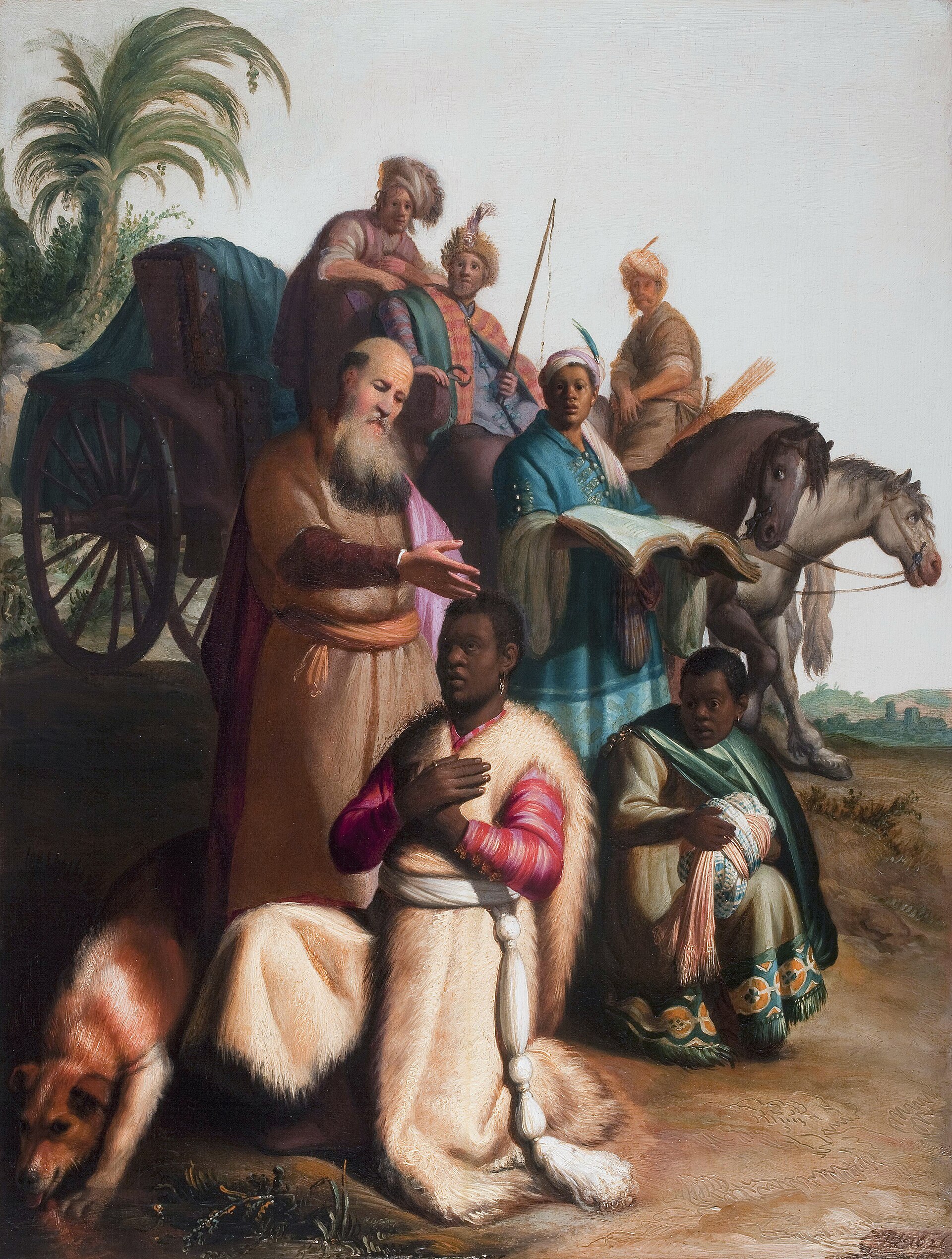
Baptism: Buried With Christ
Paul explains the meaning of baptism in one of the most important passages in the New Testament:
“Know ye not, that so many of us as were baptized into Jesus Christ were baptized into his death? Therefore we are buried with him by baptism into death: that like as Christ was raised up from the dead by the glory of the Father, even so we also should walk in newness of life. For if we have been planted together in the likeness of his death, we shall be also in the likeness of his resurrection: Knowing this, that our old man is crucified with him, that the body of sin might be destroyed, that henceforth we should not serve sin.”
Romans 6:3-6
Going down into the water is a burial. The old life, the old self, the old way of thinking, is laid in the grave. Coming up out of the water is a resurrection. That is why the Bible’s baptisms were by immersion: Jesus “went up straightway out of the water” (Matthew 3:16), John baptized “because there was much water there” (John 3:23), and Philip and the Ethiopian “went down both into the water” (Acts 8:38). Sprinkling cannot picture a burial.
(See The Wages Of Sin Is Death on Romans 6 and He Went On His Way Rejoicing on Acts 8.)
More Than Dying: Living Only For Him
Many people stop there, as if baptism were only about death. But look at why Paul says we are buried: “that like as Christ was raised up from the dead by the glory of the Father, even so we also should walk in newness of life” (Romans 6:4). The burial is for the sake of the new life. Paul says it even more plainly elsewhere:
“And that he died for all, that they which live should not henceforth live unto themselves, but unto him which died for them, and rose again.”
2 Corinthians 5:15
“I am crucified with Christ: nevertheless I live; yet not I, but Christ liveth in me: and the life which I now live in the flesh I live by the faith of the Son of God, who loved me, and gave himself for me.”
Galatians 2:20
Baptism is not only saying “I am finished with sin.” It is saying “From now on I live for Jesus, and only for Him.” It is not the end of something. It is the beginning of belonging.
“The vows which we take upon ourselves in baptism embrace much. In the name of the Father, the Son, and the Holy Spirit we are buried in the likeness of Christ’s death and raised in the likeness of His resurrection, and we are to live a new life. Our life is to be bound up with the life of Christ.”
Ellen G. White · Testimonies for the Church, vol. 6, p. 98
Now I Belong To Him
Baptism is a change of ownership. Before, we belonged to ourselves, or to sin. After, we belong to Jesus:
“For whether we live, we live unto the Lord; and whether we die, we die unto the Lord: whether we live therefore, or die, we are the Lord’s.”
Romans 14:8
“What? know ye not that your body is the temple of the Holy Ghost which is in you, which ye have of God, and ye are not your own? For ye are bought with a price: therefore glorify God in your body, and in your spirit, which are God’s.”
1 Corinthians 6:19-20
The study Now I Belong To Jesus! on this site, built around Norman Clayton’s much-loved hymn, compares this to a marriage. A husband and wife who truly love each other do not keep a list of their sacrifices. The real sacrifice was made when they took their vows; everything after that is simply living out what they promised. Baptism is those vows. “For as many of you as have been baptized into Christ have put on Christ” (Galatians 3:27). We take His name, and we are His, “not for the years of time alone,” as the hymn says, “but for eternity.”
“He has made a covenant with God. He has died to the world. He is to live to the Lord, to use for Him all his entrusted capabilities, never losing the realization that he bears God’s signature, that he is a subject of Christ’s kingdom, a partaker of the divine nature. He is to surrender to God all that he is and all that he has, employing all his gifts to His name’s glory.”
Ellen G. White · Testimonies for the Church, vol. 6, p. 98
(See also The Bible Sabbath: the Sabbath is the weekly sign that we belong to Him, as baptism is the once-for-all sign.)
Who Should Be Baptized?
Jesus sent His disciples to “teach all nations, baptizing them in the name of the Father, and of the Son, and of the Holy Ghost: teaching them to observe all things whatsoever I have commanded you” (Matthew 28:19-20). Teaching comes first. Baptism is for those who have heard the gospel, believed it and chosen to follow Jesus:
“Then Peter said unto them, Repent, and be baptized every one of you in the name of Jesus Christ for the remission of sins, and ye shall receive the gift of the Holy Ghost.”
Acts 2:38
“And as they went on their way, they came unto a certain water: and the eunuch said, See, here is water; what doth hinder me to be baptized? And Philip said, If thou believest with all thine heart, thou mayest. And he answered and said, I believe that Jesus Christ is the Son of God.”
Acts 8:36-37
A baby cannot repent, believe or make a vow, which is why the Bible’s baptisms were always of believers. Parents can dedicate their children to God, as Hannah did Samuel, and pray for the day when those children choose baptism for themselves.
“Baptism is a most solemn renunciation of the world. Those who are baptized in the threefold name of the Father, the Son, and the Holy Spirit, at the very entrance of their Christian life declare publicly that they have forsaken the service of Satan and have become members of the royal family, children of the heavenly King.”
Ellen G. White · Testimonies for the Church, vol. 6, p. 91
“Members of the royal family.” Baptism is the doorway into the royal priesthood (see Melchizedek Message).
And if you are waiting to become “good enough” first, hear what Ananias told Saul: “And now why tarriest thou? arise, and be baptized, and wash away thy sins, calling on the name of the Lord” (Acts 22:16). You come to baptism because you need cleansing, not because you have earned it.
The Lord’s Supper Begins With Washing Feet
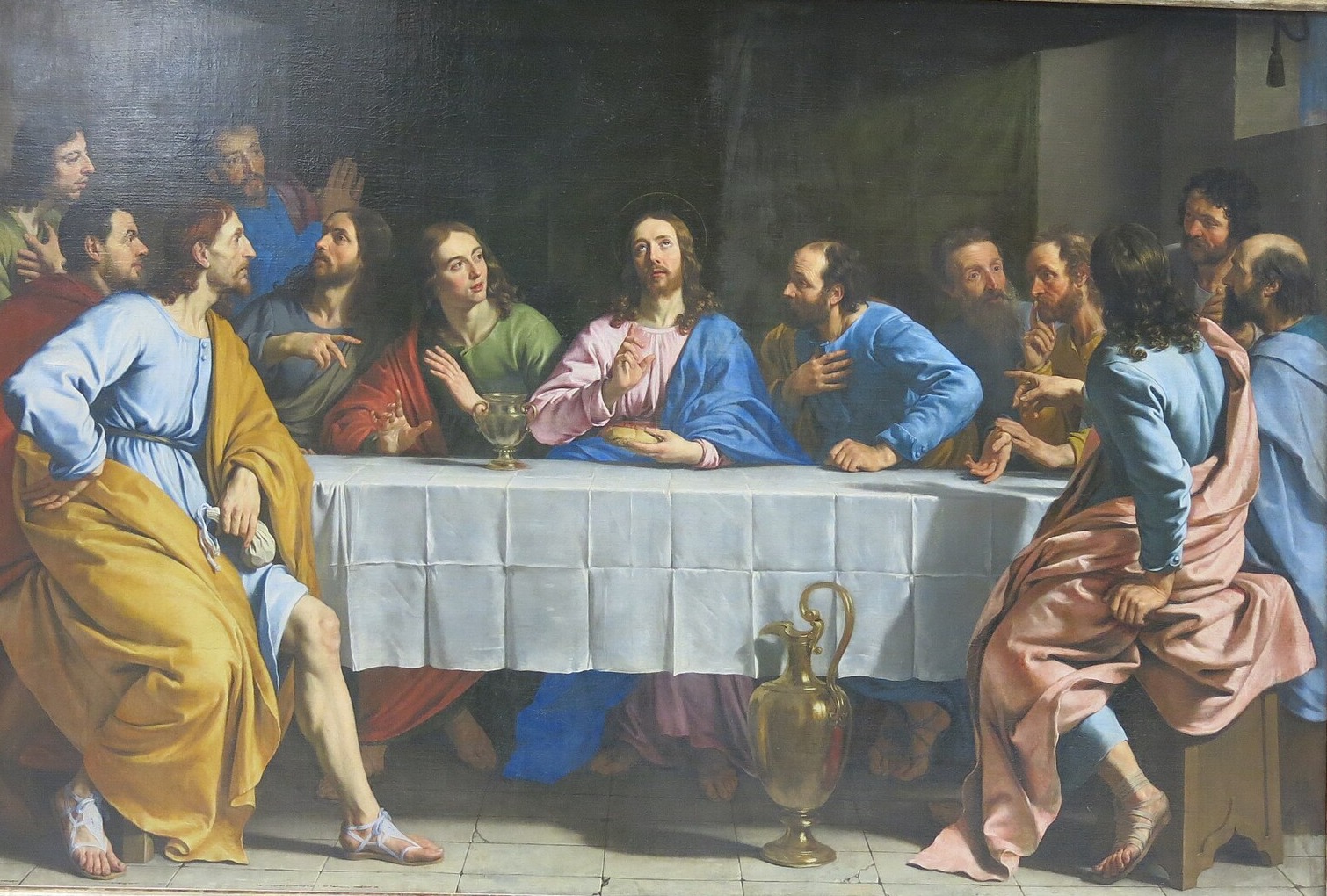
On the night before the cross, the disciples came to supper still arguing about which of them was the greatest. Before Jesus gave them the bread and the cup, He took a towel and a basin and washed their feet:
“If I then, your Lord and Master, have washed your feet; ye also ought to wash one another’s feet. For I have given you an example, that ye should do as I have done to you.”
John 13:14-15
Seventh-day Adventists still follow that example before every Communion service. It is sometimes called the ordinance of humility, or a “little baptism”: a chance to put away pride, make things right with one another and come to the table with a clean heart.
“This ordinance is Christ’s appointed preparation for the sacramental service. While pride, variance, and strife for supremacy are cherished, the heart cannot enter into fellowship with Christ. We are not prepared to receive the communion of His body and His blood.”
Ellen G. White · The Desire of Ages, p. 650
The Bread Of Life: John 6
A year before the Last Supper, the day after He fed five thousand people, Jesus told the crowd what that miracle meant:
“And Jesus said unto them, I am the bread of life: he that cometh to me shall never hunger; and he that believeth on me shall never thirst.”
John 6:35
“I am the living bread which came down from heaven: if any man eat of this bread, he shall live for ever: and the bread that I will give is my flesh, which I will give for the life of the world.”
John 6:51
Then He said the words that drove many of His followers away:
“Then Jesus said unto them, Verily, verily, I say unto you, Except ye eat the flesh of the Son of man, and drink his blood, ye have no life in you. Whoso eateth my flesh, and drinketh my blood, hath eternal life; and I will raise him up at the last day. For my flesh is meat indeed, and my blood is drink indeed. He that eateth my flesh, and drinketh my blood, dwelleth in me, and I in him.”
John 6:53-56
He was not talking about cannibalism, and He was not talking about a ritual that changes bread into flesh. He explained it Himself a few verses later:
“It is the spirit that quickeneth; the flesh profiteth nothing: the words that I speak unto you, they are spirit, and they are life.”
John 6:63
“To eat the flesh and drink the blood of Christ is to receive Him as a personal Saviour, believing that He forgives our sins, and that we are complete in Him. It is by beholding His love, by dwelling upon it, by drinking it in, that we are to become partakers of His nature. What food is to the body, Christ must be to the soul.”
Ellen G. White · The Desire of Ages, p. 389
Every time we take the bread and the cup, we are saying yes to everything Jesus said in John 6: that He is the Bread from heaven, that without Him we have no life, that we live by feeding on Him every day through His word, and that He will raise us up at the last day. (See I Am The Bread Of Life.)
And More
The Lord’s Supper points in every direction at once.
It Looks Back To The Cross
“For I have received of the Lord that which also I delivered unto you, That the Lord Jesus the same night in which he was betrayed took bread: And when he had given thanks, he brake it, and said, Take, eat: this is my body, which is broken for you: this do in remembrance of me. After the same manner also he took the cup, when he had supped, saying, This cup is the new testament in my blood: this do ye, as oft as ye drink it, in remembrance of me. For as often as ye eat this bread, and drink this cup, ye do shew the Lord’s death till he come.”
1 Corinthians 11:23-26
The bread is His body, broken. The cup is His blood, the blood of the new covenant. Jesus ate the Passover and then replaced it; He is the Lamb that every Passover lamb pointed to. That is why the bread is unleavened and the cup is unfermented grape juice: leaven and fermentation are pictures of sin and decay, and nothing corrupted could picture the sinless Lamb.
“The Passover wine, untouched by fermentation, is on the table. These emblems Christ employs to represent His own unblemished sacrifice. Nothing corrupted by fermentation, the symbol of sin and death, could represent the ‘Lamb without blemish and without spot.’”
Ellen G. White · The Desire of Ages, p. 653
It Looks Forward To His Coming
“Ye do shew the Lord’s death till he come.” And Jesus promised He would not drink the cup again “until that day when I drink it new with you in my Father’s kingdom” (Matthew 26:29). Every Communion service is a rehearsal for the marriage supper of the Lamb (see The Millennium).
It Looks Around At The Church
“For we being many are one bread, and one body: for we are all partakers of that one bread” (1 Corinthians 10:17). We cannot eat together at His table and hold a grudge against the one sitting beside us.
It Looks Within
“But let a man examine himself, and so let him eat of that bread, and drink of that cup.”
1 Corinthians 11:28
But self-examination is not meant to keep us away. Jesus washed the feet of Judas and offered him the bread. The table is for sinners who know they need Him.
“But the Communion service was not to be a season of sorrowing. This was not its purpose.”
Ellen G. White · The Desire of Ages, p. 659
It Makes Every Meal Sacred
This is the “and more.” Jesus did not only give us a service to hold a few times a year. He showed us that every piece of bread we eat was bought by His sacrifice:
“To the death of Christ we owe even this earthly life. The bread we eat is the purchase of His broken body. The water we drink is bought by His spilled blood. Never one, saint or sinner, eats his daily food, but he is nourished by the body and the blood of Christ. The cross of Calvary is stamped on every loaf. It is reflected in every water spring.”
Ellen G. White · The Desire of Ages, p. 660
(See This Do In Remembrance Of Me on 1 Corinthians 11 and The Health Message.)
Two Ordinances, One Life
Baptism happens once: the day we take our vows and begin to belong to Jesus. The Lord’s Supper happens again and again: the times we come back to the table to renew those vows, wash one another’s feet and feed again on the Bread of Life. Both say the same thing. We are not our own. Now we belong to Jesus.
If you have never been baptized, “why tarriest thou?” Talk to a pastor, study the Bible together, and take the step. And read Now I Belong To Jesus! to see what that belonging looks like day by day.
Keep Studying
- Now I Belong To Jesus!
- The Wages Of Sin Is Death: Romans 6, buried with Him
- I Am The Bread Of Life: John 6
- This Do In Remembrance Of Me: 1 Corinthians 11
- This Is My Beloved Son: Matthew 3, the baptism of Jesus
- This Jesus Hath God Raised Up: Acts 2, three thousand baptized
- The Holy Spirit
