Lamentations 1 is a funeral song for Jerusalem. The city that was “full of people” sits “solitary,” “as a widow,” weeping “sore in the night” with “none to comfort her.” The poem does not hide why: “Jerusalem hath grievously sinned.” Halfway through, the city herself begins to speak, and her cry has echoed down the centuries: “Is it nothing to you, all ye that pass by? behold, and see if there be any sorrow like unto my sorrow.” And at the end comes the confession that is the first step back to God: “The LORD is righteous; for I have rebelled against his commandment.”
A study in Lamentations 1 · Arthur Baldwin · StandUp4Jesus.Org · 18 min read
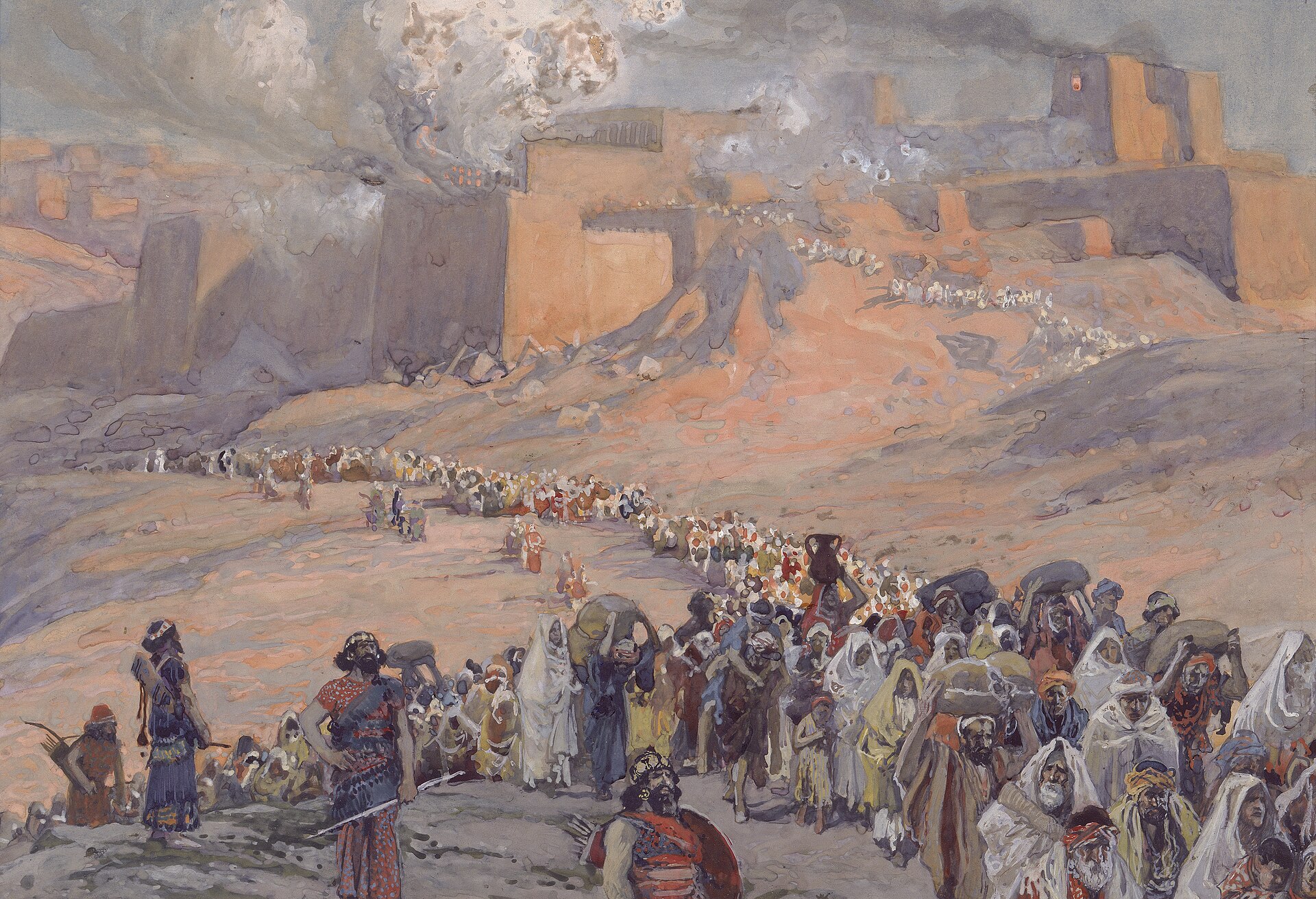
How Doth The City Sit Solitary
“How doth the city sit solitary, that was full of people! how is she become as a widow! she that was great among the nations, and princess among the provinces, how is she become tributary! She weepeth sore in the night, and her tears are on her cheeks: among all her lovers she hath none to comfort her: all her friends have dealt treacherously with her, they are become her enemies. Judah is gone into captivity because of affliction, and because of great servitude: she dwelleth among the heathen, she findeth no rest: all her persecutors overtook her between the straits. The ways of Zion do mourn, because none come to the solemn feasts: all her gates are desolate: her priests sigh, her virgins are afflicted, and she is in bitterness. Her adversaries are the chief, her enemies prosper; for the LORD hath afflicted her for the multitude of her transgressions: her children are gone into captivity before the enemy. And from the daughter of Zion all her beauty is departed: her princes are become like harts that find no pasture, and they are gone without strength before the pursuer. Jerusalem remembered in the days of her affliction and of her miseries all her pleasant things that she had in the days of old, when her people fell into the hand of the enemy, and none did help her: the adversaries saw her, and did mock at her sabbaths.”
Lamentations 1:1-7
The book opens with one Hebrew word, ‘ekah, “How!” It is the cry people raised over the dead, and the Jewish name for the whole book. Jerusalem has not just been defeated. She has died, and this is her funeral.
Every picture in these verses is a reversal. The city “full of people” now sits “solitary.” The “princess among the provinces” is now a slave paying tribute. The lovers she trusted, the nations Judah had courted instead of trusting God, “have dealt treacherously with her.” The roads to Zion, once crowded with pilgrims going up to the feasts, “do mourn, because none come to the solemn feasts.” And five times in this chapter the same sad refrain returns: she has “none to comfort her.”
The poem is an acrostic. Each of its 22 verses begins with the next letter of the Hebrew alphabet, as if the mourner meant to grieve “from A to Z” and leave nothing unsaid. Tradition has always heard Jeremiah’s voice in it, and the KJV titles the book “The Lamentations of Jeremiah.” Ellen White saw in it the grief of the prophet who had warned the city for forty years:
“The sorrow of the prophet over the utter perversity of those who would have been the spiritual light of the world, his sorrow over the fate of Zion and of the people carried captive to Babylon, is revealed in the lamentations he has left on record as a memorial of the folly of turning from the counsels of Jehovah to human wisdom.”
Ellen G. White · Prophets and Kings, p. 461
Notice the last line of verse 7: “the adversaries saw her, and did mock at her sabbaths.” The Sabbath was the sign of Israel’s covenant with God, and now the heathen laughed at it. But the people of Jerusalem had mocked the Sabbath first. Jeremiah had stood at the city gates and pleaded with them to keep it holy, and he had warned what would happen if they would not: “But if ye will not hearken unto me to hallow the sabbath day, and not to bear a burden, even entering in at the gates of Jerusalem on the sabbath day; then will I kindle a fire in the gates thereof, and it shall devour the palaces of Jerusalem, and it shall not be quenched” (Jeremiah 17:27).
“This promise of prosperity as the reward of allegiance was accompanied by a prophecy of the terrible judgments that would befall the city should its inhabitants prove disloyal to God and His law. If the admonitions to obey the Lord God of their fathers and to hallow His Sabbath day were not heeded, the city and its palaces would be utterly destroyed by fire.”
Ellen G. White · Prophets and Kings, p. 411
That is exactly what happened. The Bible even links the length of the captivity to the Sabbaths Israel had refused to keep: the exile came “to fulfil the word of the LORD by the mouth of Jeremiah, until the land had enjoyed her sabbaths: for as long as she lay desolate she kept sabbath, to fulfil threescore and ten years” (2 Chronicles 36:21). A people who would not rest with God were sent where they could not rest at all: “she dwelleth among the heathen, she findeth no rest.”
Jerusalem Hath Grievously Sinned
“Jerusalem hath grievously sinned; therefore she is removed: all that honoured her despise her, because they have seen her nakedness: yea, she sigheth, and turneth backward. Her filthiness is in her skirts; she remembereth not her last end; therefore she came down wonderfully: she had no comforter. O LORD, behold my affliction: for the enemy hath magnified himself. The adversary hath spread out his hand upon all her pleasant things: for she hath seen that the heathen entered into her sanctuary, whom thou didst command that they should not enter into thy congregation. All her people sigh, they seek bread; they have given their pleasant things for meat to relieve the soul: see, O LORD, and consider; for I am become vile.”
Lamentations 1:8-11
Lamentations never pretends that Jerusalem was an innocent victim. “Jerusalem hath grievously sinned; therefore she is removed.” The poem uses the language of shame: her “nakedness” is exposed, and her “filthiness is in her skirts.” The sins she thought were hidden are now open for the nations to see.
“She remembereth not her last end.” Moses had longed for exactly this kind of foresight: “O that they were wise, that they understood this, that they would consider their latter end!” (Deuteronomy 32:29). Sin always lives for the moment. It does not ask where the road leads. Judah had enjoyed her idols and her alliances and never stopped to think how the story would end.
Then comes the deepest wound: “the heathen entered into her sanctuary.” The temple, the place of God’s presence, the place where no unclean foreigner was to set foot, was invaded and stripped of its “pleasant things.” The gold vessels Solomon had made were carried off to Babylon, where a later king would drink from them at his feast (Daniel 5:2-3).
Was God cruel to let this happen? The Bible’s answer is that God did not abandon Jerusalem in a moment of anger. He pleaded with her for generations. “But they mocked the messengers of God, and despised his words, and misused his prophets, until the wrath of the LORD arose against his people, till there was no remedy” (2 Chronicles 36:16). The judgment came when every remedy had been refused.
“God does not stand toward the sinner as an executioner of the sentence against transgression; but He leaves the rejectors of His mercy to themselves, to reap that which they have sown. Every ray of light rejected, every warning despised or unheeded, every passion indulged, every transgression of the law of God, is a seed sown which yields its unfailing harvest.”
Ellen G. White · The Great Controversy, p. 36
Ellen White wrote those words about the second destruction of Jerusalem, by the Romans in AD 70, but the principle is the same in both. “Be not deceived; God is not mocked: for whatsoever a man soweth, that shall he also reap” (Galatians 6:7).
Is It Nothing To You?
“Is it nothing to you, all ye that pass by? behold, and see if there be any sorrow like unto my sorrow, which is done unto me, wherewith the LORD hath afflicted me in the day of his fierce anger. From above hath he sent fire into my bones, and it prevaileth against them: he hath spread a net for my feet, he hath turned me back: he hath made me desolate and faint all the day. The yoke of my transgressions is bound by his hand: they are wreathed, and come up upon my neck: he hath made my strength to fall, the Lord hath delivered me into their hands, from whom I am not able to rise up. The Lord hath trodden under foot all my mighty men in the midst of me: he hath called an assembly against me to crush my young men: the Lord hath trodden the virgin, the daughter of Judah, as in a winepress. For these things I weep; mine eye, mine eye runneth down with water, because the comforter that should relieve my soul is far from me: my children are desolate, because the enemy prevailed. Zion spreadeth forth her hands, and there is none to comfort her: the LORD hath commanded concerning Jacob, that his adversaries should be round about him: Jerusalem is as a menstruous woman among them.”
Lamentations 1:12-17
Now Jerusalem speaks for herself, and she turns to the travelers passing by on the road. “Is it nothing to you, all ye that pass by?” The worst pain of grief is to suffer while the world walks past without noticing. She asks them to stop and look: “see if there be any sorrow like unto my sorrow.”
“The yoke of my transgressions is bound by his hand.” Her sins have become a yoke on her own neck. Sin promises freedom and delivers slavery. And “the comforter that should relieve my soul is far from me.” The One who could have comforted her was the God she had turned away from.
Christians have long heard these words in a second voice. Six centuries later, Another stood above Jerusalem and wept over the same city: “And when he was come near, he beheld the city, and wept over it, Saying, If thou hadst known, even thou, at least in this thy day, the things which belong unto thy peace! but now they are hid from thine eyes” (Luke 19:41-42). Jeremiah wept over the city that rejected his warnings. Jesus wept over the city that was about to reject Him.
“Yet it was not the contemplation of these scenes that cast the shadow upon Him in this hour of gladness. No foreboding of His own superhuman anguish clouded that unselfish spirit. He wept for the doomed thousands of Jerusalem—because of the blindness and impenitence of those whom He came to bless and to save.”
Ellen G. White · The Great Controversy, p. 18
And at Calvary the words “Is it nothing to you, all ye that pass by?” fit Him perfectly. Crowds passed by the cross, wagging their heads (Matthew 27:39). There truly was no sorrow like His sorrow, for He was bearing a load that was not His own: “Surely he hath borne our griefs, and carried our sorrows: yet we did esteem him stricken, smitten of God, and afflicted” (Isaiah 53:4). Jerusalem’s affliction came “for the multitude of her transgressions.” Christ’s affliction came for ours. The verse was written about a fallen city, but every time we pass by the cross, it asks us the same question.
Jerusalem’s grief also points to a promise. Five times this chapter says she had no comforter. Jesus promised His disciples, “And I will pray the Father, and he shall give you another Comforter, that he may abide with you for ever” (John 14:16). The people of God need never again be left to weep with no one to comfort them.
The LORD Is Righteous
“The LORD is righteous; for I have rebelled against his commandment: hear, I pray you, all people, and behold my sorrow: my virgins and my young men are gone into captivity. I called for my lovers, but they deceived me: my priests and mine elders gave up the ghost in the city, while they sought their meat to relieve their souls. Behold, O LORD; for I am in distress: my bowels are troubled; mine heart is turned within me; for I have grievously rebelled: abroad the sword bereaveth, at home there is as death. They have heard that I sigh: there is none to comfort me: all mine enemies have heard of my trouble; they are glad that thou hast done it: thou wilt bring the day that thou hast called, and they shall be like unto me. Let all their wickedness come before thee; and do unto them, as thou hast done unto me for all my transgressions: for my sighs are many, and my heart is faint.”
Lamentations 1:18-22
Here is the turning point of the chapter, and the most important verse in it: “The LORD is righteous; for I have rebelled against his commandment.” Jerusalem stops blaming her enemies, her lovers and her circumstances. She says that God is right and she is wrong. That is what real repentance sounds like.
Daniel, who was carried to Babylon in the first wave of captives, prayed the same way: “O Lord, righteousness belongeth unto thee, but unto us confusion of faces, as at this day” (Daniel 9:7). People who blame God for their troubles stay where they are. People who agree with God about their sin are already on the road home. “If we confess our sins, he is faithful and just to forgive us our sins, and to cleanse us from all unrighteousness” (1 John 1:9).
“I called for my lovers, but they deceived me.” Egypt, Assyria and the idols of the nations had all promised Judah protection. When the day of trouble came, not one of them helped. Every substitute for God fails us at the moment we need it most.
The chapter ends with a prayer that God will judge Jerusalem’s enemies too: “thou wilt bring the day that thou hast called, and they shall be like unto me.” This is not a cry for personal revenge. It is a plea for justice, leaving judgment in God’s hands. And God did answer it. Babylon, the destroyer, was itself destroyed, just as Jeremiah had foretold (Jeremiah 50-51).
Lamentations 1 shows us the ruin sin leaves behind. But it also shows us the first step out of it. A broken city, sitting in the dust, says, “The LORD is righteous.” From there the book will go deeper into the darkness in chapter 2, until in chapter 3 the light breaks through: “his compassions fail not. They are new every morning.”
