Lamentations 2 is the hardest chapter in the book to read. It looks straight at the most painful truth about Jerusalem’s fall: it was not only Babylon that had done this. “The Lord was as an enemy.” God Himself had torn down His own temple and let the enemy shout in His house. The chapter also names the men who helped bring the disaster, the prophets who “have seen vain and foolish things” and “have not discovered thine iniquity.” And in the middle of the ruins it gives the only right response to such grief: “pour out thine heart like water before the face of the Lord.”
A study in Lamentations 2 · Arthur Baldwin · StandUp4Jesus.Org · 17 min read
The Lord Was As An Enemy
“How hath the Lord covered the daughter of Zion with a cloud in his anger, and cast down from heaven unto the earth the beauty of Israel, and remembered not his footstool in the day of his anger! The Lord hath swallowed up all the habitations of Jacob, and hath not pitied: he hath thrown down in his wrath the strong holds of the daughter of Judah; he hath brought them down to the ground: he hath polluted the kingdom and the princes thereof. He hath cut off in his fierce anger all the horn of Israel: he hath drawn back his right hand from before the enemy, and he burned against Jacob like a flaming fire, which devoureth round about. He hath bent his bow like an enemy: he stood with his right hand as an adversary, and slew all that were pleasant to the eye in the tabernacle of the daughter of Zion: he poured out his fury like fire. The Lord was as an enemy: he hath swallowed up Israel, he hath swallowed up all her palaces: he hath destroyed his strong holds, and hath increased in the daughter of Judah mourning and lamentation. And he hath violently taken away his tabernacle, as if it were of a garden: he hath destroyed his places of the assembly: the LORD hath caused the solemn feasts and sabbaths to be forgotten in Zion, and hath despised in the indignation of his anger the king and the priest. The Lord hath cast off his altar, he hath abhorred his sanctuary, he hath given up into the hand of the enemy the walls of her palaces; they have made a noise in the house of the LORD, as in the day of a solemn feast. The LORD hath purposed to destroy the wall of the daughter of Zion: he hath stretched out a line, he hath not withdrawn his hand from destroying: therefore he made the rampart and the wall to lament; they languished together. Her gates are sunk into the ground; he hath destroyed and broken her bars: her king and her princes are among the Gentiles: the law is no more; her prophets also find no vision from the LORD.”
Lamentations 2:1-9
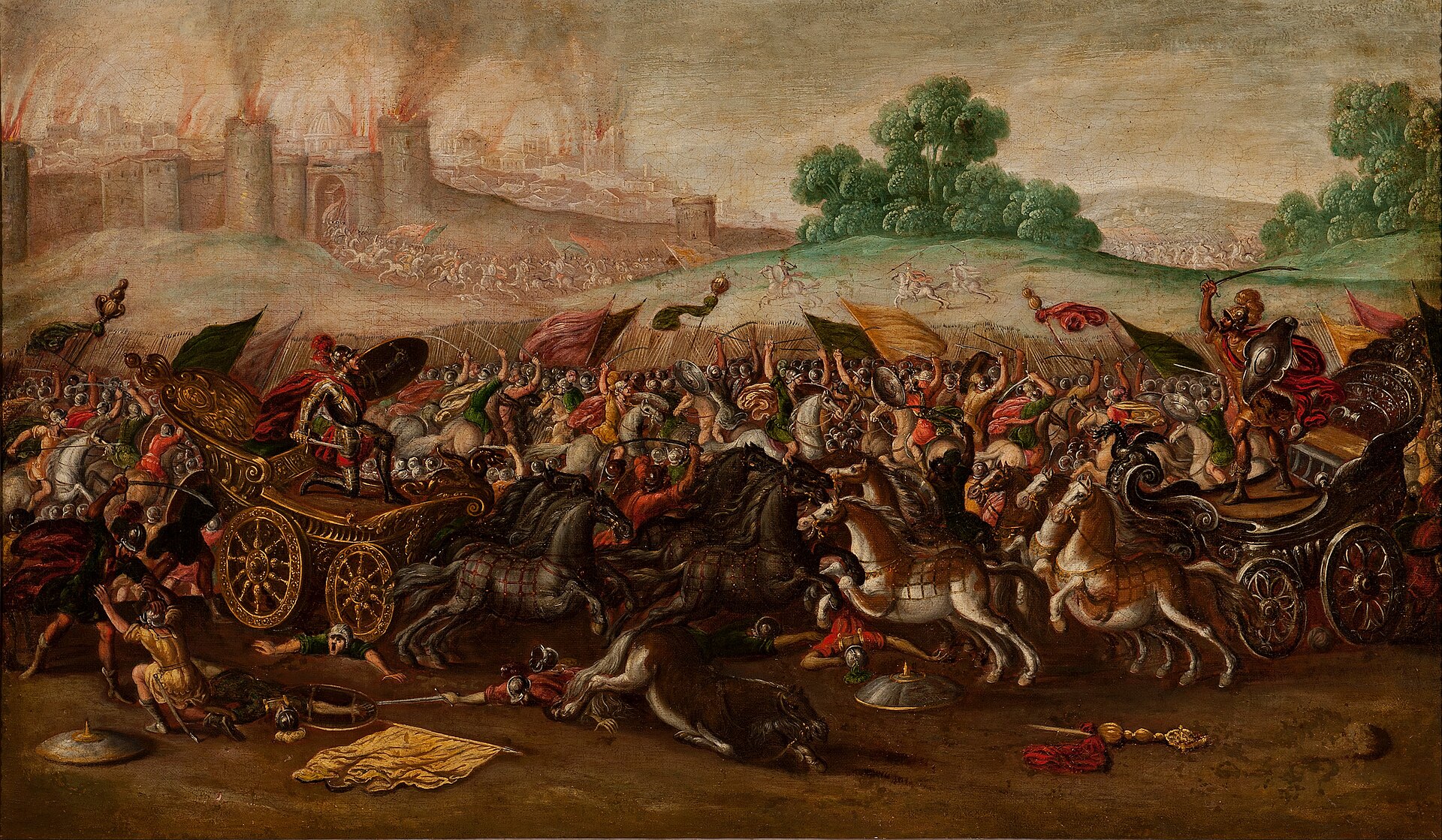
Chapter 1 described the ruin. Chapter 2 names who stood behind it. Over and over, the subject of the verbs is God: “the Lord hath swallowed up,” “he hath thrown down,” “he hath bent his bow like an enemy.” The poet does not soften it: “The Lord was as an enemy.”
The things God destroyed were the very things Judah trusted. The temple was “his footstool” and “his tabernacle,” yet “he hath abhorred his sanctuary.” The people had treated the temple as a lucky charm that guaranteed their safety, no matter how they lived. Jeremiah had warned them: “Trust ye not in lying words, saying, The temple of the LORD, The temple of the LORD, The temple of the LORD, are these” (Jeremiah 7:4). A building cannot save a people who have left the God who lives in it. So God let the Babylonians take it down, and “they have made a noise in the house of the LORD, as in the day of a solemn feast.” The shouting of the feasts was replaced by the shouting of soldiers.
Yet notice the word “as.” The Lord was as an enemy. He was acting like one, but He was not one. God’s heart toward Judah never changed. “As I live, saith the Lord GOD, I have no pleasure in the death of the wicked; but that the wicked turn from his way and live: turn ye, turn ye from your evil ways; for why will ye die, O house of Israel?” (Ezekiel 33:11). Isaiah calls judgment God’s “strange work” and “his strange act” (Isaiah 28:21). It is foreign to His nature.
“To our merciful God the act of punishment is a strange act.”
Ellen G. White · The Great Controversy, p. 627
The section ends with three losses that belong together: “the law is no more; her prophets also find no vision from the LORD,” and the “solemn feasts and sabbaths” are “forgotten in Zion.” The people had silenced God’s word for years. Now God was silent. Amos had warned of this kind of famine: “not a famine of bread, nor a thirst for water, but of hearing the words of the LORD” (Amos 8:11). There is no hunger worse than a heaven that no longer answers.
Thy Prophets Have Seen Vain And Foolish Things
“The elders of the daughter of Zion sit upon the ground, and keep silence: they have cast up dust upon their heads; they have girded themselves with sackcloth: the virgins of Jerusalem hang down their heads to the ground. Mine eyes do fail with tears, my bowels are troubled, my liver is poured upon the earth, for the destruction of the daughter of my people; because the children and the sucklings swoon in the streets of the city. They say to their mothers, Where is corn and wine? when they swooned as the wounded in the streets of the city, when their soul was poured out into their mothers’ bosom. What thing shall I take to witness for thee? what thing shall I liken to thee, O daughter of Jerusalem? what shall I equal to thee, that I may comfort thee, O virgin daughter of Zion? for thy breach is great like the sea: who can heal thee? Thy prophets have seen vain and foolish things for thee: and they have not discovered thine iniquity, to turn away thy captivity; but have seen for thee false burdens and causes of banishment. All that pass by clap their hands at thee; they hiss and wag their head at the daughter of Jerusalem, saying, Is this the city that men call The perfection of beauty, The joy of the whole earth? All thine enemies have opened their mouth against thee: they hiss and gnash the teeth: they say, We have swallowed her up: certainly this is the day that we looked for; we have found, we have seen it. The LORD hath done that which he had devised; he hath fulfilled his word that he had commanded in the days of old: he hath thrown down, and hath not pitied: and he hath caused thine enemy to rejoice over thee, he hath set up the horn of thine adversaries.”
Lamentations 2:10-17
The poet’s grief now becomes personal: “Mine eyes do fail with tears.” What breaks his heart most is the children. During the siege, little ones asked their mothers, “Where is corn and wine?” and died in their arms in the streets. He searches for a comparison and cannot find one: “thy breach is great like the sea: who can heal thee?”
Then he points to one of the causes: “Thy prophets have seen vain and foolish things for thee: and they have not discovered thine iniquity, to turn away thy captivity.” Jerusalem had prophets in abundance, but they told the people what they wanted to hear. Jeremiah described them exactly: “They have healed also the hurt of the daughter of my people slightly, saying, Peace, peace; when there is no peace” (Jeremiah 6:14). One of them, Hananiah, stood up in the temple and announced that God had “broken the yoke of the king of Babylon,” and that “within two full years” the captives and the temple vessels would come home (Jeremiah 28:2-3). The true prophet, who told them the truth about their sin, was put in a dungeon.
The false prophets’ great failure was that they “have not discovered thine iniquity.” A message that never shows us our sin can never lead us to repentance, and a people who are never called to repent are left to face the consequences. The kindest thing a preacher can do is tell the truth.
“To the end of time, men will arise to create confusion and rebellion among those who claim to be representatives of the true God. Those who prophesy lies will encourage men to look upon sin as a light thing. When the terrible results of their evil deeds are made manifest, they will seek, if possible, to make the one who has faithfully warned them, responsible for their difficulties, even as the Jews charged Jeremiah with their evil fortunes. But as surely as the words of Jehovah through His prophet were vindicated anciently, so surely will the certainty of His messages be established today.”
Ellen G. White · Prophets and Kings, p. 442
Ellen White saw the same pattern repeating at the very end of time, when many will discover too late that they followed teachers who made light of God’s law:
“Unfaithful pastors have prophesied smooth things; they have led their hearers to make void the law of God and to persecute those who would keep it holy.”
Ellen G. White · The Great Controversy, p. 655
The passersby who “clap their hands” and “wag their head” mock the city with her own famous titles. Psalm 48 had sung of Zion as “the joy of the whole earth” (Psalm 48:2), and Psalm 50 called it “the perfection of beauty” (Psalm 50:2). Now those titles are used as insults. Privilege does not protect a people who abandon the God who gave it.
And the section ends with a sentence that is both terrible and comforting: “The LORD hath done that which he had devised; he hath fulfilled his word that he had commanded in the days of old.” Centuries earlier, Moses had set before Israel the blessings of obedience and the curses of disobedience (Deuteronomy 28). God had kept His word. That is the terrible part. The comforting part is that God always keeps His word, which means every promise of mercy and restoration He has made will be kept too.
Pour Out Thine Heart Like Water
“Their heart cried unto the Lord, O wall of the daughter of Zion, let tears run down like a river day and night: give thyself no rest; let not the apple of thine eye cease. Arise, cry out in the night: in the beginning of the watches pour out thine heart like water before the face of the Lord: lift up thy hands toward him for the life of thy young children, that faint for hunger in the top of every street. Behold, O LORD, and consider to whom thou hast done this. Shall the women eat their fruit, and children of a span long? shall the priest and the prophet be slain in the sanctuary of the Lord? The young and the old lie on the ground in the streets: my virgins and my young men are fallen by the sword; thou hast slain them in the day of thine anger; thou hast killed, and not pitied. Thou hast called as in a solemn day my terrors round about, so that in the day of the LORD’s anger none escaped nor remained: those that I have swaddled and brought up hath mine enemy consumed.”
Lamentations 2:18-22
What do you do when God Himself seems to be against you? This chapter gives the answer: you go to Him anyway. “Arise, cry out in the night: in the beginning of the watches pour out thine heart like water before the face of the Lord.” The night was divided into watches, and the poet says to begin praying at the start of each one, all night long. Do not hold anything back. Pour it all out, the grief, the questions, even the complaints, the way water is poured from a jar until it is empty.
This is what the psalmist meant: “Trust in him at all times; ye people, pour out your heart before him: God is a refuge for us” (Psalm 62:8). God is not offended by honest prayer. He would much rather hear our pain than our silence.
“Through nature and revelation, through His providence, and by the influence of His Spirit, God speaks to us. But these are not enough; we need also to pour out our hearts to Him.”
Ellen G. White · Steps to Christ, p. 93
The prayer that follows is almost too painful to read. In the famine of the siege, mothers ate their own children. Moses had warned that this would happen if Israel turned from God: “And thou shalt eat the fruit of thine own body, the flesh of thy sons and of thy daughters, which the LORD thy God hath given thee, in the siege, and in the straitness, wherewith thine enemies shall distress thee” (Deuteronomy 28:53). The Bible does not hide what sin finally does to a society. It is a warning written in tears.
But notice where the poet takes all of this. He does not curse God or turn away from Him. He says, “Behold, O LORD, and consider.” He brings the worst day of his life straight to the One he believes has done it, because there is nowhere else to go. That is faith in its rawest form. It still speaks to God when it cannot understand Him.
Jesus said, “Blessed are they that mourn: for they shall be comforted” (Matthew 5:4). The chapter ends in darkness, with no answer yet. But the heart poured out before God in chapter 2 is the heart that will be ready to hear, in chapter 3, that “his compassions fail not.”
