Chapters 37 and 38 are the darkest days of Jeremiah’s life. When the Babylonians briefly lift the siege, he tries to leave the city on family business and is arrested as a deserter. He is beaten, locked in an underground cell, and later lowered into a muddy cistern to die. The man who saves him is not a priest or a prophet but a foreign servant in the palace, Ebed-melech the Ethiopian, who arrives with thirty men, a rope, and a bundle of old rags. Meanwhile King Zedekiah keeps sending for Jeremiah in secret, hearing the truth again and again, and never finding the courage to act on it.
A study in Jeremiah 37-38 · Arthur Baldwin · StandUp4Jesus.Org · 15 min read
Deceive Not Yourselves
“Then Pharaoh’s army was come forth out of Egypt: and when the Chaldeans that besieged Jerusalem heard tidings of them, they departed from Jerusalem.”
Jeremiah 37:5
This is the moment we met in chapter 34. Egypt’s army marched north, and the Babylonians pulled away from Jerusalem to deal with it. The city breathed again. The slave owners took back their slaves. And King Zedekiah sent messengers to Jeremiah: “Pray now unto the LORD our God for us” (37:3). He wanted God to make the rescue permanent.
“Thus saith the LORD; Deceive not yourselves, saying, The Chaldeans shall surely depart from us: for they shall not depart. For though ye had smitten the whole army of the Chaldeans that fight against you, and there remained but wounded men among them, yet should they rise up every man in his tent, and burn this city with fire.”
Jeremiah 37:9, 10
“Deceive not yourselves.” The most dangerous lies are the ones we tell ourselves. A break in the trouble is not the same as the end of it. God says that even if Judah somehow defeated the whole Babylonian army and left only wounded men, those wounded men would get up and burn the city. The problem was never Babylon’s strength. It was Judah’s sin, and no army could fix that.
Thou Fallest Away To The Chaldeans
“Then Jeremiah went forth out of Jerusalem to go into the land of Benjamin, to separate himself thence in the midst of the people. And when he was in the gate of Benjamin, a captain of the ward was there, whose name was Irijah, the son of Shelemiah, the son of Hananiah; and he took Jeremiah the prophet, saying, Thou fallest away to the Chaldeans. Then said Jeremiah, It is false; I fall not away to the Chaldeans.”
Jeremiah 37:12-14
With the siege lifted, Jeremiah set out for his home territory of Benjamin, probably to take care of a family property matter. At the city gate, a guard captain arrested him. The charge was desertion: “Thou fallest away to the Chaldeans.” It was an easy charge to believe. Jeremiah had been telling people for years to surrender to Babylon. “It is false,” he said. But nobody listened.
The officials beat him and threw him into a makeshift prison in the house of Jonathan the scribe, “into the dungeon, and into the cabins,” underground cells where he stayed “many days” (37:15, 16). This was the reward for nearly forty years of faithful service: a false accusation, a beating, and a dark hole.
Is There Any Word From The LORD?
“Then Zedekiah the king sent, and took him out: and the king asked him secretly in his house, and said, Is there any word from the LORD? And Jeremiah said, There is: for, said he, thou shalt be delivered into the hand of the king of Babylon.”
Jeremiah 37:17
Here is one of the most revealing scenes in the book. The king of Judah sends for a beaten prisoner, in secret, and asks, “Is there any word from the LORD?” Zedekiah did believe Jeremiah was a true prophet. That is why he asked. But he wanted the word in private, where no one could see him listen.
Jeremiah had every reason to soften his answer. His life was in this man’s hands. Instead: “There is,” and it was the same word as before. Then he asked the obvious question: “Where are now your prophets which prophesied unto you, saying, The king of Babylon shall not come against you?” (37:19). The prophets who promised peace had been proven wrong, and they were walking free. The prophet who told the truth was in a dungeon.
Zedekiah did one kind thing. He moved Jeremiah to the guard’s courtyard and ordered that he be given “daily a piece of bread out of the bakers’ street, until all the bread in the city were spent” (37:21). God kept His prophet fed through the famine, one loaf a day, until the very end.
Jeremiah Sunk In The Mire
“Therefore the princes said unto the king, We beseech thee, let this man be put to death: for thus he weakeneth the hands of the men of war that remain in this city, and the hands of all the people, in speaking such words unto them: for this man seeketh not the welfare of this people, but the hurt. Then Zedekiah the king said, Behold, he is in your hand: for the king is not he that can do any thing against you.”
Jeremiah 38:4, 5
Even in the courtyard, Jeremiah kept speaking. Four officials heard him tell the people that whoever surrendered would live (38:1-3), and they demanded his death. Their charge was that he did not seek “the welfare of this people, but the hurt.” In fact, he was the only one trying to save their lives. And the king’s answer is one of the weakest sentences ever spoken by a ruler: “the king is not he that can do any thing against you.”
“Then took they Jeremiah, and cast him into the dungeon of Malchiah the son of Hammelech, that was in the court of the prison: and they let down Jeremiah with cords. And in the dungeon there was no water, but mire: so Jeremiah sunk in the mire.”
Jeremiah 38:6
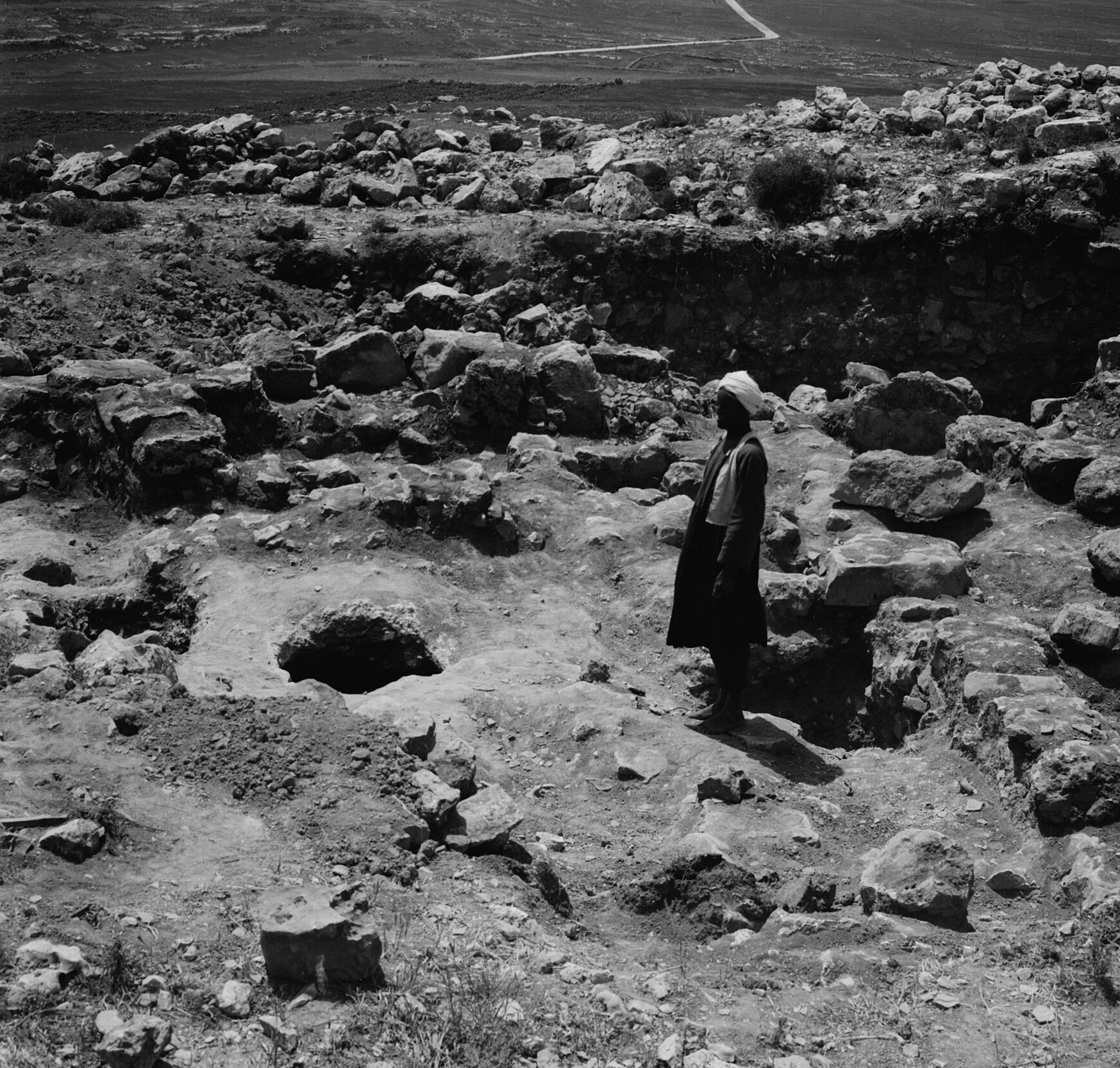
The “dungeon” here is a cistern, a bottle-shaped pit cut into the rock to collect rainwater. In the long siege it had run dry, leaving only thick mud at the bottom. They lowered Jeremiah on ropes, and he sank into the mud. They did not have to kill him with their own hands. Hunger and cold would do it for them.
Jeremiah’s experience echoes the cry of the psalmist: “I sink in deep mire, where there is no standing” (Psalm 69:2). And it echoes the joy of another psalm: “He brought me up also out of an horrible pit, out of the miry clay, and set my feet upon a rock, and established my goings” (Psalm 40:2).
Ebed-melech The Ethiopian
“Now when Ebed-melech the Ethiopian, one of the eunuchs which was in the king’s house, heard that they had put Jeremiah in the dungeon; the king then sitting in the gate of Benjamin; Ebed-melech went forth out of the king’s house, and spake to the king, saying, My lord the king, these men have done evil in all that they have done to Jeremiah the prophet, whom they have cast into the dungeon; and he is like to die for hunger in the place where he is: for there is no more bread in the city.”
Jeremiah 38:7-9
Rescue came from the least likely person in Jerusalem. Ebed-melech, whose name means “servant of the king,” was a foreigner from Cush, the land south of Egypt, and an official in the royal household. He had no political power and no family connections in Judah. But when he heard what had been done, he went straight to the king, in public, at the city gate, and said plainly, “these men have done evil.”
That took courage. The princes who had thrown Jeremiah into the pit were the most powerful men in the city. The king himself had just handed Jeremiah over to them. A palace servant who spoke against them was risking his position, and probably his life. Ebed-melech spoke anyway.
“So Ebed-melech took the men with him, and went into the house of the king under the treasury, and took thence old cast clouts and old rotten rags, and let them down by cords into the dungeon to Jeremiah. And Ebed-melech the Ethiopian said unto Jeremiah, Put now these old cast clouts and rotten rags under thine armholes under the cords. And Jeremiah did so. So they drew up Jeremiah with cords, and took him up out of the dungeon: and Jeremiah remained in the court of the prison.”
Jeremiah 38:11-13
Look at the detail Scripture saves for us. Ebed-melech did not just haul Jeremiah out. He went to a storeroom, found old worn-out clothes and rags, and lowered them down first, so the ropes would not cut into the weak old prophet’s armpits as he was pulled out of the sucking mud. That is kindness, thought through. He cared not only that Jeremiah was saved, but that he was not hurt in the saving.
God did not forget it. While the city was falling, He sent Jeremiah to Ebed-melech with a personal promise: “I will surely deliver thee, and thou shalt not fall by the sword, but thy life shall be for a prey unto thee: because thou hast put thy trust in me, saith the LORD” (39:18). Notice the reason: “because thou hast put thy trust in me.” His kindness to Jeremiah came from faith in Jeremiah’s God.
Ebed-melech belongs to a long line of foreigners who believed when God’s own people would not. Isaiah had promised that eunuchs who “take hold of my covenant” would receive “a place and a name better than of sons and of daughters” (Isaiah 56:4, 5). Centuries later, another Ethiopian official, “an eunuch of great authority under Candace queen of the Ethiopians” (Acts 8:27), would be baptized on the road from Jerusalem. And Jesus will say to everyone who has helped a suffering servant of His, “I was in prison, and ye came unto me” (Matthew 25:36).
I Am Afraid
“Then said Jeremiah unto Zedekiah, Thus saith the LORD, the God of hosts, the God of Israel; If thou wilt assuredly go forth unto the king of Babylon’s princes, then thy soul shall live, and this city shall not be burned with fire; and thou shalt live, and thine house: But if thou wilt not go forth to the king of Babylon’s princes, then shall this city be given into the hand of the Chaldeans, and they shall burn it with fire, and thou shalt not escape out of their hand.”
Jeremiah 38:17, 18
One last time, Zedekiah sent for Jeremiah in secret. And one last time, God offered him a way out. Even now, with the siege back and the city starving, the king could save his own life, his family, and Jerusalem itself, simply by surrendering.
“And Zedekiah the king said unto Jeremiah, I am afraid of the Jews that are fallen to the Chaldeans, lest they deliver me into their hand, and they mock me. But Jeremiah said, They shall not deliver thee. Obey, I beseech thee, the voice of the LORD, which I speak unto thee: so it shall be well unto thee, and thy soul shall live.”
Jeremiah 38:19, 20
“I am afraid.” That was the real reason. Not that Zedekiah doubted the message. He was afraid of being mocked. He feared people more than he feared God. “The fear of man bringeth a snare: but whoso putteth his trust in the LORD shall be safe” (Proverbs 29:25).
“He was afraid of the Jews, afraid of ridicule, afraid for his life. After years of rebellion against God, Zedekiah thought it too humiliating to say to his people, I accept the word of the Lord, as spoken through the prophet Jeremiah; I dare not venture to war against the enemy in the face of all these warnings.”
Ellen G. White · Prophets and Kings, p. 457
“The weakness of Zedekiah was a sin for which he paid a fearful penalty.”
Ellen G. White · Prophets and Kings, p. 458
The chapter ends with the king asking Jeremiah to keep their conversation secret (38:24-26). That is Zedekiah in one picture: a man who knew the truth and hid it. John describes the same kind of people in Jesus’ day: “among the chief rulers also many believed on him; but because of the Pharisees they did not confess him,” “For they loved the praise of men more than the praise of God” (John 12:42, 43).
Put Zedekiah and Ebed-melech side by side. The king had power, knowledge, and every chance to do right, and did nothing because he was afraid. The servant had no power at all, and he did the right thing at once, with courage and care. One lost everything. The other was promised his life “because thou hast put thy trust in me.” And Jeremiah, pulled out of the mire, “abode in the court of the prison until the day that Jerusalem was taken” (38:28).
