Two hundred and seventy-six souls, a doomed ship, and two weeks adrift under a sky with no sun or stars to navigate by. This is Luke’s most detailed single narrative in the entire book, written by an actual eyewitness on board — and in the middle of it, a prisoner in chains turns out to be the only person on the vessel anyone can still trust.
A study in Acts 27 · Arthur Baldwin · StandUp4Jesus.Org · 17 min read
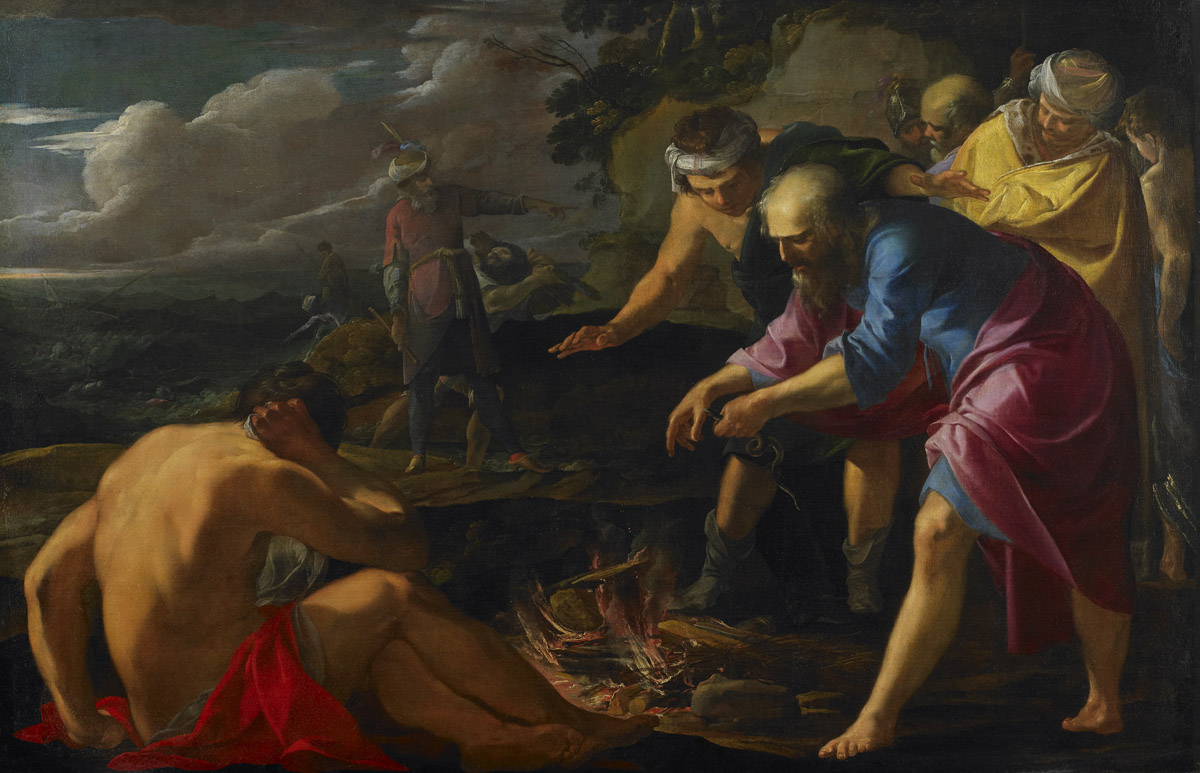
Julius Courteously Entreated Paul
“And when it was determined that we should sail into Italy, they delivered Paul and certain other prisoners unto one named Julius, a centurion of Augustus’ band. And entering into a ship of Adramyttium, we launched, meaning to sail by the coasts of Asia; one Aristarchus, a Macedonian of Thessalonica, being with us.”
Acts 27:1-2
“One circumstance greatly lightened the hardship of his lot—he was permitted the companionship of Luke and Aristarchus. … It was from choice that Aristarchus shared Paul’s bondage, that he might minister to him in his afflictions.”
Ellen G. White · The Acts of the Apostles, p. 439
Luke’s own return to first-person “we” narration, unbroken since chapter 21, means this study’s own source for the whole voyage is now an actual passenger on board — not a secondhand report but an eyewitness account of a genuinely harrowing ordeal.
“And the next day we touched at Sidon. And Julius courteously entreated Paul, and gave him liberty to go unto his friends to refresh himself.”
Acts 27:3
“Julius, the centurion, ‘courteously entreated Paul,’ and being informed that there were Christians in the place, ‘gave him liberty to go unto his friends to refresh himself.’ This permission was greatly appreciated by the apostle, who was in feeble health.”
Ellen G. White · The Acts of the Apostles, p. 440
This is a genuinely remarkable degree of trust to extend to a prisoner facing trial before the emperor himself — a Roman officer allowing his charge to walk freely into a city, on nothing but the reasonable expectation that a man like Paul will simply come back.
“And when we had sailed slowly many days, and scarce were come over against Cnidus, the wind not suffering us, we sailed under Crete, over against Salmone; And, hardly passing it, came unto a place which is called The fair havens; nigh whereunto was the city of Lasea.”
Acts 27:7-8
“Slowly,” “scarce,” “hardly” — three separate words of strain packed into two verses, Luke’s own careful language already signaling, well before the storm itself arrives, exactly how much this voyage is fighting the weather at every stage.
Ye Should Have Hearkened Unto Me
“Now when much time was spent, and when sailing was now dangerous, because the fast was now already past, Paul admonished them, And said unto them, Sirs, I perceive that this voyage will be with hurt and much damage, not only of the lading and ship, but also of our lives.”
Acts 27:9-10
“This question was earnestly discussed, and was finally referred by the centurion to Paul, who had won the respect of both sailors and soldiers.”
Ellen G. White · The Acts of the Apostles, p. 441
That a Roman centurion would even consult a chained prisoner about a nautical decision says something remarkable about the quiet reputation Paul has already earned on board, entirely apart from any miracle — simple, observed steadiness under pressure.
“Nevertheless the centurion believed the master and the owner of the ship, more than those things which were spoken by Paul.”
Acts 27:11
“But ‘the master and the owner of the ship,’ and the majority of passengers and crew, were unwilling to accept this counsel.”
Ellen G. White · The Acts of the Apostles, p. 441
Being consulted and being heeded turn out to be two entirely different things — professional expertise and financial interest outweigh Paul’s own warning, a decision the rest of this chapter will spend fourteen terrifying days proving wrong.
“And when the south wind blew softly, supposing that they had obtained their purpose, loosing thence, they sailed close by Crete. But not long after there arose against it a tempestuous wind, called Euroclydon.”
Acts 27:13-14
“Supposing that they had obtained their purpose” is a small, devastating irony — a gentle southerly breeze, read as confirmation the risky decision was right, turns out to be nothing more than the calm edge of the very storm about to prove it disastrously wrong.
“And we being exceedingly tossed with a tempest, the next day they lightened the ship; And the third day we cast out with our own hands the tackling of the ship. And when neither sun nor stars in many days appeared, and no small tempest lay on us, all hope that we should be saved was then taken away.”
Acts 27:18-20
“Every moment it seemed that the groaning timbers must give way as the vessel reeled and quivered under the tempest’s shock. The leak increased rapidly, and passengers and crew worked continually at the pumps. There was not a moment’s rest for any on board.”
Ellen G. White · The Acts of the Apostles, p. 442
Losing sight of the sun and stars is not merely uncomfortable, but a genuinely navigational catastrophe for ancient sailors who had no other way to fix their own position; “all hope… was then taken away” is not exaggeration but the plain, literal state of two hundred and seventy-six people who no longer know where on earth they are.
I Believe God, That It Shall Be Even As It Was Told Me
“But after long abstinence Paul stood forth in the midst of them, and said, Sirs, ye should have hearkened unto me, and not have loosed from Crete, and to have gained this harm and loss.”
Acts 27:21
Paul earns the right to say “I told you so” and then does not linger there — a single sentence establishing the record before pivoting immediately, without any wasted bitterness, to the encouragement the moment actually needs.
“And now I exhort you to be of good cheer: for there shall be no loss of any man’s life among you, but of the ship. For there stood by me this night the angel of God, whose I am, and whom I serve.”
Acts 27:22-23
“Saying, Fear not, Paul; thou must be brought before Cæsar: and, lo, God hath given thee all them that sail with thee.”
Acts 27:24
“He had no fears for himself; he knew that God would preserve him to witness at Rome for the truth of Christ. But his heart yearned with pity for the poor souls around him, sinful, degraded, and unprepared to die. As he earnestly pleaded with God to spare their lives, it was revealed to him that his prayer was granted.”
Ellen G. White · The Acts of the Apostles, p. 442
Two hundred and seventy-five other lives are saved here as, in effect, a byproduct of one promise made specifically to Paul — not because any of them shared his own faith, but because God’s guarantee that Paul would reach Rome turns out to require every person on that ship reaching land alive with him.
“Wherefore, sirs, be of good cheer: for I believe God, that it shall be even as it was told me. Howbeit we must be cast upon a certain island.”
Acts 27:25-26
“At these words, hope revived. Passengers and crew roused from their apathy. There was much yet to be done, and every effort within their power must be put forth to avert destruction.”
Ellen G. White · The Acts of the Apostles, p. 443
“I believe God” is offered here as public, practical reassurance to two hundred and seventy-six frightened strangers, not private devotional comfort — and it works exactly as intended, rousing an exhausted crew back into the effort that will ultimately save them.
Except These Abide In The Ship, Ye Cannot Be Saved
“But when the fourteenth night was come, as we were driven up and down in Adria, about midnight the shipmen deemed that they drew near to some country; And sounded, and found it twenty fathoms: and when they had gone a little further, they sounded again, and found it fifteen fathoms.”
Acts 27:27-28
“And as the shipmen were about to flee out of the ship, when they had let down the boat into the sea, under colour as though they would have cast anchors out of the foreship, Paul said to the centurion and to the soldiers, Except these abide in the ship, ye cannot be saved.”
Acts 27:30-31
“So gloomy was the outlook that the heathen sailors, losing all courage, ‘were about to flee out of the ship,’ and feigning to make preparations for casting ‘anchors out of the foreship,’ they had already let down the lifeboat, when Paul, perceiving their base design.”
Ellen G. White · The Acts of the Apostles, p. 443
The very sailors whose professional judgment overruled Paul’s own warning back in verse 11 are now the ones abandoning ship under a cowardly pretext, leaving everyone else to die — and Paul, still a prisoner with no formal authority over anyone, is once again the only person whose word the centurion actually acts on.
“Then the soldiers cut off the ropes of the boat, and let her fall off.”
Acts 27:32
The soldiers’ own decisive action here — cutting the only lifeboat loose entirely rather than merely stopping the sailors — removes even the temptation of a second attempt, at the cost of the ship’s one remaining means of an organized evacuation.
“And while the day was coming on, Paul besought them all to take meat, saying, This day is the fourteenth day that ye have tarried and continued fasting, having taken nothing. Wherefore I pray you to take some meat: for this is for your health: for there shall not an hair fall from the head of any of you.”
Acts 27:33-34
“And when he had thus spoken, he took bread, and gave thanks to God in presence of them all: and when he had broken it, he began to eat. Then were they all of good cheer, and they also took some meat.”
Acts 27:35-36
“Then that worn and discouraged company of two hundred and seventy-five souls, who but for Paul would have become desperate, joined with the apostle in partaking of food.”
Ellen G. White · The Acts of the Apostles, p. 444
A prisoner gives thanks over bread in front of a whole ship of pagan sailors, soldiers, and fellow prisoners, and every one of them follows his example — an unmistakable, uncomplicated echo of a communion table, held together on a broken deck in the middle of a life-or-death storm.
They Escaped All Safe To Land
“And falling into a place where two seas met, they ran the ship aground; and the forepart stuck fast, and remained unmoveable, but the hinder part was broken with the violence of the waves.”
Acts 27:41
“And the soldiers’ counsel was to kill the prisoners, lest any of them should swim out, and escape. But the centurion, willing to save Paul, kept them from their purpose.”
Acts 27:42-43
“The Roman law sanctioned this cruel policy, and the plan would have been executed at once, but for him to whom all alike were under deep obligation. Julius the centurion knew that Paul had been instrumental in saving the lives of all on board, and, moreover, convinced that the Lord was with him, he feared to do him harm.”
Ellen G. White · The Acts of the Apostles, p. 445
Standard, legally sanctioned Roman policy would have had every prisoner killed on the spot, Paul included, in the final moments of the wreck — and the one thing that overrides established law is a single officer’s personal debt to a man who has already, several times over, kept his whole company alive.
“And commanded that they which could swim should cast themselves first into the sea, and get to land: And the rest, some on boards, and some on broken pieces of the ship. And so it came to pass, that they escaped all safe to land.”
Acts 27:43-44
“All safe to land” is exactly, precisely what was promised on this same deck two weeks earlier by an angel Paul alone had seen — two hundred and seventy-six people, a shattered ship, and a promise that turns out to have held for every single one of them.
