James 3 ended with peacemakers sowing the fruit of righteousness. James 4 opens with the opposite: wars and fightings among believers. Where do they come from? From desires at war inside us, and from a heart that wants to be a friend of the world and a friend of God at the same time. James calls it spiritual adultery. But he also gives one of the Bible’s most hopeful invitations: “Submit yourselves therefore to God. Resist the devil, and he will flee from you. Draw nigh to God, and he will draw nigh to you.”
A study in James 4 · Arthur Baldwin · StandUp4Jesus.Org · 16 min read
From Whence Come Wars And Fightings?
“From whence come wars and fightings among you? come they not hence, even of your lusts that war in your members? Ye lust, and have not: ye kill, and desire to have, and cannot obtain: ye fight and war, yet ye have not, because ye ask not. Ye ask, and receive not, because ye ask amiss, that ye may consume it upon your lusts.”
James 4:1-3
James is not talking about wars between nations, but about quarrels among believers. And he goes straight to the root. Conflicts outside us come from conflicts inside us: “your lusts that war in your members.” We want something, we cannot have it, and we fight. James’s word “kill” may be meant literally, or in the sense Jesus gave it, that hatred is murder in the heart (Matthew 5:21-22). Either way, frustrated desire turns ugly.
And the tragedy is how unnecessary it is. “Ye have not, because ye ask not.” We scheme and struggle for things we could simply ask God for. And when we do ask, we often “ask amiss,” for selfish reasons, wanting God to fund our cravings rather than change our hearts.
The Friendship Of The World
“Ye adulterers and adulteresses, know ye not that the friendship of the world is enmity with God? whosoever therefore will be a friend of the world is the enemy of God. Do ye think that the scripture saith in vain, The spirit that dwelleth in us lusteth to envy? But he giveth more grace. Wherefore he saith, God resisteth the proud, but giveth grace unto the humble.”
James 4:4-6
“Ye adulterers and adulteresses.” James uses the language of the Old Testament prophets, who pictured God as Israel’s husband and idolatry as unfaithfulness (Hosea 2; Jeremiah 3). A believer who gives his heart to the world is being unfaithful to God.
“The world” here does not mean the created earth or the people in it, whom God loves (John 3:16). It means the whole system of values that leaves God out: the pride, the greed, the pleasure-seeking that John calls “the lust of the flesh, and the lust of the eyes, and the pride of life” (1 John 2:16). There is no neutral ground. “Whosoever therefore will be a friend of the world is the enemy of God.”
“When the Lord requires us to be distinct and peculiar, how can we crave popularity or seek to imitate the customs and practices of the world? ‘Know ye not that the friendship of the world is enmity with God? whosoever therefore will be a friend of the world is the enemy of God.’ James 4:4. To lower the standard in order to secure popularity and an increase of numbers, and then to make this increase a cause of rejoicing, shows great blindness.”
Ellen G. White · Testimonies for the Church, vol. 6, p. 143
Verse 5 is one of the harder verses in James. It may mean that the human spirit naturally leans toward envy. Or it may mean that God, who placed His Spirit in us, longs jealously for our whole heart, as a faithful husband does for his wife. Either way, the answer is the same: “But he giveth more grace.” However strong the pull of the world, God’s grace is stronger. And He gives it freely, on one condition: humility. “God resisteth the proud, but giveth grace unto the humble” (Proverbs 3:34).
Resist The Devil
“Submit yourselves therefore to God. Resist the devil, and he will flee from you. Draw nigh to God, and he will draw nigh to you. Cleanse your hands, ye sinners; and purify your hearts, ye double minded. Be afflicted, and mourn, and weep: let your laughter be turned to mourning, and your joy to heaviness. Humble yourselves in the sight of the Lord, and he shall lift you up.”
James 4:7-10
Here are ten commands in four verses, and they begin and end in the same place: “Submit yourselves therefore to God… Humble yourselves in the sight of the Lord.”
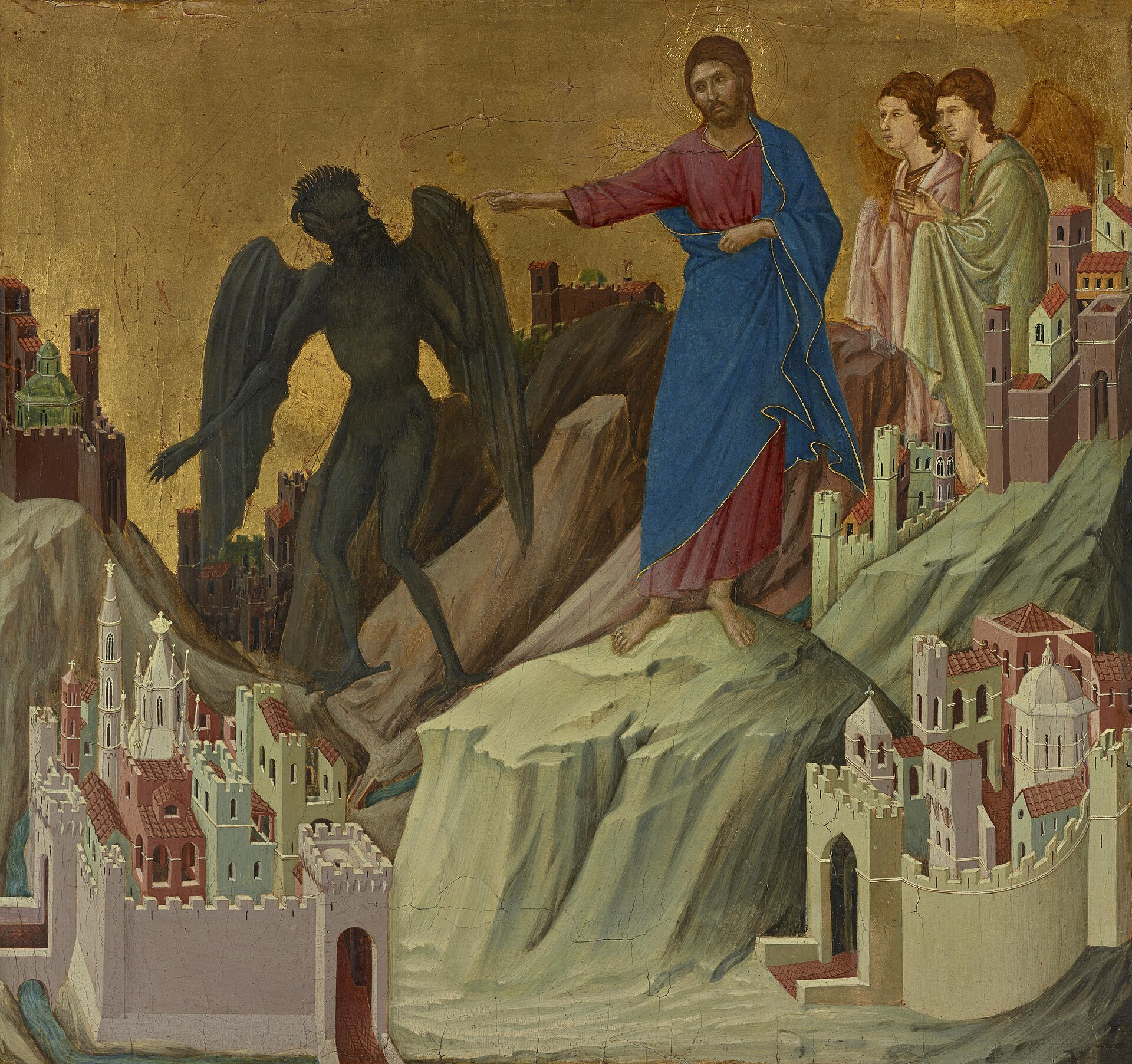
Notice the order. First submit to God; then resist the devil. We cannot resist Satan in our own strength. But a soul yielded to God is on the winning side, and the devil “will flee.” Jesus showed how in the wilderness. He answered every temptation with “It is written,” and at last commanded, “Get thee hence, Satan… Then the devil leaveth him” (Matthew 4:10-11).
“Jesus gained the victory through submission and faith in God, and by the apostle He says to us, ‘Submit yourselves therefore to God. Resist the devil, and he will flee from you. Draw nigh to God, and He will draw nigh to you.’ James 4:7, 8. We cannot save ourselves from the tempter’s power; he has conquered humanity, and when we try to stand in our own strength, we shall become a prey to his devices; but ‘the name of the Lord is a strong tower: the righteous runneth into it, and is safe.’ Proverbs 18:10. Satan trembles and flees before the weakest soul who finds refuge in that mighty name.”
Ellen G. White · The Desire of Ages, p. 130
“Draw nigh to God, and he will draw nigh to you.” Every step we take toward God, He is already taking toward us, like the father in the parable who “saw him, and had compassion, and ran” (Luke 15:20).
“The more you feel your weakness, the more you will be inclined to seek for a helper. ‘Draw nigh to God, and He will draw nigh to you.’ James 4:8. Jesus wants you to be happy, to be cheerful.”
Ellen G. White · Testimonies for the Church, vol. 8, p. 128
Drawing near means cleansing both “hands” (what we do) and “hearts” (what we are), and ending our double-mindedness. It may mean tears: “let your laughter be turned to mourning.” That is not a call to lifelong gloom. It is a call to take sin seriously, the kind of sorrow Jesus blessed: “Blessed are they that mourn: for they shall be comforted” (Matthew 5:4). And it ends in joy: “Humble yourselves in the sight of the Lord, and he shall lift you up.”
There Is One Lawgiver
“Speak not evil one of another, brethren. He that speaketh evil of his brother, and judgeth his brother, speaketh evil of the law, and judgeth the law: but if thou judge the law, thou art not a doer of the law, but a judge. There is one lawgiver, who is able to save and to destroy: who art thou that judgest another?”
James 4:11-12
James returns to the tongue. To slander and condemn a fellow believer is to set ourselves above God’s law, which commands us to love our neighbour (2:8). Instead of doing the law, we make ourselves its judges. But “there is one lawgiver,” and only He can see the heart.
“There is but one judge—He ‘who both will bring to light the hidden things of darkness, and will make manifest the counsels of the hearts.’ 1 Corinthians 4:5. And whoever takes it upon himself to judge and condemn his fellow men is usurping the prerogative of the Creator.”
Ellen G. White · Patriarchs and Prophets, p. 385
If The Lord Will
“Go to now, ye that say, To day or to morrow we will go into such a city, and continue there a year, and buy and sell, and get gain: Whereas ye know not what shall be on the morrow. For what is your life? It is even a vapour, that appeareth for a little time, and then vanisheth away. For that ye ought to say, If the Lord will, we shall live, and do this, or that. But now ye rejoice in your boastings: all such rejoicing is evil. Therefore to him that knoweth to do good, and doeth it not, to him it is sin.”
James 4:13-17
Now James turns to the merchants among his readers, travelling traders planning their next business venture. Planning is not wrong. What is wrong is planning as if God did not exist: “To day or to morrow we will go… and get gain.” They talk as if they control the future. They do not even know what tomorrow will bring.
“For what is your life? It is even a vapour.” Like morning mist over a field, it appears for a little while and then is gone. That is not a reason for despair. It is a reason to hold our plans loosely and to live every day in dependence on God: “If the Lord will, we shall live, and do this, or that.”
“But Christians are professedly not dwellers upon the earth; they are in a strange country, stopping, as it were, only for a night. Our home is in the mansions which Jesus has gone to prepare for us. This life is but a vapor, which passes away.”
Ellen G. White · Testimonies for the Church, vol. 4, p. 490
And the chapter ends with a verse that searches every conscience: “to him that knoweth to do good, and doeth it not, to him it is sin.” Sin is not only doing what is wrong. It is also failing to do what we know is right: the visit not made, the help not given, the word of encouragement not spoken. That brings us back to James’s great theme, to be doers of the word, and not hearers only. The answer to all of it is the invitation at the heart of this chapter: draw nigh to God, and He will draw nigh to you.
