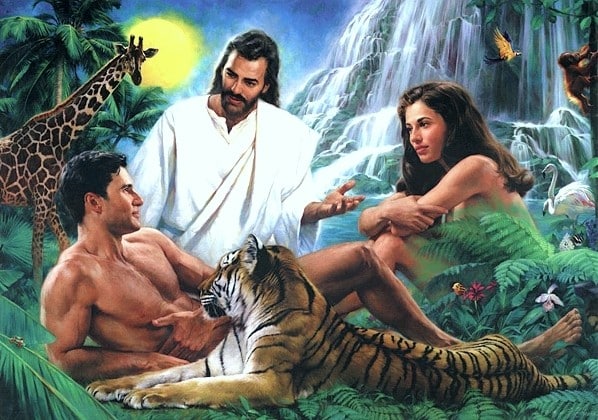
Take away Genesis 1 to 3 and the rest of the Bible has nothing to stand on. The Sabbath, marriage, the nature of man, the entrance of death, the first prophecy, and the reason a Redeemer was needed all begin in these three chapters — which is why they have been attacked harder than any comparable passage in Scripture.
Table of Contents
Everything Rests On These Three Chapters
Take away Genesis 1 to 3 and the rest of the Bible has nothing to stand on.
That is not an exaggeration, and it is easy to demonstrate. Remove these chapters and you no longer have an explanation for where the Sabbath came from, or why marriage is what it is, or why people die, or what sin actually is, or why a Redeemer was needed, or what the world is supposed to be restored to.
Every one of those doctrines has its root here. Pull the root and the plant does not survive.
Which is presumably why these three chapters have been attacked harder and longer than any comparable passage in Scripture. It is not an accident that the part of the Bible under the heaviest fire is the part everything else depends on.
And there is prophecy here
One thing worth saying at the outset, because it surprises people.
Nobody calls Genesis a prophetic book. It sits with the books of law, not with Daniel and Revelation. And yet the first prophecy in the Bible is in Genesis 3, spoken by God Himself in the garden, on the day sin entered. Every prophecy that follows it, in every book, is an elaboration of that one sentence.
So a book can be full of history and law and genealogy, and still carry a verse that the whole of prophecy hangs on. We will come to it.
Genesis 1: The God Who Speaks
"1 In the beginning God created the heaven and the earth."

Genesis 1:1  KJV
Ten words in English, and there is no argument, no defence, and no attempt to prove God exists. The Bible opens by assuming Him and telling you what He did.
Then notice the mechanism, because the chapter repeats it like a drumbeat. And God said. Light, sky, land, plants, sun and moon, fish, birds, animals…each one arrives because God spoke.
That matters more than it first appears. A God who creates by speaking is a God whose word does things. When the same God later says “thou shalt not,” or “thy sins be forgiven thee,” or “let there be light” in a human heart, it is the same voice doing the same kind of work. Genesis 1 is teaching you what God’s word is worth before you ever get to a promise you need to trust.
“Let us make man”
Then the rhythm changes. Everything else was spoken into being. When it comes to man, God stops and consults:
"26 ¶ And God said, Let us make man in our image, after our likeness: and let them have dominion over the fish of the sea, and over the fowl of the air, and over the cattle, and over all the earth, and over every creeping thing that creepeth upon the earth.

27 So God created man in his own image, in the image of God created he him; male and female created he them."

Genesis 1:26-27  KJV
“Let us.” Plural. Whatever else is happening in that verse, God is not alone and is not talking to Himself in the singular.
And “in our image.” Not in the image of the animals He had just made, and not as a slightly improved animal. Man is made to resemble God…in capacity to think, to choose, to love, to create, and to be held responsible.
Notice also “male and female created he them” sitting inside the same sentence as the image of God. Whatever the image is, Genesis attaches it to both.
That single phrase has done more for human dignity than every philosophy ever written. If a human being is an accident of chemistry, then worth is whatever the strong decide it is. If a human being carries the image of God, then worth is fixed, and it is not up for negotiation.
“Very good”
"31 And God saw every thing that he had made, and, behold, it was very good. And the evening and the morning were the sixth day."

Genesis 1:31  KJV
This verse settles something the whole Bible depends on: God did not make the world we currently live in.
He made a world that was very good. No death, no predation, no disease, no grief, no cruelty. What we have now is that world after something went badly wrong.
Which means the question “how could a good God make a world like this?” is answerable in one sentence. He did not. He made a different one, and Genesis 3 explains what happened to it.
Ellen White describes the original condition in terms that are hard to imagine from here:
“As it came from the Creator’s hand, not only the Garden of Eden but the whole earth was exceedingly beautiful.”
Ellen G. White · Education, p. 22
And the arrangement in the garden was, of all things, a school:
“The Garden of Eden was the schoolroom, nature was the lesson book, the Creator Himself was the instructor, and the parents of the human family were the students.”
Ellen G. White · Education, p. 20
That is a striking picture, and it tells you what Eden was for. It was not a reward for good behaviour or a holiday. It was the beginning of an education that was meant to run forever.
The Seventh Day, Built Into Time Itself
The creation account does not end on day six. It ends on day seven, and what happens there is the reason this article matters to Seventh-day Adventists more than almost any other passage.
"1 Thus the heavens and the earth were finished, and all the host of them.

2 And on the seventh day God ended his work which he had made; and he rested on the seventh day from all his work which he had made.

3 And God blessed the seventh day, and sanctified it: because that in it he had rested from all his work which God created and made."

Genesis 2:1-3  KJV
Three things happen to that day, and they are worth separating.
- God rested on it — not from exhaustion, but as a completion.
- God blessed it — He put something into it.
- God sanctified it — He set it apart for a purpose.
Now count what is not in that passage. There is no Israel. There is no Moses. There is no covenant at Sinai, no priesthood, no temple, no Jew and no Gentile. None of those things exist yet, and will not for two thousand years.
There is also no sin.
The Sabbath is instituted in a sinless world, for a sinless couple, before any nation existed to give it to. Whatever it is, it is not a Jewish ceremony and it is not a remedy for sin. It is part of the original design of the week.
“God saw that a Sabbath was essential for man, even in Paradise.”
Ellen G. White · Patriarchs and Prophets, p. 48
Even in Paradise. Adam had no fatigue to recover from, no employer, no deadlines and no guilt. And he still needed it.
“He needed a Sabbath to remind him more vividly of God and to awaken gratitude because all that he enjoyed and possessed came from the beneficent hand of the Creator.”
Ellen G. White · Patriarchs and Prophets, p. 48
That is the function. Not restriction — memory. A weekly appointment to remember who made you and that you did not make yourself.
Which is the whole argument of a song on this site, put more briefly than I have managed here:
God’s fourth Law is supremely clear,
It tells me God loves and made me,
It gives me hope in redemption,
And spurs me to pledge loyalty!The Sabbath reminds me of God,
My Sabbath Day
Of His wonderful loving care,
It leads me to trust in my Maker,
Inspires me to obey Him more!
“It tells me God loves and made me.” That is Genesis 2:3 in seven words, and it is the reason the day was blessed before anyone needed forgiving. The lyric even keeps the order the Bible keeps: made first, redeemed second. Creation is the ground the rescue stands on.
And the image the chorus reaches for — a ring I’m proud to wear, a sign that I belong to Him — is the right one. A wedding ring does not create a marriage. It announces one that already exists. So does the seventh day.
A memorial, set up at the beginning
“In Eden, God set up the memorial of His work of creation, in placing His blessing upon the seventh day.”
Ellen G. White · Patriarchs and Prophets, p. 48
A memorial points backward to an event. This one points back to creation, which means the Sabbath and the doctrine of creation are welded together. You cannot really keep one and disbelieve the other; the day exists to commemorate the thing.
Which is why the argument over Genesis 1 is never only about geology. If the world made itself slowly, there is nothing for the seventh day to memorialise, and the day becomes an arbitrary rule. If God made it as Genesis says, the day is the receipt.
“The Sabbath, ever pointing to Him who made them all, bids men open the great book of nature and trace therein the wisdom, the power, and the love of the Creator.”
Ellen G. White · Patriarchs and Prophets, p. 48
And one more line, easy to read past, with a great deal packed into it:
“The Sabbath was committed to Adam, the father and representative of the whole human family.”
Ellen G. White · Patriarchs and Prophets, p. 48
Given to Adam — and Adam is not the father of the Jews. He is the father of everybody. A gift handed to the representative of the whole family belongs to the whole family.
Genesis 2: The Garden, The Trees, And A Real Choice
Genesis 2 returns to the sixth day and fills in the detail. How man was made:
"7 And the LORD God formed man of the dust of the ground, and breathed into his nostrils the breath of life; and man became a living soul."

Genesis 2:7  KJV
Read the arithmetic of that verse carefully, because a great deal of theology has been built by ignoring it.
Dust, plus the breath of life, became a living soul. Man was not given a soul as a separate deposit. Man became one. The soul in this verse is the whole living person, body and breath together.
That is worth holding on to, because in the very next chapter the serpent will contradict it, and the whole world has believed him ever since.
Two trees, and only one of them fenced
"9 And out of the ground made the LORD God to grow every tree that is pleasant to the sight, and good for food; the tree of life also in the midst of the garden, and the tree of knowledge of good and evil."

Genesis 2:9  KJV
"16 And the LORD God commanded the man, saying, Of every tree of the garden thou mayest freely eat:

17 But of the tree of the knowledge of good and evil, thou shalt not eat of it: for in the day that thou eatest thereof thou shalt surely die."

Genesis 2:16-17  KJV
Look at the proportions. Every tree is permitted. One is not. The restriction is a rounding error against the liberty.
People describe Eden as a place of prohibition. It was a place of almost total freedom with a single reserved sign in it.
“The tree of knowledge, which stood near the tree of life in the midst of the garden, was to be a test of the obedience, faith, and love of our parents.”
Ellen G. White · Patriarchs and Prophets, p. 48
And the reason a test had to exist at all is the most important sentence in this whole section:
“God made them free moral agents, capable of appreciating the wisdom and benevolence of His character and the justice of His requirements, and with full liberty to yield or to withhold obedience.”
Ellen G. White · Patriarchs and Prophets, p. 48
“God might have created man without the power to transgress His law; He might have withheld the hand of Adam from touching the forbidden fruit; but in that case man would have been, not a free moral agent, but a mere automaton.”
Ellen G. White · Patriarchs and Prophets, p. 49
There is the answer to the oldest objection against God there is: why did He allow it?
Because love that cannot be refused is not love. A God who wanted to be loved had to make creatures who could decline, and a creature who can decline needs somewhere to do it. The tree was that somewhere.
An automaton would have been safer. It would also have been worthless to Him.
And marriage, before anything went wrong
"24 Therefore shall a man leave his father and his mother, and shall cleave unto his wife: and they shall be one flesh."

Genesis 2:24  KJV
Like the Sabbath, marriage is instituted in Eden, before sin, before culture, before any society existed to invent it. Both of the institutions God set up in a perfect world are still standing, and both are still contested.
That is not a coincidence. Ellen White noticed where the attack was aimed:
“It was Satan’s studied effort to pervert the marriage institution, to weaken its obligations and lessen its sacredness; for in no surer way could he deface the image of God in man.”
Ellen G. White · Patriarchs and Prophets, p. 338
Genesis 3: The Method Has Never Changed
Genesis 3 is the most consequential chapter in the Bible, and it opens with a conversation.
"1 Now the serpent was more subtil than any beast of the field which the LORD God had made. And he said unto the woman, Yea, hath God said, Ye shall not eat of every tree of the garden?"

Genesis 3:1  KJV
Before looking at what he said, notice the disguise, because it was chosen with care:
“In order to accomplish his work unperceived, Satan chose to employ as his medium the serpent—a disguise well adapted for his purpose of deception.”
Ellen G. White · Patriarchs and Prophets, p. 53
“Had she been addressed by a being like the angels, her fears would have been excited; but she had no thought that the fascinating serpent could become the medium of the fallen foe.”
Ellen G. White · Patriarchs and Prophets, p. 53
An open approach would have failed. Eve would have run. So the message arrived through something beautiful and unthreatening that she had no reason to distrust.
That is worth carrying into the present, where a great deal arrives through channels that are beautiful, entertaining and unthreatening. The delivery system is part of the strategy, not a detail of it.
And one small line that says a great deal about how these things begin:
“Instead of fleeing from the spot she lingered wonderingly to hear a serpent speak.”
Ellen G. White · Patriarchs and Prophets, p. 53
She did not decide to disobey. She decided to stay and listen. Nothing had gone wrong yet, and everything that went wrong followed from it.
Four moves, in order
The conversation is short, and it is a masterclass. Watch the sequence.
Move one: raise a question about what God said. “Yea, hath God said…?” He does not deny anything yet. He simply opens a small gap between her and the command, and invites her to stand in it and look at God from a distance.
Move two: overstate the restriction. “Ye shall not eat of every tree of the garden?” God had said the opposite — every tree but one. The serpent reframes near-total liberty as a blanket ban, so that God sounds mean before any argument is made.
Notice what it does to Eve. Her reply adds something God never said:
"2 And the woman said unto the serpent, We may eat of the fruit of the trees of the garden:

3 But of the fruit of the tree which is in the midst of the garden, God hath said, Ye shall not eat of it, neither shall ye touch it, lest ye die."

Genesis 3:2-3  KJV
“Neither shall ye touch it.” God never said that. Compare Genesis 2:17 and it simply is not there.
Within one exchange she has begun to make the command harsher than it was. Adding to God’s word looks like extra caution and is actually the first crack, because a rule that is stricter than God made it is a rule that feels unreasonable — and an unreasonable rule is easier to break.
Move three: the flat denial.
"4 And the serpent said unto the woman, Ye shall not surely die:"

Genesis 3:4  KJV
Five words, and they are the first lie ever told on this planet. We will come back to them, because of everything in these chapters that is still doing damage today, that sentence is doing the most.
Move four: the offer.
"5 For God doth know that in the day ye eat thereof, then your eyes shall be opened, and ye shall be as gods, knowing good and evil."

Genesis 3:5  KJV
Two accusations and a promise, packed into one verse.
The accusation is that God is holding out on you — He knows what this would do for you and He is keeping it back. God is recast from a giver into a rival.
The promise is “ye shall be as gods.” Which is exactly what Lucifer wanted for himself. He was not inventing a temptation for humans; he was offering the one that had already destroyed him.
And the offer was a fraud in a way worth naming. They already bore the image of God, and were already learning from Him directly. He offered them, at ruinous cost, a counterfeit of what they had been given for nothing.
Then she looked
"6 And when the woman saw that the tree was good for food, and that it was pleasant to the eyes, and a tree to be desired to make one wise, she took of the fruit thereof, and did eat, and gave also unto her husband with her; and he did eat."

Genesis 3:6  KJV
Three attractions: good for food, pleasant to the eyes, desirable to make one wise. Appetite, beauty, ambition. John lists the same three thousands of years later as the lust of the flesh, the lust of the eyes, and the pride of life — because the inventory has never needed updating.
And Adam’s part was not deception. He was not talked into it the way she was:
“After all, he reasoned, might not the words of the wise serpent be true?”
Ellen G. White · Patriarchs and Prophets, p. 56
He weighed it, and chose her over God, and told himself a story about why that was probably fine. Which is a more familiar failure than Eve’s, and a good deal harder to excuse.
“Where art thou?”
"8 And they heard the voice of the LORD God walking in the garden in the cool of the day: and Adam and his wife hid themselves from the presence of the LORD God amongst the trees of the garden.

9 And the LORD God called unto Adam, and said unto him, Where art thou?"

Genesis 3:8-9  KJV
He came looking.
That is the detail to hold on to. The first movement after the first sin is God walking into the garden and calling for the people who had just betrayed Him. He did not summon them. He came.
And “Where art thou?” is not a request for coordinates. He knew where they were. It is the question you ask when you want someone to come out and face you — an invitation, phrased as a question, to stop hiding.
The entire remainder of the Bible is God asking that question, in a hundred forms, of people who are still behind the trees.
The First Lie, And What Actually Died
Set the two statements side by side, because the whole conflict is in the contradiction.
God said: “in the day that thou eatest thereof thou shalt surely die.”
The serpent said: “Ye shall not surely die.”
Same words, one negative. The first lie in human history is a lie about death — specifically, the claim that disobeying God will not really end you.
Now think about what that lie requires in order to be believable. It requires that something in you survives no matter what you do. If a part of you cannot die, then God’s warning was an exaggeration and the serpent was telling the truth.
Which is why Genesis 2:7 matters so much. Dust plus breath became a living soul. Scripture does not describe a deathless part installed in a mortal body. Take the breath away and the soul does not go somewhere — it ceases, as a flame ceases when the candle goes out.
God confirms it in the sentence He passes:
"19 In the sweat of thy face shalt thou eat bread, till thou return unto the ground; for out of it wast thou taken: for dust thou art, and unto dust shalt thou return."

Genesis 3:19  KJV
Dust to dust. No exception, no clause, no immortal remainder. If any part of Adam were naturally deathless, this verse is where God would have said so, and He says the opposite.
So the doctrine of an immortal soul is not a neutral piece of philosophy that drifted into Christianity. It is the serpent’s sentence, restated. Every teaching that depends on the dead being conscious somewhere — and there are several, including some that make God look monstrous — traces back to five words spoken beside a tree.
“In the day”
There is a fair objection here, and it deserves answering rather than dodging. God said they would die “in the day” they ate. Adam lived another nine hundred and thirty years. Did the serpent turn out to be right?
No — but the answer is not a trick about the word “day.” Something did die that afternoon.
They died legally: from that moment they were under sentence, and every year afterwards was borrowed. They died relationally: the first thing they did on hearing God’s voice was hide from it, and that easy fellowship in the garden was over. And they began to die physically, entering a decay that had not existed before and could not now be stopped.
The nine hundred and thirty years were not a reprieve from the sentence. They were the sentence being carried out slowly, and they were possible only because of something God said before He passed it — which is where we go next.
The First Prophecy In The Bible
Here is the verse this whole article has been walking toward.
God turns to the serpent, and in the middle of a curse He makes a promise:
"15 And I will put enmity between thee and the woman, and between thy seed and her seed; it shall bruise thy head, and thou shalt bruise his heel."

Genesis 3:15  KJV
Read who it is addressed to. God is speaking to the serpent, and the words apply past the animal to the one using it:
“The words next addressed to the serpent applied directly to Satan himself, pointing forward to his ultimate defeat and destruction.”
Ellen G. White · Patriarchs and Prophets, p. 58
Four things are announced in that one verse, and the entire Bible is their outworking.
- Enmity is put there by God. “I will put enmity.” Left alone, the human race would have stayed on the serpent’s side. The instinct to resist evil at all is a gift installed from outside.
- There will be two lines — her seed and his — running side by side through history. The very next chapter opens with Cain and Abel, and it has not stopped since.
- A descendant of the woman will crush the serpent’s head. A head wound is fatal. This is not a truce; it is a promise of destruction.
- That descendant will be wounded doing it. “Thou shalt bruise his heel.” The victory will cost Him.
That is Calvary, announced in one sentence, at the scene of the crime, on the day it happened. Everything between Genesis 3 and the cross is the working out of that promise, and everything after it is the mopping up.
The order it was given in
Now notice something about the sequence that is easy to miss and impossible to unsee.
“Adam and Eve stood as criminals before the righteous Judge, awaiting the sentence which transgression had incurred; but before they heard of the life of toil and sorrow which must be their portion, or of the decree that they must return to dust, they listened to words that could not fail to give them hope.”
Ellen G. White · Patriarchs and Prophets, p. 65
Before the toil. Before the dust. The promise of a Redeemer is spoken first.
God did not sentence them and then, after a suitable interval, soften. They heard the rescue before they heard the verdict. Whatever else you conclude about the character of God from these chapters, that ordering is not the behaviour of a God looking for an excuse to punish.
“A star of hope illumined the dark and terrible future and relieved it of its utter desolation.”
Ellen G. White · Patriarchs and Prophets, p. 68
And this is where the covenant begins — not at Sinai, not with Abraham, but here:
“The covenant of grace was first made with man in Eden, when after the Fall there was given a divine promise that the seed of the woman should bruise the serpent’s head.”
Ellen G. White · Patriarchs and Prophets, p. 370
So the gospel is not a New Testament development or a change of plan. It is Genesis 3:15, and it is older than every other doctrine in Scripture except creation itself.
Which brings us back to where this article started. Genesis is not filed among the prophetic books. And the first prophecy in the Bible — the one every later prophecy depends on — is sitting in it, three chapters from the front.
Coats Of Skins: The First Death
They had already tried to solve the problem themselves. Fig leaves, sewn together, arranged over the shame. It did not work, and they were still hiding when God arrived.
Then this:
"21 Unto Adam also and to his wife did the LORD God make coats of skins, and clothed them."

Genesis 3:21  KJV
Read it slowly, because there is something terrible in it that the verse does not say out loud.
Skins come from animals. Animals that were alive that morning, in a world where nothing had ever died. For Adam and Eve to be clothed, something innocent had to be killed in front of them — and it was killed by God, and they watched.
That was the first funeral, the first blood, and the first sermon. In one act they were shown what their sin cost, that the covering they made for themselves was not adequate, and that a covering they could accept had to be provided at the cost of a life.
Ellen White notes the plain practical purpose too, and it is worth keeping alongside the symbol:
“The atmosphere, once so mild and uniform in temperature, was now subject to marked changes, and the Lord mercifully provided them with a garment of skins as a protection from the extremes of heat and cold.”
Ellen G. White · Patriarchs and Prophets, p. 61
Both are true at once, which is how God tends to work. The garment was a real answer to a real problem — the weather had changed and they would be cold — and it was simultaneously a lesson they would spend the rest of their lives understanding.
Every lamb offered from that day to Calvary is a repetition of that afternoon.
Driven Out — And Why That Was Mercy
The chapter ends harshly.
"22 ¶ And the LORD God said, Behold, the man is become as one of us, to know good and evil: and now, lest he put forth his hand, and take also of the tree of life, and eat, and live for ever:

23 Therefore the LORD God sent him forth from the garden of Eden, to till the ground from whence he was taken.

24 So he drove out the man; and he placed at the east of the garden of Eden Cherubims, and a flaming sword which turned every way, to keep the way of the tree of life."

Genesis 3:22-24  KJV
It reads like the cruellest moment in the story. Homeless, barred from the garden, an angel with a sword posted at the gate.
It is the kindest thing in the chapter, and verse 22 tells you why if you read the reason God gives: lest he put forth his hand, and take also of the tree of life, and eat, and live for ever.
Think about what that would have meant. A sinful, dying, guilt-ridden pair, eating from the tree of life and becoming permanent. Sin with no expiry date. Suffering that could never end because the sufferers could never die.
And that was precisely the outcome the enemy was hoping for:
“It was Satan’s plan that Adam and Eve should by disobedience incur God’s displeasure; and then, if they failed to obtain forgiveness, he hoped that they would eat of the tree of life, and thus perpetuate an existence of sin and misery.”
Ellen G. White · Patriarchs and Prophets, p. 60
The flaming sword was not keeping them from happiness. It was keeping them from an eternity of exactly what they had just chosen.
And then this sentence, which settles one of the largest questions in Christianity in fifteen words:
“None of the family of Adam were permitted to pass the barrier to partake of the life-giving fruit; hence there is not an immortal sinner.”
Ellen G. White · Patriarchs and Prophets, p. 60
There is not an immortal sinner.
Nobody is burning forever, because nobody has the equipment to burn forever. Immortality was on the other side of a sword God posted specifically to prevent it. The doctrine of eternal conscious torment requires the one thing Genesis 3 was written to rule out — and it requires the serpent’s sentence, “ye shall not surely die,” to be true after all.
Which means the expulsion from Eden was not God losing patience. It was God closing the only door that led somewhere worse than death.
And note where the tree of life turns up next. It appears again at the very end of the Bible, in the New Jerusalem, with the way to it open. The sword was never meant to be permanent. It was a holding measure until the seed of the woman had done His work.
What Hangs On Reading These Chapters Plainly
It is common to be told that Genesis 1 to 3 is poetry, or myth, or a pre-scientific people’s best attempt — and that nothing important depends on whether it happened.
A great deal depends on it. Here is the bill, item by item.
The Sabbath
The seventh day is a memorial of a completed creation. If there was no creation week, there is nothing to memorialise, and the fourth commandment becomes an arbitrary rule about a day rather than a monument to an event. The day and the event stand or fall together.
Marriage
Marriage is defined in Genesis 2 by God, in a sinless world, before any human society existed to negotiate it. If that account is a story a later culture told itself, then marriage is a human arrangement and human beings may rearrange it. If it is what God set up, it is not ours to redefine.
Death, and what happens when we die
Death enters as a penalty in Genesis 3. It is an intruder, not a feature of the design. If death was always here — if millions of years of dying produced us — then death is simply how the world works, God called it “very good,” and the wages of sin is nothing in particular.
And the nature of man decided in Genesis 2:7 governs everything we believe about the state of the dead. Dust plus breath became a living soul; take the breath and the soul ends. That single verse is the difference between a Bible answer and a pagan one.
The gospel itself
This is the one that ends the argument.
Paul builds the entire logic of salvation on Adam being a real man who really sinned. One man brought death in; one man brings life back. Remove the first Adam and the second Adam is answering a problem that never happened.
A symbolic fall requires only a symbolic Saviour. A real fall required a real cross, and that is what we were given.
“The very fact that Christ bore the penalty of man’s transgression is a mighty argument to all created intelligences that the law is changeless; that God is righteous, merciful, and self-denying; and that infinite justice and mercy unite in the administration of His government.”
Ellen G. White · Patriarchs and Prophets, p. 70
And what we are going back to
The last two chapters of Revelation are Genesis 1 and 2 restored — the tree of life, the river, the presence of God, no more death. Scripture ends by giving back exactly what was lost at the beginning.
If the beginning never happened, the ending is a promise to restore a place that never existed.
Three Chapters, And A Question Still Being Asked
Look at what these three chapters actually contain.
A God who creates by speaking. A creature made in His image and told so. A day blessed and set apart before anyone had done anything wrong. A marriage. A tree that made love possible by making refusal possible. A lie about death that the world has believed ever since. A God who came walking and calling instead of waiting to be approached. An innocent life taken to cover people who could not cover themselves. A promise of a Deliverer, given before the sentence. And a sword at a gate, posted in mercy, to keep sinners from becoming permanent.
Every doctrine this website cares about is in that paragraph somewhere.
And the education that started in Eden was not cancelled when they were sent out of it. It changed classrooms:
“No longer were they to dwell in Eden, for in its perfection it could not teach them the lessons which it was now essential for them to learn.”
Ellen G. White · Education, p. 25
There were things about God that a perfect world could not have taught them. Mercy is one. Forgiveness is another. A sinless Eden had no vocabulary for either, and they were about to learn both from the inside.
“The life and the death of Christ, the price of our redemption, are not only to us the promise and pledge of life, not only the means of opening again to us the treasures of wisdom: they are a broader, higher revelation of His character than even the holy ones of Eden knew.”
Ellen G. White · Education, p. 28
A broader revelation of God than the unfallen ones had. We know something about Him that Adam in his innocence did not, and we learned it the hard way, and it cost God His Son to teach it.
Which leaves the question He asked first, still hanging in the air, still addressed to everyone reading this:
"9 And the LORD God called unto Adam, and said unto him, Where art thou?"

Genesis 3:9  KJV
He is still walking in the garden in the cool of the day. He still knows the answer before He asks. And He is still calling, not because He has lost anyone, but because He wants them to come out from behind the trees.
