Nine chapters into this book, every single believer named so far has been Jewish. That changes here, all at once, in a chapter that pairs a devout Roman centurion praying in Caesarea with a hesitant apostle napping on a rooftop in Joppa — two visions, arranged by heaven to meet in the middle, that finally break open a door the church itself had kept firmly shut.
A study in Acts 10 · Arthur Baldwin · StandUp4Jesus.Org · 20 min read
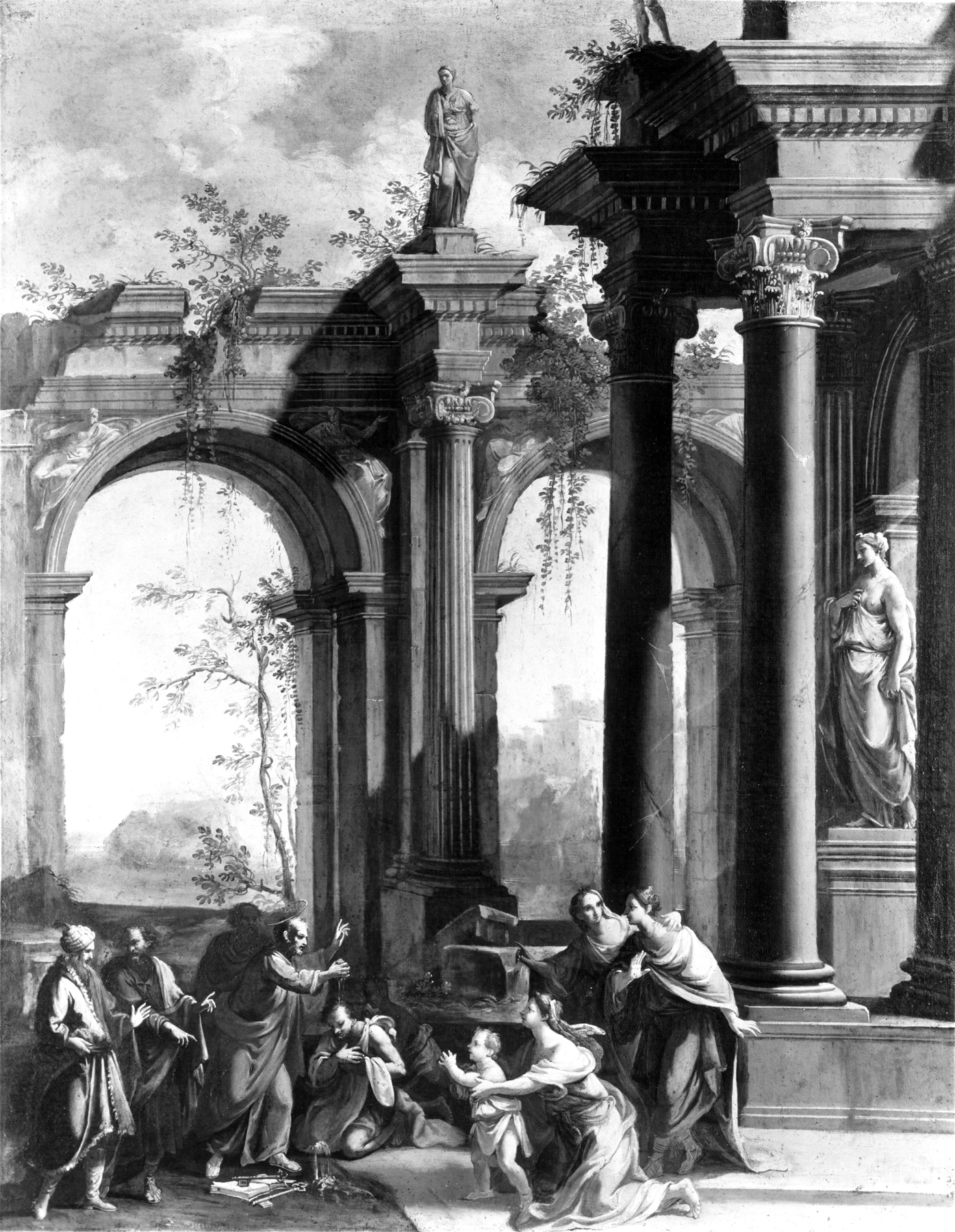
Thy Prayers And Thine Alms
“There was a certain man in Cæsarea called Cornelius, a centurion of the band called the Italian band, A devout man, and one that feared God with all his house, which gave much alms to the people, and prayed to God alway.”
Acts 10:1-2
“Cornelius was a Roman centurion. He was a man of wealth and noble birth, and his position was one of trust and honor. A heathen by birth, training, and education, through contact with the Jews he had gained a knowledge of God, and he worshiped Him with a true heart, showing the sincerity of his faith by compassion to the poor.”
Ellen G. White · The Acts of the Apostles, p. 132
A Roman officer commanding occupying troops is the last person this early church would have expected heaven to single out — and yet Luke introduces him with exactly the same devotional vocabulary already used for the most faithful Jewish believers in this book: devout, God-fearing, generous, constant in prayer.
“Though Cornelius believed the prophecies and was looking for the Messiah to come, he had not a knowledge of the gospel as revealed in the life and death of Christ. He was not a member of the Jewish church and would have been looked upon by the rabbis as a heathen and unclean. But the same Holy Watcher who said of Abraham, ‘I know him,’ knew Cornelius also, and sent a message direct from heaven to him.”
Ellen G. White · The Acts of the Apostles, p. 133
Every category the Jewish religious system used to classify Cornelius — heathen, unclean, outsider — simply does not register with God at all. Heaven has already been watching this man long before any believer ever spoke a word to him.
“He saw in a vision evidently about the ninth hour of the day an angel of God coming in to him, and saying unto him, Cornelius. And when he looked on him, he was afraid, and said, What is it, Lord? And he said unto him, Thy prayers and thine alms are come up for a memorial before God.”
Acts 10:3-4
“And now send men to Joppa, and call for one Simon, whose surname is Peter: He lodgeth with one Simon a tanner, whose house is by the sea side: he shall tell thee what thou oughtest to do.”
Acts 10:5-6
“The explicitness of these directions, in which was named even the occupation of the man with whom Peter was staying, shows that Heaven is acquainted with the history and business of men in every station of life. God is familiar with the experience and work of the humble laborer, as well as with that of the king upon his throne.”
Ellen G. White · The Acts of the Apostles, p. 133
An angel appears with the full authority of heaven behind him, and yet is not sent to preach the gospel himself. He can only point Cornelius toward a man, in a specific house, by a specific trade — God’s chosen method still routed, deliberately, through human hands rather than angelic ones.
“The angel was not commissioned to tell Cornelius the story of the cross. A man subject, even as the centurion himself, to human frailties and temptations, was to be the one to tell him of the crucified and risen Saviour. … And to men and women has been committed the sacred trust of making known ‘the unsearchable riches of Christ.’”
Ellen G. White · The Acts of the Apostles, p. 134
This is the same principle that sent Ananias, not a heavenly messenger, to lay hands on Saul in chapter 9, and Philip, not an angel, to sit beside the Ethiopian eunuch’s chariot in chapter 8. The pattern is now unmistakable across three straight chapters: heaven arranges the meeting, but a fellow human being always has to actually speak the gospel.
What God Hath Cleansed
“On the morrow, as they went on their journey, and drew nigh unto the city, Peter went up upon the housetop to pray about the sixth hour: And he became very hungry, and would have eaten: but while they made ready, he fell into a trance.”
Acts 10:9-10
“It was not for physical food alone that Peter hungered. As from the housetop he viewed the city of Joppa and the surrounding country he hungered for the salvation of his countrymen. He had an intense desire to point out to them from the Scriptures the prophecies relating to the sufferings and death of Christ.”
Ellen G. White · The Acts of the Apostles, p. 135
Even Peter’s own hunger, mentioned almost in passing by Luke, carries a double meaning in this account — a physical appetite that God is about to use as the very occasion for teaching him a hunger of an entirely different kind.
“And saw heaven opened, and a certain vessel descending unto him, as it had been a great sheet knit at the four corners, and let down to the earth: Wherein were all manner of fourfooted beasts of the earth, and wild beasts, and creeping things, and fowls of the air. And there came a voice to him, Rise, Peter; kill, and eat.”
Acts 10:11-13
“But Peter said, Not so, Lord; for I have never eaten any thing that is common or unclean. And the voice spake unto him again the second time, What God hath cleansed, that call not thou common. This was done thrice: and the vessel was received up again into heaven.”
Acts 10:14-16
“This vision conveyed to Peter both reproof and instruction. It revealed to him the purpose of God—that by the death of Christ the Gentiles should be made fellow heirs with the Jews to the blessings of salvation. … Now the Lord was seeking to teach Peter the world-wide extent of the divine plan.”
Ellen G. White · The Acts of the Apostles, p. 135
“Not so, Lord” is a small contradiction hiding in plain sight — a refusal spoken in the very same breath as an address of total submission. Peter is genuinely startled that a command from the Lord Himself could ask something his whole life’s training has taught him to consider impossible.
“How carefully the Lord worked to overcome the prejudice against the Gentiles that had been so firmly fixed in Peter’s mind by his Jewish training! By the vision of the sheet and its contents He sought to divest the apostle’s mind of this prejudice and to teach the important truth that in heaven there is no respect of persons; that Jew and Gentile are alike precious in God’s sight.”
Ellen G. White · The Acts of the Apostles, p. 136
The vision has to be repeated three times before it can even begin to loosen a conviction this deeply rooted. God does not simply announce a new policy to Peter; He patiently, deliberately dismantles a prejudice built over an entire lifetime.
“Now while Peter doubted in himself what this vision which he had seen should mean, behold, the men which were sent from Cornelius had made enquiry for Simon’s house, and stood before the gate. … While Peter thought on the vision, the Spirit said unto him, Behold, three men seek thee. Arise therefore, and get thee down, and go with them, doubting nothing: for I have sent them.”
Acts 10:17, 19-20
The vision’s true meaning arrives, quite literally, at Peter’s own front gate before he has finished puzzling over it — heaven’s timing so exact that the men from Cornelius knock while the mystery of the sheet is still turning over in his mind.
God Is No Respecter Of Persons
“To Peter this was a trying command, and it was with reluctance at every step that he undertook the duty laid upon him; but he dared not disobey. … On the following morning he set out for Caesarea, accompanied by six of his brethren. These were to be witnesses of all that he should say or do while visiting the Gentiles, for Peter knew that he would be called to account for so direct a violation of the Jewish teachings.”
Ellen G. White · The Acts of the Apostles, p. 137
Peter obeys, but not without real personal cost. He is careful enough to bring six witnesses along specifically because he already anticipates having to defend this exact trip once he returns to Jerusalem — a suspicion that turns out, by the start of the next chapter, to be entirely justified.
“And as Peter was coming in, Cornelius met him, and fell down at his feet, and worshipped him. But Peter took him up, saying, Stand up; I myself also am a man.”
Acts 10:25-26
“Cornelius, overwhelmed with reverence for the one sent by God to teach him, fell at the apostle’s feet and worshiped him. Peter was horror-stricken, and he lifted the centurion up, saying, ‘Stand up; I myself also am a man.’”
Ellen G. White · The Acts of the Apostles, p. 137
A Roman centurion, a man accustomed to receiving salutes and obedience from everyone around him, bows to the ground before a Galilean fisherman. Peter’s horror at the gesture is genuine and immediate; whatever authority he carries, he refuses even a moment’s confusion about where it actually comes from.
“And he said unto them, Ye know how that it is an unlawful thing for a man that is a Jew to keep company, or come unto one of another nation; but God hath shewed me that I should not call any man common or unclean.”
Acts 10:28
“Then Peter opened his mouth, and said, Of a truth I perceive that God is no respecter of persons: But in every nation he that feareth him, and worketh righteousness, is accepted with him.”
Acts 10:34-35
It has taken three repetitions of a vision, an all-night journey, and the sight of a Roman officer’s own household gathered eagerly to listen, but the lesson has finally, fully landed. Peter says out loud, to a room full of Gentiles, the exact truth the sheet was sent to teach him.
To Him Give All The Prophets Witness
“The word which God sent unto the children of Israel, preaching peace by Jesus Christ: (he is Lord of all:) That word, I say, ye know, which was published throughout all Judæa, and began from Galilee, after the baptism which John preached.”
Acts 10:36-37
“How God anointed Jesus of Nazareth with the Holy Ghost and with power: who went about doing good, and healing all that were oppressed of the devil; for God was with him. And we are witnesses of all things which he did both in the land of the Jews, and in Jerusalem; whom they slew and hanged on a tree.”
Acts 10:38-39
“Then to that company of attentive hearers the apostle preached Christ—His life, His miracles, His betrayal and crucifixion, His resurrection and ascension, and His work in heaven as man’s representative and advocate. As Peter pointed those present to Jesus as the sinner’s only hope, he himself understood more fully the meaning of the vision he had seen, and his heart glowed with the spirit of the truth that he was presenting.”
Ellen G. White · The Acts of the Apostles, p. 138
Peter’s own understanding of the vision keeps deepening as he preaches, not before it — proof that obedience to an unclear command often teaches more than waiting for full clarity ever could have.
“Him God raised up the third day, and shewed him openly; Not to all the people, but unto witnesses chosen before of God, even to us, who did eat and drink with him after he rose from the dead.”
Acts 10:40-41
“And he commanded us to preach unto the people, and to testify that it is he which was ordained of God to be the Judge of quick and dead. To him give all the prophets witness, that through his name whosoever believeth in him shall receive remission of sins.”
Acts 10:42-43
“Whosoever believeth in him” is the sermon’s own quiet climax, and Peter does not need to spell out for this Gentile household exactly how far that word now reaches. They can hear it for themselves, sitting in the very room his presence there has already answered.
Can Any Man Forbid Water?
“While Peter yet spake these words, the Holy Ghost fell on all them which heard the word. And they of the circumcision which believed were astonished, as many as came with Peter, because that on the Gentiles also was poured out the gift of the Holy Ghost. For they heard them speak with tongues, and magnify God.”
Acts 10:44-46
“Suddenly the discourse was interrupted by the descent of the Holy Spirit.”
Ellen G. White · The Acts of the Apostles, p. 139
God does not wait for Peter to finish his sermon, and does not wait for anyone in the room to be baptized first. Heaven settles the question of whether Gentiles belong before a single human being in that room has the chance to vote on it.
“Then answered Peter, Can any man forbid water, that these should not be baptized, which have received the Holy Ghost as well as we? And he commanded them to be baptized in the name of the Lord. Then prayed they him to tarry certain days.”
Acts 10:47-48
“Thus was the gospel brought to those who had been strangers and foreigners, making them fellow citizens with the saints, and members of the household of God. The conversion of Cornelius and his household was but the first fruits of a harvest to be gathered in.”
Ellen G. White · The Acts of the Apostles, p. 139
Peter’s own question answers itself. Water has never been the real barrier in this whole story; three chapters of visions, journeys, and one very reluctant apostle have all been aimed at removing the barrier that was never in the water at all, but in the hearts of the very people entrusted to pour it.
