Lamentations 3 is the heart of the book, and it begins in the deepest darkness of all: “I am the man that hath seen affliction by the rod of his wrath.” For eighteen verses the poet describes a God who seems to have turned against him, until he says, “My strength and my hope is perished from the LORD.” Then, at the very bottom, everything turns: “This I recall to my mind, therefore have I hope. It is of the LORD’s mercies that we are not consumed, because his compassions fail not. They are new every morning: great is thy faithfulness.” From the pit of a dungeon, the poet discovers that God has been near all along: “Thou drewest near in the day that I called upon thee: thou saidst, Fear not.”
A study in Lamentations 3 · Arthur Baldwin · StandUp4Jesus.Org · 19 min read
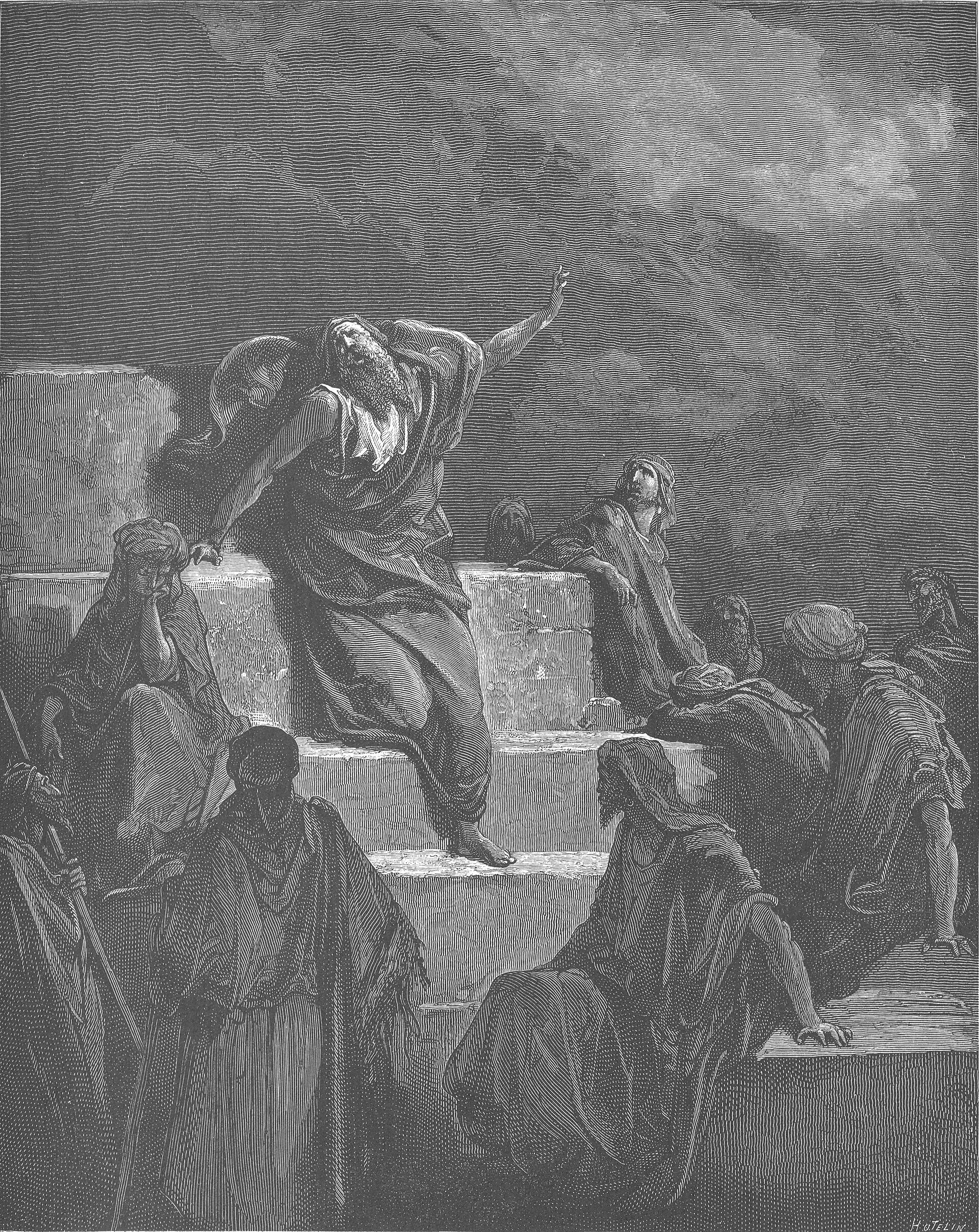
I Am The Man That Hath Seen Affliction
“I am the man that hath seen affliction by the rod of his wrath. He hath led me, and brought me into darkness, but not into light. Surely against me is he turned; he turneth his hand against me all the day. My flesh and my skin hath he made old; he hath broken my bones. He hath builded against me, and compassed me with gall and travail. He hath set me in dark places, as they that be dead of old. He hath hedged me about, that I cannot get out: he hath made my chain heavy. Also when I cry and shout, he shutteth out my prayer. He hath inclosed my ways with hewn stone, he hath made my paths crooked. He was unto me as a bear lying in wait, and as a lion in secret places. He hath turned aside my ways, and pulled me in pieces: he hath made me desolate. He hath bent his bow, and set me as a mark for the arrow. He hath caused the arrows of his quiver to enter into my reins. I was a derision to all my people; and their song all the day. He hath filled me with bitterness, he hath made me drunken with wormwood. He hath also broken my teeth with gravel stones, he hath covered me with ashes. And thou hast removed my soul far off from peace: I forgat prosperity. And I said, My strength and my hope is perished from the LORD:”
Lamentations 3:1-18
Chapters 1 and 2 spoke of a city. Chapter 3 speaks of a man: “I am the man that hath seen affliction.” The poem is the most carefully built in the book, a triple acrostic of 66 verses in which each letter of the Hebrew alphabet begins three lines in a row. The form itself says something. Even grief this deep can be brought to God in order, line by line, letter by letter.
And it is very deep. The man feels hunted, walled in, chained, shot with arrows, mocked. Worst of all: “when I cry and shout, he shutteth out my prayer.” Many believers have known nights like this, when heaven seemed shut and God felt like an enemy. The Bible does not pretend these nights never come. It gives us words for them.
Verse 14 sounds very much like Jeremiah’s own life: “I was a derision to all my people; and their song all the day.” For forty years he warned a nation that laughed at him. He was beaten, put in the stocks, thrown into prison and lowered into a muddy pit.
“Cruel were the mockings he was called upon to endure. His sensitive soul was pierced through and through by the arrows of derision hurled at him by those who despised his messages and made light of his burden for their conversion.”
Ellen G. White · Prophets and Kings, p. 420
There is another Man of sorrows behind these lines. Isaiah described Him as “despised and rejected of men; a man of sorrows, and acquainted with grief” (Isaiah 53:3). Jesus too was mocked “all the day,” and on the cross He cried out with the same sense of abandonment: “My God, my God, why hast thou forsaken me?” (Matthew 27:46). When we feel what the man in Lamentations 3 felt, we are not alone. “For we have not an high priest which cannot be touched with the feeling of our infirmities” (Hebrews 4:15).
His Compassions Fail Not
“Remembering mine affliction and my misery, the wormwood and the gall. My soul hath them still in remembrance, and is humbled in me. This I recall to my mind, therefore have I hope. It is of the LORD’s mercies that we are not consumed, because his compassions fail not. They are new every morning: great is thy faithfulness. The LORD is my portion, saith my soul; therefore will I hope in him. The LORD is good unto them that wait for him, to the soul that seeketh him. It is good that a man should both hope and quietly wait for the salvation of the LORD. It is good for a man that he bear the yoke in his youth. He sitteth alone and keepeth silence, because he hath borne it upon him. He putteth his mouth in the dust; if so be there may be hope. He giveth his cheek to him that smiteth him: he is filled full with reproach. For the Lord will not cast off for ever: But though he cause grief, yet will he have compassion according to the multitude of his mercies. For he doth not afflict willingly nor grieve the children of men. To crush under his feet all the prisoners of the earth, To turn aside the right of a man before the face of the most High, To subvert a man in his cause, the Lord approveth not. Who is he that saith, and it cometh to pass, when the Lord commandeth it not? Out of the mouth of the most High proceedeth not evil and good? Wherefore doth a living man complain, a man for the punishment of his sins?”
Lamentations 3:19-39
“This I recall to my mind, therefore have I hope.” Nothing outside has changed. The city is still in ruins and the man is still in pain. What changes is what he chooses to remember. He stops dwelling only on “the wormwood and the gall” and calls to mind what he knows about God. Hope begins as an act of memory.
And here, near the very centre of the book, stands its greatest sentence: “It is of the LORD’s mercies that we are not consumed, because his compassions fail not. They are new every morning: great is thy faithfulness.” Judah deserved to be wiped out completely, and she was not. The fact that anyone was left alive was itself proof of mercy. And that mercy is not a supply that runs low. It is “new every morning,” as fresh as the manna that fell each day in the wilderness. Yesterday’s failures do not use up today’s compassion.
Ellen White saw this as the moment Jeremiah’s faith won its hardest battle:
“When called to drink of the cup of tribulation and sorrow, and when tempted in his misery to say, ‘My strength and my hope is perished from the Lord,’ he recalled the providences of God in his behalf and triumphantly exclaimed, ‘It is of the Lord’s mercies that we are not consumed, because His compassions fail not. They are new every morning: great is Thy faithfulness. The Lord is my portion, saith my soul; therefore will I hope in Him. The Lord is good unto them that wait for Him, to the soul that seeketh Him. It is good that a man should both hope and quietly wait for the salvation of the Lord.’”
Ellen G. White · Prophets and Kings, p. 421
“The LORD is my portion.” The land, the temple and the city were all gone. But the one thing that could not be taken was God Himself. David said the same: “The LORD is the portion of mine inheritance and of my cup” (Psalm 16:5). So did Asaph: “My flesh and my heart faileth: but God is the strength of my heart, and my portion for ever” (Psalm 73:26). When everything else is stripped away, the believer discovers that God was always enough.
“It is good that a man should both hope and quietly wait.” Waiting is not giving up. It is trusting God’s timing when we cannot see His hand. “But they that wait upon the LORD shall renew their strength” (Isaiah 40:31). The verses that follow describe what that patience looks like: sitting silent, putting one’s “mouth in the dust” in humility, even giving “his cheek to him that smiteth him.” Jesus would one day live these words. “I gave my back to the smiters, and my cheeks to them that plucked off the hair” (Isaiah 50:6).
Then comes a window into God’s heart: “For he doth not afflict willingly nor grieve the children of men.” The Hebrew literally says He does not afflict “from His heart.” Suffering is never God’s first desire for us. When He allows it, He has a purpose in it.
“The Saviour’s words have a message of comfort to those also who are suffering affliction or bereavement. Our sorrows do not spring out of the ground. God ‘doth not afflict willingly nor grieve the children of men.’”
Ellen G. White · Thoughts From the Mount of Blessing, p. 10
Verses 37 and 38 can sound troubling: “Out of the mouth of the most High proceedeth not evil and good?” The word “evil” here means calamity or disaster, not sin, just as in Isaiah 45:7: “I make peace, and create evil.” Nothing, not even the fall of Jerusalem, happened outside God’s knowledge and permission. And so the poet asks, “Wherefore doth a living man complain, a man for the punishment of his sins?” If we are still alive, mercy is still at work.
Let Us Search And Try Our Ways
“Let us search and try our ways, and turn again to the LORD. Let us lift up our heart with our hands unto God in the heavens. We have transgressed and have rebelled: thou hast not pardoned. Thou hast covered with anger, and persecuted us: thou hast slain, thou hast not pitied. Thou hast covered thyself with a cloud, that our prayer should not pass through. Thou hast made us as the offscouring and refuse in the midst of the people. All our enemies have opened their mouths against us. Fear and a snare is come upon us, desolation and destruction. Mine eye runneth down with rivers of water for the destruction of the daughter of my people. Mine eye trickleth down, and ceaseth not, without any intermission, Till the LORD look down, and behold from heaven. Mine eye affecteth mine heart because of all the daughters of my city. Mine enemies chased me sore, like a bird, without cause. They have cut off my life in the dungeon, and cast a stone upon me. Waters flowed over mine head; then I said, I am cut off.”
Lamentations 3:40-54
Hope leads to repentance. The “I” of the chapter now becomes “us”: “Let us search and try our ways, and turn again to the LORD.” The man who has found God’s mercy invites everyone around him to examine their lives and come home. This was the constant prayer of Jeremiah’s ministry.
“Amid the ruin wrought, Jeremiah could still declare, ‘It is of the Lord’s mercies that we are not consumed;’ and his constant prayer was, ‘Let us search and try our ways, and turn again to the Lord.’”
Ellen G. White · Prophets and Kings, p. 461
“Search and try our ways” is the same prayer David prayed: “Search me, O God, and know my heart: try me, and know my thoughts: And see if there be any wicked way in me, and lead me in the way everlasting” (Psalm 139:23-24). And it is not enough to search our ways. We must “turn again to the LORD,” and “lift up our heart with our hands,” not just our hands. Outward religion had failed Judah. God wanted their hearts.
The confession is honest: “We have transgressed and have rebelled.” It even admits that, for now, “thou hast not pardoned” and the cloud still hangs over their prayers. Repentance does not always bring instant relief from the consequences of sin. But the poet keeps weeping and praying “without any intermission, Till the LORD look down, and behold from heaven.” He will not stop until God answers.
Verses 53 and 54 bring us down into a pit: “They have cut off my life in the dungeon, and cast a stone upon me. Waters flowed over mine head; then I said, I am cut off.” It is hard not to think of what happened to Jeremiah during the siege: “Then took they Jeremiah, and cast him into the dungeon of Malchiah the son of Hammelech, that was in the court of the prison: and they let down Jeremiah with cords. And in the dungeon there was no water, but mire: so Jeremiah sunk in the mire” (Jeremiah 38:6). It was a deep, dark cistern, and a man left there would die.
Thou Drewest Near
“I called upon thy name, O LORD, out of the low dungeon. Thou hast heard my voice: hide not thine ear at my breathing, at my cry. Thou drewest near in the day that I called upon thee: thou saidst, Fear not. O Lord, thou hast pleaded the causes of my soul; thou hast redeemed my life. O LORD, thou hast seen my wrong: judge thou my cause. Thou hast seen all their vengeance and all their imaginations against me. Thou hast heard their reproach, O LORD, and all their imaginations against me; The lips of those that rose up against me, and their device against me all the day. Behold their sitting down, and their rising up; I am their musick. Render unto them a recompence, O LORD, according to the work of their hands. Give them sorrow of heart, thy curse unto them. Persecute and destroy them in anger from under the heavens of the LORD.”
Lamentations 3:55-66
“I called upon thy name, O LORD, out of the low dungeon.” From the bottom of the pit, the man prays. And this time heaven is not shut: “Thou hast heard my voice.” At the start of the chapter he said, “he shutteth out my prayer.” Now he says, “Thou drewest near in the day that I called upon thee: thou saidst, Fear not.” God had been there all along. The darkness had only hidden Him.
Jeremiah was lifted out of his muddy pit because an Ethiopian servant named Ebed-melech pleaded with the king for his life and pulled him up with ropes and old rags (Jeremiah 38:7-13). David knew the same rescue: “He brought me up also out of an horrible pit, out of the miry clay, and set my feet upon a rock, and established my goings” (Psalm 40:2). Whatever pit we are in, the same God hears and draws near.
“O Lord, thou hast pleaded the causes of my soul; thou hast redeemed my life.” God is pictured as a lawyer arguing His servant’s case and as a Redeemer buying back his life. Both are pictures of Christ, our Advocate with the Father and our Redeemer.
The chapter closes with a prayer that God will repay the man’s persecutors. Lines like these can trouble Christian readers. But notice what the man does not do. He takes no revenge himself. He hands the whole matter over to God: “judge thou my cause.” That is exactly what the New Testament teaches: “Dearly beloved, avenge not yourselves, but rather give place unto wrath: for it is written, Vengeance is mine; I will repay, saith the Lord” (Romans 12:19). Jesus showed the way when He suffered: He “committed himself to him that judgeth righteously” (1 Peter 2:23).
Lamentations 3 is a map for every dark night of the soul. It goes down into honest grief, holds on to what we know of God, turns in repentance, prays from the pit, and comes up to find that He was near all along. Whatever we are facing, the morning will bring new mercies, because “great is thy faithfulness.” In chapter 4 the poet returns to the ruined city, but he will never again speak as one without hope.
