Lamentations 4 goes back over the siege and the fall of Jerusalem, and it opens with an image that has haunted God’s people ever since: “How is the gold become dim! how is the most fine gold changed!” The “precious sons of Zion” are treated like broken clay pots. The chapter puts the blame where it belongs: “For the sins of her prophets, and the iniquities of her priests.” It remembers how Judah “watched for a nation that could not save us,” and how the king they trusted was caught like an animal in a pit. And then, at the very end, the first ray of light in the book: “The punishment of thine iniquity is accomplished, O daughter of Zion; he will no more carry thee away into captivity.”
A study in Lamentations 4 · Arthur Baldwin · StandUp4Jesus.Org · 16 min read
How Is The Gold Become Dim
“How is the gold become dim! how is the most fine gold changed! the stones of the sanctuary are poured out in the top of every street. The precious sons of Zion, comparable to fine gold, how are they esteemed as earthen pitchers, the work of the hands of the potter! Even the sea monsters draw out the breast, they give suck to their young ones: the daughter of my people is become cruel, like the ostriches in the wilderness. The tongue of the sucking child cleaveth to the roof of his mouth for thirst: the young children ask bread, and no man breaketh it unto them. They that did feed delicately are desolate in the streets: they that were brought up in scarlet embrace dunghills. For the punishment of the iniquity of the daughter of my people is greater than the punishment of the sin of Sodom, that was overthrown as in a moment, and no hands stayed on her. Her Nazarites were purer than snow, they were whiter than milk, they were more ruddy in body than rubies, their polishing was of sapphire: Their visage is blacker than a coal; they are not known in the streets: their skin cleaveth to their bones; it is withered, it is become like a stick. They that be slain with the sword are better than they that be slain with hunger: for these pine away, stricken through for want of the fruits of the field. The hands of the pitiful women have sodden their own children: they were their meat in the destruction of the daughter of my people. The LORD hath accomplished his fury; he hath poured out his fierce anger, and hath kindled a fire in Zion, and it hath devoured the foundations thereof. The kings of the earth, and all the inhabitants of the world, would not have believed that the adversary and the enemy should have entered into the gates of Jerusalem.”
Lamentations 4:1-12
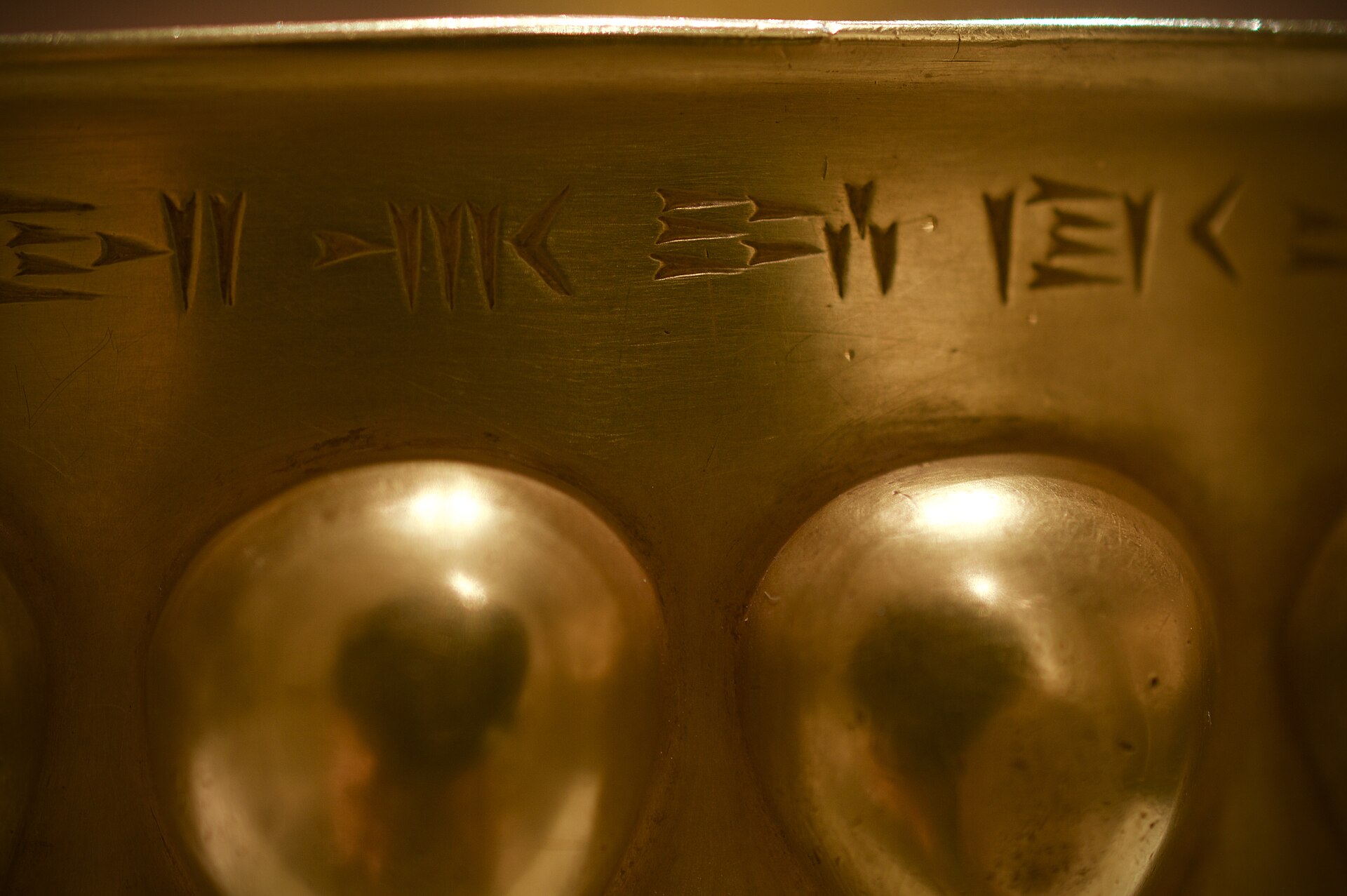
Gold does not rust, but it can lose its shine. Covered in soot and dirt, the finest gold looks no better than lead. That is the picture the poet chooses for his people. The “precious sons of Zion,” worth their weight in fine gold, are now treated like “earthen pitchers,” cheap clay pots that are thrown away when they crack.
Everything has been reversed. Those who once dined on delicacies now dig through rubbish heaps. Even the “Nazarites,” young men consecrated to God (Numbers 6:2), once radiant with health, are now so starved that no one recognizes them. And the poet says something startling: Jerusalem’s punishment was “greater than the punishment of the sin of Sodom.” Sodom was destroyed “as in a moment.” Jerusalem suffered slowly, through a long and terrible siege. And Jerusalem had far more light than Sodom ever had. Greater privilege brings greater responsibility.
Verse 10 records again the darkest horror of the siege, which we met in chapter 2: mothers driven by hunger to eat their own children. The poet does not dwell on it, and neither will we. It stands as a warning of how far a society can fall once it has thrown off God.
“The kings of the earth, and all the inhabitants of the world, would not have believed” that Jerusalem could fall. The city seemed invincible. It had survived the Assyrian siege in Hezekiah’s day. People were sure God would never let His city be taken. But a city’s safety was never in its walls. It was in its faithfulness.
Ellen White saw in verse 1 a warning for the church in every age, including our own:
“The standard of holiness is the same today as in the days of the apostles. Neither the promises nor the requirements of God have lost aught of their force. But what is the state of the Lord’s professed people as compared with the early church? Where is the Spirit and power of God which then attended the preaching of the gospel? Alas, ‘how is the gold become dim! how is the most fine gold changed!’”
Ellen G. White · Testimonies for the Church, vol. 5, p. 240
And she explained how the gold loses its shine. It does not happen all at once:
“The change in her spiritual state has come gradually and almost imperceptibly. As she began to seek the praise and friendship of the world, her faith diminished, her zeal grew languid, her fervent devotion gave place to dead formality. Every advance step toward the world was a step away from God.”
Ellen G. White · Testimonies for the Church, vol. 5, p. 240
Jesus sends the same warning to the last church in Revelation, the church that thinks it is “rich, and increased with goods, and have need of nothing” but is really “wretched, and miserable, and poor, and blind, and naked.” His remedy is to come to Him for something better: “I counsel thee to buy of me gold tried in the fire, that thou mayest be rich” (Revelation 3:17-18). Dim gold can shine again, but only when it is refined by Christ.
For The Sins Of Her Prophets
“For the sins of her prophets, and the iniquities of her priests, that have shed the blood of the just in the midst of her, They have wandered as blind men in the streets, they have polluted themselves with blood, so that men could not touch their garments. They cried unto them, Depart ye; it is unclean; depart, depart, touch not: when they fled away and wandered, they said among the heathen, They shall no more sojourn there. The anger of the LORD hath divided them; he will no more regard them: they respected not the persons of the priests, they favoured not the elders.”
Lamentations 4:13-16
Why did it happen? “For the sins of her prophets, and the iniquities of her priests.” The men who should have been the nation’s spiritual guides were the ones who led it astray. Worse, they “shed the blood of the just.” This was not just a figure of speech. When Jeremiah preached in the temple, “the priests and the prophets and all the people took him, saying, Thou shalt surely die” (Jeremiah 26:8). Another faithful prophet, Urijah, was not so fortunate: King Jehoiakim had him brought back from Egypt, and “slew him with the sword, and cast his dead body into the graves of the common people” (Jeremiah 26:23).
Now those same religious leaders stagger through the streets “as blind men,” so defiled that people shout at them the words lepers had to cry: “Depart ye; it is unclean; depart, depart, touch not.” The men who once declared others clean or unclean are now treated as unclean themselves. Even the heathen nations do not want them.
Leaders carry a heavy responsibility. When those who teach God’s word lead the people away from it, the whole community suffers. Jesus said His followers are “the salt of the earth,” and warned what happens when salt loses its flavor: “it is thenceforth good for nothing, but to be cast out, and to be trodden under foot of men” (Matthew 5:13). That is a picture of what happened to Jerusalem’s priests.
A Nation That Could Not Save Us
“As for us, our eyes as yet failed for our vain help: in our watching we have watched for a nation that could not save us. They hunt our steps, that we cannot go in our streets: our end is near, our days are fulfilled; for our end is come. Our persecutors are swifter than the eagles of the heaven: they pursued us upon the mountains, they laid wait for us in the wilderness. The breath of our nostrils, the anointed of the LORD, was taken in their pits, of whom we said, Under his shadow we shall live among the heathen.”
Lamentations 4:17-20
During the siege, the people of Jerusalem kept watching the horizon for help: “we have watched for a nation that could not save us.” That nation was Egypt. For a short time Pharaoh’s army marched north, and the Babylonians lifted the siege to meet it. Jerusalem rejoiced. But Jeremiah had already told them how it would end: “Behold, Pharaoh’s army, which is come forth to help you, shall return to Egypt into their own land” (Jeremiah 37:7). Egypt went home, and Babylon came back.
Isaiah had warned Judah about this long before: “Woe to them that go down to Egypt for help; and stay on horses, and trust in chariots, because they are many; and in horsemen, because they are very strong; but they look not unto the Holy One of Israel, neither seek the LORD!” (Isaiah 31:1). And Jeremiah said it more bluntly: “Cursed be the man that trusteth in man, and maketh flesh his arm, and whose heart departeth from the LORD” (Jeremiah 17:5). We are always tempted to watch for some human rescue, a government, a leader, a plan. They cannot save us.
Then the people trusted their king: “The breath of our nostrils, the anointed of the LORD,” the one “of whom we said, Under his shadow we shall live among the heathen.” This was King Zedekiah, the last king of Judah. When the walls were broken, he fled by night, but “the army of the Chaldees pursued after the king, and overtook him in the plains of Jericho: and all his army were scattered from him” (2 Kings 25:5). The man they hoped would shelter them was “taken in their pits,” caught like a hunted animal.
Zedekiah had been given every chance. Jeremiah told him plainly that if he surrendered, the city would be spared. He believed the prophet privately but was afraid of what people would say. Ellen White describes what he could have done:
“If Zedekiah had stood up bravely and declared that he believed the words of the prophet, already half fulfilled, what desolation might have been averted! He should have said, I will obey the Lord, and save the city from utter ruin. I dare not disregard the commands of God because of the fear or favor of man. I love the truth, I hate sin, and I will follow the counsel of the Mighty One of Israel.”
Ellen G. White · Prophets and Kings, p. 458
“Put not your trust in princes, nor in the son of man, in whom there is no help” (Psalm 146:3). There is only one Anointed One whose shadow truly shelters us, and He was never captured against His will. He gave Himself up.
The Punishment Is Accomplished
“Rejoice and be glad, O daughter of Edom, that dwellest in the land of Uz; the cup also shall pass through unto thee: thou shalt be drunken, and shalt make thyself naked. The punishment of thine iniquity is accomplished, O daughter of Zion; he will no more carry thee away into captivity: he will visit thine iniquity, O daughter of Edom; he will discover thy sins.”
Lamentations 4:21-22
Edom was descended from Esau, Jacob’s brother. When Jerusalem fell, Edom did not help its relatives. It cheered. “Remember, O LORD, the children of Edom in the day of Jerusalem; who said, Rase it, rase it, even to the foundation thereof” (Psalm 137:7). The prophet Obadiah condemned them for it: “neither shouldest thou have rejoiced over the children of Judah in the day of their destruction” (Obadiah 1:12). (See this site’s study of Obadiah.)
So the poet speaks with bitter irony: “Rejoice and be glad, O daughter of Edom.” Enjoy it while you can, because “the cup also shall pass through unto thee.” The cup of God’s judgment that Judah drank would be passed to Edom next. And it was. Within a few centuries the Edomites had been driven out of their homeland by Arab tribes, and after the first century AD they disappear from history as a people.
But the most important words in the chapter are spoken to Zion: “The punishment of thine iniquity is accomplished, O daughter of Zion; he will no more carry thee away into captivity.” After four chapters of grief, here is the first clear promise. The punishment had an end. God’s discipline is never endless for those who turn to Him. Isaiah announced the same good news to the exiles: “Speak ye comfortably to Jerusalem, and cry unto her, that her warfare is accomplished, that her iniquity is pardoned” (Isaiah 40:2).
For the believer, that promise has an even deeper fulfillment. Our punishment has been accomplished, not because we paid it, but because Christ bore it. On the cross He said, “It is finished.” The gold that sin dimmed can be made bright again. In the last chapter of the book, the people will turn that hope into prayer.
