A new governor inherits an old prisoner and an old grudge, and the same murder plot that failed two chapters ago simply gets proposed again in a different form. Paul, weary of endless delay and knowing exactly what a Jerusalem trial would actually mean, finally plays the one card that changes everything: his citizenship, and three words that override every local court that could still reach him.
A study in Acts 25 · Arthur Baldwin · StandUp4Jesus.Org · 12 min read
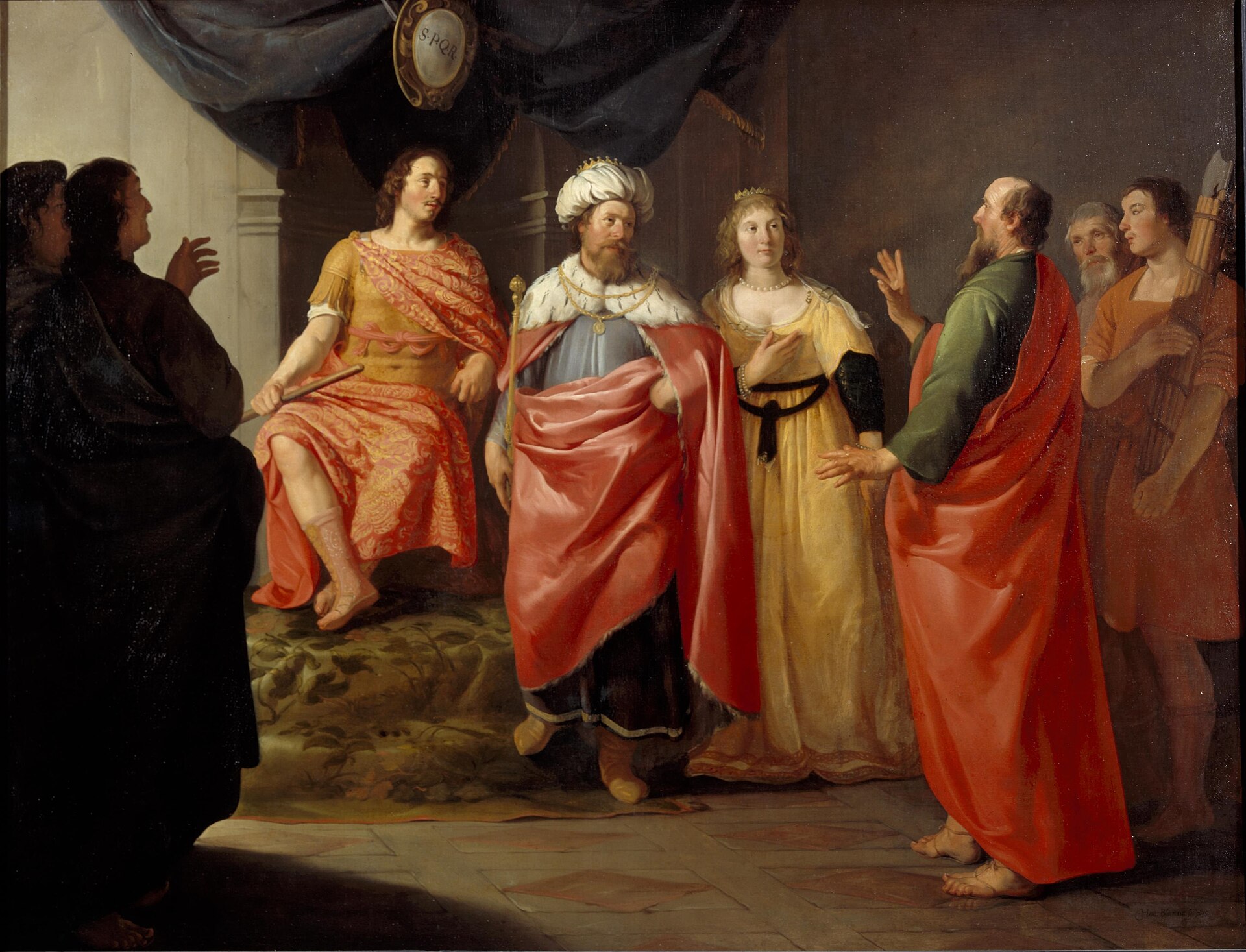
It Is Not The Manner Of The Romans
“Now when Festus was come into the province, after three days he ascended from Cæsarea to Jerusalem. Then the high priest and the chief of the Jews informed him against Paul, and besought him, And desired favour against him, that he would send for him to Jerusalem, laying wait in the way to kill him.”
Acts 25:1-3
“In making this request they purposed to waylay Paul along the road to Jerusalem and murder him. But Festus had a high sense of the responsibility of his position, and courteously declined to send for Paul.”
Ellen G. White · The Acts of the Apostles, p. 428
Barely three days into his new post, before he has any real understanding of the case, Festus is already being asked to hand a Roman prisoner over to men whose only plan, unknown to him, is ambush and murder — the exact same conspiracy this study’s own twenty-third chapter recorded failing once already, now simply proposed to a governor who has not yet learned to distrust it.
“But Festus answered, that Paul should be kept at Cæsarea, and that he himself would depart shortly thither. Let them therefore, said he, which among you are able, go down with me, and accuse this man, if there be any wickedness in him.”
Acts 25:4-5
Festus never has to know the plot was murderous to refuse it; ordinary Roman legal procedure — the accused stays where he is, the accusers travel to him — happens to be exactly what saves Paul’s life this time, without any special divine intervention needed at all.
“And when he was come, the Jews which came down from Jerusalem stood round about, and laid many and grievous complaints against Paul, which they could not prove. While he answered for himself, Neither against the law of the Jews, neither against the temple, nor yet against Cæsar, have I offended any thing at all.”
Acts 25:7-8
“Festus discerned that the question in dispute related wholly to Jewish doctrines, and that, rightly understood, there was nothing in the charges against Paul, could they be proved, that would render him subject to sentence of death, or even to imprisonment.”
Ellen G. White · The Acts of the Apostles, p. 429
Paul’s own three-part denial covers every conceivable jurisdiction at once — Jewish religious law, the temple itself, and Roman civil authority — a comprehensive answer to charges that, once again, nobody in the room can actually substantiate.
I Appeal Unto Caesar
“But Festus, willing to do the Jews a pleasure, answered Paul, and said, Wilt thou go up to Jerusalem, and there be judged of these things before me?”
Acts 25:9
“Yet he saw clearly the storm of rage that would be created if Paul were not condemned or delivered into their hands. And so, ‘willing to do the Jews a pleasure,’ Festus turned to Paul, and asked if he was willing to go to Jerusalem under his protection, to be tried by the Sanhedrin.”
Ellen G. White · The Acts of the Apostles, p. 429
Festus is a genuinely more principled man than Felix in almost every visible respect, and yet the exact same political pressure eventually bends even him — a “protection” that would march Paul straight back through the very territory where forty men once swore an oath to kill him.
“Then said Paul, I stand at Cæsar’s judgment seat, where I ought to be judged: to the Jews have I done no wrong, as thou very well knowest. For if I be an offender, or have committed any thing worthy of death, I refuse not to die: but if there be none of these things whereof these accuse me, no man may deliver me unto them. I appeal unto Cæsar.”
Acts 25:10-11
“He knew that, like the prophet Elijah, he would be safer among the heathen than with those who had rejected light from heaven and hardened their hearts against the gospel. Weary of strife, his active spirit could ill endure the repeated delays and wearing suspense of his trial and imprisonment. He therefore decided to exercise his privilege, as a Roman citizen, of appealing to Caesar.”
Ellen G. White · The Acts of the Apostles, p. 430
Paul explicitly states he is not afraid of a just death — “I refuse not to die” — which makes clear this appeal is not personal fear driving the decision. It is a calculated legal maneuver, using the one privilege that can finally lift his case entirely out of a jurisdiction that has already tried to kill him twice.
“Then Festus, when he had conferred with the council, answered, Hast thou appealed unto Cæsar? unto Cæsar shalt thou go.”
Acts 25:12
This one sentence, spoken almost offhandedly by a provincial governor, is the exact legal hinge on which the rest of this book now turns — the whole remaining narrative, all the way to its own final chapter, will simply be the working-out of this single appeal.
I Would Also Hear The Man Myself
“And after certain days king Agrippa and Bernice came unto Cæsarea to salute Festus. And when they had been there many days, Festus declared Paul’s cause unto the king, saying, There is a certain man left in bonds by Felix.”
Acts 25:13-14
Agrippa’s visit is purely social — a courtesy call to the new governor — and Paul’s case comes up almost as an afterthought, evidence that Festus genuinely does not know what to do with a prisoner whose real dispute, as he is about to admit out loud, he does not fully understand.
“But had certain questions against him of their own superstition, and of one Jesus, which was dead, whom Paul affirmed to be alive.”
Acts 25:19
Coming from a pagan Roman official, “one Jesus, which was dead, whom Paul affirmed to be alive” is a strikingly accurate, almost accidental summary of the entire gospel — the resurrection itself, stated in the flattest possible legal language, by a man who has no idea he is describing the hinge of human history.
“Then Agrippa said unto Festus, I would also hear the man myself. To morrow, said he, thou shalt hear him.”
Acts 25:22
Agrippa, as this study’s own next chapter will show, genuinely does have “expert” knowledge of Jewish customs and questions — his curiosity here is not idle entertainment but the informed interest of a man who might actually be able to follow an argument Festus himself cannot.
“And on the morrow, when Agrippa was come, and Bernice, with great pomp, and was entered into the place of hearing, with the chief captains, and principal men of the city, at Festus’ commandment Paul was brought forth.”
Acts 25:23
“In honor of his visitors, Festus had sought to make this an occasion of imposing display. The rich robes of the procurator and his guests, the swords of the soldiers, and the gleaming armor of their commanders, lent brilliancy to the scene.”
Ellen G. White · The Acts of the Apostles, p. 434
“Great pomp” is not an incidental detail — this is theater, staged for the benefit of visiting royalty, and Paul, still chained, is about to walk into a room built entirely to project exactly the kind of worldly power his own gospel keeps quietly relativizing.
“But when I found that he had committed nothing worthy of death, and that he himself hath appealed to Augustus, I have determined to send him. Of whom I have no certain thing to write unto my lord.”
Acts 25:25-26
Festus’s own dilemma, stated with unusual candor for a Roman official, is almost comic: he must ship a prisoner to the emperor himself and has genuinely nothing coherent to write about what the man actually did wrong — the whole elaborate hearing that follows exists mainly to help Festus fill in his own paperwork.
“For it seemeth to me unreasonable to send a prisoner, and not withal to signify the crimes laid against him.”
Acts 25:27
The chapter closes on this quietly absurd admission: after five separate hearings across two governors and one full Sanhedrin trial, the Roman Empire’s own most careful officials still cannot articulate, on paper, what crime Paul is actually accused of committing.
