The last chapter of Paul’s last letter. He solemnly charges Timothy to “preach the word,” warns of a day when people will want teachers who tell them only what they want to hear, and then, facing execution, looks back on his whole life: “I have fought a good fight, I have finished my course, I have kept the faith.” He looks forward too, not to a reward at death, but to a crown the Lord will give “at that day” to everyone who loves His appearing.
A study in 2 Timothy 4 · Arthur Baldwin · StandUp4Jesus.Org · 23 min read
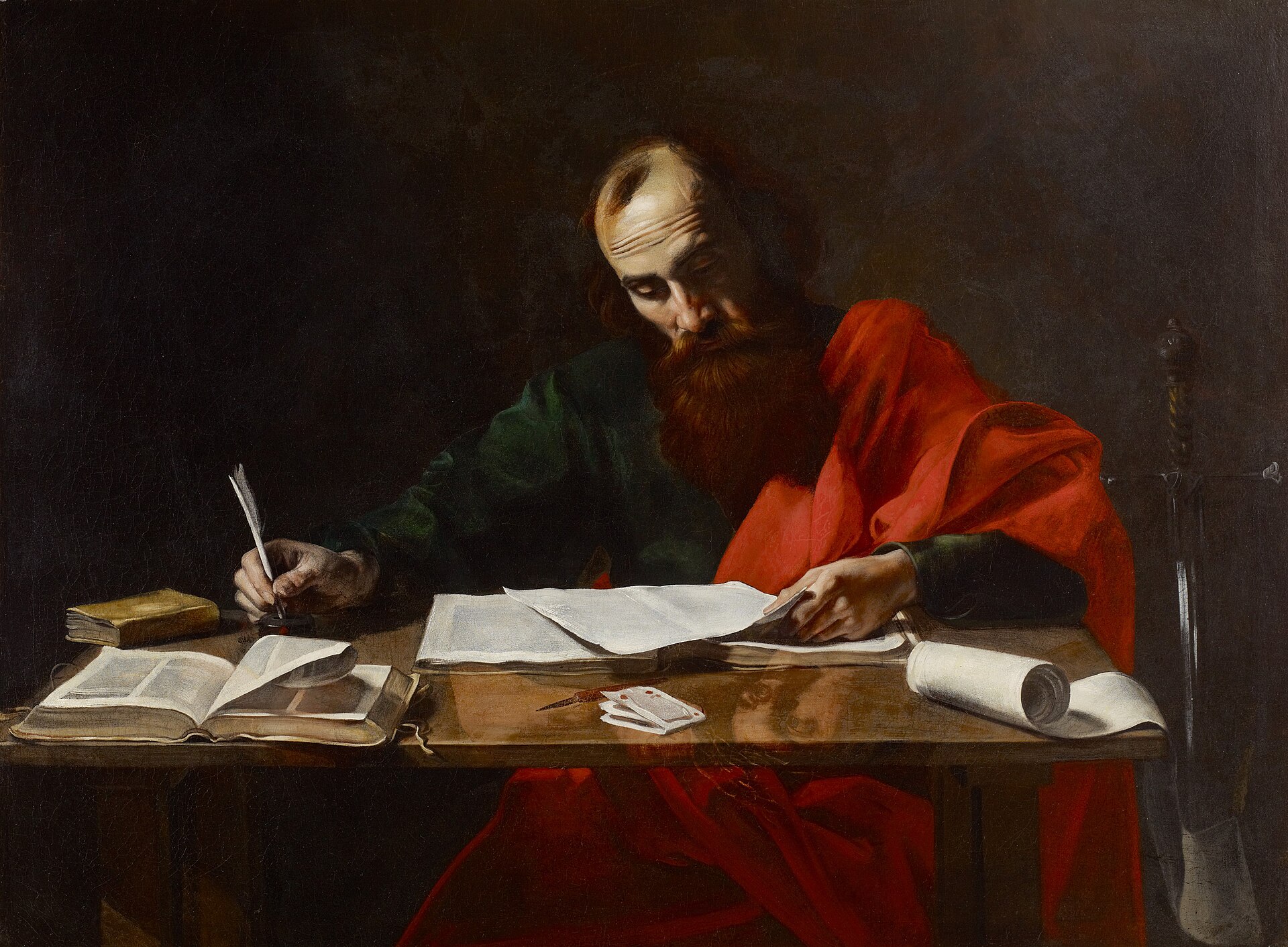
Preach The Word
“I charge thee therefore before God, and the Lord Jesus Christ, who shall judge the quick and the dead at his appearing and his kingdom; Preach the word; be instant in season, out of season; reprove, rebuke, exhort with all longsuffering and doctrine.”
2 Timothy 4:1-2
Paul brings Timothy, in effect, into a courtroom. The charge is given “before God, and the Lord Jesus Christ,” the One who will judge “the quick and the dead” — the living and the dead — “at his appearing and his kingdom.” Every minister, and every believer, will one day give account to Him. That is the setting for the command that follows.
“Preach the word.” Not opinions, not philosophy, not the latest trend — the word, the God-breathed Scriptures Paul has just described in chapter 3. And do it “in season, out of season”: when it is welcome and when it is not, when it is convenient and when it is not.
“Summoning Timothy before the bar of God, Paul bids him preach the word, not the sayings and customs of men; to be ready to witness for God whenever opportunity should present itself—before large congregations and private circles, by the way and at the fireside, to friends and to enemies, whether in safety or exposed to hardship and peril, reproach and loss.”
Ellen G. White · The Acts of the Apostles, p. 503
The preaching Paul describes has three edges: “reprove, rebuke, exhort.” Timothy was gentle by nature, and Paul knew he might be tempted to leave out the hard parts. But the correction was to be given “with all longsuffering and doctrine” — with patience, and grounded in the truth of the word, not in personal irritation.
“To hate and reprove sin, and at the same time to show pity and tenderness for the sinner, is a difficult attainment. The more earnest our own efforts to attain to holiness of heart and life, the more acute will be our perception of sin and the more decided our disapproval of any deviation from the right. We must guard against undue severity toward the wrongdoer, but we must also be careful not to lose sight of the exceeding sinfulness of sin.”
Ellen G. White · The Acts of the Apostles, p. 503
Having Itching Ears
“For the time will come when they will not endure sound doctrine; but after their own lusts shall they heap to themselves teachers, having itching ears; And they shall turn away their ears from the truth, and shall be turned unto fables. But watch thou in all things, endure afflictions, do the work of an evangelist, make full proof of thy ministry.”
2 Timothy 4:3-5
Why the urgency? Because a time is coming when people “will not endure sound doctrine” — they will not put up with it. They will not stop wanting religion. Instead they will “heap to themselves teachers,” gathering as many as they like, all chosen to satisfy “their own lusts.” Their ears itch for something pleasant and new, and they find teachers happy to scratch them.
“The apostle does not here refer to the openly irreligious, but to the professing Christians who make inclination their guide, and thus become enslaved by self. Such are willing to listen to those doctrines only that do not rebuke their sins or condemn their pleasure-loving course. They are offended by the plain words of the faithful servants of Christ and choose teachers who praise and flatter them.”
Ellen G. White · The Acts of the Apostles, p. 504
Note the order in verse 4. First they “turn away their ears from the truth.” Then they “shall be turned unto fables.” Nobody lives in a vacuum. Those who turn from the truth do not end up believing nothing; they end up believing stories. Many of the most popular religious ideas of our time — that the dead are conscious in heaven or in torment, that God’s law was done away at the cross, that Sunday replaced the Sabbath — survive not because Scripture teaches them, but because they are comfortable and familiar.
Paul’s answer to Timothy is not to panic but to keep working: “watch thou in all things, endure afflictions, do the work of an evangelist, make full proof of thy ministry.” Stay alert, stay faithful, keep reaching people, and finish what God has given you to do.
“The answer is found in Paul’s exhortation to Timothy, ‘Preach the word.’ In the Bible are found the only safe principles of action. It is a transcript of the will of God, an expression of divine wisdom.”
Ellen G. White · The Acts of the Apostles, p. 506
I Have Fought A Good Fight
“For I am now ready to be offered, and the time of my departure is at hand. I have fought a good fight, I have finished my course, I have kept the faith: Henceforth there is laid up for me a crown of righteousness, which the Lord, the righteous judge, shall give me at that day: and not to me only, but unto all them also that love his appearing.”
2 Timothy 4:6-8
“I am now ready to be offered.” The picture is of a drink offering, wine poured out beside the sacrifice on the altar. Paul had used the same picture years before, when he wrote from his first Roman imprisonment: “if I be offered upon the sacrifice and service of your faith, I joy” (Philippians 2:17). Then it was a possibility. Now, he says, the pouring out has already begun. The word “departure” was used for loosing a ship from its moorings, or striking a tent to move on. Paul is ready to go.
Then comes his own summary of his life, in three short sentences. “I have fought a good fight” — the soldier. “I have finished my course” — the runner. “I have kept the faith” — the steward who has guarded what was entrusted to him. He does not boast of his achievements. He simply states that, by God’s grace, he did not quit.
Now look carefully at when Paul expects his reward. He does not say that the moment the sword falls he will be crowned in heaven. The crown is “laid up” — stored, reserved — and the Lord will give it “at that day.” Which day? The chapter has already told us: the day of “his appearing and his kingdom” (verse 1). And Paul will not receive it alone or ahead of anyone else. It is given “not to me only, but unto all them also that love his appearing.” Paul and every faithful believer are crowned together, at the second coming of Christ. Until then, the dead in Christ rest, and “the dead in Christ shall rise first” when the Lord Himself descends from heaven (1 Thessalonians 4:16).
“His life is hid with Christ in God, and he is persuaded that He who has conquered death is able to keep that which is committed to His trust. His mind grasps the Saviour’s promise, ‘I will raise him up at the last day.’ John 6:40. His thoughts and hopes are centered on the second coming of his Lord. And as the sword of the executioner descends and the shadows of death gather about the martyr, his latest thought springs forward, as will his earliest in the great awakening, to meet the Life-giver, who shall welcome him to the joy of the blest.”
Ellen G. White · The Acts of the Apostles, p. 512
For Paul, death is only a moment’s sleep. His next conscious thought after the executioner’s sword will be the voice of Christ calling him from the grave. That is why death held no terror for him, and why it need hold none for us.
Only Luke Is With Me
“Do thy diligence to come shortly unto me: For Demas hath forsaken me, having loved this present world, and is departed unto Thessalonica; Crescens to Galatia, Titus unto Dalmatia. Only Luke is with me. Take Mark, and bring him with thee: for he is profitable to me for the ministry. And Tychicus have I sent to Ephesus. The cloke that I left at Troas with Carpus, when thou comest, bring with thee, and the books, but especially the parchments.”
2 Timothy 4:9-13
After the high point of verses 6-8, the letter becomes very human. Paul is lonely. He wants Timothy to come quickly. And he tells three very different stories in a few words.
Demas had once been a fellow worker, named alongside Luke in Paul’s earlier letters (Colossians 4:14; Philemon 24). But he “hath forsaken me, having loved this present world.” The contrast with verse 8 is deliberate: the faithful love Christ’s appearing; Demas loved this present age. A person can stand close to the greatest of God’s servants and still walk away.
Luke, “the beloved physician,” had stayed. Only Luke. The man who wrote the Gospel and the book of Acts was there at the end.
And Mark. Years earlier, Mark had turned back from the first missionary journey, and Paul had refused to take him again, a disagreement so sharp that Paul and Barnabas parted company (Acts 15:37-39). Now Paul writes, “Take Mark, and bring him with thee: for he is profitable to me for the ministry.” The young man who failed had been restored, and the old apostle was glad to say so.
“Since the earlier years of his profession of faith, Mark’s Christian experience had deepened. As he had studied more closely the life and death of Christ he had obtained clearer views of the Saviour’s mission, its toils and conflicts. … In the face of severe trial and adversity, Mark continued steadfast, a wise and beloved helper of the apostle.”
Ellen G. White · The Acts of the Apostles, p. 455
Then comes a small, touching request: bring the cloak, because winter is coming and a Roman dungeon is cold (verse 21), and bring “the books, but especially the parchments.” Even at the very end, Paul wanted to read and study. The “parchments” were most likely copies of the Scriptures. The man who had just written that “all scripture is given by inspiration of God” wanted to spend his last days with it.
The Lord Stood With Me
“Alexander the coppersmith did me much evil: the Lord reward him according to his works: Of whom be thou ware also; for he hath greatly withstood our words. At my first answer no man stood with me, but all men forsook me: I pray God that it may not be laid to their charge. Notwithstanding the Lord stood with me, and strengthened me; that by me the preaching might be fully known, and that all the Gentiles might hear: and I was delivered out of the mouth of the lion.”
2 Timothy 4:14-17
Alexander had done Paul “much evil,” and Paul does not pretend otherwise. He warns Timothy about him. But he does not take revenge; he leaves Alexander with the Lord, who will judge every man “according to his works.”
Then Paul describes his “first answer,” his first hearing before the Roman court. Not one believer stood beside him. Everyone was too afraid. And Paul’s response sounds like his Master and like Stephen, whose death he had once approved: “I pray God that it may not be laid to their charge” (compare Acts 7:60, “Lord, lay not this sin to their charge”). No bitterness. Only forgiveness.
“Notwithstanding the Lord stood with me.” When every human friend was gone, Christ was there. And He used that lonely courtroom so “that all the Gentiles might hear.” Paul preached the gospel at the heart of the Roman Empire, before the emperor’s own court.
“After speaking of the scene of his trial before Nero, the desertion of his brethren, and the sustaining grace of a covenant-keeping God, Paul closed his letter by commending his beloved Timothy to the guardianship of the Chief Shepherd, who, though the undershepherds might be stricken down, would still care for His flock.”
Ellen G. White · The Acts of the Apostles, p. 508
“And the Lord shall deliver me from every evil work, and will preserve me unto his heavenly kingdom: to whom be glory for ever and ever. Amen.”
2 Timothy 4:18
Paul did not expect to be rescued from death this time; he has just said his departure is at hand. His confidence is deeper than that. The Lord would keep him from every evil work, would keep him faithful to the end, and would bring him safely into “his heavenly kingdom.”
“Salute Prisca and Aquila, and the household of Onesiphorus. Erastus abode at Corinth: but Trophimus have I left at Miletum sick. Do thy diligence to come before winter. Eubulus greeteth thee, and Pudens, and Linus, and Claudia, and all the brethren. The Lord Jesus Christ be with thy spirit. Grace be with you. Amen.”
2 Timothy 4:19-22
The letter ends with names: old friends like Priscilla and Aquila, the faithful household of Onesiphorus, and believers in Rome who sent their greetings. Paul had healed the sick by God’s power, yet he had to leave Trophimus sick at Miletum. Faith does not mean every prayer is answered in the way we would choose. And once more: “Do thy diligence to come before winter.” We do not know whether Timothy arrived in time.
The last words Paul ever wrote, as far as we know, are a blessing: “The Lord Jesus Christ be with thy spirit. Grace be with you.” He had begun his Christian life breathing threats against the church. He ended it breathing grace.
“Well-nigh a score of centuries have passed since Paul the aged poured out his blood as a witness for the word of God and the testimony of Jesus Christ. No faithful hand recorded for the generations to come the last scenes in the life of this holy man, but Inspiration has preserved for us his dying testimony.”
Ellen G. White · The Acts of the Apostles, p. 513
That testimony is now ours to live. The fight is still being fought, the race is still being run, and the faith still has to be kept. And the same crown is still laid up, “not to me only, but unto all them also that love his appearing.”
