Jeremiah 31 is the high point of the “Book of Consolation” and one of the great chapters of the whole Old Testament. It begins with God’s “everlasting love,” hears Rachel weeping for her lost children, and listens as a runaway son named Ephraim comes home. Then it gives the promise of a “new covenant,” the only time that exact phrase appears in the Old Testament. The New Testament quotes it twice in the book of Hebrews, and Jesus spoke of it at the Last Supper. What is new about it is not a new law, but a new place for the old one: written on the heart.
A study in Jeremiah 31 · Arthur Baldwin · StandUp4Jesus.Org · 16 min read
An Everlasting Love
“The LORD hath appeared of old unto me, saying, Yea, I have loved thee with an everlasting love: therefore with lovingkindness have I drawn thee. Again I will build thee, and thou shalt be built, O virgin of Israel: thou shalt again be adorned with thy tabrets, and shalt go forth in the dances of them that make merry.”
Jeremiah 31:3, 4
This is why God had not given up on Israel. Not because Israel had been faithful; the whole book has shown she had not. But because His love for her was “everlasting.” It had no beginning in her goodness, so it could have no end in her failure.
And notice how that love works: “with lovingkindness have I drawn thee.” God does not drag His people back. He draws them. Then He calls Israel “O virgin of Israel,” a startling name for a nation the earlier chapters had called unfaithful. Forgiveness does not just pardon the past; it restores what was lost.
“While the sinner is yet far from the Father’s house, wasting his substance in a strange country, the Father’s heart is yearning over him; and every longing awakened in the soul to return to God is but the tender pleading of His Spirit, wooing, entreating, drawing the wanderer to his Father’s heart of love.”
Ellen G. White · Steps to Christ, p. 54
“They shall come with weeping, and with supplications will I lead them: I will cause them to walk by the rivers of waters in a straight way, wherein they shall not stumble: for I am a father to Israel, and Ephraim is my firstborn.”
Jeremiah 31:9
The exiles would come home “with weeping,” tears of repentance and of joy mixed together. And God would lead them like a father leading small children, by easy paths and near water, “in a straight way, wherein they shall not stumble.”
Rachel Weeping For Her Children
“Thus saith the LORD; A voice was heard in Ramah, lamentation, and bitter weeping; Rahel weeping for her children refused to be comforted for her children, because they were not. Thus saith the LORD; Refrain thy voice from weeping, and thine eyes from tears: for thy work shall be rewarded, saith the LORD; and they shall come again from the land of the enemy. And there is hope in thine end, saith the LORD, that thy children shall come again to their own border.”
Jeremiah 31:15-17
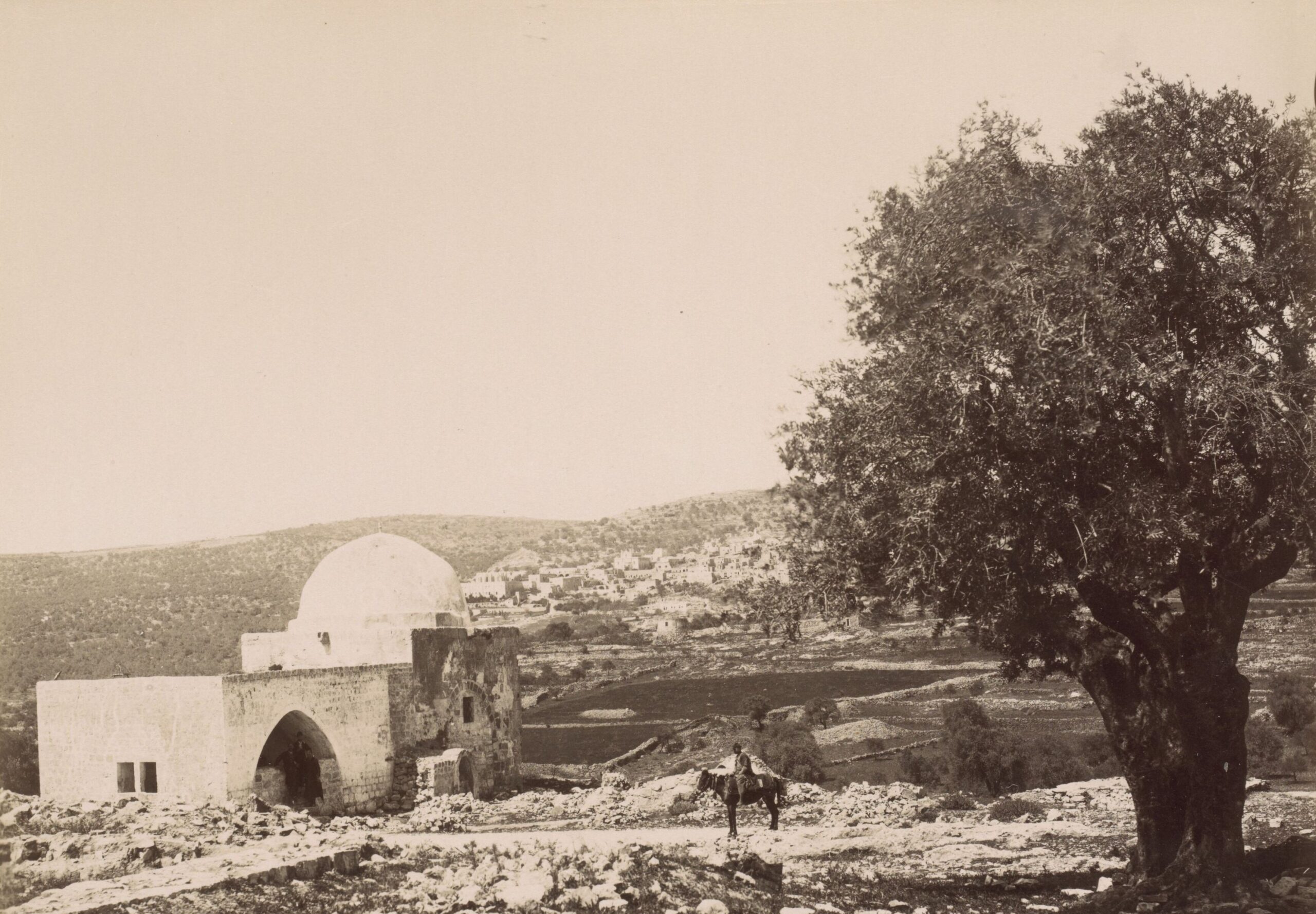
Rachel, Jacob’s beloved wife, died giving birth to Benjamin and was buried near Bethlehem. She was the mother of Joseph, and so the grandmother of Ephraim and Manasseh, the largest tribes of the northern kingdom. Jeremiah pictures her in her grave, weeping for her descendants as they are marched away into captivity. Ramah, a few miles north of Jerusalem, was where the captives were later gathered before being led to Babylon (40:1).
Six hundred years later, Rachel wept again. When King Herod ordered the children of Bethlehem killed, Matthew wrote: “Then was fulfilled that which was spoken by Jeremy the prophet, saying, In Rama was there a voice heard, lamentation, and weeping, and great mourning, Rachel weeping for her children, and would not be comforted, because they are not” (Matthew 2:17, 18).
But Jeremiah did not leave Rachel weeping. God answered her: “Refrain thy voice from weeping,” and “there is hope in thine end.” The children would come back “from the land of the enemy.” For the exiles, that meant Babylon. For every mother who has buried a child in faith, it points to a greater enemy and a greater return. Death is “the last enemy” (1 Corinthians 15:26), and the children of God will come back even from there.
Is Ephraim My Dear Son?
“I have surely heard Ephraim bemoaning himself thus; Thou hast chastised me, and I was chastised, as a bullock unaccustomed to the yoke: turn thou me, and I shall be turned; for thou art the LORD my God. Surely after that I was turned, I repented; and after that I was instructed, I smote upon my thigh: I was ashamed, yea, even confounded, because I did bear the reproach of my youth.”
Jeremiah 31:18, 19
This is one of the most moving prayers of repentance in Scripture. Ephraim, the northern kingdom, compares himself to a young bull that kicked against the yoke. In the last two studies, God’s people were told to accept a yoke; here one of them finally admits he fought it. And his prayer is perfect: “turn thou me, and I shall be turned.” He does not promise to fix himself. He asks God to turn him.
“Is Ephraim my dear son? is he a pleasant child? for since I spake against him, I do earnestly remember him still: therefore my bowels are troubled for him; I will surely have mercy upon him, saith the LORD.”
Jeremiah 31:20
And here is God’s side of the conversation. Every time He had to speak against Ephraim, He still remembered him with longing. “My bowels are troubled for him” is the old way of saying, “My heart aches for him.” It is the father of the prodigal son, watching the road: “when he was yet a great way off, his father saw him, and had compassion, and ran, and fell on his neck, and kissed him” (Luke 15:20).
The Fathers Have Eaten A Sour Grape
“In those days they shall say no more, The fathers have eaten a sour grape, and the children’s teeth are set on edge. But every one shall die for his own iniquity: every man that eateth the sour grape, his teeth shall be set on edge.”
Jeremiah 31:29, 30
The exiles had a bitter proverb. Our parents ate the sour grapes, and our teeth are the ones that ache. In other words: we are suffering for their sins, not ours. Ezekiel, in Babylon, heard the same saying and answered it in a whole chapter (Ezekiel 18).
God’s answer is that no one will be able to hide behind their parents. Each person answers for his own life. That sounds stern, but it is actually freedom. It means no one is trapped by the sins of the family they were born into. Every person can turn to God for themselves, and that is exactly what the new covenant makes possible.
A New Covenant
“Behold, the days come, saith the LORD, that I will make a new covenant with the house of Israel, and with the house of Judah: Not according to the covenant that I made with their fathers in the day that I took them by the hand to bring them out of the land of Egypt; which my covenant they brake, although I was an husband unto them, saith the LORD:”
Jeremiah 31:31, 32
What was wrong with the old covenant made at Sinai? God puts it in four words: “my covenant they brake.” The problem was not God’s side of it. He had been “an husband unto them.” The problem was the people. At Sinai they had promised, “All that the LORD hath said will we do, and be obedient” (Exodus 24:7), and within weeks they were dancing around a golden calf.
“The people did not realize the sinfulness of their own hearts, and that without Christ it was impossible for them to keep God’s law; and they readily entered into covenant with God. Feeling that they were able to establish their own righteousness, they declared, ‘All that the Lord hath said will we do, and be obedient.’”
Ellen G. White · Patriarchs and Prophets, p. 371
The old covenant depended on the people’s promises. The new covenant depends on God’s. That is the whole difference. Jesus announced its beginning at the Last Supper: “This cup is the new testament in my blood, which is shed for you” (Luke 22:20). In the Greek of the New Testament, “testament” and “covenant” are the same word.
The Law Written In The Heart
“But this shall be the covenant that I will make with the house of Israel; After those days, saith the LORD, I will put my law in their inward parts, and write it in their hearts; and will be their God, and they shall be my people. And they shall teach no more every man his neighbour, and every man his brother, saying, Know the LORD: for they shall all know me, from the least of them unto the greatest of them, saith the LORD: for I will forgive their iniquity, and I will remember their sin no more.”
Jeremiah 31:33, 34
Read the promise carefully. God does not say, “I will abolish my law,” or “I will give them a different law.” He says, “I will put my law in their inward parts, and write it in their hearts.” The law is the same. What changes is where it is written. At Sinai, God wrote the Ten Commandments with His own finger on tables of stone. In the new covenant, He writes the same law on human hearts.
“The same law that was engraved upon the tables of stone is written by the Holy Spirit upon the tables of the heart. Instead of going about to establish our own righteousness we accept the righteousness of Christ. His blood atones for our sins. His obedience is accepted for us. Then the heart renewed by the Holy Spirit will bring forth ‘the fruits of the Spirit.’”
Ellen G. White · Patriarchs and Prophets, p. 372
Paul uses the same picture: believers are a letter “written not with ink, but with the Spirit of the living God; not in tables of stone, but in fleshy tables of the heart” (2 Corinthians 3:3). Ezekiel adds how it happens: “A new heart also will I give you,” and “I will put my spirit within you, and cause you to walk in my statutes” (Ezekiel 36:26, 27). The result is not a person freed from God’s law, but a person who loves it. The Messiah says it of Himself first: “I delight to do thy will, O my God: yea, thy law is within my heart” (Psalm 40:8).
The book of Hebrews quotes this passage in full (Hebrews 8:8-12), and again in part (Hebrews 10:16, 17). When Hebrews says the first covenant “decayeth and waxeth old” and “is ready to vanish away” (Hebrews 8:13), it means the old arrangement of animal sacrifices and an earthly priesthood, which Christ’s sacrifice fulfilled. It does not mean the law God promised to write on the heart. A law cannot be written on our hearts and abolished at the same time. As Paul puts it: “Do we then make void the law through faith? God forbid: yea, we establish the law” (Romans 3:31).
And the covenant ends with its foundation: “I will forgive their iniquity, and I will remember their sin no more.” Before God changes the heart, He clears the record. The new covenant begins with grace, and obedience grows out of it, not the other way around.
If Heaven Above Can Be Measured
“Thus saith the LORD, which giveth the sun for a light by day, and the ordinances of the moon and of the stars for a light by night, which divideth the sea when the waves thereof roar; The LORD of hosts is his name: If those ordinances depart from before me, saith the LORD, then the seed of Israel also shall cease from being a nation before me for ever.”
Jeremiah 31:35, 36
How sure is this covenant? As sure as sunrise. As long as the moon and stars keep their courses, God will keep His people. And “if heaven above can be measured,” God says, then He will cast them off (31:37). The universe will run out before His faithfulness does.
But who are the people this promise belongs to? Many in Jesus’ day assumed it covered everyone born a descendant of Abraham, whatever they did. Ellen White points out that the promise comes right after the new covenant, and belongs to the people who are in that covenant.
“To a people in whose hearts His law is written, the favor of God is assured. They are one with Him.”
Ellen G. White · The Desire of Ages, p. 106
Paul says the same: “And if ye be Christ’s, then are ye Abraham’s seed, and heirs according to the promise” (Galatians 3:29). The door to this covenant stands open to anyone, Jew or Gentile, who will let God write His law on their heart. And for all who enter, the promise of verse 34 is as fixed as the stars: “I will remember their sin no more.”
