After the great roll of faith in chapter 11, Hebrews 12 turns to us. The Christian life is a race, and we run it surrounded by the testimony of those who ran before, “looking unto Jesus the author and finisher of our faith.” The chapter explains why hardship comes to God’s children, warns against bitterness and against selling our birthright like Esau, and contrasts the terrifying mountain of Sinai with the joyful gathering at Mount Zion. It ends with a warning that God will shake everything that can be shaken, and a promise of “a kingdom which cannot be moved.”
A study in Hebrews 12 · Arthur Baldwin · StandUp4Jesus.Org · 20 min read
So Great A Cloud Of Witnesses
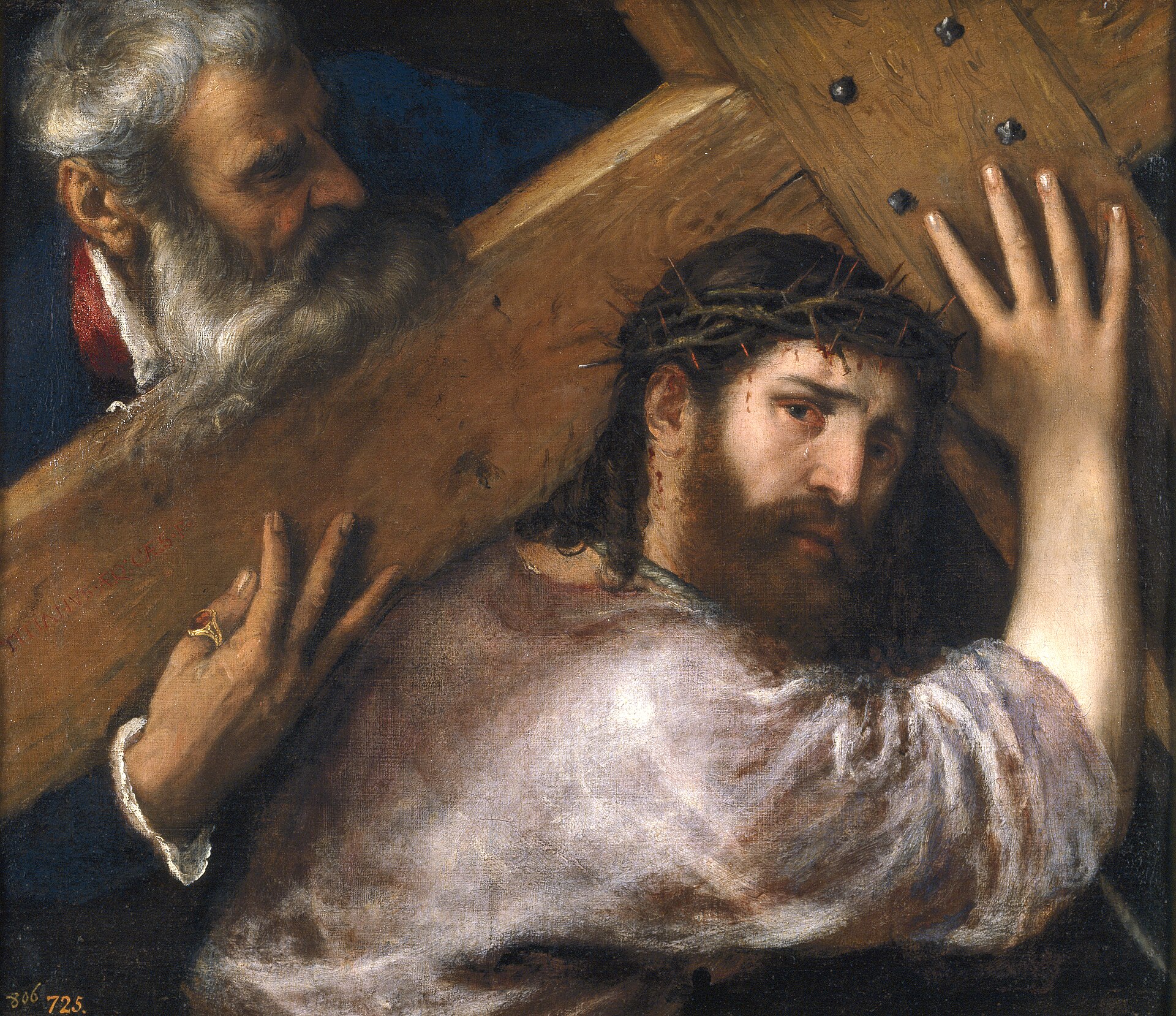
“Wherefore seeing we also are compassed about with so great a cloud of witnesses, let us lay aside every weight, and the sin which doth so easily beset us, and let us run with patience the race that is set before us, Looking unto Jesus the author and finisher of our faith; who for the joy that was set before him endured the cross, despising the shame, and is set down at the right hand of the throne of God. For consider him that endured such contradiction of sinners against himself, lest ye be wearied and faint in your minds. Ye have not yet resisted unto blood, striving against sin.”
Hebrews 12:1-4
“So great a cloud of witnesses” are the men and women of chapter 11. They are “witnesses” not because they are watching us from the grandstands of heaven — the chapter has just told us they have not yet received the promise and are waiting for the resurrection (11:39-40). They are witnesses because their lives bear witness. Their testimony surrounds us: God is faithful, and faith is worth it.
So “let us run.” First, lay aside every “weight” — not necessarily sinful things, but anything that slows us down. Then lay aside “the sin which doth so easily beset us,” the sin that clings like a long robe tangling a runner’s legs. And run “with patience,” with endurance, because this is not a sprint but a marathon.
“Envy, malice, evil thinking, evilspeaking, covetousness—these are weights that the Christian must lay aside if he would run successfully the race for immortality. Every habit or practice that leads into sin and brings dishonor upon Christ must be put away, whatever the sacrifice.”
Ellen G. White · The Acts of the Apostles, p. 312
The secret of running well is where we look: “Looking unto Jesus.” Not at ourselves, not at others, not at the obstacles, but at Him. He is “the author,” the pioneer who started our faith, and the “finisher,” the One who completes it. He ran the race Himself. “For the joy that was set before him” — the joy of saving us — He “endured the cross, despising the shame.” Crucifixion was the most shameful death in the Roman world, and He counted the shame as nothing compared with the joy. Now He is seated at God’s right hand. When we are tired, “consider him,” the writer says. Whatever we face, He faced worse.
Whom The Lord Loveth He Chasteneth
“And ye have forgotten the exhortation which speaketh unto you as unto children, My son, despise not thou the chastening of the Lord, nor faint when thou art rebuked of him: For whom the Lord loveth he chasteneth, and scourgeth every son whom he receiveth. If ye endure chastening, God dealeth with you as with sons; for what son is he whom the father chasteneth not? But if ye be without chastisement, whereof all are partakers, then are ye bastards, and not sons. Furthermore we have had fathers of our flesh which corrected us, and we gave them reverence: shall we not much rather be in subjection unto the Father of spirits, and live? For they verily for a few days chastened us after their own pleasure; but he for our profit, that we might be partakers of his holiness. Now no chastening for the present seemeth to be joyous, but grievous: nevertheless afterward it yieldeth the peaceable fruit of righteousness unto them which are exercised thereby.”
Hebrews 12:5-11
Why do hardships come to God’s people? The writer quotes Proverbs 3:11-12: “whom the Lord loveth he chasteneth.” “Chastening” here means training, the discipline a loving father gives his son. It is not punishment for its own sake. It is education.
Every good father disciplines his children, and a child who is never corrected is being neglected. Earthly fathers sometimes get it wrong, disciplining “after their own pleasure.” God never does. He disciplines “for our profit, that we might be partakers of his holiness.” None of it feels good at the time. “Nevertheless afterward it yieldeth the peaceable fruit of righteousness.”
“Again and again he had reaped the fruit of that first wrong deed. Over and over he saw repeated among his sons the sins of which he himself had been guilty. But bitter as had been the discipline, it had accomplished its work. The chastening, though grievous, had yielded ‘the peaceable fruit of righteousness.’ Hebrews 12:11.”
Ellen G. White · Patriarchs and Prophets, p. 237
Ellen White wrote those words about Jacob at the end of his long and troubled life. God’s discipline had taken years, and it had been painful, but it had turned the deceiver into Israel.
Follow Peace With All Men, And Holiness
“Wherefore lift up the hands which hang down, and the feeble knees; And make straight paths for your feet, lest that which is lame be turned out of the way; but let it rather be healed. Follow peace with all men, and holiness, without which no man shall see the Lord: Looking diligently lest any man fail of the grace of God; lest any root of bitterness springing up trouble you, and thereby many be defiled; Lest there be any fornicator, or profane person, as Esau, who for one morsel of meat sold his birthright. For ye know how that afterward, when he would have inherited the blessing, he was rejected: for he found no place of repentance, though he sought it carefully with tears.”
Hebrews 12:12-17
Back to the race. Tired runners let their arms droop and their knees buckle. “Lift up the hands which hang down.” And “make straight paths,” so that the weaker runners, “that which is lame,” can keep going instead of being turned aside. We run together, and we are responsible for each other.
“Follow peace with all men, and holiness, without which no man shall see the Lord.” Peace with others, and holiness before God, go together. Holiness is not an optional extra for the especially devout. Without it, “no man shall see the Lord.” It is the fruit of grace, not a way of earning it, but it is real.
Then two warnings. The first is against “any root of bitterness.” One bitter person can poison a whole church.
“Every act, every word, is a seed that will bear fruit. Every deed of thoughtful kindness, of obedience, or of self-denial, will reproduce itself in others, and through them in still others. So every act of envy, malice, or dissension is a seed that will spring up in a ‘root of bitterness’ (Hebrews 12:15), whereby many shall be defiled.”
Ellen G. White · Christ’s Object Lessons, p. 85
The second warning is Esau, who traded his birthright for a single meal. Later he wept bitterly, but “he found no place of repentance.” That does not mean God refused to forgive a sorry sinner. It means Esau could not undo what he had done; the birthright was gone. And his tears were for his loss, not for his sin.
“Esau was not shut out from the privilege of seeking God’s favor by repentance, but he could find no means of recovering the birthright. His grief did not spring from conviction of sin; he did not desire to be reconciled to God.”
Ellen G. White · Patriarchs and Prophets, p. 181
Ye Are Come Unto Mount Sion
“For ye are not come unto the mount that might be touched, and that burned with fire, nor unto blackness, and darkness, and tempest, And the sound of a trumpet, and the voice of words; which voice they that heard intreated that the word should not be spoken to them any more: (For they could not endure that which was commanded, And if so much as a beast touch the mountain, it shall be stoned, or thrust through with a dart: And so terrible was the sight, that Moses said, I exceedingly fear and quake:) But ye are come unto mount Sion, and unto the city of the living God, the heavenly Jerusalem, and to an innumerable company of angels, To the general assembly and church of the firstborn, which are written in heaven, and to God the Judge of all, and to the spirits of just men made perfect, And to Jesus the mediator of the new covenant, and to the blood of sprinkling, that speaketh better things than that of Abel.”
Hebrews 12:18-24
Two mountains. Mount Sinai was a place of fire, darkness, storm and a trumpet blast so terrifying that the people begged God to stop speaking, and even Moses trembled. That was how the old covenant was given.
“But ye are come unto mount Sion.” By faith, believers have already come to the heavenly Jerusalem, the city of the living God, where countless angels gather in joyful assembly, where the names of God’s people “are written in heaven,” where God is Judge of all, and where Jesus stands as Mediator. The same holy God is there. What is different is that the way to Him is now open, through Jesus and His blood.
“The spirits of just men made perfect” are the righteous whose salvation God has made complete in Christ. Scripture uses “spirit” for the whole person as God sees and knows him; it does not teach that the righteous dead are now conscious in heaven. The “made perfect” of verse 23 reaches its fulfillment when they are raised at Christ’s coming (11:40; 1 Corinthians 15:52).
And the last thing we come to is “the blood of sprinkling, that speaketh better things than that of Abel.” Abel’s blood cried out from the ground for justice (Genesis 4:10). Christ’s blood cries out for mercy.
A Kingdom Which Cannot Be Moved
“See that ye refuse not him that speaketh. For if they escaped not who refused him that spake on earth, much more shall not we escape, if we turn away from him that speaketh from heaven: Whose voice then shook the earth: but now he hath promised, saying, Yet once more I shake not the earth only, but also heaven. And this word, Yet once more, signifieth the removing of those things that are shaken, as of things that are made, that those things which cannot be shaken may remain. Wherefore we receiving a kingdom which cannot be moved, let us have grace, whereby we may serve God acceptably with reverence and godly fear: For our God is a consuming fire.”
Hebrews 12:25-29
The same God who spoke at Sinai speaks now “from heaven.” If ignoring His voice at Sinai was dangerous, ignoring it now is more so. At Sinai His voice shook the earth. He has promised to do it again, on a far greater scale.
“Amid the most terrific convulsions of nature the voice of God, like a trumpet, was heard from the cloud. The mountain was shaken from base to summit, and the hosts of Israel, pale and trembling with terror, lay upon their faces upon the earth. He whose voice then shook the earth has declared, ‘Yet once more I shake not the earth only, but also heaven.’ Hebrews 12:26.”
Ellen G. White · Patriarchs and Prophets, p. 340
Everything that can be shaken will be shaken: every human kingdom, every false security, every life built on anything but God. Only “those things which cannot be shaken” will remain. And that is exactly what believers are receiving: “a kingdom which cannot be moved.”
So “let us have grace” — let us be thankful — and serve God “acceptably with reverence and godly fear: For our God is a consuming fire.” The God of grace is still holy. His fire will consume everything that is sin. For those who cling to sin, that is a terror. For those who have come to Mount Zion through the blood of Jesus, it is the fire that will burn away everything that ever hurt them, and leave only the kingdom that cannot be shaken.
