Chapter 7 ended in a cry with nowhere to go. Chapter 8 is the answer — not a new law, not a new effort, but a new Spirit. This is the longest, richest, most quoted chapter in the whole letter, moving from “no condemnation” in its first verse to “more than conquerors” in its last, by way of adoption, groaning creation, and a love nothing in all existence can separate a believer from.
A study in Romans 8 · Arthur Baldwin · StandUp4Jesus.Org · 21 min read
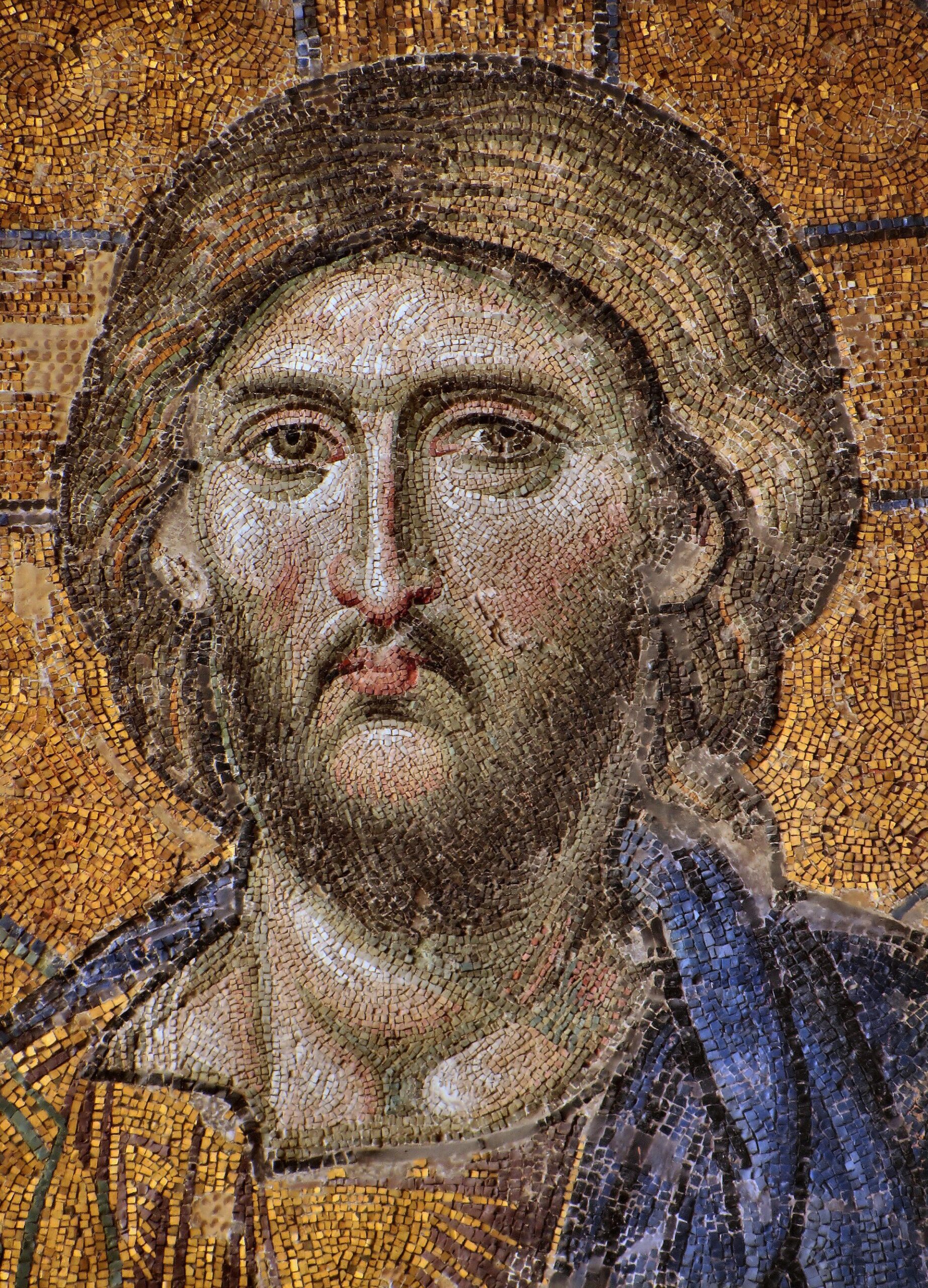
No Condemnation
“There is therefore now no condemnation to them which are in Christ Jesus, who walk not after the flesh, but after the Spirit.”
Romans 8:1
“It is not the will of our heavenly Father that we should be ever under condemnation and darkness. … We may go to Jesus and be cleansed, and stand before the law without shame and remorse. ‘There is therefore now no condemnation to them which are in Christ Jesus, who walk not after the flesh, but after the Spirit.’”
Ellen G. White · The Great Controversy, p. 477
“Therefore” is doing enormous work in this opening word — everything chapter 7 just described, the war, the wretchedness, the cry for deliverance, leads here, to a verdict rendered not on the believer’s own performance in that war but on their standing “in Christ Jesus.”
“For the law of the Spirit of life in Christ Jesus hath made me free from the law of sin and death. For what the law could not do, in that it was weak through the flesh, God sending his own Son in the likeness of sinful flesh, and for sin, condemned sin in the flesh.”
Romans 8:2-3
“As the image made in the likeness of the destroying serpents was lifted up for their healing, so One made ‘in the likeness of sinful flesh’ was to be their Redeemer.”
Ellen G. White · The Desire of Ages, p. 174
This study’s own source ties Christ’s incarnation “in the likeness of sinful flesh” back to Moses’s own bronze serpent lifted up in the wilderness — a striking, deliberate echo, since the serpent’s own likeness to the very thing that was killing the people is exactly what made it able to heal them.
“That the righteousness of the law might be fulfilled in us, who walk not after the flesh, but after the Spirit.”
Romans 8:4
This verse answers chapter 3’s own closing question — does faith make void the law? — from a new direction. The law’s righteousness is not abolished but fulfilled, not by the believer’s own strength but “in us,” accomplished through the Spirit on behalf of those who could never accomplish it under their own power.
Not In The Flesh, But In The Spirit
“For they that are after the flesh do mind the things of the flesh; but they that are after the Spirit the things of the Spirit. For to be carnally minded is death; but to be spiritually minded is life and peace.”
Romans 8:5-6
Paul is not describing two categories of action here but two categories of mind — what a person habitually sets their attention on, which explains why this passage speaks of death and life in the present tense, as a current condition, not merely a future sentence.
“Because the carnal mind is enmity against God: for it is not subject to the law of God, neither indeed can be. So then they that are in the flesh cannot please God.”
Romans 8:7-8
“Neither indeed can be” is a hard, absolute claim — not that the carnal mind occasionally rebels against God’s law, but that submission is categorically beyond its own capacity, which is exactly why chapter 7’s own struggle could never have ended in the flesh’s own strength alone.
“But ye are not in the flesh, but in the Spirit, if so be that the Spirit of God dwell in you. Now if any man have not the Spirit of Christ, he is none of his.”
Romans 8:9
“But if the Spirit of him that raised up Jesus from the dead dwell in you, he that raised up Christ from the dead shall also quicken your mortal bodies by his Spirit that dwelleth in you.”
Romans 8:11
The same resurrection power that raised Christ from an actual grave is, this verse insists, already resident in every believer right now — not a future hope only, but a present indwelling, with the resurrection of the body described as simply that same power finishing a work already begun.
The Spirit Of Adoption
“Therefore, brethren, we are debtors, not to the flesh, to live after the flesh. For if ye live after the flesh, ye shall die: but if ye through the Spirit do mortify the deeds of the body, ye shall live.”
Romans 8:12-13
“For as many as are led by the Spirit of God, they are the sons of God.”
Romans 8:14
“‘As many as are led by the Spirit of God, they are the sons of God.’ … Not those whose hearts are touched by the Spirit, not those who now and then yield to its power, but they that are led by the Spirit, are the sons of God.”
Ellen G. White · Thoughts From the Mount of Blessing, p. 149
This study’s own source draws a sharp line between occasional response and ongoing leadership — not everyone the Spirit has ever touched qualifies as a son of God under this verse, only those who are, as an ongoing pattern of life, actually being led.
“For ye have not received the spirit of bondage again to fear; but ye have received the Spirit of adoption, whereby we cry, Abba, Father. The Spirit itself beareth witness with our spirit, that we are the children of God.”
Romans 8:15-16
“Abba” is an Aramaic word of intimate family address, closer to “Papa” than to a formal title, and Paul lets it stand untranslated — a small linguistic fossil preserving something of the actual sound of how the earliest believers, in whatever language they otherwise spoke, addressed God.
“And if children, then heirs; heirs of God, and joint-heirs with Christ; if so be that we suffer with him, that we may be also glorified together.”
Romans 8:17
“How can we ever be in doubt and uncertainty, and feel that we are orphans? … We have an Advocate in the heavens, and whoever accepts Him as a personal Saviour is not left an orphan to bear the burden of his own sins.”
Ellen G. White · Thoughts From the Mount of Blessing, p. 104
“Joint-heirs with Christ” is about as high a status as language can grant — not merely forgiven servants, but co-inheritors alongside the Son Himself, with suffering named here not as a contradiction of that status but as its expected, shared path toward glory.
The Whole Creation Groaneth
“For I reckon that the sufferings of this present time are not worthy to be compared with the glory which shall be revealed in us.”
Romans 8:18
“Paul suffered for the truth’s sake, and yet we hear no complaints from his lips. As he reviews his life of toil and care and sacrifice, he says, ‘I reckon that the sufferings of this present time are not worthy to be compared with the glory which shall be revealed in us.’”
Ellen G. White · The Sanctified Life, p. 95
“Reckon” appeared already in chapter 6, an accounting term — and Paul applies the same careful weighing here to his own considerable sufferings, doing the actual arithmetic and coming out with the glory so far outweighing the cost that the comparison itself barely holds.
“For the earnest expectation of the creature waiteth for the manifestation of the sons of God. For the creature was made subject to vanity, not willingly, but by reason of him who hath subjected the same in hope, Because the creature itself also shall be delivered from the bondage of corruption into the glorious liberty of the children of God.”
Romans 8:19-21
Paul widens the scope of this whole hope dramatically here — not human redemption alone, but the entire created order, subjected to decay “not willingly” but by God’s own decree “in hope,” waiting for the same liberation believers themselves are waiting for.
“For we know that the whole creation groaneth and travaileth in pain together until now. And not only they, but ourselves also, which have the firstfruits of the Spirit, even we ourselves groan within ourselves, waiting for the adoption, to wit, the redemption of our body.”
Romans 8:22-23
“His Spirit ‘maketh intercession for us with groanings which cannot be uttered.’ As the ‘whole creation groaneth and travaileth in pain together’ … the heart of the infinite Father is pained in sympathy. … Yet God feels it all.”
Ellen G. White · Education, p. 263
This study’s own source connects two groans this chapter names separately — creation’s own travail and the Spirit’s own intercession — into a single picture: God is not a distant observer of this suffering but genuinely, personally pained by it, even while sovereignly directing it toward its own eventual liberation.
“For we are saved by hope: but hope that is seen is not hope: for what a man seeth, why doth he yet hope for? But if we hope for that we see not, then do we with patience wait for it.”
Romans 8:24-25
“Likewise the Spirit also helpeth our infirmities: for we know not what we should pray for as we ought: but the Spirit itself maketh intercession for us with groanings which cannot be uttered.”
Romans 8:26
“In praying for the sick, it should be remembered that ‘we know not what we should pray for as we ought.’ … We do not know whether the blessing we desire will be best or not.”
Ellen G. White · Gospel Workers, p. 217
This is a genuinely comforting admission built into the very structure of prayer — not that believers must always know the right words, but that the Spirit’s own intercession picks up exactly where human understanding runs out, translating even wordless groaning into a request God fully understands.
All Things Work Together For Good
“And he that searcheth the hearts knoweth what is the mind of the Spirit, because he maketh intercession for the saints according to the will of God. And we know that all things work together for good to them that love God, to them who are the called according to his purpose.”
Romans 8:27-28
“Nothing can touch him except by our Lord’s permission, and ‘all things’ that are permitted ‘work together for good to them that love God.’”
Ellen G. White · Thoughts From the Mount of Blessing, p. 71
This verse’s own careful qualification is easy to overlook in its familiar repetition — not all things ARE good, and not all things work together for good to everyone, but specifically “to them that love God,” a promise anchored to relationship, not a blanket guarantee detached from it.
“For whom he did foreknow, he also did predestinate to be conformed to the image of his Son, that he might be the firstborn among many brethren.”
Romans 8:29
“Christ is sitting for His portrait in every disciple. … Every one God has predestinated to be ‘conformed to the image of His Son.’”
Ellen G. White · The Desire of Ages, p. 826
Predestination in this verse is defined by its own stated goal, not left abstract — conformity to Christ’s own image. Whatever else the doctrine involves, Paul anchors it here to a specific, concrete destination rather than an arbitrary, unexplained decree.
“Moreover whom he did predestinate, them he also called: and whom he called, them he also justified: and whom he justified, them he also glorified.”
Romans 8:30
This single sentence forms an unbroken chain of five links — foreknown, predestinated, called, justified, glorified — and Paul writes the final link, glorification, in the same past tense as all the others, a future certainty spoken of as though it were already accomplished, because from God’s own vantage point it already is.
More Than Conquerors
“What shall we then say to these things? If God be for us, who can be against us? He that spared not his own Son, but delivered him up for us all, how shall he not with him also freely give us all things?”
Romans 8:31-32
“‘If God be for us, who can be against us? He that spared not His own Son, but delivered Him up for us all, how shall He not with Him also freely give us all things?’”
Ellen G. White · The Ministry of Healing, p. 66
This is the same “much more” logic already used in chapter 5 — God already gave the hardest, costliest gift imaginable, His own Son; withholding any lesser good thing after that would make no logical sense at all.
“Who shall lay any thing to the charge of God’s elect? It is God that justifieth. Who is he that condemneth? It is Christ that died, yea rather, that is risen again, who is even at the right hand of God, who also maketh intercession for us.”
Romans 8:33-34
“The souls that turn to Him for refuge, Jesus lifts above the accusing and the strife of tongues. No man or evil angel can impeach these souls. Christ unites them to His own divine-human nature. They stand beside the great Sin Bearer in the light proceeding from the throne of God.”
Ellen G. White · The Ministry of Healing, p. 90
Paul stages this as a courtroom scene with every possible role accounted for — an accuser tries to bring a charge, but the judge Himself is the one who justifies, and the very Christ who died is the same one now interceding, leaving no seat left in the courtroom for a successful prosecution.
“Who shall separate us from the love of Christ? shall tribulation, or distress, or persecution, or famine, or nakedness, or peril, or sword? As it is written, For thy sake we are killed all the day long; we are accounted as sheep for the slaughter.”
Romans 8:35-36
Every item on this list is not hypothetical for Paul; by the time this letter is written he has already suffered nearly every one of them personally, and will suffer the rest before this book of Acts finishes its own record of his life.
“Nay, in all these things we are more than conquerors through him that loved us. For I am persuaded, that neither death, nor life, nor angels, nor principalities, nor powers, nor things present, nor things to come.”
Romans 8:37-38
“Nor height, nor depth, nor any other creature, shall be able to separate us from the love of God, which is in Christ Jesus our Lord.”
Romans 8:39
“They had been witness to the wisdom and power of God, and they were ‘persuaded, that neither death, nor life, nor angels, nor principalities, nor powers, nor things present, nor things to come, nor height, nor depth, nor any other creature,’ would be able to separate them from ‘the love of God, which is in Christ Jesus our Lord.’ ‘In all these things,’ they said, ‘we are more than conquerors through Him that loved us.’”
Ellen G. White · The Great Controversy, p. 349
This study’s own source applies Paul’s own list of undefeated enemies to the two disciples walking the Emmaus road on resurrection day — a striking connection, since those two men had, only hours earlier, been the very picture of despair, and this same unshakable assurance is what their own encounter with the risen Christ produced in them. “More than conquerors” is a deliberately excessive phrase; not merely surviving these things, and not merely defeating them, but somehow coming out the other side having gained more than was ever at risk of being lost. This chapter that opened with “no condemnation” closes, twenty-nine verses later, having run through the whole of human experience — sin, suffering, creation’s own groaning, life, death, angels, and every power named or unnamed — and found not one single thing in all of it capable of prying a believer loose from this love.
