Hebrews 10 ended with “the just shall live by faith.” Hebrews 11 shows what that looks like, with a gallery of men and women who trusted God before they saw His promises fulfilled: Abel, Enoch, Noah, Abraham and Sarah, Isaac, Jacob, Joseph, Moses, Rahab, and a crowd too large to name. Most of them died without receiving what was promised. They are waiting still, the chapter says, so that “they without us should not be made perfect.”
A study in Hebrews 11 · Arthur Baldwin · StandUp4Jesus.Org · 23 min read
The Substance Of Things Hoped For
“Now faith is the substance of things hoped for, the evidence of things not seen. For by it the elders obtained a good report. Through faith we understand that the worlds were framed by the word of God, so that things which are seen were not made of things which do appear.”
Hebrews 11:1-3
Verse 1 is not a dictionary definition so much as a description of what faith does. It is “the substance of things hoped for”: it gives present reality to what God has promised for the future. It is “the evidence of things not seen”: it is convinced of what cannot yet be seen with the eyes. Faith is not wishful thinking. It is confidence resting on the word of a God who cannot lie (6:18).
And faith begins at the beginning. “Through faith we understand that the worlds were framed by the word of God.” God spoke, and it was (Psalm 33:9). The visible world was not made out of pre-existing material; it was called into being by His word. The first thing faith believes is that God is the Creator, just as Genesis 1 says.
“But to man’s unaided reason, nature’s teaching cannot but be contradictory and disappointing. Only in the light of revelation can it be read aright. ‘Through faith we understand.’ Hebrews 11:3. ‘In the beginning God.’ Genesis 1:1.”
Ellen G. White · Education, p. 134
Abel, Enoch And Noah
“By faith Abel offered unto God a more excellent sacrifice than Cain, by which he obtained witness that he was righteous, God testifying of his gifts: and by it he being dead yet speaketh. By faith Enoch was translated that he should not see death; and was not found, because God had translated him: for before his translation he had this testimony, that he pleased God. But without faith it is impossible to please him: for he that cometh to God must believe that he is, and that he is a rewarder of them that diligently seek him. By faith Noah, being warned of God of things not seen as yet, moved with fear, prepared an ark to the saving of his house; by the which he condemned the world, and became heir of the righteousness which is by faith.”
Hebrews 11:4-7
Why was Abel’s sacrifice “more excellent” than Cain’s? Not because a lamb was worth more than fruit, but because Abel came God’s way, trusting in the promised Redeemer, while Cain came his own way.
“Abel grasped the great principles of redemption. He saw himself a sinner, and he saw sin and its penalty, death, standing between his soul and communion with God. He brought the slain victim, the sacrificed life, thus acknowledging the claims of the law that had been transgressed. Through the shed blood he looked to the future sacrifice, Christ dying on the cross of Calvary; and trusting in the atonement that was there to be made, he had the witness that he was righteous, and his offering accepted.”
Ellen G. White · Patriarchs and Prophets, p. 72
Enoch walked with God for three hundred years, in a world growing steadily worse, and God took him to heaven without seeing death (Genesis 5:24). He is a picture of the people who will be alive and faithful when Christ returns.
“In the midst of a world by its iniquity doomed to destruction, Enoch lived a life of such close communion with God that he was not permitted to fall under the power of death. The godly character of this prophet represents the state of holiness which must be attained by those who shall be ‘redeemed from the earth’ (Revelation 14:3) at the time of Christ’s second advent.”
Ellen G. White · Patriarchs and Prophets, p. 88
Verse 6 states the principle behind every example in the chapter: “without faith it is impossible to please him.” Coming to God requires believing two things: that He exists, and that He rewards those who seek Him. And Noah shows faith in action. Warned “of things not seen as yet” — a flood such as the world had never seen — he spent years building an ark on dry ground. His obedience condemned the unbelieving world and saved his family.
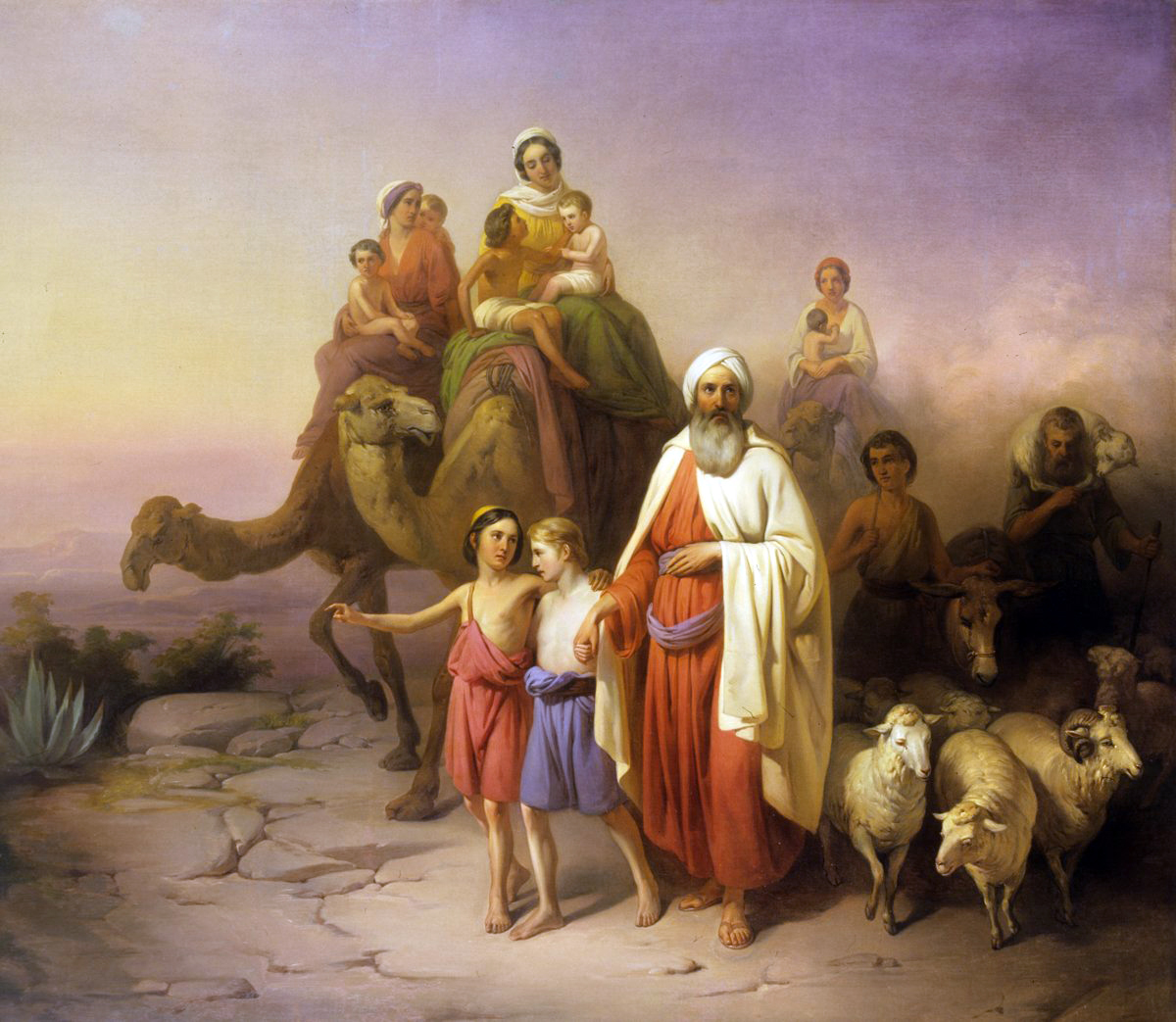
Abraham Went Out, Not Knowing Whither
“By faith Abraham, when he was called to go out into a place which he should after receive for an inheritance, obeyed; and he went out, not knowing whither he went. By faith he sojourned in the land of promise, as in a strange country, dwelling in tabernacles with Isaac and Jacob, the heirs with him of the same promise: For he looked for a city which hath foundations, whose builder and maker is God. Through faith also Sara herself received strength to conceive seed, and was delivered of a child when she was past age, because she judged him faithful who had promised. Therefore sprang there even of one, and him as good as dead, so many as the stars of the sky in multitude, and as the sand which is by the sea shore innumerable.”
Hebrews 11:8-12
Abraham gets more space than anyone else in the chapter. God called, and he “obeyed; and he went out, not knowing whither he went.” Faith does not always know where it is going. It knows Who it is following.
“Abraham’s unquestioning obedience is one of the most striking evidences of faith to be found in all the Bible. To him, faith was ‘the substance of things hoped for, the evidence of things not seen.’ Verse 1. Relying upon the divine promise, without the least outward assurance of its fulfillment, he abandoned home and kindred and native land, and went forth, he knew not whither, to follow where God should lead.”
Ellen G. White · Patriarchs and Prophets, p. 126
Even in the land God promised him, Abraham lived in tents, as a foreigner. He never owned more of Canaan than a burial plot. Why was he content? “For he looked for a city which hath foundations, whose builder and maker is God.” Tents have no foundations. Abraham’s real hope was the heavenly city.
“These all died in faith, not having received the promises, but having seen them afar off, and were persuaded of them, and embraced them, and confessed that they were strangers and pilgrims on the earth. For they that say such things declare plainly that they seek a country. And truly, if they had been mindful of that country from whence they came out, they might have had opportunity to have returned. But now they desire a better country, that is, an heavenly: wherefore God is not ashamed to be called their God: for he hath prepared for them a city.”
Hebrews 11:13-16
“These all died in faith, not having received the promises.” They saw the promises “afar off,” like travellers glimpsing a distant city, and they lived as “strangers and pilgrims on the earth.” They could have gone back to Ur. They did not want to. They wanted “a better country, that is, an heavenly.” And “God is not ashamed to be called their God,” because He has prepared that city for them.
“In the Bible the inheritance of the saved is called ‘a country.’ Hebrews 11:14-16. There the heavenly Shepherd leads His flock to fountains of living waters. … On those peaceful plains, beside those living streams, God’s people, so long pilgrims and wanderers, shall find a home.”
Ellen G. White · The Great Controversy, p. 675
“By faith Abraham, when he was tried, offered up Isaac: and he that had received the promises offered up his only begotten son, Of whom it was said, That in Isaac shall thy seed be called: Accounting that God was able to raise him up, even from the dead; from whence also he received him in a figure. By faith Isaac blessed Jacob and Esau concerning things to come. By faith Jacob, when he was a dying, blessed both the sons of Joseph; and worshipped, leaning upon the top of his staff. By faith Joseph, when he died, made mention of the departing of the children of Israel; and gave commandment concerning his bones.”
Hebrews 11:17-22
Abraham’s greatest test was Mount Moriah. God had promised descendants through Isaac, and then asked him to sacrifice Isaac. Abraham reasoned that God “was able to raise him up, even from the dead.” His faith was a faith in resurrection. Isaac, Jacob and Joseph each looked beyond their own lifetimes to what God would do. Joseph, dying in Egypt, gave orders to carry his bones to Canaan when God brought Israel out (Genesis 50:25). He was sure it would happen.
Esteeming The Reproach Of Christ
“By faith Moses, when he was born, was hid three months of his parents, because they saw he was a proper child; and they were not afraid of the king’s commandment. By faith Moses, when he was come to years, refused to be called the son of Pharaoh’s daughter; Choosing rather to suffer affliction with the people of God, than to enjoy the pleasures of sin for a season; Esteeming the reproach of Christ greater riches than the treasures in Egypt: for he had respect unto the recompence of the reward. By faith he forsook Egypt, not fearing the wrath of the king: for he endured, as seeing him who is invisible.”
Hebrews 11:23-27
Moses had everything the world could offer: royal rank, wealth, education, power. He gave it up, “choosing rather to suffer affliction with the people of God, than to enjoy the pleasures of sin for a season.” Notice that phrase: sin does have pleasures, but only “for a season.” And notice the remarkable words “the reproach of Christ.” Moses suffered for the same Messiah we serve, centuries before He came.
“Moses was fitted to take pre-eminence among the great of the earth, to shine in the courts of its most glorious kingdom, and to sway the scepter of its power. His intellectual greatness distinguishes him above the great men of all ages.”
Ellen G. White · Patriarchs and Prophets, p. 245
How could he do it? “He endured, as seeing him who is invisible.” Faith sees the invisible God so clearly that the visible treasures of Egypt lose their shine.
“Through faith he kept the passover, and the sprinkling of blood, lest he that destroyed the firstborn should touch them. By faith they passed through the Red sea as by dry land: which the Egyptians assaying to do were drowned. By faith the walls of Jericho fell down, after they were compassed about seven days. By faith the harlot Rahab perished not with them that believed not, when she had received the spies with peace.”
Hebrews 11:28-31
The Passover, the Red Sea, the walls of Jericho — each one required trusting God’s word when it made no sense by human reckoning. And then comes the most surprising name on the list: “the harlot Rahab,” a Canaanite woman with a shameful past, who believed in Israel’s God and was saved. Faith is open to anyone. She became an ancestor of Jesus (Matthew 1:5).
Of Whom The World Was Not Worthy
“And what shall I more say? for the time would fail me to tell of Gedeon, and of Barak, and of Samson, and of Jephthae; of David also, and Samuel, and of the prophets: Who through faith subdued kingdoms, wrought righteousness, obtained promises, stopped the mouths of lions, Quenched the violence of fire, escaped the edge of the sword, out of weakness were made strong, waxed valiant in fight, turned to flight the armies of the aliens. Women received their dead raised to life again: and others were tortured, not accepting deliverance; that they might obtain a better resurrection:”
Hebrews 11:32-35
The writer runs out of time. He lists judges, kings and prophets, and their victories: Daniel stopping “the mouths of lions,” the three Hebrews quenching “the violence of fire,” the women of Zarephath and Shunem receiving their sons back from death. Notice how flawed some of these heroes were. Samson and Jephthah are hardly models of wisdom. Faith is not a reward for perfection; it is trust in a perfect God.
But then the tone changes. “And others.” Not every believer was delivered. Some were tortured and refused release, “that they might obtain a better resurrection.”
“And others had trial of cruel mockings and scourgings, yea, moreover of bonds and imprisonment: They were stoned, they were sawn asunder, were tempted, were slain with the sword: they wandered about in sheepskins and goatskins; being destitute, afflicted, tormented; (Of whom the world was not worthy:) they wandered in deserts, and in mountains, and in dens and caves of the earth. And these all, having obtained a good report through faith, received not the promise: God having provided some better thing for us, that they without us should not be made perfect.”
Hebrews 11:36-40
Faith sometimes wins dramatic victories, and sometimes it endures terrible suffering. Both are faith. The world counted these people outcasts; God says “the world was not worthy” of them.
And then the last two verses: “these all… received not the promise.” Abel, Enoch’s contemporaries, Abraham, Moses, the martyrs — none of them has yet received the full reward. Where are they? Not already in heaven. They are asleep in the dust, waiting. “God having provided some better thing for us, that they without us should not be made perfect.” God is waiting until all His people, of every generation, can be made perfect together. On the day Christ returns, “the dead in Christ shall rise first: Then we which are alive and remain shall be caught up together with them” (1 Thessalonians 4:16-17). Abraham will not enter the city ahead of us, nor we ahead of him. We will go in together.
That is the hope that sustained every name on this list. It is the same hope held out to us, and the next chapter will tell us how to run with it.