The third chapter of 1 Thessalonians lets us see inside a missionary’s heart. Paul, alone in Athens, could not bear the silence about his converts any longer, so he sent Timothy back into danger to find out how they were. The news Timothy brought was so good that Paul said it gave him his life back. The chapter ends with a prayer that their love would grow, and that their hearts would be found blameless in holiness when the Lord Jesus comes.
A study in 1 Thessalonians 3 · Arthur Baldwin · StandUp4Jesus.Org · 13 min read
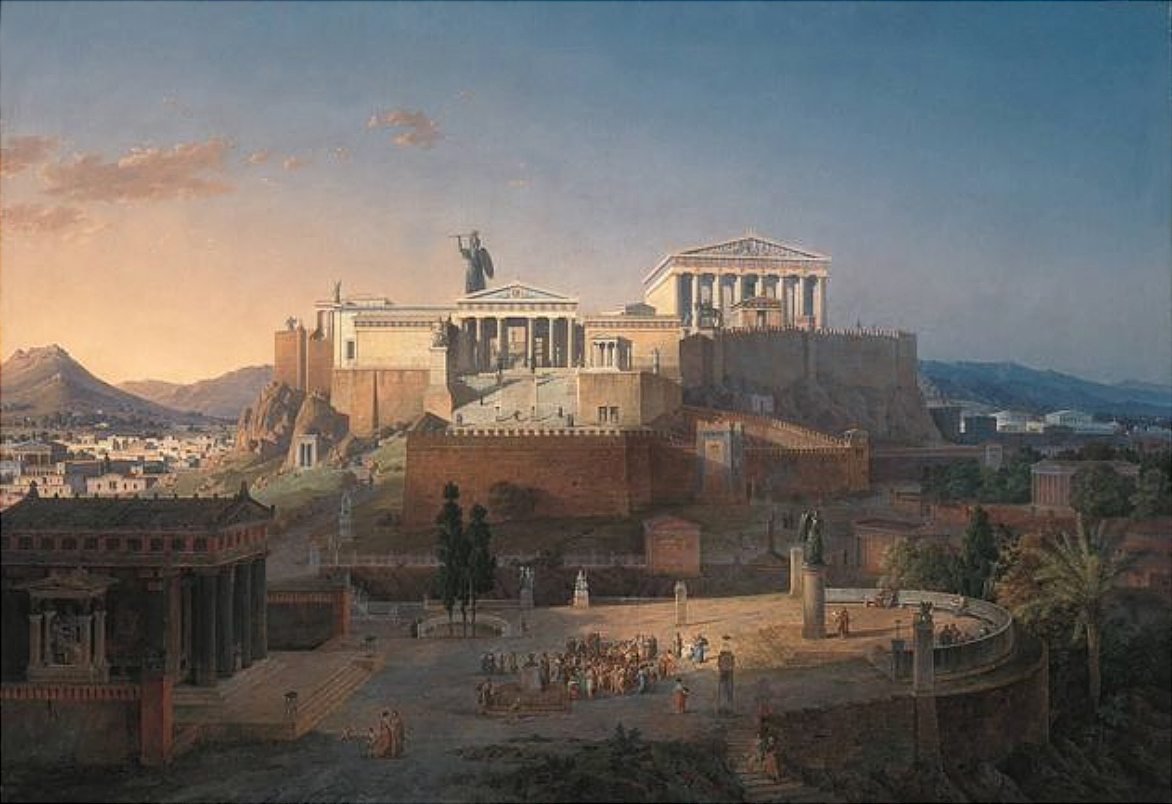
Left At Athens Alone
“Wherefore when we could no longer forbear, we thought it good to be left at Athens alone; And sent Timotheus, our brother, and minister of God, and our fellowlabourer in the gospel of Christ, to establish you, and to comfort you concerning your faith:”
1 Thessalonians 3:1-2
After Thessalonica and Berea, Paul traveled on to Athens, the most famous city of the ancient world, full of temples, philosophers and art. Timothy joined him there. But Paul could not stop thinking about the young church he had been forced to leave. “When we could no longer forbear” — the word pictures a vessel that can no longer hold what is inside it. So he sent Timothy, his closest companion, back to Thessalonica, and stayed in Athens by himself.
“In this great city, where God was not worshiped, Paul was oppressed by a feeling of solitude, and he longed for the sympathy and aid of his fellow laborers. So far as human friendship was concerned, he felt himself to be utterly alone. In his epistle to the Thessalonians he expresses his feelings in the words, ‘Left at Athens alone.’ 1 Thessalonians 3:1.”
Ellen G. White · The Acts of the Apostles, p. 234
Notice how Paul describes Timothy: “our brother, and minister of God, and our fellowlabourer.” Timothy was still young, and the Thessalonians might have been disappointed to receive him instead of Paul. Paul makes sure they know they are getting a full partner in the work, sent “to establish you, and to comfort you.”
We Are Appointed Thereunto
“That no man should be moved by these afflictions: for yourselves know that we are appointed thereunto. For verily, when we were with you, we told you before that we should suffer tribulation; even as it came to pass, and ye know. For this cause, when I could no longer forbear, I sent to know your faith, lest by some means the tempter have tempted you, and our labour be in vain.”
1 Thessalonians 3:3-5
New believers are often surprised when following Christ makes life harder rather than easier. Paul had not let the Thessalonians be surprised. He told them in advance that tribulation would come, and it did. Suffering for Christ is not a sign that something has gone wrong; believers are “appointed thereunto.” Jesus said the same: “In the world ye shall have tribulation: but be of good cheer; I have overcome the world” (John 16:33).
Paul’s fear was not that persecution would hurt them physically. It was that “the tempter” would use it to shake their faith. Satan hindered Paul from coming (2:18); now Paul feared he might be working on the church from the inside, whispering that the gospel had brought them nothing but trouble.
Now We Live, If Ye Stand Fast In The Lord
“But now when Timotheus came from you unto us, and brought us good tidings of your faith and charity, and that ye have good remembrance of us always, desiring greatly to see us, as we also to see you: Therefore, brethren, we were comforted over you in all our affliction and distress by your faith: For now we live, if ye stand fast in the Lord.”
1 Thessalonians 3:6-8
By the time Timothy returned, Paul had moved on to Corinth, where he was facing his own “affliction and distress” (Acts 18:5-6). Then Timothy arrived with “good tidings” — the same word used for the gospel itself. The church was standing. Their faith and love were intact. And they were not bitter toward Paul; they longed to see him as much as he longed to see them.
“Paul’s heart went out in tender sympathy toward these believers, who, in the midst of trial and adversity, had remained true to God. He longed to visit them in person, but as this was not then possible, he wrote to them.”
Ellen G. White · The Acts of the Apostles, p. 255
“For now we live.” Paul’s own life seemed bound up with theirs. Their faithfulness revived him. And yet notice the “if”: his joy depended on their continuing to “stand fast in the Lord.” They were not yet perfect, and he knew it.
“Paul wrote to these brethren as ‘saints in Christ Jesus;’ but he was not writing to those who were perfect in character. He wrote to them as men and women who were striving against temptation and who were in danger of falling.”
Ellen G. White · The Ministry of Healing, p. 167
“For what thanks can we render to God again for you, for all the joy wherewith we joy for your sakes before our God; Night and day praying exceedingly that we might see your face, and might perfect that which is lacking in your faith?”
1 Thessalonians 3:9-10
Paul’s joy did not make him complacent. There was still something “lacking” in their faith. He had had only a few weeks with them, and there was much they had not yet been taught — including, as chapter 4 will show, what happens to believers who die before Christ returns. So he prayed “night and day,” “exceedingly,” to be able to finish what he had started.
At The Coming Of Our Lord Jesus Christ With All His Saints
“Now God himself and our Father, and our Lord Jesus Christ, direct our way unto you. And the Lord make you to increase and abound in love one toward another, and toward all men, even as we do toward you: To the end he may stablish your hearts unblameable in holiness before God, even our Father, at the coming of our Lord Jesus Christ with all his saints.”
1 Thessalonians 3:11-13
Paul turns his longing into a prayer. First, that God would open the road back to them. Second, that their love would “increase and abound” — not only for each other but “toward all men,” including, by implication, their persecutors. And third, that God would “stablish” their hearts, make them firm and steady, so that they would be “unblameable in holiness” at Christ’s coming.
Once again, and for the third chapter in a row, Paul ends with the second coming. The goal of all Christian growth is to be ready to meet Him. And notice the path: the holiness that stands firm on that day grows out of love, practiced now, toward everyone.
Who are “all his saints” who come with Christ? The word means “holy ones.” Some have taken it to mean believers who died and went to heaven, returning with the Lord. But in the very next chapter Paul explains that the dead in Christ are raised from their graves when He comes; they do not come down with Him from the sky (4:16). The “holy ones” who accompany Him are the angels. Jesus Himself said so: “When the Son of man shall come in his glory, and all the holy angels with him” (Matthew 25:31).
“Christ is coming with power and great glory. He is coming with His own glory and with the glory of the Father. He is coming with all the holy angels with Him. While all the world is plunged in darkness, there will be light in every dwelling of the saints. They will catch the first light of His second appearing.”
Ellen G. White · Christ’s Object Lessons, p. 420
So the chapter shows us two kinds of love at work. There is Paul’s love, which could not rest until he knew his converts were safe, and which sent his dearest companion into danger to find out. And there is the love he prays will fill the church, until it overflows toward everyone and prepares them to stand before the Lord at His coming. The next chapter will turn to how that holiness is lived, and then to the great question that was troubling the church: what about those who had already died?
