Chapter 22 ended with the last kings of David’s line being pulled off God’s hand like a ring. Chapter 23 turns straight from those failed kings to the King who would not fail. God condemns the shepherds who scattered His flock, then promises to raise up “a righteous Branch” from David whose name would be THE LORD OUR RIGHTEOUSNESS. The rest of the chapter is a long, heartbroken warning against prophets who spoke “a vision of their own heart” and not the word of God. It asks a question every listener still has to answer: “What is the chaff to the wheat?”
A study in Jeremiah 23 · Arthur Baldwin · StandUp4Jesus.Org · 18 min read
Woe Be Unto The Pastors
“Woe be unto the pastors that destroy and scatter the sheep of my pasture! saith the LORD. Therefore thus saith the LORD God of Israel against the pastors that feed my people; Ye have scattered my flock, and driven them away, and have not visited them: behold, I will visit upon you the evil of your doings, saith the LORD.”
Jeremiah 23:1, 2
In Jeremiah, “pastors” usually means the rulers of the nation, the kings and princes who were supposed to care for God’s people the way a shepherd cares for sheep. Chapter 22 has just named three of them. Now God sums up their whole record in one sentence: “Ye have scattered my flock.”
Notice the play on words. The shepherds “have not visited” the flock, so God says, “I will visit upon you the evil of your doings.” They would not come to the sheep in care, so God would come to them in judgment. A leader who neglects the people in his charge will still have a visit from God. It just will not be the kind he wants.
“And I will gather the remnant of my flock out of all countries whither I have driven them, and will bring them again to their folds; and they shall be fruitful and increase. And I will set up shepherds over them which shall feed them: and they shall fear no more, nor be dismayed, neither shall they be lacking, saith the LORD.”
Jeremiah 23:3, 4
Then God takes the work into His own hands. He will gather “the remnant of my flock” Himself. Ezekiel, prophesying in Babylon at the same time, would expand this same promise into a whole chapter: “I will both search my sheep, and seek them out” (Ezekiel 34:11). The bad shepherds had scattered; the Good Shepherd would gather.
The LORD Our Righteousness
“Behold, the days come, saith the LORD, that I will raise unto David a righteous Branch, and a King shall reign and prosper, and shall execute judgment and justice in the earth. In his days Judah shall be saved, and Israel shall dwell safely: and this is his name whereby he shall be called, THE LORD OUR RIGHTEOUSNESS.”
Jeremiah 23:5, 6
This is the heart of the chapter, and one of the great Messianic promises of the Old Testament. The tree of David’s royal house was about to be cut down. But from its stump God would “raise unto David a righteous Branch.” Isaiah had used the same picture a century earlier: “there shall come forth a rod out of the stem of Jesse, and a Branch shall grow out of his roots” (Isaiah 11:1).
Look at what the Branch would do. He would “execute judgment and justice in the earth.” That is the very job description chapter 22 gave the kings of Judah: “Execute ye judgment and righteousness” (22:3). Every one of them failed it. The Branch would be the first King of David’s line to do it perfectly.
“Plainly he foresaw the downfall of the kingdom and a scattering of the inhabitants of Judah among the nations; but with the eye of faith he looked beyond all this to the times of restoration.”
Ellen G. White · Prophets and Kings, p. 426
And then His name: “THE LORD OUR RIGHTEOUSNESS.” In Hebrew it is Yahweh Tsidkenu. The King who is coming is called by the covenant name of God Himself, “the LORD,” and He is not only righteous; He is our righteousness. There is a quiet irony here, too. The king on the throne in chapter 21 was Zedekiah, whose name means “the LORD is righteous.” He carried the name and lived the opposite. The true King would carry the name and be it.
How can a King be someone else’s righteousness? The New Testament answers: “For he hath made him to be sin for us, who knew no sin; that we might be made the righteousness of God in him” (2 Corinthians 5:21). Christ Jesus “of God is made unto us wisdom, and righteousness, and sanctification, and redemption” (1 Corinthians 1:30). When Jeremiah repeats this promise in chapter 33, the name is given to the city as well: “this is the name wherewith she shall be called, The LORD our righteousness” (33:16). His people come to wear His name.
“The righteousness of God is embodied in Christ. We receive righteousness by receiving Him.”
Ellen G. White · Thoughts From the Mount of Blessing, p. 18
That righteousness is not earned. On the same page she adds: “Not by painful struggles or wearisome toil, not by gift or sacrifice, is righteousness obtained; but it is freely given to every soul who hungers and thirsts to receive it.” The kings of Judah had been told to do righteousness and could not. The Branch would do it, and then give it.
“Therefore, behold, the days come, saith the LORD, that they shall no more say, The LORD liveth, which brought up the children of Israel out of the land of Egypt; But, The LORD liveth, which brought up and which led the seed of the house of Israel out of the north country, and from all countries whither I had driven them; and they shall dwell in their own land.”
Jeremiah 23:7, 8
For centuries, Israel’s greatest oath was “The LORD liveth, which brought up the children of Israel out of the land of Egypt.” The Exodus was the defining act of God’s power. Jeremiah says the coming rescue would be so great that it would replace the Exodus as the story people told. The return from Babylon was a first fulfillment. The greater one is the deliverance Christ brings, which ends not in a land but in the kingdom of God.
Mine Heart Within Me Is Broken
“Mine heart within me is broken because of the prophets; all my bones shake; I am like a drunken man, and like a man whom wine hath overcome, because of the LORD, and because of the words of his holiness. For the land is full of adulterers; for because of swearing the land mourneth; the pleasant places of the wilderness are dried up, and their course is evil, and their force is not right. For both prophet and priest are profane; yea, in my house have I found their wickedness, saith the LORD.”
Jeremiah 23:9-11
The second half of the chapter carries the heading “because of the prophets.” Jeremiah is staggering “like a drunken man,” not from wine but from the weight of God’s holiness set beside what he saw around him. The religious leaders were corrupt, and the corruption had reached the temple itself: “in my house have I found their wickedness.”
“I have seen also in the prophets of Jerusalem an horrible thing: they commit adultery, and walk in lies: they strengthen also the hands of evildoers, that none doth return from his wickedness: they are all of them unto me as Sodom, and the inhabitants thereof as Gomorrah.”
Jeremiah 23:14
The worst charge is this: “they strengthen also the hands of evildoers, that none doth return from his wickedness.” A true prophet’s job is to turn people back to God. These prophets did the opposite. By living in sin and calling it acceptable, they made people comfortable in their sins. Nobody repented, because nobody was told there was anything to repent of. God says Jerusalem had become like Sodom, the city He destroyed with fire.
A Vision Of Their Own Heart
“Thus saith the LORD of hosts, Hearken not unto the words of the prophets that prophesy unto you: they make you vain: they speak a vision of their own heart, and not out of the mouth of the LORD. They say still unto them that despise me, The LORD hath said, Ye shall have peace; and they say unto every one that walketh after the imagination of his own heart, No evil shall come upon you.”
Jeremiah 23:16, 17
Here is how to recognize a false prophet. He speaks “a vision of” his “own heart.” His message comes from inside himself, from what he wishes were true, and not “out of the mouth of the LORD.” And his message is always the same: “Ye shall have peace.” “No evil shall come upon you.” He says it to the very people “that despise” God, and to those who walk “after the imagination of” their “own heart.”
Micah had heard the same comfortable creed in his day: “yet will they lean upon the LORD, and say, Is not the LORD among us? none evil can come upon us” (Micah 3:11). It is the oldest lie in the world, first spoken in Eden: “Ye shall not surely die” (Genesis 3:4). Any message that promises peace without repentance should be tested very carefully.
“When men’s hearts are softened and subdued by the constraining influence of the Holy Spirit, they will give heed to counsel; but when they turn from admonition until their hearts become hardened, the Lord permits them to be led by other influences. Refusing the truth, they accept falsehood, which becomes a snare to their own destruction.”
Ellen G. White · Prophets and Kings, p. 425
The false prophets had an audience because the people wanted what they were selling. Paul warned of the same thing in the last days: “the time will come when they will not endure sound doctrine; but after their own lusts shall they heap to themselves teachers, having itching ears” (2 Timothy 4:3).
“I have not sent these prophets, yet they ran: I have not spoken to them, yet they prophesied. But if they had stood in my counsel, and had caused my people to hear my words, then they should have turned them from their evil way, and from the evil of their doings.”
Jeremiah 23:21, 22
“They ran.” They were busy, eager and energetic. But God had not sent them. And God gives a simple test of a real message from Him: it turns people “from their evil way.” A message that leaves people where it found them, comfortable in their sins, did not come from “the counsel of the LORD.”
What Is The Chaff To The Wheat?
“Am I a God at hand, saith the LORD, and not a God afar off? Can any hide himself in secret places that I shall not see him? saith the LORD. Do not I fill heaven and earth? saith the LORD.”
Jeremiah 23:23, 24
The false prophets spoke as if God were a small, local god who would always be on their side and never look too closely. God answers that He fills “heaven and earth.” Nothing is hidden from Him, including the lies told in His name. “I have heard what the prophets said, that prophesy lies in my name, saying, I have dreamed, I have dreamed” (23:25). Their dreams would cause the people “to forget my name,” just “as their fathers have forgotten my name for Baal” (23:27).
“The prophet that hath a dream, let him tell a dream; and he that hath my word, let him speak my word faithfully. What is the chaff to the wheat? saith the LORD. Is not my word like as a fire? saith the LORD; and like a hammer that breaketh the rock in pieces?”
Jeremiah 23:28, 29
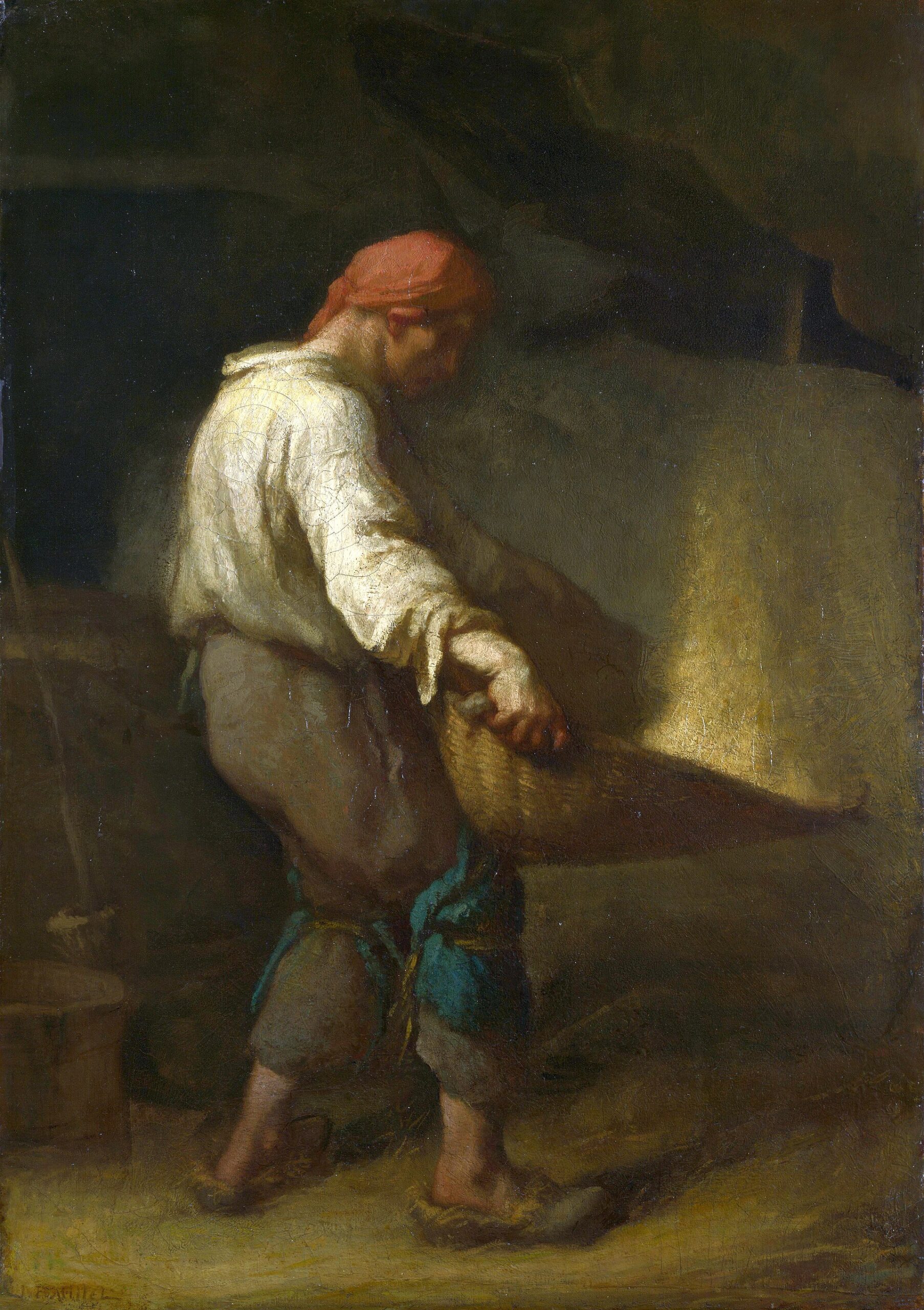
“What is the chaff to the wheat?” At harvest, grain was tossed into the wind. The heavy wheat fell back to the floor and the light chaff blew away. A man’s own dreams are chaff. They look like grain, but there is nothing in them to feed anyone. God’s word is wheat, and it is the only thing that will be left when the wind blows.
Then two more pictures. God’s word is “like as a fire,” the same fire Jeremiah felt “shut up in my bones” (20:9). And it is “like a hammer that breaketh the rock in pieces.” A hard heart cannot be talked into softness by pleasant dreams. It takes the hammer of God’s truth to break it. Hebrews says the same: “the word of God is quick, and powerful, and sharper than any twoedged sword” (Hebrews 4:12).
“Therefore, behold, I am against the prophets, saith the LORD, that steal my words every one from his neighbour. Behold, I am against the prophets, saith the LORD, that use their tongues, and say, He saith.”
Jeremiah 23:30, 31
Three times God says, “I am against the prophets.” Some “steal my words every one from his neighbour,” borrowing phrases that sounded like real prophecy and passing them around. Others “use their tongues, and say, He saith,” attaching God’s name to their own ideas. Both had the sound of God’s word without the substance. Religious language can be borrowed. The power of God cannot.
The Burden Of The LORD
“And when this people, or the prophet, or a priest, shall ask thee, saying, What is the burden of the LORD? thou shalt then say unto them, What burden? I will even forsake you, saith the LORD.”
Jeremiah 23:33
The chapter closes with a play on a word. “Burden” was the common term for a prophet’s message, especially a heavy one. People had started using it as a sneer. “What is the burden of the LORD” today, Jeremiah? It was the way people mock a preacher whose warnings they have heard too often.
God turns the word around. “What burden?” You want to know the burden? “I will even forsake you.” The people who treated God’s word as a tiresome load would find that they themselves had become the load God was setting down. So God forbids the phrase altogether: “the burden of the LORD shall ye mention no more: for every man’s word shall be his burden; for ye have perverted the words of the living God” (23:36). Instead of mocking, they were to ask humbly: “What hath the LORD answered? and, What hath the LORD spoken?” (23:35).
That is still the right question. The chapter gives us two kinds of voices: the shepherds and prophets who spoke from their own hearts, and the Branch whose very name is the LORD our righteousness. The first kind tells us we are fine as we are. The second tells us the truth about our sin, and then covers it with His own righteousness. Jesus said, “I am the good shepherd: the good shepherd giveth his life for the sheep” (John 10:11). He is the Shepherd Jeremiah promised, and He is the wheat.