After fifteen chapters of the most tightly argued theology in the New Testament, Paul closes his letter the way any real letter closes — with names. Dozens of them, real people in a church Paul has never visited, greeted one by one, before the whole massive argument folds back into a single doxology. The letter that opened with “the just shall live by faith” ends with “to God only wise, be glory through Jesus Christ for ever.”
A study in Romans 16 · Arthur Baldwin · StandUp4Jesus.Org · 13 min read
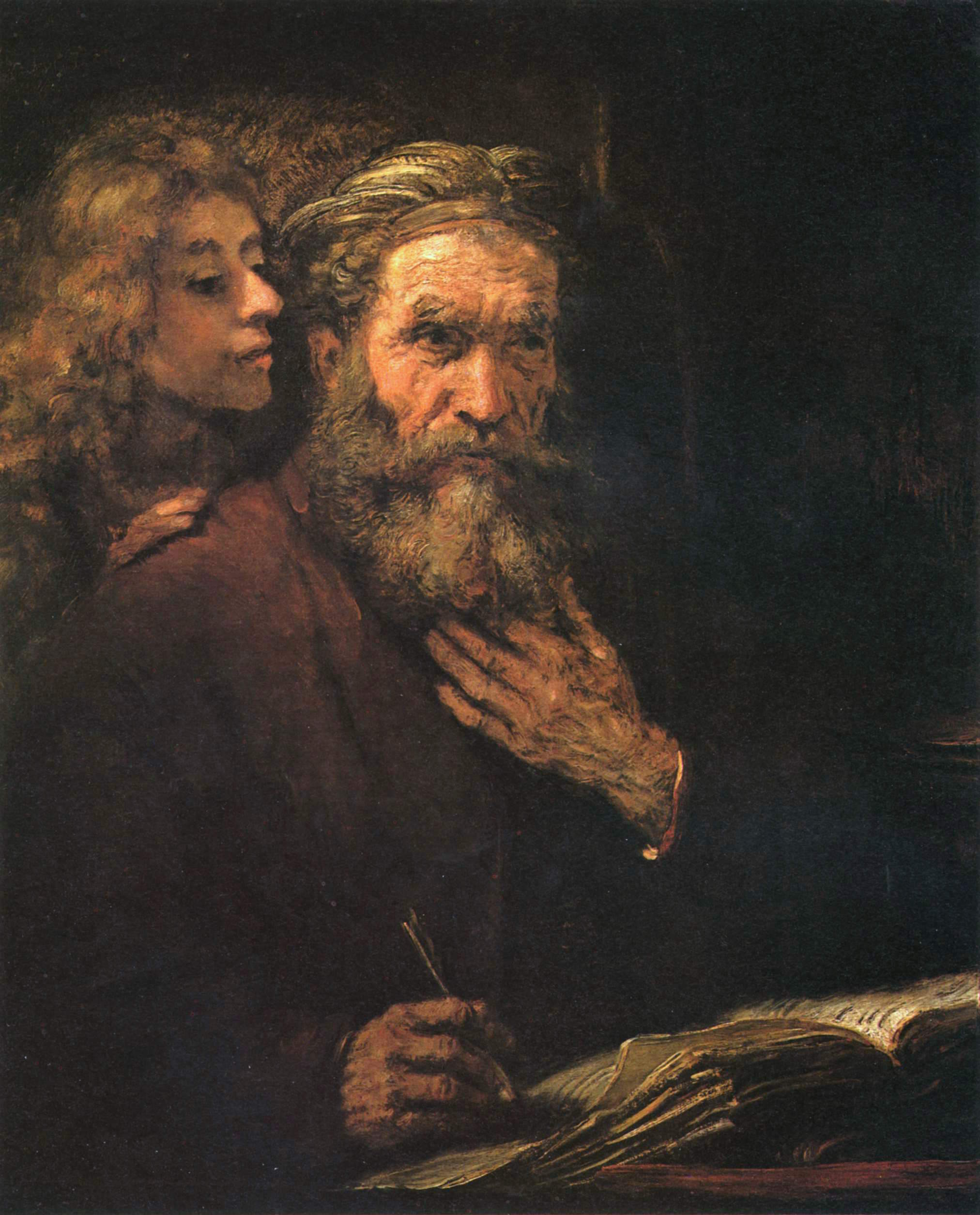
I Commend Unto You Phebe
“I commend unto you Phebe our sister, which is a servant of the church which is at Cenchrea: That ye receive her in the Lord, as becometh saints, and that ye assist her in whatsoever business she hath need of you: for she hath been a succourer of many, and of myself also.”
Romans 16:1-2
“Phebe entertained the apostle, and she was in a marked manner an entertainer of strangers who needed care. Her example should be followed by the churches of today.”
Ellen G. White · Testimonies for the Church, vol. 6, p. 343
Phebe is almost certainly the letter’s own carrier — the one who traveled from Cenchrea to Rome with these sixteen chapters in hand, which makes Paul’s commendation here practical as well as warm: the church at Rome is being asked to receive not just a stranger but the very person who just delivered them this letter.
My Helpers In Christ Jesus
“Greet Priscilla and Aquila my helpers in Christ Jesus: Who have for my life laid down their own necks: unto whom not only I give thanks, but also all the churches of the Gentiles.”
Romans 16:3-4
“Aquila and Priscilla were not called to give their whole time to the ministry of the gospel, yet these humble laborers were used by God to show Apollos the way of truth more perfectly.”
Ellen G. White · The Acts of the Apostles, p. 355
This tentmaking couple appears in four different New Testament books, in three different cities, always working with their hands and always, it turns out, exactly where the gospel needed them most — proof that the most consequential ministry in the New Testament wasn’t always the ordained kind.
“Likewise greet the church that is in their house. Salute my wellbeloved Epaenetus, who is the firstfruits of Achaia unto Christ. Greet Mary, who bestowed much labour on us.”
Romans 16:5-6
A house church, a first convert remembered by name years later, a woman whose labor Paul specifically calls out — three small details in three verses, and together they sketch a church that was never an abstraction to Paul but a set of actual faces.
“Salute Andronicus and Junia, my kinsmen, and my fellowprisoners, who are of note among the apostles, who also were in Christ before me.”
Romans 16:7
“Who also were in Christ before me” is a striking admission from the letter’s own author — Paul, who has spent fifteen chapters establishing his own apostolic authority, cheerfully notes that this pair believed before he did, converted, on the traditional reckoning, in the very earliest days after the resurrection.
“Greet Amplias my beloved in the Lord. Salute Urbane, our helper in Christ, and Stachys my beloved. Salute Apelles approved in Christ. Salute them which are of Aristobulus’ household.”
Romans 16:8-10
“Salute Herodion my kinsman. Greet them that be of the household of Narcissus, which are in the Lord. Salute Tryphena and Tryphosa, who labour in the Lord. Salute the beloved Persis, which laboured much in the Lord.”
Romans 16:11-12
Several names on this list, including Amplias, Urbane, and both households named here, are attested in the era’s own Roman inscriptions as common names among slaves and freedpersons — a quiet indication of just how far down the social ladder Rome’s earliest converts actually reached.
“Salute Rufus chosen in the Lord, and his mother and mine. Salute Asyncritus, Phlegon, Hermas, Patrobas, Hermes, and the brethren which are with them.”
Romans 16:13-14
“His mother and mine” is the most personal single phrase in this whole list — a woman in Rome who had cared for Paul like her own son, remembered here with a tenderness the letter’s dense theology never once needed to reach for.
“Salute Philologus, and Julia, Nereus, and his sister, and Olympas, and all the saints which are with them. Salute one another with an holy kiss. The churches of Christ salute you.”
Romans 16:15-16
Twenty-six people named across this list, roughly a third of them women given equal individual mention — a detail easy to read past, but one that shows exactly how central women’s labor was to the actual, on-the-ground life of the earliest church Paul knew.
Mark Them Which Cause Divisions
“Now I beseech you, brethren, mark them which cause divisions and offences contrary to the doctrine which ye have learned; and avoid them. For they that are such serve not our Lord Jesus Christ, but their own belly; and by good words and fair speeches deceive the hearts of the simple.”
Romans 16:17-18
“I beseech you, brethren, mark them which cause divisions and offenses contrary to the doctrine which ye have learned; and avoid them. For they that are such serve not our Lord Jesus Christ, … and by good words and fair speeches deceive the hearts of the simple. For your obedience is come abroad unto all men. I am glad therefore on your behalf: but yet I would have you wise unto that which is good, and simple concerning evil.”
Ellen G. White · Testimonies for the Church, vol. 8, p. 167
This warning arrives abruptly after two chapters of warm greeting, and the abruptness is the point — the same letter that spent chapter 14 insisting on charity toward disputable matters draws a hard line here around a different category entirely: teaching that serves “their own belly” rather than Christ, dressed up in “good words and fair speeches” precisely so it will be harder to spot.
“For your obedience is come abroad unto all men. I am glad therefore on your behalf: but yet I would have you wise unto that which is good, and simple concerning evil.”
Romans 16:19
“Wise unto that which is good, and simple concerning evil” is a carefully balanced instruction — not naive about how deception works, but also not expert in evil’s own methods, the same distinction chapter 12 already drew when it called believers to “abhor that which is evil” rather than study it closely.
“And the God of peace shall bruise Satan under your feet shortly. The grace of our Lord Jesus Christ be with you. Amen.”
Romans 16:20
Paul reaches all the way back to Eden’s own first promise here — the bruised serpent of Genesis 3:15 — and applies it directly to the church at Rome’s own present struggle, the same ancient conflict still working itself out in ordinary congregational disputes over false teachers.
My Fellowlabourers Salute You
“Timotheus my workfellow, and Lucius, and Jason, and Sosipater, my kinsmen, salute you. I Tertius, who wrote this epistle, salute you in the Lord.”
Romans 16:21-22
Tertius’s own brief greeting is a small window into how this letter was physically made — Paul dictated, and a scribe named Tertius took it down, pausing here to add one sentence in his own name before returning the pen, as it were, to the apostle he served.
“Gaius mine host, and of the whole church, saluteth you. Erastus the chamberlain of the city saluteth you, and Quartus a brother. The grace of our Lord Jesus Christ be with you all. Amen.”
Romans 16:23-24
Erastus is one of the few names in this whole list with an actual archaeological footprint — a first-century pavement inscription discovered in Corinth names an Erastus, city treasurer (or “chamberlain,” the same office Paul’s own Greek names here), who paid for that very pavement at his own expense. It cannot be proven to be the same man, but it is at minimum the right name, the right office, and the right city, in the right century.
The Mystery Kept Secret Since The World Began
“Now to him that is of power to stablish you according to my gospel, and the preaching of Jesus Christ, according to the revelation of the mystery, which was kept secret since the world began, But now is made manifest, and by the scriptures of the prophets, according to the commandment of the everlasting God, made known to all nations for the obedience of faith.”
Romans 16:25-26
“The plan for our redemption was not an afterthought, a plan formulated after the fall of Adam. It was a revelation of ‘the mystery which hath been kept in silence through times eternal.’ … It was an unfolding of the principles that from eternal ages have been the foundation of God’s throne.”
Ellen G. White · The Desire of Ages, p. 22
This study’s own source ties Paul’s closing phrase directly to eternity itself — the gospel he has spent sixteen chapters unfolding was never an emergency improvisation after Eden, but a plan already settled “from eternal ages,” only now, in Paul’s own generation, finally made public.
“To God only wise, be glory through Jesus Christ for ever. Amen.”
Romans 16:27
Sixteen chapters end on the same single word chapter 11 already reached for at the close of its own doxology — glory, offered not to Paul, not to any name on this long list of fellow-laborers, but “through Jesus Christ” alone. From “the just shall live by faith” to a mystery kept secret since the world began, the whole letter’s own argument was always headed here: not to a doctrine to master, but to a God worth this much praise.