God sends Jeremiah to watch a potter at work. A pot is spoiled on the wheel, and the potter simply squashes the clay and starts again. That is the hope of chapter 18: as long as clay is soft, it can be remade. Chapter 19 is the other side of the same picture. Jeremiah buys a hardened, fired jar, carries it down to the valley where children were burned to idols, and smashes it on the ground. A fired pot cannot be reshaped. It can only be broken.
A study in Jeremiah 18-19 · Arthur Baldwin · StandUp4Jesus.Org · 14 min read
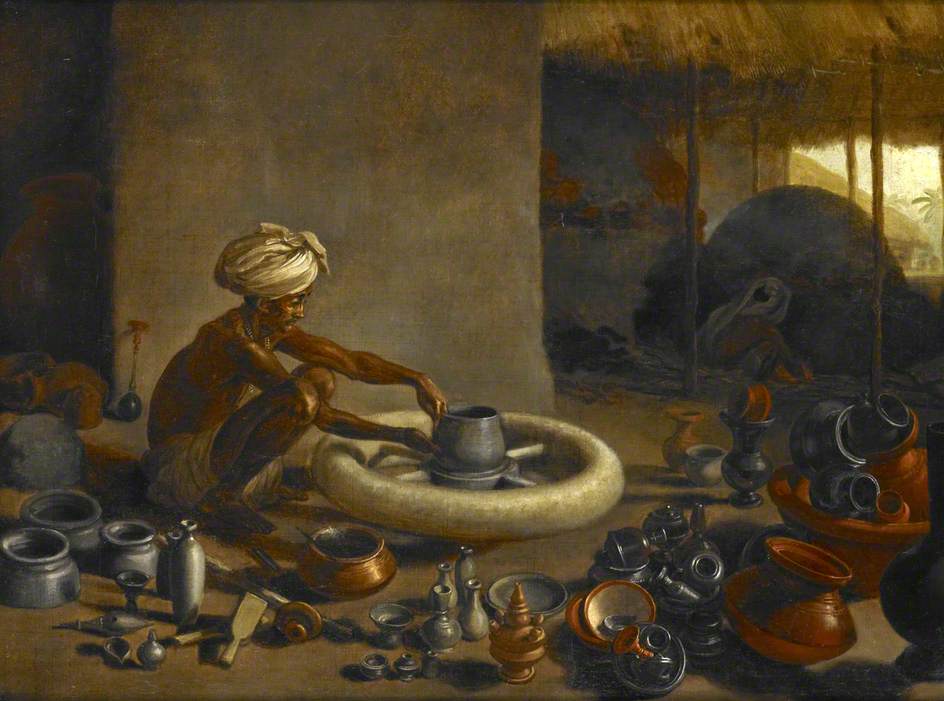
Go Down To The Potter’s House
“The word which came to Jeremiah from the LORD, saying, Arise, and go down to the potter’s house, and there I will cause thee to hear my words. Then I went down to the potter’s house, and, behold, he wrought a work on the wheels. And the vessel that he made of clay was marred in the hand of the potter: so he made it again another vessel, as seemed good to the potter to make it. Then the word of the LORD came to me, saying, O house of Israel, cannot I do with you as this potter? saith the LORD. Behold, as the clay is in the potter’s hand, so are ye in mine hand, O house of Israel.”
Jeremiah 18:1-6
God teaches Jeremiah this lesson not in the temple but in a workshop. He sends him “down to the potter’s house” to watch an ordinary craftsman doing an ordinary job. The potter is working the clay “on the wheels,” the pair of stone wheels turned with the feet. Something goes wrong. The pot is “marred.” Perhaps there was a stone in the clay, or the walls went lopsided.
What does the potter do? He does not throw the clay away. He presses it back into a lump and “made it again another vessel, as seemed good to the potter to make it.” The failure is not the end of the clay. It is the beginning of a new pot.
That is the message God wanted Jeremiah to see: “as the clay is in the potter’s hand, so are ye in mine hand.” Israel had been marred, but they were still in God’s hands, and He could still remake them. Isaiah had prayed the same truth: “But now, O LORD, thou art our father; we are the clay, and thou our potter; and we all are the work of thy hand” (Isaiah 64:8).
“The potter takes the clay and molds it according to his will. He kneads it and works it. He tears it apart and presses it together. He wets it and then dries it. He lets it lie for a while without touching it. When it is perfectly pliable, he continues the work of making of it a vessel. He forms it into shape and on the wheel trims and polishes it. He dries it in the sun and bakes it in the oven. Thus it becomes a vessel fit for use. So the great Master Worker desires to mold and fashion us. And as the clay is in the hands of the potter, so are we to be in His hands. We are not to try to do the work of the potter. Our part is to yield ourselves to be molded by the Master Worker.”
Ellen G. White · The Ministry of Healing, p. 471
If That Nation Turn
“At what instant I shall speak concerning a nation, and concerning a kingdom, to pluck up, and to pull down, and to destroy it; If that nation, against whom I have pronounced, turn from their evil, I will repent of the evil that I thought to do unto them. And at what instant I shall speak concerning a nation, and concerning a kingdom, to build and to plant it; If it do evil in my sight, that it obey not my voice, then I will repent of the good, wherewith I said I would benefit them.”
Jeremiah 18:7-10
These four verses explain how God’s warnings and promises work. Many of God’s messages to nations are conditional. A warning of judgment is an invitation to repent, and if a nation turns, God will “repent of the evil” He had threatened. A promise of blessing assumes faithfulness, and if a nation turns to evil, the blessing can be withdrawn.
Nineveh is the classic example. Jonah announced that the city would be overthrown in forty days. The people repented, “And God saw their works, that they turned from their evil way; and God repented of the evil, that he had said that he would do unto them; and he did it not” (Jonah 3:10). God’s word did not fail. It succeeded. The warning was given so that it would not have to be carried out.
Notice that “repent” here does not mean God had done wrong. It means He changes His course in response to the people’s change of course. God’s character never changes. Because He is always just and always merciful, He responds differently to a nation that turns than to one that refuses.
There Is No Hope
“Now therefore go to, speak to the men of Judah, and to the inhabitants of Jerusalem, saying, Thus saith the LORD; Behold, I frame evil against you, and devise a device against you: return ye now every one from his evil way, and make your ways and your doings good. And they said, There is no hope: but we will walk after our own devices, and we will every one do the imagination of his evil heart.”
Jeremiah 18:11, 12
The word “frame” in verse 11 is the potter’s word: God is shaping something against them, like a potter shaping a pot. But the door is still open: “return ye now every one from his evil way.” This is exactly the situation verses 7 and 8 described. Judah could still turn.
Their answer is chilling: “There is no hope: but we will walk after our own devices.” They do not say they cannot change. They say they will not. “There is no hope” here means “don’t waste your breath.” They have decided. The clay has chosen to harden.
And instead of turning from their evil, they turn on the messenger: “Come, and let us devise devices against Jeremiah,” they said; “let us smite him with the tongue, and let us not give heed to any of his words” (18:18). They were sure the priests, the wise men and the prophets would always be there to tell them what they wanted to hear. Jeremiah’s response is a cry to God that occupies the rest of the chapter.
A Potter’s Earthen Bottle
“Thus saith the LORD, Go and get a potter’s earthen bottle, and take of the ancients of the people, and of the ancients of the priests; And go forth unto the valley of the son of Hinnom, which is by the entry of the east gate, and proclaim there the words that I shall tell thee,”
Jeremiah 19:1, 2
Chapter 19 goes back to the potter, but this time Jeremiah buys a finished jar. It has been fired in the kiln. Soft clay can be reshaped as many times as the potter likes. Fired clay cannot. It is set in its shape for good.
Jeremiah takes the jar and some of the city’s elders and priests down to the valley of the son of Hinnom, the valley of Tophet. We met it in chapter 7. This was the place of Judah’s worst sin.
“Because they have forsaken me, and have estranged this place, and have burned incense in it unto other gods, whom neither they nor their fathers have known, nor the kings of Judah, and have filled this place with the blood of innocents; They have built also the high places of Baal, to burn their sons with fire for burnt offerings unto Baal, which I commanded not, nor spake it, neither came it into my mind: Therefore, behold, the days come, saith the LORD, that this place shall no more be called Tophet, nor The valley of the son of Hinnom, but The valley of slaughter.”
Jeremiah 19:4-6
Here Judah had sacrificed its own children to Baal and Molech. Good King Josiah had tried to stop it: “he defiled Topheth, which is in the valley of the children of Hinnom, that no man might make his son or his daughter to pass through the fire to Molech” (2 Kings 23:10). But after his death the practice came back. God says it was something He “commanded not, nor spake it, neither came it into my mind.” Child sacrifice was so far from God’s heart that the very thought was foreign to Him. No one could ever claim this horror as worship of the true God.
That Cannot Be Made Whole Again
“Then shalt thou break the bottle in the sight of the men that go with thee, And shalt say unto them, Thus saith the LORD of hosts; Even so will I break this people and this city, as one breaketh a potter’s vessel, that cannot be made whole again: and they shall bury them in Tophet, till there be no place to bury.”
Jeremiah 19:10, 11
Jeremiah lifts the jar and smashes it on the rocks in front of the elders. The pieces scatter across the valley. Then the words: “Even so will I break this people and this city, as one breaketh a potter’s vessel, that cannot be made whole again.”
The valley where they had killed their children would become a burial ground for the city’s own dead, “till there be no place to bury.” Every sin has a harvest, and this one would be reaped in the very place it was sown.
This valley appears once more in Scripture in a surprising way. Matthew tells how the priests used Judas’s thirty pieces of silver to buy “the potter’s field, to bury strangers in” (Matthew 27:7), and says, “Then was fulfilled that which was spoken by Jeremy the prophet” (Matthew 27:9). Tradition places that field in this same valley. The city that would not be remade by the Potter ended by buying a potter’s field with the price of the Son of God.
Soft Clay Or Hard Clay
Put the two chapters side by side and the lesson is clear. In chapter 18 the clay is marred, but it is still soft, and the potter remakes it. In chapter 19 the clay has been fired, and it can only be broken. The difference is not how badly the pot was spoiled. It is whether the clay is still yielding to the potter’s hands.
This is good news and a warning at the same time. The good news: no matter how marred we are, as long as we yield to God, He can make us again into “another vessel, as seemed good to the potter.” Paul wrote that God has power over the clay (Romans 9:21), but the power He loves to use is the power to remake. “He which hath begun a good work in you will perform it until the day of Jesus Christ” (Philippians 1:6).
The warning: clay hardens. Each time we answer God’s call with “There is no hope: but we will walk after our own devices,” we move a little closer to the kiln. The time to be remade is while the clay is still soft. David’s prayer is the prayer of yielding clay: “Create in me a clean heart, O God; and renew a right spirit within me” (Psalm 51:10).
