Jesus stood up in His home synagogue, read this chapter aloud, stopped in the middle of a sentence, closed the book and sat down. What He left out, and why, is the key to both chapters — and to a name that means “my delight is in her.”
A study in Isaiah 61-62 · Arthur Baldwin · StandUp4Jesus.Org · 16 min read
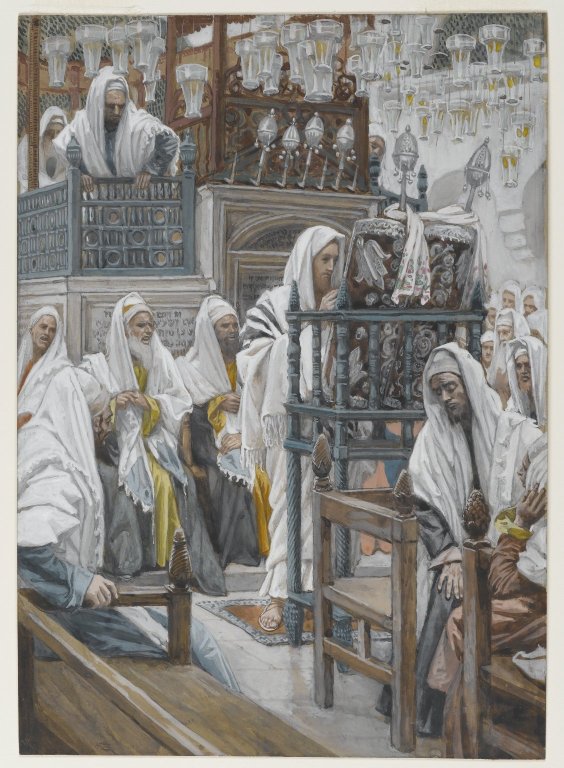
Table of Contents
The Spirit Of The Lord GOD Is Upon Me
“The Spirit of the Lord GOD is upon me; because the LORD hath anointed me to preach good tidings unto the meek; he hath sent me to bind up the brokenhearted, to proclaim liberty to the captives, and the opening of the prison to them that are bound.”
Isaiah 61:1
Somebody is speaking here in the first person, and Isaiah does not tell us who.
We would be guessing, except that the speaker Himself settled it seven hundred years later, in a village synagogue, in front of the people He grew up with.
Before we get there, notice the job description, because it is unusually specific about who it is for. The meek. The brokenhearted. Captives. Prisoners. Four groups, and not one of them is defined by having done anything right. They are defined by being in a bad position — some of it their own fault, some of it not, and the text does not sort them.
The verbs are worth the same attention. Not instruct the brokenhearted; bind up. Not encourage the captives; proclaim liberty. And for those in prison, the opening of the prison — a door, not a visit.
Where He Stopped Reading
“To proclaim the acceptable year of the LORD, and the day of vengeance of our God; to comfort all that mourn.”
Isaiah 61:2
Hold that verse in view, and now watch what happens in Nazareth.
“The Spirit of the Lord is upon me, because he hath anointed me to preach the gospel to the poor; he hath sent me to heal the brokenhearted, to preach deliverance to the captives, and recovering of sight to the blind, to set at liberty them that are bruised, to preach the acceptable year of the Lord.”
Luke 4:18, 19
“And he closed the book, and he gave it again to the minister, and sat down. And the eyes of all them that were in the synagogue were fastened on him. And he began to say unto them, This day is this scripture fulfilled in your ears.”
Luke 4:20, 21
He stopped at the acceptable year of the LORD.
The next words on the scroll in front of Him were and the day of vengeance of our God, and He did not read them. He closed the book in the middle of Isaiah’s sentence, handed it back, sat down, and said this day is this scripture fulfilled in your ears.
The half He read was fulfilled that day. The half He did not read was not.
This is one of the most important things Jesus ever did with a text, and He did it without a word of explanation. Isaiah had written the two halves in a single breath, because from where Isaiah stood they looked like one event. Standing inside it, Jesus put a full stop where the prophet had put a comma, and the gap He opened there is the age we are living in.
Two things follow, and they matter.
The first: the day of vengeance is still in the text. He did not tear it out or deny it; He declined to read it yet. Anyone who wants a Bible with only the first half has to answer for the fact that Jesus left the second half on the scroll.
The second, and it is the pastoral one: we are living in the part He did read. The acceptable year is the era currently in force. Whatever else is coming, the sentence God is speaking over the world at this moment is the one about the meek and the brokenhearted and the opening of the prison. That is not naivety about judgment. It is knowing which half of the verse we are standing in.
Beauty For Ashes
“To appoint unto them that mourn in Zion, to give unto them beauty for ashes, the oil of joy for mourning, the garment of praise for the spirit of heaviness; that they might be called trees of righteousness, the planting of the LORD, that he might be glorified.”
Isaiah 61:3
Three exchanges, and each one is an object traded for an object — this is not a change of attitude being requested, it is a swap being performed.
Ashes were what a mourner put on his head. Oil was what a guest had poured on him at a feast. A garment of praise replaces a spirit of heaviness — and note that the mourning in this verse is never denied. Nobody is told they should not have grieved. They are handed something to wear instead.
And then the result: that they might be called trees of righteousness, the planting of the LORD. A tree is the slowest possible image for this, and it is the right one. People who have been through the ash-heap and come out do not become brilliant; they become rooted. And Isaiah is careful about whose garden they are in: the planting of the LORD, ending that he might be glorified. Even the recovery is His work and His credit.
The Robe Of Righteousness
“I will greatly rejoice in the LORD, my soul shall be joyful in my God; for he hath clothed me with the garments of salvation, he hath covered me with the robe of righteousness, as a bridegroom decketh himself with ornaments, and as a bride adorneth herself with her jewels.”
Isaiah 61:10
Two chapters earlier, Isaiah said that what people weave for themselves will never be clothing: “their webs shall not become garments, neither shall they cover themselves with their works” (59:6). He left that hanging. Here he closes it.
There is a garment. He clothed; He covered. Both verbs belong to God and neither belongs to the wearer, and the wearer’s only contribution to the sentence is the rejoicing at the front of it.
John saw the same robe on the same people at the end of the story:
“And to her was granted that she should be arrayed in fine linen, clean and white: for the fine linen is the righteousness of saints.”
Revelation 19:8
Was granted. Even at the wedding, the dress is a gift.
And Isaiah reaches for a wedding to describe it — as a bridegroom decketh himself… as a bride adorneth herself. This is the point at which chapters 61 and 62 join, because the second one is almost entirely a wedding.
Thou Shalt Be Called By A New Name
“And thou shalt be called by a new name, which the mouth of the LORD shall name. Thou shalt also be a crown of glory in the hand of the LORD, and a royal diadem in the hand of thy God.”
Isaiah 62:2, 3
Before the name arrives, notice where the crown is. Not on His head — in his hand. A crown in the hand is a crown being looked at. He is holding her up and turning her over, the way a person examines something they are pleased with.
Then the new name, and Isaiah does something unusual: he gives the translation in the same verse.
“Thou shalt no more be termed Forsaken; neither shall thy land any more be termed Desolate: but thou shalt be called Hephzi-bah, and thy land Beulah: for the LORD delighteth in thee, and thy land shall be married.”
Isaiah 62:4
Four names, in two pairs, and the second half of the verse tells you what the Hebrew ones mean.
- Forsaken becomes Hephzi-bah — and the verse glosses it: for the LORD delighteth in thee. The name means my delight is in her.
- Desolate becomes Beulah — glossed in the same breath: thy land shall be married.
Sit with the first one, because it is the heart of both chapters and most people have never been told it.
God renames a ruined city, and the name He chooses is not Forgiven. It is not Restored, or Spared, or Tolerated. He calls her My Delight Is In Her, and then, in case anybody thought the name was decorative, He translates it Himself: for the LORD delighteth in thee.
Most people can believe that God will forgive them. A good many can believe He is patient with them. Almost nobody can believe He delights in them — and here He makes it their legal name.
As The Bridegroom Rejoiceth Over The Bride
“For as a young man marrieth a virgin, so shall thy sons marry thee: and as the bridegroom rejoiceth over the bride, so shall thy God rejoice over thee.”
Isaiah 62:5
The comparison in the second half of that verse is the boldest in Isaiah, and it works only if you take it seriously.
Picture an actual bridegroom on an actual wedding day — not composed, not dignified, plainly and slightly ridiculously happy. That is the standard of comparison, and Isaiah says so shall thy God rejoice over thee.
Not God will accept you the way a bridegroom accepts a bride. Rejoice over. The whole Song of Solomon is an eight-chapter expansion of this one line, and anyone who has read that book alongside this verse will recognise the voice immediately.
Give Him No Rest
“I have set watchmen upon thy walls, O Jerusalem, which shall never hold their peace day nor night: ye that make mention of the LORD, keep not silence, and give him no rest, till he establish, and till he make Jerusalem a praise in the earth.”
Isaiah 62:6, 7
Isaiah has hard things to say about watchmen elsewhere — “his watchmen are blind… dumb dogs, they cannot bark” (56:10). These are the opposite: watchmen who will not shut up.
And then an instruction that ought to startle anyone who has been taught that prayer should be restrained: give him no rest.
God is telling His people to pester Him. To keep bringing it up. To be, in the plainest sense, a nuisance about the thing He has already promised — and to keep at it till he establish, which means the stopping condition is His action and not our fatigue.
Jesus told two parables making exactly this point, about a friend banging on a door at midnight and a widow wearing down a judge, and both of them make some readers uncomfortable because they seem to picture God as reluctant. Isaiah 62 shows what is really going on: He is the one who issued the instruction. The persistence He responds to is persistence He asked for.
Gather Out The Stones
“Go through, go through the gates; prepare ye the way of the people; cast up, cast up the highway; gather out the stones; lift up a standard for the people.”
Isaiah 62:10
Five commands, all of them physical, and every one is about clearing a road for somebody else to walk on.
Gather out the stones is the humblest job in Scripture and one of the most useful. Somebody walks the road ahead of everyone else and picks up the things people would trip on. It is unglamorous, it leaves no monument, and the people who benefit will never know it was done.
And lift up a standard takes us back three chapters, to “when the enemy shall come in like a flood, the Spirit of the LORD shall lift up a standard against him” (59:19). There the Spirit raises the flag; here the people do. The rally point is God’s, and holding it up is ours.
“Say ye to the daughter of Zion, Behold, thy salvation cometh; behold, his reward is with him, and his work before him.”
Isaiah 62:11
The last book of the Bible picks that sentence up almost word for word and puts it in Christ’s own mouth:
“And, behold, I come quickly; and my reward is with me, to give every man according as his work shall be.”
Revelation 22:12
And then the final name in the pair of chapters, which is the answer to every one of the old ones:
“And they shall call them, The holy people, The redeemed of the LORD: and thou shalt be called, Sought out, A city not forsaken.”
Isaiah 62:12
Sought out. Of all the names God could have given at the end of two chapters about robes and crowns and weddings, He chose one that describes what He did rather than what she became. She is not called Faithful, or Worthy, or Restored. She is called the one who was looked for.
Which is where the two chapters end up, and it is the same place they started: someone anointed and sent, going after people in a bad position, and not one word about them deserving it.
