Eight chapters of soaring doctrine — no condemnation, no separation from love, more than conquerors — run straight into a wall of grief. Paul’s own people, the nation this whole gospel was first entrusted to, have largely rejected the Messiah it points to. This chapter, and the two that follow it, is Paul working through exactly how that fact fits into everything he has just spent eight chapters proving about God’s faithfulness.
A study in Romans 9 · Arthur Baldwin · StandUp4Jesus.Org · 17 min read
I Could Wish That Myself Were Accursed
“I say the truth in Christ, I lie not, my conscience also bearing me witness in the Holy Ghost, That I have great heaviness and continual sorrow in my heart.”
Romans 9:1-2
Paul opens with a triple oath — truth in Christ, no lie, his own conscience witnessing in the Holy Ghost — the strongest possible guarantee of sincerity, because what he is about to say will sound almost unbelievable coming from him.
“For I could wish that myself were accursed from Christ for my brethren, my kinsmen according to the flesh.”
Romans 9:3
This is one of the most startling sentences Paul ever writes — the same man who just closed chapter 8 insisting nothing in all creation could separate him from the love of Christ now says he would trade that very love away, if it were possible, to save his own people. The grief is not a contradiction of chapter 8’s confidence; it is proof of how seriously Paul takes both truths at once.
“Who are Israelites; to whom pertaineth the adoption, and the glory, and the covenants, and the giving of the law, and the service of God, and the promises; Whose are the fathers, and of whom as concerning the flesh Christ came, who is over all, God blessed for ever. Amen.”
Romans 9:4-5
Paul lists Israel’s privileges here almost as a eulogy for a tragedy still in progress — adoption, glory, covenants, the law, temple worship, the promises, the patriarchs, and finally Christ Himself “as concerning the flesh.” Every single one of these belonged first to the very people this whole chapter is grieving over.
They Are Not All Israel, Which Are Of Israel
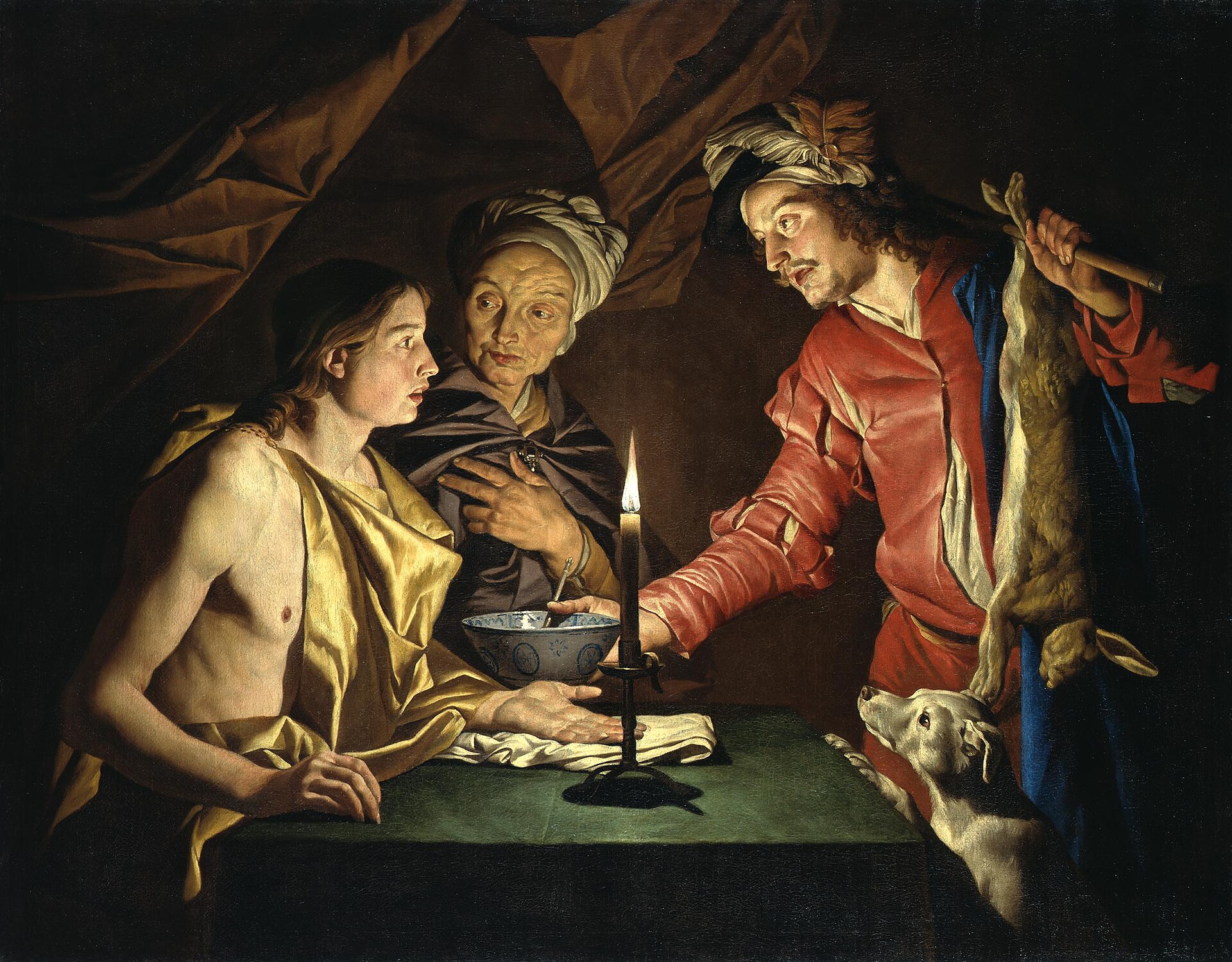
“Not as though the word of God hath taken none effect. For they are not all Israel, which are of Israel: Neither, because they are the seed of Abraham, are they all children: but, In Isaac shall thy seed be called.”
Romans 9:6-7
Paul’s real concern in this whole chapter surfaces in its first sentence: has God’s own word failed? His answer begins by redrawing the boundary of “Israel” itself — physical descent from Abraham was never, even in the Old Testament’s own record, the same thing as belonging to the promise. Abraham had other sons besides Isaac; only Isaac carried the promise forward.
“That is, They which are the children of the flesh, these are not the children of God: but the children of the promise are counted for the seed. For this is the word of promise, At this time will I come, and Sara shall have a son.”
Romans 9:8-9
“Children of the promise” rather than “children of the flesh” is the same distinction this study’s own fourth chapter already drew from Abraham’s own life — a distinction Paul is now applying a second time, not to justification, but to the very definition of God’s people.
“And not only this; but when Rebecca also had conceived by one, even by our father Isaac; (For the children being not yet born, neither having done any good or evil, that the purpose of God according to election might stand, not of works, but of him that calleth.)”
Romans 9:10-11
Paul’s second example, Jacob and Esau, is chosen with even greater precision than the first. Ishmael and Isaac at least had different mothers; Jacob and Esau share the same father, the same mother, even the same womb at the same time — ruling out any explanation based on ancestry at all.
“It was said unto her, The elder shall serve the younger. As it is written, Jacob have I loved, but Esau have I hated.”
Romans 9:12-13
“If Esau had received the blessing of his father, which was bestowed upon the first-born, his prosperity could have come from God alone; and He would have blessed him with prosperity, or brought upon him adversity, according to his course of action. If he should love and reverence God… he would be accepted and blessed of God. If, like wicked Cain, he had no respect for God nor for His commandments… he would not receive a blessing from God but would be rejected of God, as was Cain.”
Ellen G. White · The Story of Redemption, p. 88
This is an important, easily missed clarification: this study’s own source is careful to note that Esau’s own eternal standing before God was never actually settled by this pre-birth choice. What was chosen before birth was a role — who would carry forward the covenant line and its birthright — not a verdict on either brother’s own character or salvation, which each man would still work out through his own response to God. “Jacob have I loved, but Esau have I hated” is Malachi’s own later language for that same role, not a description of God’s eternal feeling toward two individual souls.
Is There Unrighteousness With God?
“What shall we say then? Is there unrighteousness with God? God forbid. For he saith to Moses, I will have mercy on whom I will have mercy, and I will have compassion on whom I will have compassion.”
Romans 9:14-15
Paul anticipates the obvious objection again — the same “God forbid” that answered similar objections in chapters 3, 6, and 7 — and answers it by quoting God’s own words to Moses rather than offering a new argument of his own. Mercy, by its very nature, can never be owed; the moment it becomes an obligation, it stops being mercy.
“So then it is not of him that willeth, nor of him that runneth, but of God that sheweth mercy. For the scripture saith unto Pharaoh, Even for this same purpose have I raised thee up, that I might shew my power in thee, and that my name might be declared throughout all the earth.”
Romans 9:16-17
Pharaoh’s own hardened heart, already familiar to any reader of Exodus, is enlisted here as a second illustration. God’s purpose used even Pharaoh’s own stubborn resistance to display His power and make His name known across the ancient world — a hard providence, but one still fully consistent with the fact, recorded repeatedly in Exodus itself, that Pharaoh hardened his own heart before Scripture ever says God hardened it.
“Therefore hath he mercy on whom he will have mercy, and whom he will he hardeneth.”
Romans 9:18
This verse states the principle in its starkest, most compressed form, and Paul does not soften it here — the softening, when it comes later in this same letter’s own argument, will come from showing that God’s mercy is offered on the same terms of faith to absolutely everyone, not from denying His sovereign right to show it as He chooses.
Hath Not The Potter Power Over The Clay?
“Thou wilt say then unto me, Why doth he yet find fault? For who hath resisted his will? Nay but, O man, who art thou that repliest against God? Shall the thing formed say to him that formed it, Why hast thou made me thus?”
Romans 9:19-20
Paul does not attempt to fully resolve the tension between divine sovereignty and human responsibility here; he instead challenges the standing of the questioner to demand a resolution at all — a pointed reminder that the created thing is never in a position to put the Creator on trial.
“Hath not the potter power over the clay, of the same lump to make one vessel unto honour, and another unto dishonour? What if God, willing to shew his wrath, and to make his power known, endured with much longsuffering the vessels of wrath fitted to destruction.”
Romans 9:21-22
“‘Hath not the potter power over the clay,’ he inquires, ‘of the same lump to make one vessel unto honor, and another unto dishonor? What if God, willing to show His wrath, and to make His power known, endured with much long-suffering the vessels of wrath fitted to destruction: and that He might make known the riches of His glory on the vessels of mercy, which He had afore prepared unto glory, even us, whom He hath called, not of the Jews only, but also of the Gentiles?’”
Ellen G. White · The Acts of the Apostles, p. 376
“Fitted to destruction” is a notably passive construction in the Greek, worth pausing on — the text does not say God fitted these vessels for destruction, only that they were found in that condition and endured with longsuffering rather than being destroyed at once.
“And that he might make known the riches of his glory on the vessels of mercy, which he had afore prepared unto glory, Even us, whom he hath called, not of the Jews only, but also of the Gentiles?”
Romans 9:23-24
This study’s own source places this whole potter-and-clay argument exactly where it belongs in Paul’s own larger purpose — not an abstract meditation on divine sovereignty for its own sake, but the very hinge on which the chapter turns toward its real destination: God’s grace was always intended to reach the Gentiles, “not of the Jews only,” and everything argued so far has been building toward that announcement.
Which Were Not My People
“As he saith also in Osee, I will call them my people, which were not my people; and her beloved, which was not beloved. And it shall come to pass, that in the place where it was said unto them, Ye are not my people; there shall they be called the children of the living God.”
Romans 9:25-26
Hosea originally wrote these words about Israel’s own unfaithful generation, warned that they would temporarily forfeit the name “my people” for their idolatry before being restored. Paul now applies that same pattern of reversal to the Gentiles — a people with no covenant claim at all, called into the very family Hosea’s own original audience once belonged to and lost.
“Esaias also crieth concerning Israel, Though the number of the children of Israel be as the sand of the sea, a remnant shall be saved: For he will finish the work, and cut it short in righteousness: because a short work will the Lord make upon the earth.”
Romans 9:27-28
“And as Esaias said before, Except the Lord of Sabaoth had left us a seed, we had been as Sodoma, and been made like unto Gomorrha.”
Romans 9:29
“A remnant shall be saved” is Isaiah’s own answer to the very grief Paul opened this chapter with. The nation as a whole may reject its Messiah, but the promise to Israel was never actually a promise that every physical descendant would be saved regardless of faith — only that a faithful remnant, however small against “the sand of the sea,” would always remain.
The Stumblingstone
“What shall we say then? That the Gentiles, which followed not after righteousness, have attained to righteousness, even the righteousness which is of faith. But Israel, which followed after the law of righteousness, hath not attained to the law of righteousness.”
Romans 9:30-31
This is a genuinely surprising reversal, stated as plainly as Paul can state it: Gentiles who were not even pursuing righteousness stumbled into it, while Israel, actively pursuing it through the law, missed it entirely. The problem was never the pursuit itself, but the method.
“Wherefore? Because they sought it not by faith, but as it were by the works of the law. For they stumbled at that stumblingstone.”
Romans 9:32
Every argument this letter has made since chapter 3 — justification by faith, not by works of the law — converges here into a single, concrete cause of Israel’s own failure: they were running the right race toward the right finish line, but by the wrong method entirely, works instead of faith.
“As it is written, Behold, I lay in Sion a stumblingstone and rock of offence: and whosoever believeth on him shall not be ashamed.”
Romans 9:33
The chapter’s own final image is deliberately double-edged, drawn from Isaiah — the very stone God Himself laid in Zion is, for those who trust it, a sure foundation, and for those who reject it in favor of their own righteousness, the exact thing they trip over. The same Christ is both, depending entirely on how He is received — a tension this letter’s own next chapter will pick up and carry forward.
