“Now of the things which we have spoken this is the sum.” Hebrews 8 pulls the argument together: we have a High Priest seated at God’s right hand, ministering in “the true tabernacle, which the Lord pitched, and not man.” The sanctuary Moses built was only a copy of that heavenly original. And the High Priest who serves there is the Mediator of a new and better covenant, in which God writes His law on the heart and remembers our sins no more.
A study in Hebrews 8 · Arthur Baldwin · StandUp4Jesus.Org · 15 min read
This Is The Sum
“Now of the things which we have spoken this is the sum: We have such an high priest, who is set on the right hand of the throne of the Majesty in the heavens; A minister of the sanctuary, and of the true tabernacle, which the Lord pitched, and not man.”
Hebrews 8:1-2
“This is the sum” — the main point, the heart of everything. After seven chapters, the writer tells us what it all comes to. We have a High Priest. He is seated at God’s right hand in heaven. And He is “a minister of the sanctuary, and of the true tabernacle.”
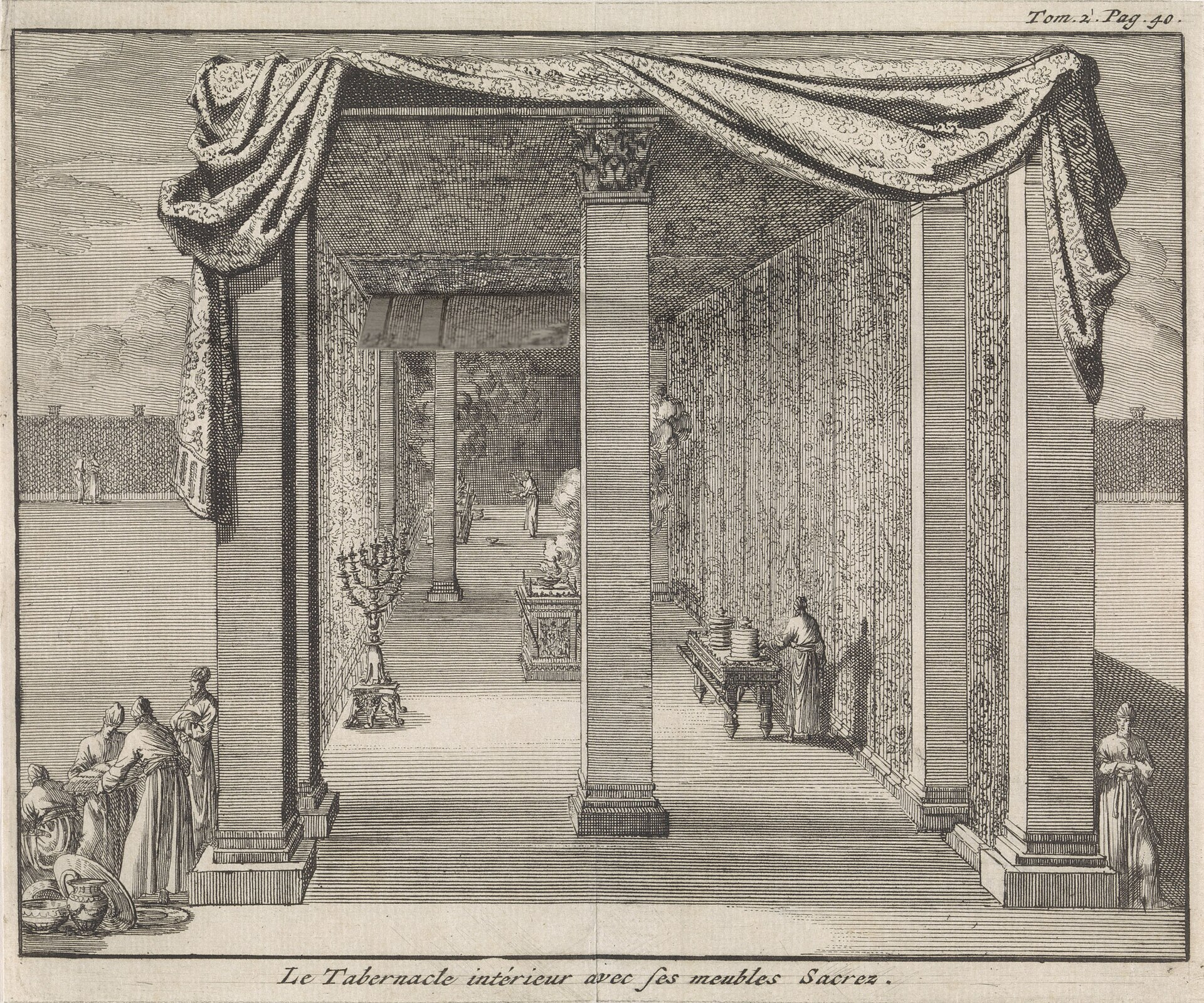
Notice the words. There is a sanctuary in heaven, and Jesus is ministering in it. It is not a figure of speech for heaven in general. It is “the true tabernacle, which the Lord pitched, and not man.” The earthly tabernacle was pitched by Moses and the Israelites; the heavenly one was made by God Himself. And the word “true” does not mean the earthly one was false. It means the heavenly one is the real, original thing, of which the earthly was only a copy.
“Here is revealed the sanctuary of the new covenant. The sanctuary of the first covenant was pitched by man, built by Moses; this is pitched by the Lord, not by man. In that sanctuary the earthly priests performed their service; in this, Christ, our great High Priest, ministers at God’s right hand. One sanctuary was on earth, the other is in heaven.”
Ellen G. White · The Great Controversy, p. 413
The Example And Shadow Of Heavenly Things
“For every high priest is ordained to offer gifts and sacrifices: wherefore it is of necessity that this man have somewhat also to offer. For if he were on earth, he should not be a priest, seeing that there are priests that offer gifts according to the law: Who serve unto the example and shadow of heavenly things, as Moses was admonished of God when he was about to make the tabernacle: for, See, saith he, that thou make all things according to the pattern shewed to thee in the mount.”
Hebrews 8:3-5
A priest must have something to offer. What does Christ offer? The writer has already told us: “himself” (7:27). The next chapters will explain that sacrifice in full.
Jesus could not serve as a priest in the earthly temple; He was from Judah, not Levi, and there were already priests there. His priesthood is exercised in heaven. And the earthly priests, the writer says, served “unto the example and shadow of heavenly things.” When God told Moses to build the tabernacle, He said, “See… that thou make all things according to the pattern shewed to thee in the mount” (verse 5, quoting Exodus 25:40). Moses was shown something, and he built a copy of it.
“The sanctuary in heaven, in which Jesus ministers in our behalf, is the great original, of which the sanctuary built by Moses was a copy. … The matchless splendor of the earthly tabernacle reflected to human vision the glories of that heavenly temple where Christ our forerunner ministers for us before the throne of God.”
Ellen G. White · The Great Controversy, p. 414
This is why the Old Testament sanctuary matters so much. Every piece of furniture, every service, every feast was a lesson about what Christ would do. Its two rooms, the holy place and the most holy place, represented the two phases of His ministry above, and the book of Revelation shows John looking into both (Revelation 4:5; 8:3; 11:19). Understanding the shadow helps us understand the substance.
“In the temple in heaven, the dwelling place of God, His throne is established in righteousness and judgment. In the most holy place is His law, the great rule of right by which all mankind are tested. The ark that enshrines the tables of the law is covered with the mercy seat, before which Christ pleads His blood in the sinner’s behalf. Thus is represented the union of justice and mercy in the plan of human redemption.”
Ellen G. White · The Great Controversy, p. 415
A Better Covenant
“But now hath he obtained a more excellent ministry, by how much also he is the mediator of a better covenant, which was established upon better promises. For if that first covenant had been faultless, then should no place have been sought for the second. For finding fault with them, he saith, Behold, the days come, saith the Lord, when I will make a new covenant with the house of Israel and with the house of Judah: Not according to the covenant that I made with their fathers in the day when I took them by the hand to lead them out of the land of Egypt; because they continued not in my covenant, and I regarded them not, saith the Lord.”
Hebrews 8:6-9
Christ’s ministry is “more excellent” because the covenant He mediates is “better,” founded on “better promises.” What was wrong with the first covenant? Read carefully: “For finding fault with them.” The fault was not in God’s law. It was in the people. At Sinai Israel promised, “All that the LORD hath spoken we will do” (Exodus 19:8). Within weeks they were worshipping a golden calf. “They continued not in my covenant.”
The old covenant rested largely on human promises: we will obey. The new covenant rests on God’s promises: I will do it. That is what makes the promises “better.” And the new covenant was not a completely new idea. The writer is quoting Jeremiah 31:31-34, written six hundred years before Christ. God had always intended to save by grace.
I Will Write Them In Their Hearts
“For this is the covenant that I will make with the house of Israel after those days, saith the Lord; I will put my laws into their mind, and write them in their hearts: and I will be to them a God, and they shall be to me a people: And they shall not teach every man his neighbour, and every man his brother, saying, Know the Lord: for all shall know me, from the least to the greatest. For I will be merciful to their unrighteousness, and their sins and their iniquities will I remember no more.”
Hebrews 8:10-12
Here are the “better promises,” four of them. God will write His laws in our minds and hearts. He will be our God, and we will be His people. Every one of us will know Him personally, “from the least to the greatest.” And He will forgive our sins and “remember no more.”
Notice what the new covenant does not say. It does not say, “I will abolish my law.” It says, “I will put my laws into their mind, and write them in their hearts.” Under the old covenant God’s law was written on tables of stone, outside the people. Under the new, the same law is written inside, so that obedience comes from a changed heart.
“The ‘new covenant’ was established upon ‘better promises’—the promise of forgiveness of sins and of the grace of God to renew the heart and bring it into harmony with the principles of God’s law. … The same law that was engraved upon the tables of stone is written by the Holy Spirit upon the tables of the heart. Instead of going about to establish our own righteousness we accept the righteousness of Christ.”
Ellen G. White · Patriarchs and Prophets, p. 372
Those tables of stone rested inside the ark in the most holy place, beneath the mercy seat. The heavenly sanctuary is the place where God’s law and God’s mercy meet. And the new covenant is where they meet in us: His law written in our hearts, and His mercy covering our sins.
Ready To Vanish Away
“In that he saith, A new covenant, he hath made the first old. Now that which decayeth and waxeth old is ready to vanish away.”
Hebrews 8:13
By speaking of a “new” covenant through Jeremiah, God had already declared the first one “old.” And what is old and wearing out is “ready to vanish away.” When Hebrews was written, the temple in Jerusalem was still standing and its priests were still offering sacrifices. But within a few years, in A.D. 70, the Romans destroyed it, and the sacrificial system has never been restored. What the writer said was “ready to vanish away” did exactly that.
What passed away was the system of earthly priests, sacrifices and ceremonies, the “shadow of heavenly things.” What remains is the reality it pointed to: a High Priest in the true tabernacle, a law written on the heart, and sins forgiven and remembered no more. That, the writer says, “is the sum.”
