2 Peter 2 is a warning. As there were false prophets in Israel, “there shall be false teachers among you,” bringing in “damnable heresies, even denying the Lord that bought them.” Peter gives three examples from history: the angels that sinned, the world before the Flood, and Sodom and Gomorrah. Together they show that God knows how to rescue the godly and how to “reserve the unjust unto the day of judgment to be punished.” Then he describes the false teachers themselves: greedy like Balaam, “wells without water,” promising liberty while they are slaves of corruption.
A study in 2 Peter 2 · Arthur Baldwin · StandUp4Jesus.Org · 18 min read
False Teachers Among You
“But there were false prophets also among the people, even as there shall be false teachers among you, who privily shall bring in damnable heresies, even denying the Lord that bought them, and bring upon themselves swift destruction. And many shall follow their pernicious ways; by reason of whom the way of truth shall be evil spoken of. And through covetousness shall they with feigned words make merchandise of you: whose judgment now of a long time lingereth not, and their damnation slumbereth not.”
2 Peter 2:1-3
Chapter 1 ended with true prophecy, given by holy men “moved by the Holy Ghost.” Chapter 2 opens with its counterfeit. “There were false prophets also among the people,” in Israel’s history, “even as there shall be false teachers among you.” The danger Peter warns of does not come from outside the church. It comes from within, from people who sit in the congregation and speak in the name of Christ.
They work “privily,” quietly slipping their teachings in beside the truth. What they bring is “damnable heresies,” teachings that destroy. And the heart of it is “denying the Lord that bought them.” Notice that Christ “bought” even these men. His blood paid for them too. Their ruin is not because He did not die for them, but because they deny Him.
“Here the apostle has pointed out one of the marked characteristics of spiritualist teachers. They refuse to acknowledge Christ as the Son of God.”
Ellen G. White · Patriarchs and Prophets, p. 686
Ellen White applies Peter’s words to the spiritualism of her own day, which claimed to bring messages from the dead while denying who Christ is. The principle reaches wider. Any teaching that makes Christ less than the Lord, less than the Son of God who “bought” us, or that sets aside His word, falls under Peter’s warning.
“Many shall follow their pernicious ways.” Error is often popular. And the result is that “the way of truth shall be evil spoken of”: the world judges Christianity by those who misrepresent it. Their motive is exposed too. “Through covetousness shall they with feigned words make merchandise of you.” They treat God’s people as a market. But Peter adds a warning: “their damnation slumbereth not.” Judgment may seem slow. It is not asleep.
The Lord Knoweth How To Deliver
“For if God spared not the angels that sinned, but cast them down to hell, and delivered them into chains of darkness, to be reserved unto judgment; And spared not the old world, but saved Noah the eighth person, a preacher of righteousness, bringing in the flood upon the world of the ungodly; And turning the cities of Sodom and Gomorrha into ashes condemned them with an overthrow, making them an ensample unto those that after should live ungodly; And delivered just Lot, vexed with the filthy conversation of the wicked: (For that righteous man dwelling among them, in seeing and hearing, vexed his righteous soul from day to day with their unlawful deeds;) The Lord knoweth how to deliver the godly out of temptations, and to reserve the unjust unto the day of judgment to be punished.”
2 Peter 2:4-9
Peter builds one long sentence around three examples: “if God spared not” the angels, “and spared not the old world,” and turned Sodom and Gomorrah “into ashes,” then He certainly knows how to deal with false teachers. But in two of the three examples he also shows God rescuing His faithful ones: Noah and his family, and “just Lot.” The point is double. God judges, and God delivers.
First, “the angels that sinned.” The word translated “hell” here is not the usual word for the grave, or for the final fire. It is tartaroō, used only here in the New Testament. Peter says these angels were confined “into chains of darkness, to be reserved unto judgment.” They are not yet being punished in fire. They are restrained, in spiritual darkness, cut off from the light of heaven, waiting for a judgment still to come. Their final end is “everlasting fire, prepared for the devil and his angels” (Matthew 25:41), a fire that will leave nothing behind (Ezekiel 28:18-19).
Second, the Flood. God “spared not the old world,” but saved Noah, “a preacher of righteousness,” with seven others. For a hundred and twenty years Noah preached, and the world did not listen.
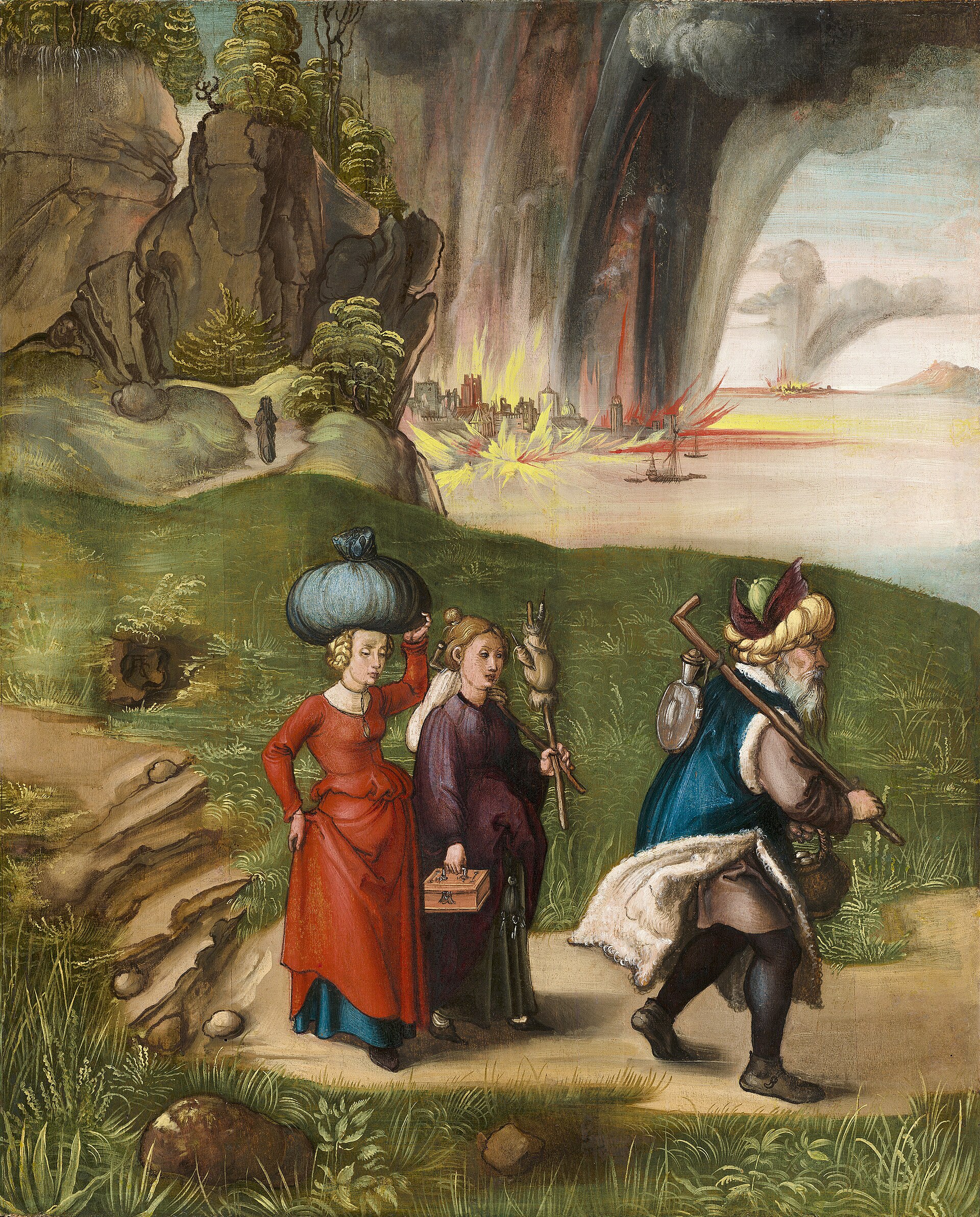
Third, Sodom and Gomorrah. Notice what Peter says happened to them: God turned them “into ashes.” Jude says the same cities suffered “the vengeance of eternal fire” (Jude 7). Yet they are not burning today. The fire was eternal in its effect: it did its work completely, and the cities have never been rebuilt. Peter calls them “an ensample unto those that after should live ungodly.” The final punishment of the wicked will be like that, not endless torment, but complete destruction. The wicked will be “ashes under the soles of your feet” (Malachi 4:3).
“In mercy to the world, God blotted out its wicked inhabitants in Noah’s time. In mercy He destroyed the corrupt dwellers in Sodom. Through the deceptive power of Satan the workers of iniquity obtain sympathy and admiration, and are thus constantly leading others to rebellion. It was so in Cain’s and in Noah’s day, and in the time of Abraham and Lot; it is so in our time. It is in mercy to the universe that God will finally destroy the rejecters of His grace.”
Ellen G. White · The Great Controversy, p. 543
And Lot? He was not a strong man. He had chosen to live in Sodom for its prosperity, and it cost him dearly. But Peter still calls him “just Lot” and “that righteous man.” He did not join in the city’s sins. “In seeing and hearing,” he “vexed his righteous soul from day to day with their unlawful deeds.” A believer surrounded by wickedness should be troubled by it, never comfortable with it. And God rescued him.
“The Lord knoweth how to deliver the godly out of temptations, and to reserve the unjust unto the day of judgment to be punished.” Two things are held in reserve: deliverance for the godly, and punishment for the unjust. Notice when the punishment comes: at “the day of judgment,” not at death. The wicked dead are not in torment now. They are “reserved,” awaiting the judgment, and the punishment that follows ends in the second death.
“They suffer punishment varying in duration and intensity, ‘according to their works,’ but finally ending in the second death. Since it is impossible for God, consistently with His justice and mercy, to save the sinner in his sins, He deprives him of the existence which his transgressions have forfeited and of which he has proved himself unworthy.”
Ellen G. White · The Great Controversy, p. 544
The Way Of Balaam
“But chiefly them that walk after the flesh in the lust of uncleanness, and despise government. Presumptuous are they, selfwilled, they are not afraid to speak evil of dignities. Whereas angels, which are greater in power and might, bring not railing accusation against them before the Lord. But these, as natural brute beasts, made to be taken and destroyed, speak evil of the things that they understand not; and shall utterly perish in their own corruption; And shall receive the reward of unrighteousness, as they that count it pleasure to riot in the day time. Spots they are and blemishes, sporting themselves with their own deceivings while they feast with you; Having eyes full of adultery, and that cannot cease from sin; beguiling unstable souls: an heart they have exercised with covetous practices; cursed children: Which have forsaken the right way, and are gone astray, following the way of Balaam the son of Bosor, who loved the wages of unrighteousness; But was rebuked for his iniquity: the dumb ass speaking with man’s voice forbad the madness of the prophet.”
2 Peter 2:10-16
Peter’s portrait of the false teachers is blunt. They follow their appetites, “despise government,” reject every authority over them, and are “not afraid to speak evil of dignities.” Even the angels, far greater in power, do not dare to use such railing language (compare Jude 9). These men speak “of the things that they understand not.”
Peter compares them to “natural brute beasts,” creatures living by instinct. And he describes their end in plain words: they “shall utterly perish in their own corruption.” Scripture never says the wicked live forever in torment. It says they perish.
They are not open enemies. They “feast with you,” sitting at the church’s fellowship meals, “spots” and “blemishes” on its love feasts. Their eyes are “full of adultery,” and they are expert at “beguiling unstable souls.” And behind it all is greed: “an heart they have exercised with covetous practices.” Like an athlete who trains daily, they have trained their hearts in covetousness.
That is why Peter names Balaam (Numbers 22-24). Balaam was a real prophet who knew the true God. But he “loved the wages of unrighteousness.” King Balak offered him riches to curse Israel, and he went, hoping to find a way to take the money without openly disobeying God. His own donkey saw the angel of the Lord that he could not see, and “the dumb ass speaking with man’s voice forbad the madness of the prophet.”
“The sin of covetousness, which God declares to be idolatry, had made him a timeserver, and through this one fault Satan gained entire control of him. It was this that caused his ruin.”
Ellen G. White · Patriarchs and Prophets, p. 439
A man can know the truth, speak it, and even prophesy, and still be lost because he loves money more than God. That was Balaam’s way, and it was the false teachers’ way. It is still a danger for anyone who handles holy things.
Wells Without Water
“These are wells without water, clouds that are carried with a tempest; to whom the mist of darkness is reserved for ever. For when they speak great swelling words of vanity, they allure through the lusts of the flesh, through much wantonness, those that were clean escaped from them who live in error. While they promise them liberty, they themselves are the servants of corruption: for of whom a man is overcome, of the same is he brought in bondage. For if after they have escaped the pollutions of the world through the knowledge of the Lord and Saviour Jesus Christ, they are again entangled therein, and overcome, the latter end is worse with them than the beginning. For it had been better for them not to have known the way of righteousness, than, after they have known it, to turn from the holy commandment delivered unto them. But it is happened unto them according to the true proverb, The dog is turned to his own vomit again; and the sow that was washed to her wallowing in the mire.”
2 Peter 2:17-22
In a dry land, few things are more disappointing than a well with no water, or a cloud that promises rain and blows away. The false teachers promise refreshment and give nothing. They use “great swelling words of vanity,” impressive speech with nothing inside. And their target is the new believer, “those that were clean escaped” from a life of error, still unsteady on their feet.
Their offer is “liberty,” freedom from rules, from the law, from restraint. But “they themselves are the servants of corruption: for of whom a man is overcome, of the same is he brought in bondage.” Whatever masters you owns you. Sin always advertises freedom and delivers slavery. It has done so since Eden.
“At his creation Adam was placed in dominion over the earth. But by yielding to temptation, he was brought under the power of Satan. ‘Of whom a man is overcome, of the same is he brought in bondage.’ 2 Peter 2:19. When man became Satan’s captive, the dominion which he held, passed to his conqueror.”
Ellen G. White · Patriarchs and Prophets, p. 67
True freedom is found only in Christ: “If the Son therefore shall make you free, ye shall be free indeed” (John 8:36). And the law of God, far from being bondage, is “the perfect law of liberty” (James 1:25).
The chapter ends with a sobering warning about those who have known Christ and turned back. “The latter end is worse with them than the beginning.” Knowing “the way of righteousness” and then turning from “the holy commandment” is worse than never knowing it at all. Peter’s two proverbs make the point: a dog returns to its vomit (Proverbs 26:11), and a washed pig goes back to the mud. The outside had been cleaned, but the nature had not been changed.
That is the difference between reformation and new birth. Only those who have become “partakers of the divine nature” (1:4) are truly changed. And the protection against the false teachers is exactly what Peter commanded in chapter 1: keep growing, keep adding grace to grace, and “ye shall never fall.”