God forbids Jeremiah to pray for his own people, and tells him that Moses and Samuel together could not change the outcome. Then Jeremiah says the loveliest sentence in the book and, four verses later, accuses God of being a dried-up stream.
A study in Jeremiah 14-15 · Arthur Baldwin · StandUp4Jesus.Org · 12 min read
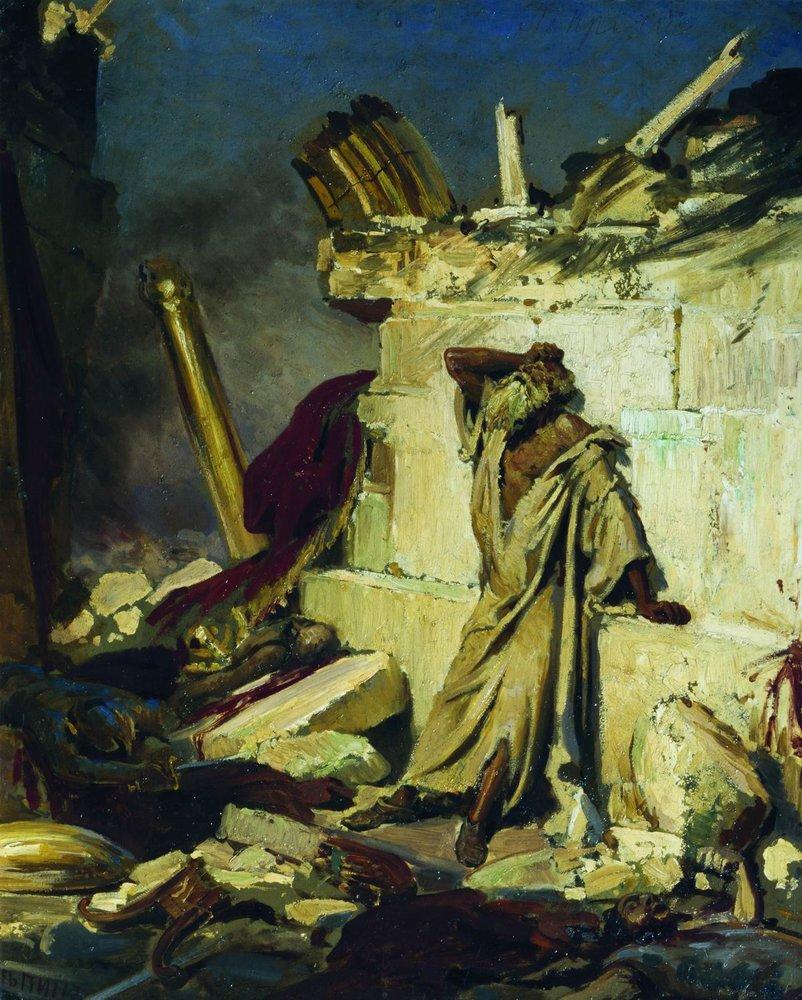
Pray Not For This People
“Then said the LORD unto me, Pray not for this people for their good. When they fast, I will not hear their cry; and when they offer burnt offering and an oblation, I will not accept them.”
Jeremiah 14:11, 12
A drought has been described in the opening verses of the chapter — empty cisterns, farmers with covered heads, a deer abandoning her fawn because there is no grass. Into that, God says the hardest thing He has said to Jeremiah yet.
Pray not for this people for their good. Intercession is forbidden. The one thing a prophet can always do for people who will not listen — pray for them — is taken away.
This needs handling carefully, because misread it becomes a monstrous sentence. Two things keep it in proportion.
First, it is said to Jeremiah, not published to the nation. Nobody in Judah was told that prayer was pointless. The prohibition is on the prophet, and it functions as a message about how far things have gone — the way a doctor stops ordering tests, not because the patient is beneath care but because the diagnosis is no longer in doubt.
Second, look at what is refused: fasting and burnt offerings. Those are religious observances, and they are exactly what the people were still willing to produce. The drought had driven them to ceremony, not to change. God is declining the ceremony, which is a different thing from declining the people — and He had already said what He would accept, back in chapter 4: break up your fallow ground.
And Jeremiah, notably, keeps praying anyway. The chapter is full of his intercession before and after this verse, and God does not strike him for it.
I Sent Them Not
“Then said I, Ah, Lord GOD! behold, the prophets say unto them, Ye shall not see the sword, neither shall ye have famine; but I will give you assured peace in this place.”
Jeremiah 14:13
Jeremiah’s response is a defence of the people, and it is a fair one. They were told this. Other prophets — credentialled men, speaking publicly, in God’s name — promised them assured peace in this place. If the nation is deceived, someone deceived it.
He opens with the same two words he used when he was first called: Ah, Lord GOD! Then it was an objection about himself. Now it is an objection on behalf of somebody else.
“The prophets prophesy lies in my name: I sent them not, neither have I commanded them, neither spake unto them: they prophesy unto you a false vision and divination, and a thing of nought, and the deceit of their heart.”
Jeremiah 14:14
The denial is triple, and the repetition is the force of it: I sent them not. I have not commanded them. I never spoke to them. No commission, no instruction, no contact of any kind. God shuts every door through which they might claim some partial authority.
Then the source is named — the deceit of their heart. They were not lying to the people so much as repeating what they had already told themselves. That is what makes a false prophet convincing: he is generally the first person he persuaded.
And the test is embedded in the message itself. The true word was hard and the false word was pleasant, and the difference between them was not tone but accuracy. One of these groups was going to be proved right by events within twenty years.
Though Moses And Samuel Stood Before Me
“Then said the LORD unto me, Though Moses and Samuel stood before me, yet my mind could not be toward this people: cast them out of my sight, and let them go forth.”
Jeremiah 15:1
Two names, and they are the right two.
Moses stood between God and a nation that had just made a golden calf, and offered to be blotted out of God’s book if they could be spared — and the nation was spared. Samuel prayed and God answered with thunder. If Israel had a hall of intercessors, these are the two portraits at the entrance, and both of them are remembered specifically for having prevailed.
God says that even those two, standing there together, would not move Him now.
What that sentence is measuring is not a limit on prayer. It is a statement about how far Judah has gone — and it is aimed at a very specific delusion. A nation that trusts in a building, in a priesthood, in the fact of being chosen, will also trust that somebody holy enough can always be found to fix things. God is closing that exit. There is no intercessor so effective that a people may decline to repent.
And it is worth saying what the passage does not say. It is not a statement about the reach of Christ’s intercession, which is a different matter entirely and rests on something other than the standing of the man praying. Moses and Samuel were servants pleading for a nation. What Scripture later sets against this verse is a Priest who does not plead from outside the problem.
Thy Words Were Found, And I Did Eat Them
“Thy words were found, and I did eat them; and thy word was unto me the joy and rejoicing of mine heart: for I am called by thy name, O LORD God of hosts.”
Jeremiah 15:16
After all of that, this. It is the warmest verse Jeremiah ever wrote, and it sits four verses away from the bitterest.
Thy words were found. Found, not produced — the same posture as chapter 1, where nothing about the commission originated with him. They were there to be discovered.
And I did eat them. Not studied, not admired, not filed. Eating is the most thorough thing a person can do with anything: it stops being an external object and becomes the one consuming it. Ezekiel was handed a scroll and told to eat it, and found it sweet as honey. John was given the same instruction on Patmos. It is a recurring picture, and it always means the same thing — the word is not information to be carried but food to be assimilated.
Then the result: the joy and rejoicing of mine heart.
Consider what those words actually were. Jeremiah’s messages were disaster, invasion, ruined cities, a rotted belt and an emptied earth. And he calls them his joy. The delight was not in the content of the message but in the fact that God had spoken to him at all. He was given hard words by Someone who was really there, and that turned out to be better than pleasant words from nobody.
I Sat Alone
“I sat not in the assembly of the mockers, nor rejoiced; I sat alone because of thy hand: for thou hast filled me with indignation.”
Jeremiah 15:17
And here is the bill for the previous verse.
The isolation is not incidental and it is not self-imposed piety. I sat alone because of thy hand — he traces his loneliness directly to God. The same hand that touched his mouth in chapter 1 is the reason there is no company at his table.
Note the honesty of nor rejoiced. He is not claiming he found the mockers’ assembly unappealing. He stayed away from a party he might have enjoyed, and he says so.
This is one of the truest verses in Scripture about the cost of a calling, and it is placed deliberately. Verse 16 is the joy; verse 17 is what the joy cost. Anyone who quotes the one without the other has taken half the testimony.
As Waters That Fail
“Why is my pain perpetual, and my wound incurable, which refuseth to be healed? wilt thou be altogether unto me as a liar, and as waters that fail?”
Jeremiah 15:18
Two verses after calling God’s word his joy, Jeremiah asks God whether He is a liar.
The second image is the sharper one, and it needs the geography. A wadi in that country runs full in the wet season and is bone dry by high summer. Waters that fail are not waters that were never there — they are waters you have drunk from, that you walked back to in the heat, and found gone.
That is the accusation. Not that God does not exist. That He was there, and then was not, exactly when needed. It is the complaint of a man who has known better rather than a man who never believed.
And it is in Scripture, unedited, in the mouth of a true prophet, four verses after the verse about joy. The Bible does not present its faithful men as people who felt one way consistently. Jeremiah wrote both sentences in the same breath, and both were recorded.
Return Not Thou Unto Them
“Therefore thus saith the LORD, If thou return, then will I bring thee again, and thou shalt stand before me: and if thou take forth the precious from the vile, thou shalt be as my mouth: let them return unto thee; but return not thou unto them.”
Jeremiah 15:19
God’s answer to the accusation is not a rebuke, and it is not reassurance either. It is a call to repentance — addressed to the prophet.
If thou return. The word God has been using for the whole book about Judah is now turned on Jeremiah. He has drifted, in his bitterness, and is invited back on the same terms as everyone else. There is no special category for the man in the pulpit.
Then the condition: if thou take forth the precious from the vile, thou shalt be as my mouth. Separate what is valuable from what is worthless in what you are saying — and then you will speak for Me. Even a true prophet’s output needed sorting, and the sorting was his job.
And then the sentence that decides which way the influence runs: let them return unto thee; but return not thou unto them.
A man standing against a whole nation will be moved by it if he is not careful. God is not telling him to stop caring — he has just been told to keep speaking to them. He is telling him which direction the traffic goes. Jeremiah may be their prophet without becoming their echo.
Then God repeats the promise from the first chapter, word for word in its essentials:
“And I will make thee unto this people a fenced brasen wall: and they shall fight against thee, but they shall not prevail against thee: for I am with thee to save thee and to deliver thee, saith the LORD.”
Jeremiah 15:20
The same brasen walls, the same they shall not prevail, the same I am with thee — given at his calling and now given again, to a man who has just called God a dried-up creek.
Nothing has been withdrawn. The commission stands exactly where it did, and the terms were not adjusted for his outburst. That is the answer to waters that fail, and it is given by repetition rather than by argument: the promise is still here, in the same words, after you said that.
Next in this study: The Heart Is Deceitful, And The Sabbath Gates — Jeremiah 16 and 17, a prophet forbidden to marry or attend a funeral, the heart above all things, and a test set at the gates of the city.
