Lamentations 5 is not a poem of mourning like the four before it. It is a prayer. The whole community speaks to God together: “Remember, O LORD, what is come upon us.” They list everything they have lost, and then they say the words that make all the difference: “woe unto us, that we have sinned!” They lift their eyes from the ruins to the throne that cannot fall: “Thou, O LORD, remainest for ever.” And they pray the prayer every returning sinner needs: “Turn thou us unto thee, O LORD, and we shall be turned; renew our days as of old.”
A study in Lamentations 5 · Arthur Baldwin · StandUp4Jesus.Org · 13 min read
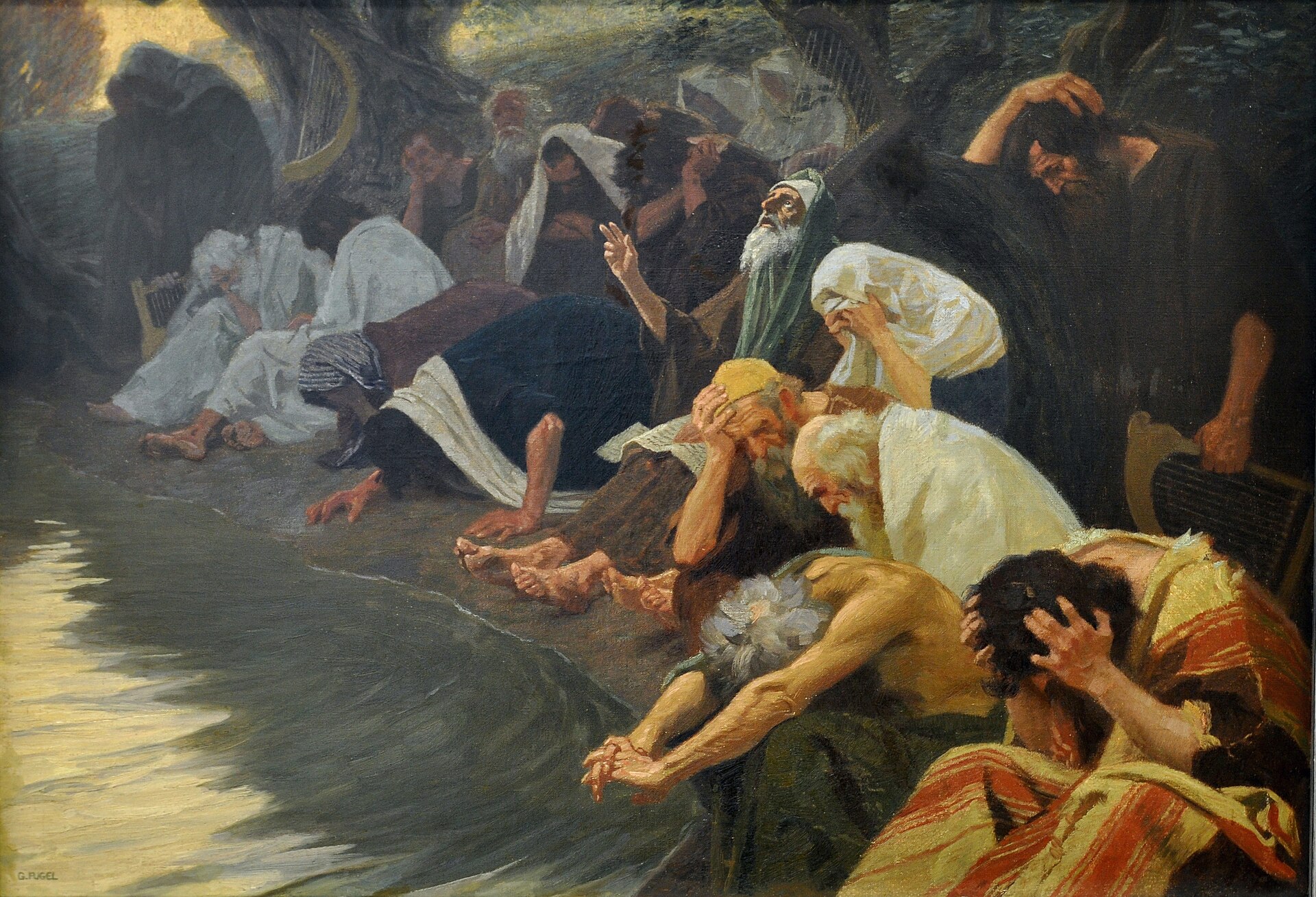
Remember, O LORD
“Remember, O LORD, what is come upon us: consider, and behold our reproach. Our inheritance is turned to strangers, our houses to aliens. We are orphans and fatherless, our mothers are as widows. We have drunken our water for money; our wood is sold unto us. Our necks are under persecution: we labour, and have no rest. We have given the hand to the Egyptians, and to the Assyrians, to be satisfied with bread. Our fathers have sinned, and are not; and we have borne their iniquities. Servants have ruled over us: there is none that doth deliver us out of their hand. We gat our bread with the peril of our lives because of the sword of the wilderness. Our skin was black like an oven because of the terrible famine.”
Lamentations 5:1-10
This last chapter has 22 verses, like an acrostic, but it no longer follows the alphabet. The careful pattern of grief has given way to plain prayer, as though the people have run out of poetry and simply talk to God. It begins with one word: “Remember.” Not that God had forgotten, but this is how His people have always prayed. They lay their situation before Him and ask Him to look.
And what a list it is. The land God gave them as an “inheritance” now belongs to foreigners. Their homes are occupied by strangers. They have to pay for water from their own wells and for wood from their own forests. They are like orphans with no father to protect them. Those who once ruled as a kingdom of priests are now ruled by “servants,” petty officials of a foreign empire.
“We have given the hand to the Egyptians, and to the Assyrians, to be satisfied with bread.” For generations Judah had made deals with the great powers instead of trusting God. Now they have to beg those same nations for food.
Then comes a verse that sounds like a complaint: “Our fathers have sinned, and are not; and we have borne their iniquities.” It is true that one generation’s sins can bring suffering on the next. The second commandment speaks of God “visiting the iniquity of the fathers upon the children unto the third and fourth generation of them that hate me” (Exodus 20:5). But notice the last words: “of them that hate me.” Children suffer for their parents’ sins when they continue in them. God does not hold anyone guilty for what someone else did: “The son shall not bear the iniquity of the father, neither shall the father bear the iniquity of the son” (Ezekiel 18:20). And as we will see, this generation is about to admit that the sin was theirs too.
Ellen White quoted this prayer as part of the grief of God’s people in captivity, and pointed out where their help would come from:
“The dark years of destruction and death marking the end of the kingdom of Judah would have brought despair to the stoutest heart had it not been for the encouragements in the prophetic utterances of God’s messengers. Through Jeremiah in Jerusalem, through Daniel in the court of Babylon, through Ezekiel on the banks of the Chebar, the Lord in mercy made clear His eternal purpose and gave assurance of His willingness to fulfill to His chosen people the promises recorded in the writings of Moses.”
Ellen G. White · Prophets and Kings, p. 464
Woe Unto Us, That We Have Sinned
“They ravished the women in Zion, and the maids in the cities of Judah. Princes are hanged up by their hand: the faces of elders were not honoured. They took the young men to grind, and the children fell under the wood. The elders have ceased from the gate, the young men from their musick. The joy of our heart is ceased; our dance is turned into mourning. The crown is fallen from our head: woe unto us, that we have sinned! For this our heart is faint; for these things our eyes are dim. Because of the mountain of Zion, which is desolate, the foxes walk upon it.”
Lamentations 5:11-18
The prayer does not hide the cruelty of the conquerors. Women were abused, princes were hanged, young men were set to the slaves’ work of grinding at the millstones, and boys staggered under loads of wood. The whole life of the community has stopped. The elders no longer sit at the city gate to judge, and the young men no longer play their music. “Our dance is turned into mourning.”
Then the turning point of the whole prayer: “The crown is fallen from our head: woe unto us, that we have sinned!” In verse 7 they spoke of their fathers’ sins. Now they speak of their own. “We have sinned.” This is the confession God had waited forty years to hear. Jerusalem’s crown, her glory as the city of God, had fallen because of what they themselves had done.
“Because of the mountain of Zion, which is desolate, the foxes walk upon it.” Wild animals now wander over the hill where the temple stood. More than a century earlier the prophet Micah had warned that this would happen: “Therefore shall Zion for your sake be plowed as a field, and Jerusalem shall become heaps, and the mountain of the house as the high places of the forest” (Micah 3:12). Every warning had come true.
But the dance turned into mourning can be turned back again. David wrote, “Thou hast turned for me my mourning into dancing: thou hast put off my sackcloth, and girded me with gladness” (Psalm 30:11). The God who allows grief is the only One who can turn it to joy, and He begins exactly where this verse does, with a heart that says, “We have sinned.”
Turn Thou Us Unto Thee
“Thou, O LORD, remainest for ever; thy throne from generation to generation. Wherefore dost thou forget us for ever, and forsake us so long time? Turn thou us unto thee, O LORD, and we shall be turned; renew our days as of old. But thou hast utterly rejected us; thou art very wroth against us.”
Lamentations 5:19-22
“Thou, O LORD, remainest for ever; thy throne from generation to generation.” The throne of David in Jerusalem had fallen. The temple, God’s earthly “footstool,” lay in ashes. But God’s own throne had not moved an inch. “But thou, O LORD, shalt endure for ever; and thy remembrance unto all generations” (Psalm 102:12). When everything we lean on collapses, God is still on His throne.
That is why the people can pray, “Turn thou us unto thee, O LORD, and we shall be turned.” They have learned that they cannot even repent on their own. They need God to turn their hearts. Ephraim had prayed the same prayer in Jeremiah’s day: “turn thou me, and I shall be turned; for thou art the LORD my God” (Jeremiah 31:18). Real repentance is not something we produce to earn God’s favor. It is a gift He works in us when we ask.
“Christ is the source of every right impulse. He is the only one that can implant in the heart enmity against sin. Every desire for truth and purity, every conviction of our own sinfulness, is an evidence that His Spirit is moving upon our hearts.”
Ellen G. White · Steps to Christ, p. 26
“Renew our days as of old.” They do not ask for something new. They ask to go back to the beginning, to the relationship with God their nation had at its best. It is the prayer of the prodigal son coming home.
And then the book ends on a strange and painful note: “But thou hast utterly rejected us; thou art very wroth against us.” The Hebrew can also be read as a question or a fear: “unless thou hast utterly rejected us.” The book does not resolve it. It leaves the question hanging, the way real grief often does. When the book is read aloud in the synagogue, it is the custom to read verse 21 again after verse 22, so that the reading does not end on rejection but on the prayer: “Turn thou us unto thee, O LORD, and we shall be turned; renew our days as of old.”
History gave God’s answer. He had not utterly rejected them. Through Jeremiah He had promised, “after seventy years be accomplished at Babylon I will visit you, and perform my good word toward you, in causing you to return to this place” (Jeremiah 29:10). And He kept His word, on time: “Now in the first year of Cyrus king of Persia, that the word of the LORD by the mouth of Jeremiah might be fulfilled, the LORD stirred up the spirit of Cyrus king of Persia, that he made a proclamation throughout all his kingdom” (Ezra 1:1), letting the captives go home to rebuild.
“And now, just at the time God had said He would cause His temple at Jerusalem to be rebuilt, He moved upon Cyrus as His agent to discern the prophecies concerning himself, with which Daniel was so familiar, and to grant the Jewish people their liberty.”
Ellen G. White · Prophets and Kings, p. 557
The question at the end of Lamentations has a final answer in the New Testament too. Paul asked, “Hath God cast away his people? God forbid” (Romans 11:1). “God hath not cast away his people which he foreknew” (Romans 11:2). And to every one of us He says what He said through Jeremiah: “Yea, I have loved thee with an everlasting love: therefore with lovingkindness have I drawn thee” (Jeremiah 31:3).
Lamentations is the saddest book in the Bible, and it was written so that we would never have to learn its lessons the hard way. It shows where refusing God’s warnings leads. But at its centre stands the promise that has carried believers through every dark night since: “his compassions fail not. They are new every morning: great is thy faithfulness.” To read the warnings that came before the fall, see this site’s study of Jeremiah. To go back to the beginning of this series, see Lamentations, chapter by chapter.
