In the space of a single afternoon in one small Lycaonian city, Paul goes from being hailed as a god come down from heaven to being stoned in the street and left for dead. Nothing about the gospel itself changes between those two moments — only the crowd’s own understanding of what they are looking at. This chapter closes out the first missionary journey with two of its most extreme scenes standing right next to each other.
A study in Acts 14 · Arthur Baldwin · StandUp4Jesus.Org · 17 min read
The Word Of His Grace
“And it came to pass in Iconium, that they went both together into the synagogue of the Jews, and so spake, that a great multitude both of the Jews and also of the Greeks believed.”
Acts 14:1
Driven out of Antioch in Pisidia at the end of the previous chapter, Paul and Barnabas arrive at their very next stop and do exactly the same thing that got them expelled the first time — walk straight into the synagogue and preach.
“But the unbelieving Jews stirred up the Gentiles, and made their minds evil affected against the brethren. Long time therefore abode they speaking boldly in the Lord, which gave testimony unto the word of his grace, and granted signs and wonders to be done by their hands.”
Acts 14:2-3
Opposition and boldness sit side by side in this one sentence without any tension between them. Knowing full well their message is generating enemies, Paul and Barnabas stay anyway — a “long time,” not a brief, cautious visit.
“But the multitude of the city was divided: and part held with the Jews, and part with the apostles. And when there was an assault made both of the Gentiles, and also of the Jews with their rulers, to use them despitefully, and to stone them, They were ware of it, and fled unto Lystra and Derbe, cities of Lycaonia, and unto the region that lieth round about.”
Acts 14:4-6
Stoning is mentioned here as a plan narrowly avoided — a warning worth remembering, since this exact fate is about to catch up with Paul only a few verses later, in the very next city on this itinerary.
The Gods Are Come Down To Us
“And there sat a certain man at Lystra, impotent in his feet, being a cripple from his mother’s womb, who never had walked: The same heard Paul speak: who stedfastly beholding him, and perceiving that he had faith to be healed, Said with a loud voice, Stand upright on thy feet. And he leaped and walked.”
Acts 14:8-10
“Paul’s heart went out in sympathy toward the afflicted man, in whom he discerned one who ‘had faith to be healed.’ In the presence of the idolatrous assembly Paul commanded the cripple to stand upright on his feet. Heretofore the sufferer had been able to take a sitting posture only, but now he instantly obeyed Paul’s command and for the first time in his life stood on his feet.”
Ellen G. White · The Acts of the Apostles, p. 181
This is nearly the same scene that opened chapter 3, a lifelong cripple healed in an instant — except this time the healing happens in a Gentile city with no Jewish synagogue at all, before an audience with no framework for understanding it except their own mythology.
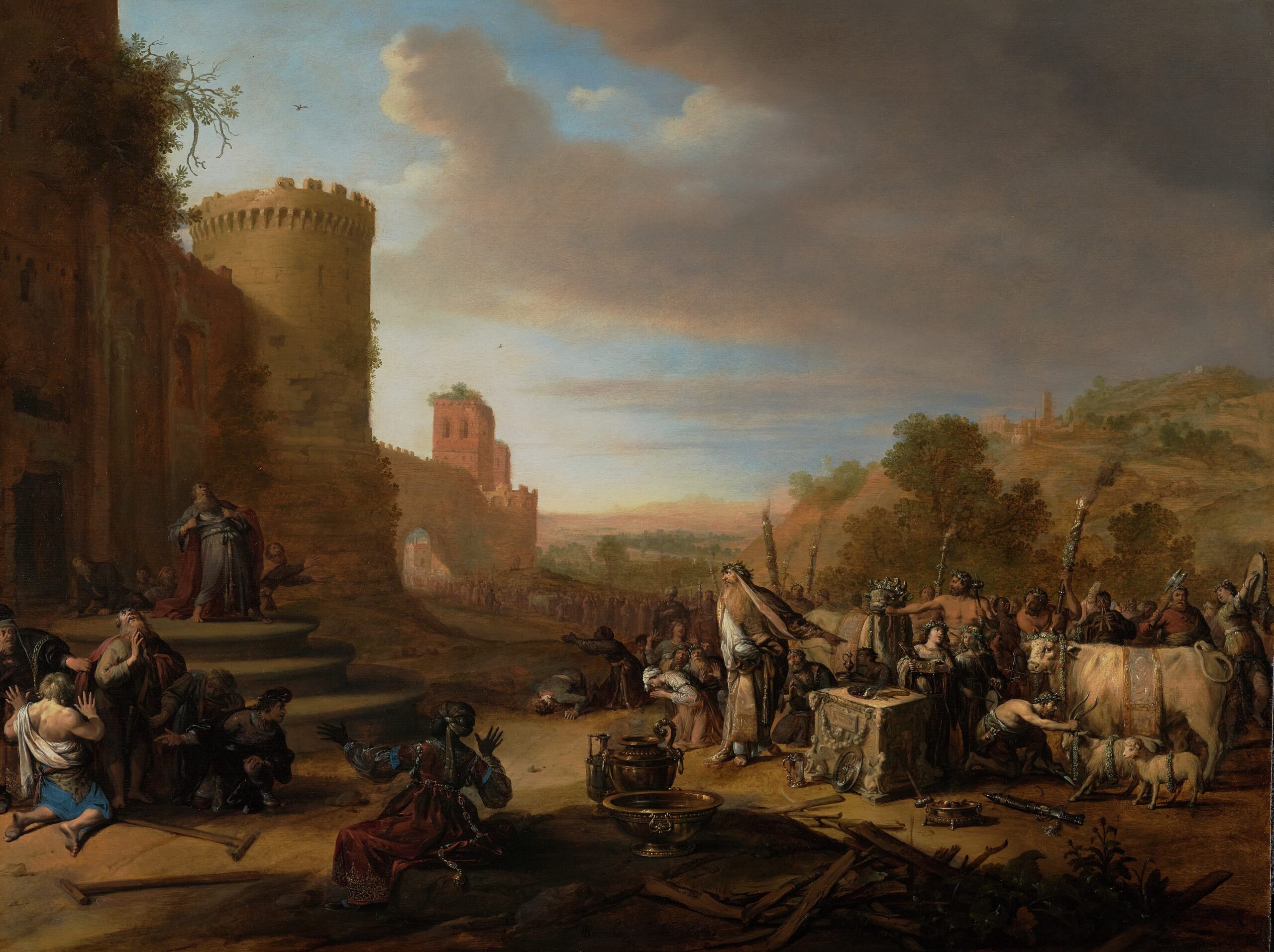
“And when the people saw what Paul had done, they lifted up their voices, saying in the speech of Lycaonia, The gods are come down to us in the likeness of men. And they called Barnabas, Jupiter; and Paul, Mercurius, because he was the chief speaker.”
Acts 14:11-12
“This statement was in harmony with a tradition of theirs that the gods occasionally visited the earth. Barnabas they called Jupiter, the father of gods, because of his venerable appearance, his dignified bearing, and the mildness and benevolence expressed in his countenance. Paul they believe to be Mercury, ‘because he was the chief speaker,’ earnest and active, and eloquent with words of warning and exhortation.”
Ellen G. White · The Acts of the Apostles, p. 181
Even the specific gods assigned reveal how closely this crowd has been watching — Barnabas’s quiet dignity read as the majesty of Jupiter, Paul’s own eloquence read as the quick, message-bearing energy of Mercury. Their idolatry, however wrong its conclusion, is at least paying careful attention.
“Then the priest of Jupiter, which was before their city, brought oxen and garlands unto the gates, and would have done sacrifice with the people.”
Acts 14:13
“Paul and Barnabas, who had sought retirement and rest, were not aware of these preparations. Soon, however, their attention was attracted by the sound of music and the enthusiastic shouting of a large crowd who had come to the house where they were staying.”
Ellen G. White · The Acts of the Apostles, p. 181
Sacrificial oxen are already garlanded and on their way to the gate before Paul and Barnabas even realize what the noise outside their door means. The whole misunderstanding has grown to its full, elaborate scale entirely without their knowledge or consent.
We Also Are Men Of Like Passions With You
“Which when the apostles, Barnabas and Paul, heard of, they rent their clothes, and ran in among the people, crying out, And saying, Sirs, why do ye these things? We also are men of like passions with you, and preach unto you that ye should turn from these vanities unto the living God, which made heaven, and earth, and the sea, and all things that are therein.”
Acts 14:14-15
Tearing one’s clothing was, in that world, an unmistakable public signal of horror — the same gesture Caiaphas once used, falsely, to perform outrage at Christ’s own claim to divinity. Here the gesture is entirely genuine: two men desperately trying to refuse a worship they know does not belong to them.
“Who in times past suffered all nations to walk in their own ways. Nevertheless he left not himself without witness, in that he did good, and gave us rain from heaven, and fruitful seasons, filling our hearts with food and gladness.”
Acts 14:16-17
With no shared Scripture and no synagogue tradition to build from, Paul reaches for the one witness every person in that crowd already has access to — rain, harvest, the ordinary provision of daily life, offered as evidence of a Creator these idol-worshipers have simply never been taught to recognize.
“And with these sayings scarce restrained they the people, that they had not done sacrifice unto them.”
Acts 14:18
“So firm had been their belief that these men were indeed gods, and so great their enthusiasm, that they were loath to acknowledge their error. … It was only after much persuasion on the part of Paul, and careful explanation regarding the mission of himself and Barnabas as representatives of the God of heaven and of His Son, the great Healer, that the people were persuaded to give up their purpose.”
Ellen G. White · The Acts of the Apostles, p. 182
“Scarce restrained” is the whole scene’s own warning in two words. A crowd’s misplaced devotion, this account makes clear, is not a compliment to be quietly accepted — it is a danger requiring real, exhausting effort to correct.
Supposing He Had Been Dead
“And there came thither certain Jews from Antioch and Iconium, who persuaded the people, and, having stoned Paul, drew him out of the city, supposing he had been dead.”
Acts 14:19
“The disappointment that the Lystrians had suffered in being refused the privilege of offering sacrifice to the apostles, prepared them to turn against Paul and Barnabas with an enthusiasm approaching that with which they had hailed them as gods.”
Ellen G. White · The Acts of the Apostles, p. 183
It is the very same crowd, in the very same city, likely within the very same week. The intensity of their worship and the intensity of their violence turn out to be powered by exactly the same volatile enthusiasm, simply pointed in a new direction by a handful of determined agitators who traveled a considerable distance specifically to redirect it.
“The apostle thought that his end had come. The martyrdom of Stephen, and the cruel part that he himself had acted upon that occasion, came vividly to his mind. Covered with bruises and faint with pain, he fell to the ground, and the infuriated mob ‘drew him out of the city, supposing he had been dead.’”
Ellen G. White · The Acts of the Apostles, p. 183
Paul’s own mind returns, at the very moment he expects to die by stoning, to the death he once approved of by the very same method — a debt he can never fully repay now being asked of him in kind.
“Howbeit, as the disciples stood round about him, he rose up, and came into the city: and the next day he departed with Barnabas to Derbe.”
Acts 14:20
“Among those who had been converted at Lystra, and who were eyewitnesses of the sufferings of Paul, was one who was afterward to become a prominent worker for Christ… This was a young man named Timothy. When Paul was dragged out of the city, this youthful disciple was among the number who took their stand beside his apparently lifeless body and who saw him arise, bruised and covered with blood, but with praises upon his lips.”
Ellen G. White · The Acts of the Apostles, p. 184
Timothy’s own introduction to this book happens here, watching the exact worst moment of Paul’s ministry so far — a young disciple’s first real image of the apostle who will later become his own spiritual father is a battered, half-dead man rising up still praising God.
The Door Of Faith
“And when they had preached the gospel to that city, and had taught many, they returned again to Lystra, and to Iconium, and Antioch, Confirming the souls of the disciples, and exhorting them to continue in the faith, and that we must through much tribulation enter into the kingdom of God.”
Acts 14:21-22
Rather than avoiding Lystra after nearly dying there, Paul deliberately walks back into it. His own recent stoning becomes, if anything, the most credible possible illustration of the very warning he now gives these new believers about tribulation.
“And when they had ordained them elders in every church, and had prayed with fasting, they commended them to the Lord, on whom they believed.”
Acts 14:23
“As an important factor in the spiritual growth of the new converts the apostles were careful to surround them with the safeguards of gospel order. Churches were duly organized in all places in Lycaonia and Pisidia where there were believers. Officers were appointed in each church, and proper order and system were established.”
Ellen G. White · The Acts of the Apostles, p. 185
Paul does not simply preach and move on, leaving new believers to fend for themselves. Every city on this route receives real, lasting structure — local leaders appointed by name, so the work can continue long after the apostles themselves are gone.
“And after they had passed throughout Pisidia, they came to Pamphylia. And when they had preached the word in Perga, they went down into Attalia: And thence sailed to Antioch, from whence they had been recommended to the grace of God for the work which they fulfilled.”
Acts 14:24-26
“And when they were come, and had gathered the church together, they rehearsed all that God had done with them, and how he had opened the door of faith unto the Gentiles. And there they abode long time with the disciples.”
Acts 14:27-28
“On reaching Antioch in Syria, from which place they had been sent forth on their mission, Paul and Barnabas took advantage of an early opportunity to assemble the believers and rehearse ‘all that God had done with them, and how He had opened the door of faith unto the Gentiles.’”
Ellen G. White · The Acts of the Apostles, p. 188
Notice the careful phrasing of that report: not “how we opened the door,” but “how He had opened” it. Two men who have just been worshiped as gods and nearly killed as criminals return home giving every bit of credit for what happened to someone else entirely — the same humility that made them tear their own clothes rather than accept a sacrifice meant for God alone.
