The chapter begins by clearing God of the charge everyone quietly makes against Him, spends fourteen verses proving the problem is on our side, and then does something nobody expects: God looks for someone to fix it, finds nobody, and is astonished — so He puts on armour and does it Himself.
A study in Isaiah 59 · Arthur Baldwin · StandUp4Jesus.Org · 15 min read
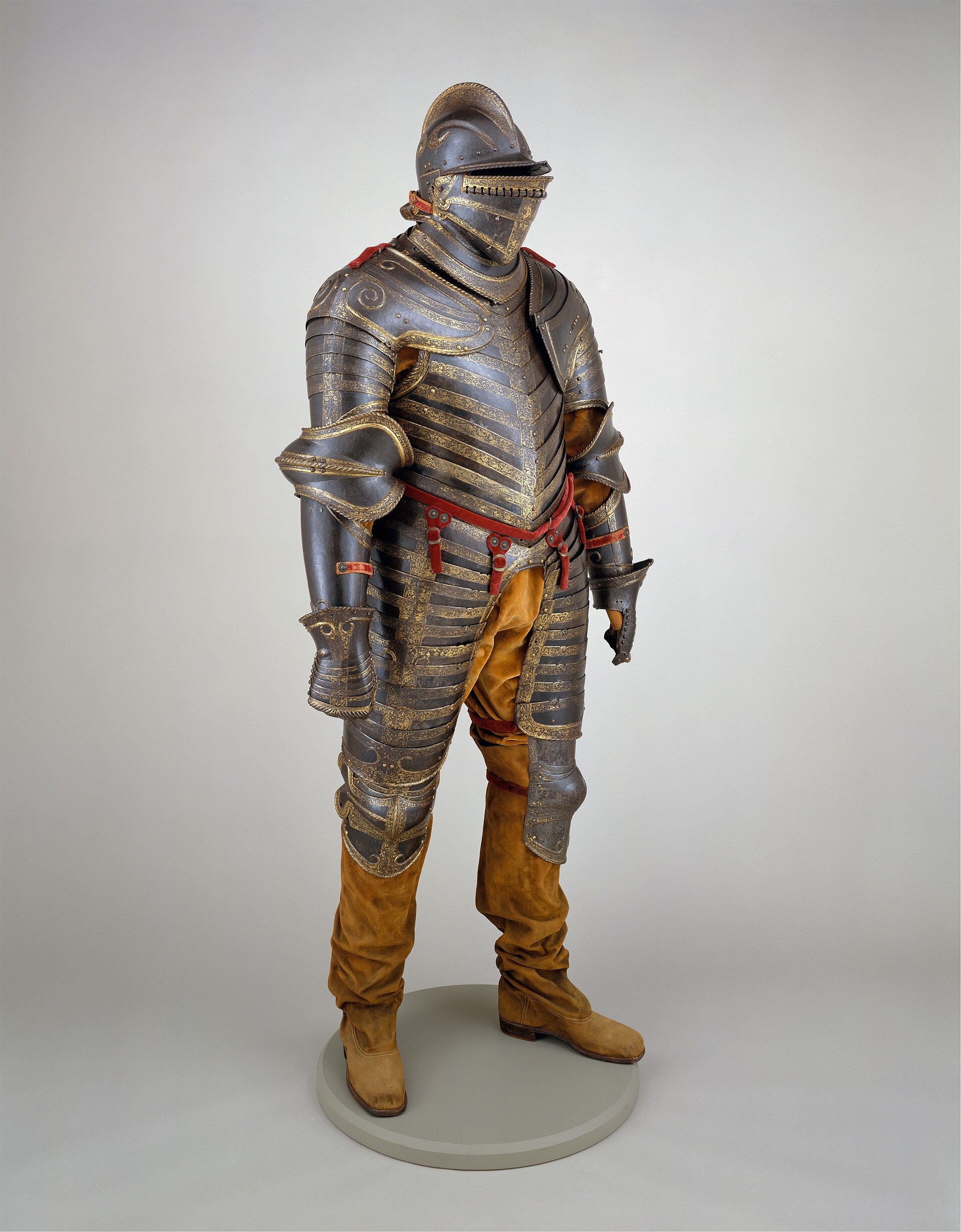
Table of Contents
The Hand Is Not Shortened
“Behold, the LORD’s hand is not shortened, that it cannot save; neither his ear heavy, that it cannot hear.”
Isaiah 59:1
Isaiah opens this chapter by answering an accusation, and it is worth noticing that nobody in the text has made it out loud.
They had been thinking it, though, and so has everyone who has ever prayed for a long time about something that did not change. The suspicion takes a respectable form. We do not say God cannot help; we say the situation is complicated, or that this may not be His will, or that perhaps He is busy with larger matters. But underneath the polite version sits the plain one: either He is not able, or He is not listening.
Two images, and both are physical. A shortened hand is an arm that cannot reach far enough — a rescuer at the edge of a pit whose fingertips come up short. A heavy ear is one that has gone dull; the sound arrives and does not register.
Isaiah denies both, flatly, before he says anything else. Whatever has gone wrong between this people and their God, the failure is not on the side of His power and it is not on the side of His attention. Clear that ground first, because everything else in the chapter is built on it — and because the last thing a discouraged believer needs is to have the true diagnosis handed to them while they are still suspecting the wrong one.
Your Iniquities Have Separated
“But your iniquities have separated between you and your God, and your sins have hid his face from you, that he will not hear.”
Isaiah 59:2
Here is the diagnosis, and the grammar of it repays attention.
Notice who does the acting. It is not God who separates; your iniquities separate. It is not God who covers His face; your sins have hid it. The sentence is carefully built so that the barrier is a thing, and the thing is ours, and it stands between two parties who are both still there.
That last point matters more than it looks. A separation is not a departure. He has not gone anywhere. There is something in the way.
“It is not because He is unwilling to forgive that He turns from the transgressor; it is because the sinner refuses to make use of the abundant provisions of grace, that God is unable to deliver from sin.”
Ellen G. White · Prophets and Kings, p. 323
Read that sentence twice, because it puts the whole chapter into one line. The obstacle is not God’s unwillingness. It is a refusal to use something already provided in abundance.
And this is the point at which Isaiah 59 stops being a comfortable chapter, because a wall that is entirely on our side of the property line is a wall we cannot excuse. It is also — and the chapter will get to this — a wall we cannot demolish.
Paul Read This Chapter
Verses 3 to 8 are an indictment, and Isaiah does not summarize. He goes through hands, fingers, lips, tongue, feet, thoughts and paths, and every one of them has been put to a use it was not made for.
“Their feet run to evil, and they make haste to shed innocent blood: their thoughts are thoughts of iniquity; wasting and destruction are in their paths. The way of peace they know not; and there is no judgment in their goings.”
Isaiah 59:7, 8
If those lines sound familiar in a New Testament register, that is because Paul lifted them. When he builds his case in Romans 3 that the whole human race is in the same condition, he strings together a chain of Old Testament quotations — and these two verses are in it:
“Their feet are swift to shed blood: destruction and misery are in their ways: and the way of peace have they not known.”
Romans 3:15-17
That is Isaiah 59, quoted by the apostle, in the passage that ends “all have sinned, and come short of the glory of God.” Which tells us how Paul understood this chapter: not as a complaint about one nation in one century, but as a description of the human problem generally.
Isaiah supplies one image Paul leaves behind, and it is too good to lose:
“They hatch cockatrice’ eggs, and weave the spider’s web… Their webs shall not become garments, neither shall they cover themselves with their works.”
Isaiah 59:5, 6
A spider’s web is a real achievement. It is intricate, it is symmetrical, it takes genuine skill, and it will catch things. What it will never be is clothing. You cannot wear it, and it will not cover you.
That is Isaiah’s verdict on self-made righteousness, and it is kinder than it sounds — he does not say the work is worthless, he says it is the wrong kind of thing. The problem with the web is not that it is badly made. It is that a person standing in front of God needs a garment, and no amount of weaving produces one. Isaiah has already said what does: “he hath covered me with the robe of righteousness” (61:10), which is where this series goes next but one.
We Stumble At Noonday
At verse 9 something changes that is easy to read straight past, and it is the most hopeful moment in the first half of the chapter.
The pronoun switches. Verses 2 through 8 were your iniquities, their feet, their webs. From verse 9 it is we:
“We grope for the wall like the blind, and we grope as if we had no eyes: we stumble at noonday as in the night; we are in desolate places as dead men. We roar all like bears, and mourn sore like doves: we look for judgment, but there is none; for salvation, but it is far off from us.”
Isaiah 59:10, 11
The accusation has been accepted. Nobody argued, nobody explained, and the prophet’s you has become the people’s we. Confession, in Scripture, is very often just this: agreeing with what God has already said, in the first person.
And what they say about themselves is bleak and precise. We stumble at noonday as in the night — the light is not the problem. There is plenty of light. They are walking into things at midday, which means the trouble is in the eyes.
Then verse 14, which every generation has thought was written about its own:
“And judgment is turned away backward, and justice standeth afar off: for truth is fallen in the street, and equity cannot enter.”
Isaiah 59:14
Truth is fallen in the street. Not banned, not refuted — fallen, in the public place, where everyone can see it lying there and nobody picks it up. And the consequence in the next verse is one of the sharpest sentences in the prophets: “he that departeth from evil maketh himself a prey” (59:15). When truth is on the ground, the person who declines to join in becomes the target.
He Wondered That There Was No Intercessor
Now the chapter turns, and it turns on the most surprising verb in Isaiah.
“And he saw that there was no man, and wondered that there was no intercessor: therefore his arm brought salvation unto him; and his righteousness, it sustained him.”
Isaiah 59:16
God wondered.
He looked for a man to stand in the gap and there was not one, and Scripture records that He was astonished. Whatever we make of that theologically, we are not permitted to soften it, because Isaiah chose the word.
And then the answer, in five words: therefore his arm brought salvation.
This is the same arm the book has been talking about for six chapters. “To whom is the arm of the LORD revealed?” asks 53:1, at the head of the Suffering Servant. “The LORD hath made bare his holy arm in the eyes of all the nations” says 52:10, one chapter earlier. When Isaiah says arm, he is not being decorative; he is pointing at a person.
“He saw that there was no man, and wondered that there was no intercessor,” none other could ransom men and women from the power of the enemy; “therefore His arm brought salvation unto Him; and His righteousness, it sustained Him.”
Ellen G. White · Prophets and Kings, p. 692
None other could. That is the whole of it. The search of verse 16 was not God being slow to notice something; it was the establishing of a fact that had to be established — that the gap between a holy God and a people whose righteousness is a spider’s web could not be bridged by any person inside the problem.
So the one party who was not part of the problem came in and did it.
He Put On Righteousness As A Breastplate
“For he put on righteousness as a breastplate, and an helmet of salvation upon his head; and he put on the garments of vengeance for clothing, and was clad with zeal as a cloke.”
Isaiah 59:17
Anyone who has ever heard a sermon on the armour of God should stop here for a moment, because this is where it comes from — and the original wearer is not us.
“Stand therefore, having your loins girt about with truth, and having on the breastplate of righteousness… And take the helmet of salvation, and the sword of the Spirit, which is the word of God.”
Ephesians 6:14, 17
The breastplate of righteousness and the helmet of salvation are Isaiah’s, and in Isaiah God is wearing them. Paul takes the armour off the LORD of hosts and hands it to a congregation at Ephesus.
That changes what the armour is. It is not equipment issued to soldiers who might, with enough training, become formidable. It is His own gear. The breastplate is His righteousness — the same righteousness that verse 16 says sustained Him — and when Paul tells a believer to put it on, he is telling them to wear something that belongs to somebody else and was never manufactured for them.
Which answers the spider’s web of verse 6 exactly. Their webs shall not become garments. No — but there is a garment, and it was on God first.
When The Enemy Shall Come In Like A Flood
“So shall they fear the name of the LORD from the west, and his glory from the rising of the sun. When the enemy shall come in like a flood, the Spirit of the LORD shall lift up a standard against him.”
Isaiah 59:19
This is one of the best-loved promises in the book, and it has been a comfort to a great many people in genuinely bad weather.
Honesty first: the Hebrew of this verse is punctuated differently by different translators, and some read it as a description of the LORD Himself arriving like a pent-up river driven by His own breath, rather than as an enemy flooding in and being met. Both readings put God on the winning side of the sentence; they disagree about who the flood is. Since the King James reading is the one that has done the work in English for four centuries, and since it is a defensible rendering, we can use it — while being straight with anyone who looks it up and finds a footnote.
On the King James reading the picture is exact. A standard is a battle flag: the thing an army rallies to when the line is breaking, planted in the ground so that scattered men can see where to run. It does not stop the flood. It gives people somewhere to gather while the flood is happening.
Thus “when the enemy shall come in like a flood, the Spirit of the Lord shall lift up a standard against him.”
Ellen G. White · The Great Controversy, p. 599
Note also who raises it. Not the church, and not a leader. The Spirit of the LORD. The rally point in the worst hour is not something God’s people organize; it is something done for them while they are being overwhelmed.
The Redeemer Shall Come To Zion
“And the Redeemer shall come to Zion, and unto them that turn from transgression in Jacob, saith the LORD.”
Isaiah 59:20
The chapter that began with a barrier ends with an arrival, and Paul quotes this verse too:
“And so all Israel shall be saved: as it is written, There shall come out of Sion the Deliverer, and shall turn away ungodliness from Jacob.”
Romans 11:26
So Paul quotes Isaiah 59 twice in one letter — the indictment in chapter 3, and the rescue in chapter 11. He read this chapter the way it is built: a problem stated without mercy, and then a Redeemer.
And the last verse is a covenant about words:
“My spirit that is upon thee, and my words which I have put in thy mouth, shall not depart out of thy mouth, nor out of the mouth of thy seed, nor out of the mouth of thy seed’s seed, saith the LORD, from henceforth and for ever.”
Isaiah 59:21
Think about what this chapter has just said about mouths. Your lips have spoken lies, your tongue hath muttered perverseness (59:3). The mouth was named in the indictment.
And the covenant God makes at the end is that His words will not depart out of that mouth — not the speaker’s, nor his children’s, nor his grandchildren’s. The organ that was part of the problem is the organ He commits Himself to keep supplied. That is how God generally does repairs: not by replacing the offending part, but by filling it with something better and refusing to take it back.
The chapter opened by insisting His hand was long enough. It closes with His arm having done the work, His armour on, His standard raised, and His words in the mouths of grandchildren not yet born.
