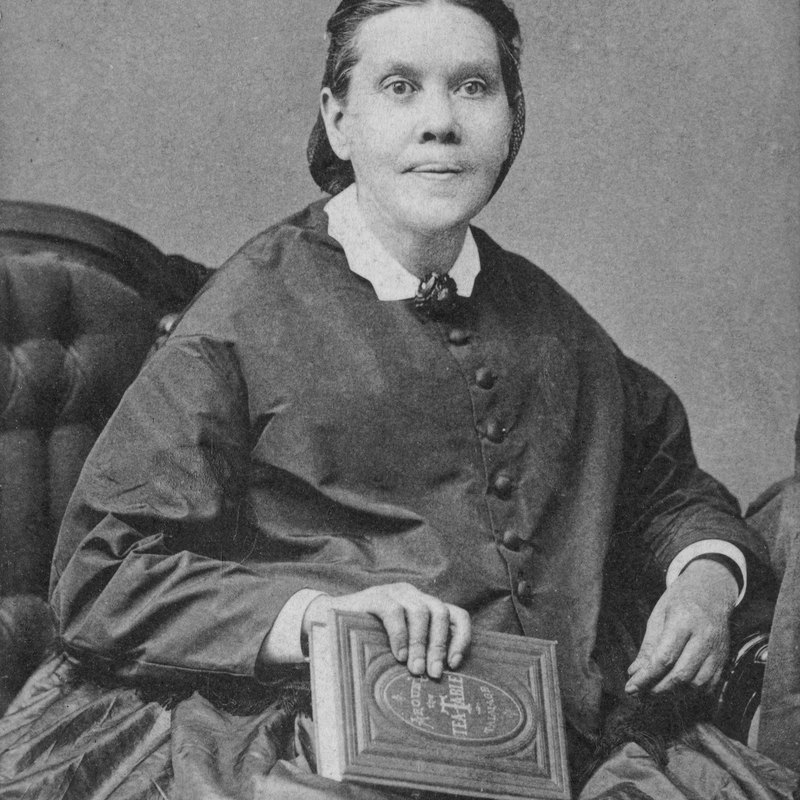
Few subjects divide Seventh-day Adventists more sharply than the role of women in the church, and few are argued more badly. This article works from what actually happened — what Scripture records women doing, what Ellen White actually did across seventy years, what credentials she held and what she never did, and what the denomination itself put in its minutes and yearbooks. Including the evidence that cuts the other way.
Table of Contents
Why This Question Is Hard
Few subjects divide Seventh-day Adventists more sharply than the role of women in the church, and few are argued more badly.
The pattern is familiar. One side produces a list of Bible women who spoke for God, and treats the matter as settled. The other side produces two verses from Paul, and treats the matter as settled. Both sides quote Ellen White. Both sides quote her selectively. And the conversation ends exactly where it began, with each party more certain than before.
This article takes a different approach, and it is worth stating the method plainly before we begin, because the method is most of the argument.
We are going to look at what actually happened. What the Bible records women doing, and with what authority. What Ellen White actually did across seventy years of ministry, what credentials she actually held, and what she conspicuously never did. What the Seventh-day Adventist Church actually practiced in her lifetime, in the minutes and the yearbooks. And what she actually wrote, including the statements that make the case harder rather than easier.
That last commitment is the one that matters. There is evidence in this subject that cuts against the conclusion many readers of this website would prefer, and it will be presented here in full, with its sources, and it will not be minimized. An argument that survives its own counter-evidence is worth something. An argument that has to hide from it is worth nothing at all.
Two questions, not one
Most of the confusion comes from running two separate questions together as though they were the same one.
The first question is about ministry. May a woman teach the Word, preach publicly, lead souls to Christ, be recognized and paid by the church for that work, and be set apart for it by prayer and the laying on of hands?
The second question is about ordination to the gospel ministry in the specific, technical sense the denomination now uses…the credential that authorizes a person to organize churches, ordain local elders, and serve as a conference or union president.
These are not the same question, and the evidence answers them very differently. As we will see, the record on the first is overwhelming and almost entirely one-directional. The record on the second is thin, genuinely contested, and includes a statement from the White Estate itself that most advocates never quote.
Anyone who tells you that Ellen White settled the second question has not read the second question’s evidence.
Why her example is the right place to look
There is a reason to start with Ellen White rather than with a proof text, and it is not sentiment.
Every other participant in this debate is arguing from a text about somebody else. She is the one case where a woman’s ministry was carried out in full view of the church that is now arguing, for seventy years, in a documented institution, with committee minutes, credential records, payroll decisions and published counsel…all of it preserved.
If you want to know what the Seventh-day Adventist Church actually believed about a woman exercising spiritual authority, you do not have to speculate. You can look at what it did with the most spiritually authoritative woman it has ever had, year after year, and read the receipts.
Her example is not a proof text. It is a case study, and it is the only one we have.
A word about sources
Scripture here is the Authorized Version throughout.
The Ellen White material and the historical record come largely from Daughters of God, a compilation published by the Ellen G. White Estate in 1998. Its Appendix C is a paper prepared by White Estate staff and presented at the ministerial meeting of the 1990 General Conference session, titled “Exhibits Relating to the Ordination of Women.”
That document deserves a word of praise, because it is a model of the thing this subject usually lacks. It was written by the institution that holds her papers, at the height of the denominational argument, and it lays out the evidence on both sides without editorializing…including the material most damaging to the position its own church was moving toward. Where this article quotes it, it quotes it whole.
Women Who Spoke For God
Start where the argument ought to start…with what God actually did, rather than with what we assume He would have done.
The Old Testament names three women as prophetesses in the working sense of the word, and each one is worth looking at closely, because each one breaks a different assumption.
Miriam, and the leadership of Israel
"20 And Miriam the prophetess, the sister of Aaron, took a timbrel in her hand; and all the women went out after her with timbrels and with dances."

Exodus 15:20  KJV
It would be easy to read that as a woman leading a song, and nothing more. Then centuries later God Himself summarises the Exodus, and names the leadership He provided:
"4 For I brought thee up out of the land of Egypt, and redeemed thee out of the house of servants; and I sent before thee Moses, Aaron, and Miriam."

Micah 6:4  KJV
Three names. The lawgiver, the high priest, and Miriam. God’s own accounting of who He sent puts her in the same sentence as the other two, without qualification and without apology.
Whatever else that means, it means she was not incidental.
Deborah, and civil authority
Deborah is the hardest case for anyone arguing that women may teach but never lead, because she did both, at the highest level the nation had.
"4 And Deborah, a prophetess, the wife of Lapidoth, she judged Israel at that time.

5 And she dwelt under the palm tree of Deborah between Ramah and Beth-el in mount Ephraim: and the children of Israel came up to her for judgment."

Judges 4:4-5  KJV
Read what that text says she was doing. Israel had no king. The judge was the government…the final human authority in the nation, military, judicial, and spiritual at once. And “the children of Israel came up to her for judgment.”
Men came to a woman to be judged, and God had put her there.
Two things are worth noticing, because both get abused.
The first is that the text offers no apology and no explanation. It does not say Israel had run out of qualified men. It does not say this was a concession to an emergency. Scripture is perfectly capable of flagging an irregular arrangement when there is one; here it simply reports the fact and moves on. The excuse that Deborah was a divine last resort is an addition to the text, not a reading of it.
The second is that Deborah was a judge and prophetess, not a priest. Nothing in her account touches the sanctuary, the altar, or the sacrificial system. Anyone using Deborah to settle a question about priestly office is reaching past what the passage supports.
That distinction will matter later, and it cuts in a direction that surprises people.
Huldah, and the authority to authenticate Scripture
Huldah is the most remarkable of the three, and the least discussed.
The setting is the reign of Josiah. During repairs to the temple, a lost book of the law is discovered. The king is appalled at how far Judah has drifted from it, and he needs to know whether the book is genuine and what the Lord intends. So he sends a delegation.
"14 So Hilkiah the priest, and Ahikam, and Achbor, and Shaphan, and Asahiah, went unto Huldah the prophetess, the wife of Shallum the son of Tikvah, the son of Harhas, keeper of the wardrobe; (now she dwelt in Jerusalem in the college;) and they communed with her.

15 And she said unto them, Thus saith the LORD God of Israel, Tell the man that sent you to me,"

2 Kings 22:14-15  KJV
Consider who is in that delegation. Hilkiah the high priest. The king’s secretary. The king’s counselors. The most senior religious and civil officials in Judah, sent by the king himself.
And they go to a woman.
Note also who was available and not consulted. Jeremiah was prophesying in Jerusalem at this time. Zephaniah was active in Josiah’s reign. This was not a shortage of prophets. The delegation went to Huldah because Huldah was who you went to.
And what did she do? She authenticated the book of the law and pronounced the word of the Lord upon the nation and upon the king personally:
"20 Behold therefore, I will gather thee unto thy fathers, and thou shalt be gathered into thy grave in peace; and thine eyes shall not see all the evil which I will bring upon this place. And they brought the king word again."

2 Kings 22:20  KJV
A woman told the high priest what the Scriptures meant, and he took her answer back to the king as the word of God. The reformation that followed…the greatest religious reform in Judah’s history…rests on her verdict.
If God is unwilling to speak authoritatively to men through a woman, somebody needs to explain 2 Kings 22.
What this does not prove
Now the discipline this subject requires.
Miriam, Deborah and Huldah establish that God gives women revelatory and governing authority, and that Israel was expected to receive it. That is a great deal, and it is not nothing.
But it is not the same as establishing that women held priestly office, because in the Old Testament they did not. The Aaronic priesthood was male, and it was also hereditary, tribal and ritually specific…a man of the wrong tribe was as disqualified as any woman. That priesthood is fulfilled and closed in Christ, which is why the New Testament never appoints a successor to it.
So the honest summary is this. The prophetic office in Israel was open to women and demonstrably exercised by them. The priestly office was not. Any argument that ignores either half of that sentence is only telling you half the Bible.
What Changed At Pentecost
The New Testament does not merely continue the Old Testament pattern. It widens it deliberately, and it says so.
Joel had promised something specific about the last days:
"28 And it shall come to pass afterward, that I will pour out my spirit upon all flesh; and your sons and your daughters shall prophesy, your old men shall dream dreams, your young men shall see visions:

29 And also upon the servants and upon the handmaids in those days will I pour out my spirit."

Joel 2:28-29  KJV
Sons and daughters. Servants and handmaids. The promise is explicitly and symmetrically gendered, and the symmetry is the point…the Spirit will fall on the categories of people who had been furthest from the center of Israel’s worship.
And on the day the church was born, Peter stood up and said the promise had just been fulfilled:
"17 And it shall come to pass in the last days, saith God, I will pour out of my Spirit upon all flesh: and your sons and your daughters shall prophesy, and your young men shall see visions, and your old men shall dream dreams:

18 And on my servants and on my handmaidens I will pour out in those days of my Spirit; and they shall prophesy:"

Acts 2:17-18  KJV
Peter did not have to include the daughters and the handmaidens. He was quoting selectively enough to shorten other things. He kept them, and he added four words that are not in Joel: “and they shall prophesy.”
The charter document of the Christian church, read aloud on its first day, explicitly provides for women to speak under the Spirit’s power.
Anna, at the hinge of the covenants
Before Pentecost, at the very beginning of the Gospel, there is Anna…and Luke calls her exactly what he would call a man in the same role.
"36 And there was one Anna, a prophetess, the daughter of Phanuel, of the tribe of Aser: she was of a great age, and had lived with an husband seven years from her virginity;

37 And she was a widow of about fourscore and four years, which departed not from the temple, but served God with fastings and prayers night and day.

38 And she coming in that instant gave thanks likewise unto the Lord, and spake of him to all them that looked for redemption in Jerusalem."

Luke 2:36-38  KJV
She “spake of him to all them that looked for redemption in Jerusalem.” That is public proclamation of the identity of the Messiah, in the temple precincts, to whoever would listen. It is one of the two announcements of the incarnation given to Israel, and the other one came from Simeon.
Philip’s four daughters
"9 And the same man had four daughters, virgins, which did prophesy."

Acts 21:9  KJV
Ten words, dropped in without comment, describing an established situation in an ordinary congregation. Luke does not treat it as remarkable, which tells you it was not.
Priscilla, teaching a preacher
Apollos was an educated, eloquent, powerful public speaker whose theology had a gap in it. Here is how the gap was fixed:
"26 And he began to speak boldly in the synagogue: whom when Aquila and Priscilla had heard, they took him unto them, and expounded unto him the way of God more perfectly."

Acts 18:26  KJV
A husband and wife together corrected the doctrine of a prominent male preacher, privately and effectively. Ellen White notes the same episode and draws a careful line around it:
“Aquila and Priscilla were not called to give their whole time to the ministry of the gospel, yet these humble laborers were used by God to show Apollos the way of truth more perfectly.”
Ellen G. White · The Acts of the Apostles, p. 355
Note the honesty of that. She does not inflate them into full-time ministers to score a point. They were lay people, and God used them to correct a preacher. That is the claim the text supports, and she makes exactly that claim and no more.
Phebe, and a word worth weighing
"1 I commend unto you Phebe our sister, which is a servant of the church which is at Cenchrea:

2 That ye receive her in the Lord, as becometh saints, and that ye assist her in whatsoever business she hath need of you: for she hath been a succourer of many, and of myself also."

Romans 16:1-2  KJV
“Servant” here renders the Greek diakonos…the same word the Authorized Version elsewhere translates “deacon” and, when Paul uses it of himself and of Timothy, “minister.” Paul is writing a letter of commendation for a woman traveling to Rome, and he attaches an official-sounding term to her and asks the church to receive her and assist her.
Ellen White’s comment on Phebe is deliberately modest. Writing about hospitality in Testimonies volume 6, she says:
“Phebe entertained the apostle, and she was in a marked manner an entertainer of strangers who needed care.”
Ellen G. White · Testimonies for the Church, vol. 6, p. 343
That is worth flagging plainly, because it is inconvenient for one side of this argument. Where a modern advocate might build a case on diakonos, Ellen White’s own emphasis falls on hospitality. She is not using Phebe to argue for office.
Junia, and one honest uncertainty
"7 Salute Andronicus and Junia, my kinsmen, and my fellowprisoners, who are of note among the apostles, who also were in Christ before me."

Romans 16:7  KJV
Junia is a woman’s name, and the Authorized Version renders it as one. “Of note among the apostles” is the phrase people fight over: does it mean she was an apostle of note, or that she was well thought of by the apostles? The Greek carries both readings, and the argument is old and unresolved.
So we will not lean on Junia. A case built on a contested preposition is a case waiting to collapse. It is enough to note that Paul greets her in the same breath as Andronicus, with the same commendation, and that nobody in the early church found this strange.
Adding it up
Prophesying, publicly proclaiming Christ, correcting a preacher’s doctrine, carrying an apostolic letter with an official commendation, and being explicitly written into the founding promise of the church.
Whatever Paul meant in the two verses we are about to examine, he did not mean to erase all of that…because he is the one who wrote Romans 16.
The Two Hard Texts
Two passages from Paul carry almost the entire weight of the case against women in public ministry. They deserve to be quoted in full, without softening, because a reader who is only shown the friendly evidence is being handled rather than taught.
"34 Let your women keep silence in the churches: for it is not permitted unto them to speak; but they are commanded to be under obedience, as also saith the law.

35 And if they will learn any thing, let them ask their husbands at home: for it is a shame for women to speak in the church."

1 Corinthians 14:34-35  KJV
"11 Let the woman learn in silence with all subjection.

12 But I suffer not a woman to teach, nor to usurp authority over the man, but to be in silence."

1 Timothy 2:11-12  KJV
Those are strong words and there is no use pretending otherwise. Anyone who waves them away has not taken Scripture seriously.
But there is a problem, and it is not a problem invented by modern readers. It is a problem inside Paul’s own writing.
Paul against Paul
Three chapters earlier in the same letter to the same church, Paul gives instructions on how a woman should be dressed while she is praying or prophesying in the assembly. He regulates the practice. He does not forbid it. You do not tell someone how to dress for an activity you are about to prohibit outright.
And it is the same apostle who commends Phebe to the Roman church with an official term, who greets Priscilla ahead of her husband, who greets Junia as “of note among the apostles,” and who wrote:
"28 There is neither Jew nor Greek, there is neither bond nor free, there is neither male nor female: for ye are all one in Christ Jesus."

Galatians 3:28  KJV
So whatever “let your women keep silence” means, it cannot mean a blanket prohibition on women speaking in Christian assemblies, because the man who wrote it also regulated women speaking in Christian assemblies and commended women who did.
That is not a liberal evasion. It is the plainest possible reading of Paul’s complete correspondence, and it is forced on us by the texts themselves.
What the context suggests
1 Corinthians 14 is not a chapter about gender. It is a chapter about disorder in worship. Read the whole thing and you will find Paul restraining tongues-speakers, restraining prophets, insisting that only two or three speak and one at a time, and stating the principle he is driving at: “Let all things be done decently and in order.”
The instruction to women sits in a list of instructions restraining several groups who were interrupting. The specific remedy offered…“let them ask their husbands at home”…points at disruptive questioning during the service rather than at prophetic ministry, which Paul had already regulated approvingly three chapters earlier.
1 Timothy 2 is a letter to one man about one congregation with a specific and severe problem: false teaching, which Paul names repeatedly through the letter. The verb rendered “usurp authority” is a rare and forceful one, carrying the sense of seizing or domineering rather than simply exercising a function.
None of this makes the passages disappear. It locates them.
Being honest about the limits of that answer
Here is where this article parts company with a good deal of writing on its own side of the question.
The contextual reading above is reasonable, and I think it is right. But it is an interpretation, not a demonstration. Paul does not tell us he is addressing a local disorder; we infer it from the surrounding material. A thoughtful reader who takes the verses as a standing rule is not being stupid or faithless, and treating him as though he were is both unkind and lazy.
What can be said with confidence is narrower, and it is enough:
- Paul’s own practice included women who prophesied, taught privately, carried letters and were officially commended.
- Therefore the restrictive texts cannot be absolute, whatever else they are.
- Therefore the question is where the line falls — and Scripture does not draw that line for us with the precision the modern debate demands.
Which is exactly why the example of Ellen White matters so much. Where the texts leave a genuine ambiguity, God gave the Advent movement a seventy-year worked demonstration of how He was willing to use a woman. We are not left guessing.
What Ellen White Actually Did
Now to the case study, and to the reason her example is worth more than any amount of arguing.
For seventy years a woman exercised the highest spiritual authority in the Seventh-day Adventist movement. She rebuked its presidents. She redirected its institutions. She wrote the counsel that shaped its schools, its hospitals, its publishing houses and its theology. When the church was wrong, she said so in print, and it changed course.
No one in Adventist history has been listened to more.
And here is what the church did about it, on paper.
She held ministerial credentials
This is a documented administrative fact, not an inference. The White Estate’s own summary states it directly:
“For many years Ellen White was voted ministerial credentials by the Michigan conference (see E.G. The Review and Herald, September 10, 1872) and then later by the General Conference. However, she was never ordained by human hands, nor did she ever perform a wedding, organize a church, or conduct a baptism.”
Ellen G. White Estate · Daughters of God, p. 248
Read that quotation twice, because it is the single most important sentence in this whole subject, and both halves of it are load-bearing.
The first half is decisive against one position. The Seventh-day Adventist Church, in session, repeatedly voted ministerial credentials to a woman…the same credential it issued to its ordained men…and went on doing so for decades, at conference and then at General Conference level. Whatever the church believed in the nineteenth century, it did not believe that a woman could not hold a minister’s credential. It issued her one, over and over, in the minutes, for anyone to read.
The second half is decisive against the other position. She was never ordained by human hands. She never performed a wedding. She never organized a church. She never conducted a baptism.
That is not an oversight, and it is not a case of a woman being held back. This is a person who could have done any of those things simply by saying she should. Her word carried more weight in that movement than any committee’s. If she had written one paragraph asking to be ordained, or performing a baptism, the matter would have been closed in a fortnight.
She did not.
“The Lord ordained me”
She did, however, describe herself as ordained…and she was precise about who had done it.
“In the city of Portland the Lord ordained me as His messenger, and here my first labors were given to the cause of present truth.”
Ellen G. White · The Review and Herald, May 18, 1911 — cited in Daughters of God, p. 252
And five years earlier, applying Paul’s language about his own commissioning to herself without hesitation:
“And I thank Christ Jesus our Lord, who hath enabled me, for that He counted me faithful, putting me into the ministry.”
Ellen G. White · The Review and Herald, July 26, 1906 — cited in Daughters of God, p. 252
“Putting me into the ministry.” She is quoting 1 Timothy 1:12 and applying it to herself, in print, in the denominational paper, at seventy-eight years of age. Nobody wrote in to correct her.
So her own account of her authorization is that it came from heaven and required no human ceremony to validate it. That is a coherent position, and it is worth noticing that it is neither of the positions the modern church usually argues about.
The church paid her, and argued about paying other women
There is a strand of evidence here that is quieter than the ordination question and, in some ways, more revealing…because money shows you what an institution actually believes.
Ellen White held firm views on the tithe. She insisted it was sacred, reserved, and not to be diverted:
“The Lord regards the tithe as His own, to be used for a certain purpose… the Lord has guarded this, His own portion, to be sacredly used for the support of the gospel ministers.”
Ellen G. White · letter of 16 March 1897 — cited in Daughters of God, pp. 256, 257
Now set beside that what she did with tithe money in practice, and what she said about women workers:
“…women who are accomplishing just as essential work as the ministers are doing, and this tithe I will reserve for work in the same line as that of the ministers, hunting for souls, fishing for souls. I know that the faithful women should be paid wages as it is considered proportionate to the pay received by ministers. They carry the burden of souls and should not be treated unjustly.”
Ellen G. White · cited in Daughters of God, p. 106
Put those two statements together, and the conclusion is unavoidable. The tithe is sacred and reserved for the support of gospel ministers. She directed tithe to women, on the express ground that their work was “just as essential” and “in the same line as that of the ministers.”
She was not making a sentimental gesture. She was making a categorical judgment about the nature of what those women were doing, and she backed it with the one fund she considered untouchable.
And she framed it as a matter of justice rather than kindness:
“God is a God of justice, and if the ministers receive a salary for their work, their wives, who devote themselves just as interestedly to the work as laborers together with God, should be paid in addition to the wages their husbands receive, notwithstanding that they may not ask this.”
Ellen G. White · cited in Daughters of God, p. 111
“Notwithstanding that they may not ask this.” She is instructing the church to pay women who were too modest to demand it. That is not a woman uninterested in the standing of women in the church.
What Her Public Ministry Looked Like
It is possible to read the credentials argument and still picture a woman who wrote books quietly at home while men did the preaching. That picture is badly wrong, and her own diaries dismantle it.
Daughters of God devotes an appendix to it, titled “The Public Ministry of Ellen G. White,” and introduces it in these words: “In her public ministry Ellen White effectively made appeals which called for a response.”
Read what that meant in practice.
Battle Creek, January 1868
“Attended meeting at the church at Battle Creek. Spoke to the people about one hour with freedom, in regard to the fall of Adam bringing misery and death, Christ bringing life and immortality to light through His humiliation and death…. In meeting that evening we called those forward who had a desire to be Christians. Thirteen came forward. All bore testimony for the Lord. It was a good work.”
Ellen G. White · diary, 12 January 1868 · Selected Messages, book 1, p. 144 — cited in Daughters of God, p. 241
An hour of doctrinal preaching on the fall and the atonement, followed by an appeal, followed by thirteen decisions. In the denomination’s home church. In 1868.
June 1873, and a detail worth pausing on
“I spoke in the afternoon from 2 Peter. I had freedom in talking. After I had spoken one hour I invited those who wished to be Christians to come forward. Between thirty and forty came forward quietly without excitement and occupied the front seats. I spoke with them in regard to making an entire surrender to God. We had a praying season for those who came forward…. Those who wished baptism were requested to signify it by rising. Quite a number arose.”
Ellen G. White · diary, 9 June 1873 · Selected Messages, book 1, p. 145 — cited in Daughters of God, p. 242
Stop on that last line, because it is the whole argument of this article compressed into one sentence.
She preached the sermon. She made the appeal. Between thirty and forty people responded. She counseled them about surrender. She prayed with them. She called for baptismal candidates and identified them.
And then somebody else baptized them.
That is the exact line her ministry ran along for seventy years. Everything an evangelist does…proclamation, persuasion, appeal, decision, spiritual counsel…and then a stop, precisely at the ordained acts.
Notice, too, that the line did not restrict what she did. It restricted only who performed the ceremony afterward. Nobody in that room was in any doubt about who had brought those forty people to that decision.
Europe, 1885 and 1886
In Switzerland she preached to a congregation unfamiliar with public appeals, and made one anyway:
“This was a new experience for many of our brethren in Europe, but they did not hesitate. It seemed that the entire congregation were on their feet…. After prayer, one hundred fifteen testimonies were borne.”
Ellen G. White · The Review and Herald, 3 November 1885 — cited in Daughters of God, p. 243
In Norway she did something rather harder than preaching an appeal. She rebuked a church:
“The Spirit of the Lord moved me to bear a very plain testimony…. I presented before them the necessity of a thorough change in the character if they would be children of God…. I urged upon them the necessity of deep repentance, confession, and forsaking of the sins which had shut away the sweet spirit of Christ from the church.”
Ellen G. White · The Review and Herald, 19 October 1886 — cited in Daughters of God, p. 243
That is pastoral discipline. A visiting woman told an established congregation, corporately, that sin had driven the Spirit of Christ out of their church, and called them to repentance. And they repented.
There is no category for that except ministry.
Which is what Christ Himself started
She was conscious of the precedent, and traced it to its origin:
“During the years of Christ’s ministry on earth, godly women assisted in the work that the Saviour and His disciples were carrying forward…. But while women were laboring with Christ and the apostles, the entire work was conducted on so high a plane as to be above the shadow of a suspicion.”
Ellen G. White · Evangelism, p. 67
Two observations sit inside that.
The first is that women laboring alongside Christ and the apostles are presented as simple historical fact, requiring no defense.
The second is the qualification she attaches, and it is characteristic of her. The concern is not whether women may work, but that the work be conducted “on so high a plane as to be above the shadow of a suspicion.” Her caution, wherever it appears, is always about conduct…never about permission.
That distinction is worth carrying into the modern argument, where a good deal of what presents itself as principle turns out, on inspection, to be discomfort.
What She Wrote About Women In Ministry
Her practice is one body of evidence. Her published counsel is another, and it is unambiguous in one direction and carefully limited in another.
“The Lord has a work for women”
“The Lord has a work for women as well as for men. They may take their places in His work at this crisis, and He will work through them. If they are imbued with a sense of their duty, and labor under the influence of the Holy Spirit, they will have just the self-possession required for this time.”
Ellen G. White · Evangelism, p. 464
And with a specific reason why their work is not merely permitted but needed:
“The Lord has a work for women, as well as for men…. They can come close to the hearts of those whom men cannot reach.”
Ellen G. White · The Review and Herald, August 26, 1902 — cited in Daughters of God, introduction
That is an argument from capacity, not from concession. There is work that will not otherwise be done.
Prayer and the laying on of hands
This is the statement most often quoted in the ordination debate, and it says exactly what it appears to say:
“Women who are willing to consecrate some of their time to the service of the Lord should be appointed to visit the sick, look after the young, and minister to the necessities of the poor. They should be set apart to this work by prayer and laying on of hands. In some cases they will need to counsel with the church officers or the minister; but if they are devoted women, maintaining a vital connection with God, they will be a power for good in the church.”
Ellen G. White · The Review and Herald, July 9, 1895 — cited in Daughters of God, p. 102
“Set apart to this work by prayer and laying on of hands.” That is the language and the gesture of ordination, applied to women, by Ellen White, in the denominational paper, in 1895.
And it was not theoretical. It was done, and the minutes survive. During her Australian ministry, at the Ashfield church in Sydney:
“Immediately following the election, the officers were called to the front where pastors Corliss and McCullagh set apart the elder, deacons, [and] deaconesses by prayer and the laying on of hands.”
Ashfield church clerk’s minutes, 10 August 1895 — cited in Daughters of God, p. 249
Five years later, in the same church, her own son officiated:
“The previous Sabbath officers had been nominated and accepted for the current year, and today Elder White ordained and laid hands on the elders, deacon, and deaconesses.”
Ashfield church minutes, 7 January 1900 — cited in Daughters of God, p. 249
Note the verb in that second entry. “Ordained.” Not “installed,” not “recognized.” The church clerk, writing in the ordinary course of business with no argument to win, described what W. C. White did to those deaconesses as ordination.
So the question “may hands ever be laid on a woman in the Seventh-day Adventist Church?” was answered in 1895, in the affirmative, in practice, under Ellen White’s direct counsel.
The caveat the White Estate attaches
And now the discipline. Daughters of God prints an editorial note immediately after that 1895 statement, and honesty requires reproducing it:
“The article in which this statement appears is entitled ‘The Duty of the Minister and the People.’ It is a call for involvement of the laity in the church…”
Editorial note · Daughters of God, p. 102
The White Estate’s summary describes this as a recommendation for “the ordination of women who would give themselves to a deaconess-type of work.”
That is a real limitation, and it should not be smuggled past the reader. The 1895 statement is about visiting the sick, caring for the young, and relieving the poor. It is a warrant for setting women apart for that. It is not, on its face, a warrant for ordaining women as gospel ministers with authority over churches.
Anyone who quotes “prayer and laying on of hands” without the surrounding sentence about visiting the sick and the poor is quoting dishonestly, however good their cause.
“Women who should labor in the gospel ministry”
The strongest single sentence in the whole case is this one, written in 1898:
“There are women who should labor in the gospel ministry. In many respects they would do more good than the ministers who neglect to visit the flock of God.”
Ellen G. White · Manuscript 43a, 1898 — Evangelism, p. 472
That sentence appears on posters and in position papers. It is genuinely striking.
And the White Estate, holding the manuscript, adds this:
“The context of this statement seems to indicate that she is speaking of ministers’ wives.”
Ellen G. White Estate · Daughters of God, p. 250
And they print the context so you can judge for yourself. The paragraph before it is answering letters from ministers’ wives asking whether they should adopt infant children; her answer is no, because it would consume the strength they owe to the work. Then:
“There are women who should labor in the gospel ministry. In many respects they would do more good than the ministers who neglect to visit the flock of God. Husband and wife may unite in this work, and when it is possible, they should. The way is open for consecrated women.”
Ellen G. White · Manuscript Releases, vol. 5, pp. 325, 326 — cited in Daughters of God, p. 251
The sentence that follows the famous one is about husbands and wives working together. That does not empty the statement of force…“the way is open for consecrated women” is not a small phrase, and “labor in the gospel ministry” is not a small description. But it does mean the sentence will not carry the entire weight of a denominational policy on its own.
One more, from Testimonies volume 6, where the language goes somewhere the other statements do not:
“It is the accompaniment of the Holy Spirit of God that prepares workers, both men and women, to become pastors to the flock of God.”
Ellen G. White · Testimonies for the Church, vol. 6, p. 322
Pastors to the flock of God, men and women, in a book she published herself in 1900. In fairness, the section is titled “The Canvasser a Gospel Worker” and is about literature evangelism as preparation for ministry. But she chose the word pastors, and she chose to apply it to both.
The Half Of Her Counsel That Gets Left Out
An article that quoted only the material above would be giving a false impression of Ellen White, and the falseness would run in this website’s own preferred direction. So let it be corrected here.
She wrote far more about women in the home than about women in the pulpit, and she wrote about it in language of extraordinary elevation:
“The king upon his throne has no higher work than has the mother.”
Ellen G. White · The Adventist Home, p. 231
“Mothers who sigh for a missionary field have one at hand in their own home circle.”
Ellen G. White · The Adventist Home, p. 245
Those statements are real, they are numerous, and they are not a footnote to her thought. Anyone who reads her whole output rather than a curated selection will find that the domestic counsel outweighs the ministerial counsel many times over.
So what do we do with that?
Two things…and the order matters.
First, take it at face value. She meant it. She was not smuggling in a consolation prize for women excluded from something better. In her scale of values, the formation of a human character was the highest work available to anybody, and she said the same about fathers. A reader who finds that quaint is disagreeing with her, which is permitted, but should not pretend to be quoting her.
Second, notice that she never used it as a limit. This is the decisive point, and it is easily tested.
If she had believed the home was a woman’s boundary rather than her honor, the evidence would look entirely different. She would have warned women away from public labor. She would have qualified “the Lord has a work for women” with a domestic exception. She would have counseled the thirty-one licensed preachers to go home. She would not have directed tithes to women evangelists. She would not have told ministers’ wives to decline adopting children because it would consume the strength they owed to the work.
That last one is worth sitting with, because it is the exact reverse of the argument usually built on her domestic counsel. Presented with women choosing between raising a child and laboring in the gospel ministry, she told them to keep laboring.
Her position is therefore not the one either camp assigns her. She held the home in the highest possible honor and sent women out to preach, and saw no tension between the two, because in her mind both were simply the work God had given…and the whole of her counsel to everybody, men and women alike, was to do the work God had given.
The tension is ours. It was not hers.
The Record Of What The Church Actually Did
Leave the quotations aside for a moment and look at the administrative history, because the nineteenth-century Seventh-day Adventist Church behaved in ways that would surprise many of its descendants.
The resolution of 1881
At the General Conference session of 1881, the following resolution was placed before the delegates:
“Resolved, that females possessing the necessary qualifications to fill that position may, with perfect propriety, be set apart by ordination to the work of the Christian ministry.
The Review and Herald, December 20, 1881 — cited in Daughters of God, p. 248
“This was discussed by J. O. Corliss, A. C. Bourdeau, E. R. Jones, D. H. Lamson, W. H. Littlejohn, A. S. Hutchins, D. M. Canright, and J. N. Loughborough, and referred to the General Conference Committee.”
Several things in that short entry deserve attention.
The resolution was proposed in 1881 at the Seventh-day Adventist General Conference. That fact alone disposes of any claim that the idea is a modern importation from the surrounding culture. It was on the floor within twenty years of the denomination’s organization.
The wording is remarkable: “may, with perfect propriety, be set apart by ordination to the work of the Christian ministry.” Not as a concession. Not as an emergency measure.
Eight men are named as having discussed it, including J. N. Loughborough and D. M. Canright…men on opposite trajectories in the movement.
And then: “referred to the General Conference Committee.” Which is where it died. No action was taken. It was neither adopted nor rejected. It was sent to a committee and never came back.
Both sides of the modern argument like to claim this episode, and neither is entitled to it. It was not adopted, so it is not a precedent. It was not defeated, so it is not a rejection. It is a question the church raised and declined to answer.
And she was not there
The detail that matters most about 1881 is the one usually left out:
“Ellen White did not attend the General Conference of 1881. Her husband died on August 6 of that year. Two weeks after his death she left Battle Creek, bound for California. She did not return to Michigan until August of 1883.”
Ellen G. White Estate · Daughters of God, p. 248
James White died in August. The session met in December. She was newly widowed, in poor health, two thousand miles away.
So the one occasion on which the Seventh-day Adventist Church formally debated ordaining women is the one occasion on which its prophet was absent and grieving. We have no record of her view of that resolution because nobody was in a position to ask her, and by the time she returned the moment had passed.
Anyone who tells you Ellen White supported the 1881 resolution is inventing. Anyone who tells you she opposed it is inventing equally. The honest answer is that we do not know, and the reason we do not know is a funeral.
Thirty-one women licensed to preach
Here is the part of the history that almost nobody knows, and it is documented in the General Conference archives and the denominational yearbooks.
“The Adventist Church during 1878-1910 licensed 31 women to preach.”
Ellen G. White Estate · Daughters of God, introduction
Not thirty-one women who taught Sabbath School. Thirty-one women licensed to preach, by name, in the official records. Among them:
- 1878 — Anna Fulton (Minnesota), Ellen S. Lane (Michigan), Julia Owen (Kentucky-Tennessee)
- 1879 — Libbie Collins (Minnesota), Hattie Enoch (Kansas), Libbie Fulton, Lizzie Post
- 1881 — Ida W. Ballenger (Illinois), Helen L. Morse (Illinois)
- 1893 — Flora Plummer (Iowa)
- 1894 — Margaret Caro (New Zealand)
- 1898 — Sarepta Irish Henry (General Conference), Lulu Wightman (New York)
- 1900 — Hetty Haskell (General Conference), Mina Robinson (British Conference)
- 1902 — Mrs. S. N. Haskell (Greater New York), Minnie Sype (Oklahoma)
- 1910 — Pearl Field and Mrs. Ura Spring (Nebraska)
Two of those names carry “Gen. Conf.” beside them. Sarepta Irish Henry and Hetty Haskell were licensed to preach at the General Conference level in 1898 and 1900, while Ellen White was alive and writing.
The White Estate adds a detail worth keeping: “Some of the women listed above were employed by the church. Others, such as Margaret Caro, who was a dentist, were self-supporting.” These were not honorary titles handed to ministers’ wives. Some of these women were paid to preach; others paid their own way in order to do it.
And there is Flora Plummer, licensed in Iowa in 1893, who went on to lead the Sabbath School Department of the General Conference for twenty-three years.
Women in denominational office
Preaching licenses were not the whole of it. The same introduction records the administrative picture:
“Three of the first eleven treasurers of the General Conference (1871-1883) were women. Of the nineteen editors of The Youth’s Instructor who served between 1852 and 1899, eleven were women.”
Ellen G. White Estate · Daughters of God, introduction
Three of the first eleven treasurers of the General Conference. A majority of the editors of the denomination’s youth paper across half a century.
These are not ceremonial posts. The treasurer of the General Conference controls the money of the entire denomination. The editor of a paper decides what a generation of young Adventists reads.
The White Estate frames the period plainly: “During the last half of the nineteenth century women were given greater leadership roles in some Protestant churches. This was true of the Seventh-day Adventist Church.”
Which raises a question this article will leave standing, because it is the uncomfortable one. On several measures, women held more institutional responsibility in the Seventh-day Adventist Church of the 1880s than in the Seventh-day Adventist Church of the 1980s.
Whatever the right answer to the ordination question turns out to be, that particular trend is not a return to the pioneers. It is a departure from them.
What a license was, and was not
A word of precision, because this is where enthusiasm outruns evidence.
A ministerial license in that era authorized a person to preach. Ordination, which followed for men after a period of proven service, authorized the additional functions… baptizing, organizing churches, officiating at weddings, ordaining local officers.
So the record shows the church licensing women to preach for more than thirty years, and not ordaining them. Which is precisely the pattern of Ellen White’s own life, at scale: the fullest recognition of spiritual work, stopping short of the ordained office.
That pattern is the actual historical answer, and it is not the answer either party in the modern debate wants.
What She Did Not Say
Everything so far has run in one direction. Now the evidence runs the other way, and it is stronger than most advocates admit.
This section exists because an argument that only presents its own side is not an argument. It is advertising.
The White Estate’s own conclusion
Point 8 of the White Estate’s 1990 paper is the single most damaging piece of evidence against the case this article has been building, and it is stated by the institution that holds her manuscripts:
“It is likely that Ellen White did not suggest at any time that the Seventh-day Adventist Church should commence the practice of ordaining women to the gospel ministry. Her secretary, C. C. Crisler, says that she was very cautious on this point.”
Ellen G. White Estate · Daughters of God, p. 253
That is not an opponent’s characterization. That is the White Estate, writing at the 1990 General Conference session, summarising seventy years of her correspondence.
And the source is as close as a source can get. C. C. Crisler was her literary secretary. He handled her letters. He knew what she said privately as well as publicly, and what she declined to say. His judgment was that on this specific question she was very cautious.
The context of that statement is itself instructive. In March 1916…months after Ellen White’s death…a Bible worker in San Antonio, Mrs. L. E. Cox, wrote to Crisler. She had recently been granted a ministerial license. She had attended a meeting where Elder Andross “set aside women by the laying on of hands,” had asked him what authority he had for doing it, and had been referred to Crisler. She wanted copies of the statement, because her conference president wanted one too.
So within a year of her death, Adventist ministers were already laying hands on women, already being challenged about it, and already reaching back to her writings for authority. The question we are still arguing about was live in 1916.
She declined the women’s rights movement
The second piece of counter-evidence will disappoint anyone hoping to enlist her as a campaigner.
Mrs. Graves urged her to take up the cause of women’s suffrage. The abuses Mrs. Graves described were genuine and horrifying…she was arguing that women needed the vote in order to stop the legalized exploitation of women. Ellen White agreed entirely about the evil. She would not take up the cause. Writing to her husband:
“I told her that my mind was unprepared for any such matter as women voting. She had been thinking and dwelling upon these things and her mind was ripe upon them, while my work was of another character.”
Ellen G. White · Manuscript Releases, vol. 10, p. 69 — cited in Daughters of God, p. 253
“My work was of another character.”
This matters for how her example should be used. She was not a reformer of the social position of women, and she showed no interest in becoming one. Every advance she made for women in the church she made on the ground that the work needed doing…never on the ground of rights, equality or representation.
Anyone quoting her as an early feminist is quoting a person who declined that role in writing.
Four things she never did
And back to the sentence from earlier, because it will not go away:
- She was never ordained by human hands.
- She never performed a wedding.
- She never organized a church.
- She never conducted a baptism.
In seventy years. With unmatched moral authority. In a movement that would have accommodated her instantly.
It is possible she simply never wished to. It is possible she judged it unnecessary given the authority she already had. It is possible she thought the distinction mattered. Scripture and her writings do not tell us which, and the honest position is that we do not know.
What we cannot honestly do is treat her silence as agreement.
Weighing it
So how much does the counter-evidence cost the case?
It costs the maximal version everything. The claim that Ellen White taught, advocated or would have voted for the ordination of women as gospel ministers cannot survive point 8 of her own estate’s paper. That claim should be abandoned by anyone making it, and there are people on this website’s side of the argument who need to hear that.
It costs the substantial version almost nothing. None of the counter-evidence touches the credentials, the licenses, the tithe, the deaconess ordinations at Ashfield, the thirty-one women licensed to preach, or a single one of the statements about women laboring in the gospel ministry.
She was cautious about one specific institutional act. She was not remotely cautious about women preaching, teaching, pastoring, being set apart by the laying on of hands, and being paid from the Lord’s own reserved fund for doing work “in the same line as that of the ministers.”
Those are two different questions, and we said at the outset that keeping them apart would be most of the argument.
What Her Example Actually Defines
Pull the whole record together and a shape emerges. It is not the shape either party in the modern argument is fighting for, which is a reasonable sign that it is the shape of the evidence rather than of somebody’s preference.
Here is what her example defines.
1. A woman may carry the highest spiritual authority God gives
Not a lesser authority. Not a parallel authority for women only. The prophetic gift is the highest form of divine communication given to the church, and God gave it to a teenage girl in Portland, Maine, and to Miriam, Deborah, Huldah and Anna before her.
Every Seventh-day Adventist who accepts the Spirit of Prophecy has already conceded the largest question in this debate. You cannot hold that God speaks authoritatively to the church through a woman and simultaneously hold that God will not entrust spiritual authority to a woman. That position is not conservative. It is incoherent.
2. That authority is validated by God, not conferred by men
“In the city of Portland the Lord ordained me as His messenger.”
She never sought a human ceremony to legitimize a divine commission, and she never suggested her ministry was incomplete without one. Her authority came from the call and was demonstrated by the fruit.
This cuts against a certain kind of campaigning on both sides…the assumption that a woman’s ministry is only real once a committee has voted on it, and the assumption that it is only real once a committee has refused to.
3. The church should formally recognize the work, and pay for it
This is where her example is most concrete and least ambiguous, and where the modern church has the least excuse.
She held ministerial credentials for decades. Thirty-one women were licensed to preach. Deaconesses were set apart by prayer and the laying on of hands. And she directed the tithe…the fund she called the Lord’s own portion, sacredly reserved for gospel ministers…to women doing work “in the same line as that of the ministers,” and called it a matter of justice.
Formal recognition. Public credentials. Hands laid on. Payment from the sacred fund.
Any church that treats women’s ministry as volunteer labor, unrecognized and unpaid, has departed from nineteenth-century Adventist practice. Not advanced beyond it. Departed from it.
4. The measure is the work, never the status
Every single argument she made for women was an argument from need. There is work to do. Souls are perishing. Women can reach hearts men cannot reach. Ministers neglect to visit the flock and these women would do more good.
Not one argument from rights. Not one from representation. Not one from fairness to the woman herself…even the wages statement is grounded in God being “a God of justice” toward workers who “may not ask this.”
She declined the suffrage cause because her work was “of another character.” That is the discipline her example imposes, and it falls hardest on her admirers.
5. On the narrow question of ordination, she left it open
She was cautious. Her secretary said so. She never asked for it, never taught it, and never performed the acts that ordination authorizes.
She also never forbade it, never rebuked those who laid hands on women, and never wrote a syllable suggesting that a woman doing gospel work was out of order. When the 1881 resolution was debated, she was two thousand miles away, burying her husband.
The Advent movement has spent a century and a half trying to get an answer out of her silence on this one point. There is not one there.
Where Both Sides Overreach
It is worth being specific, because in a debate this old the errors have hardened into habits.
Those who oppose overreach when they
- Quote 1 Timothy 2:12 as though Paul had not also written Romans 16, regulated women prophesying in Corinth, and called Phebe a diakonos.
- Explain Deborah away as an emergency measure, which the text of Judges 4 does not say and does not imply.
- Accept the Spirit of Prophecy while denying that God entrusts spiritual authority to women — holding two beliefs that cannot both be true.
- Treat the ordained ministry as a continuation of the Aaronic priesthood, when Scripture treats that priesthood as fulfilled in Christ and appoints no successor to it.
- Point to her four omissions as a prohibition, when they are a silence.
Those who favor overreach when they
- Quote “there are women who should labor in the gospel ministry” without the next sentence about husband and wife, or the White Estate’s note that the context concerns ministers’ wives.
- Quote “prayer and laying on of hands” without the surrounding words about visiting the sick and relieving the poor.
- Claim the 1881 resolution as a precedent when it was referred to committee and never acted upon.
- Enlist her as a campaigner for women’s rights when she declined that role in writing.
- Pass over point 8 of her own estate’s paper in silence — which is the clearest test of whether a writer is arguing or advertising.
If you have read something on this subject that did not contain a single fact inconvenient to its own conclusion, you have not read an argument.
What Is Left To Us
So where does this land?
On the great question…may a woman teach the Word, preach publicly, pastor souls, be set apart by the laying on of hands, be credentialled and paid by the church for gospel work…the Bible and Ellen White answer with one voice, and the answer is yes. Miriam, Deborah, Huldah, Anna, Philip’s daughters, Priscilla, Phebe. Thirty-one licensed preachers. Deaconesses ordained at Ashfield. Tithe money, reserved for ministers, paid to women.
On the narrow question of ordaining women to the gospel ministry in the modern technical sense, the sources are genuinely quiet, and the quiet is not an answer. A church may decide that question one way or the other without disloyalty to her, because she did not decide it.
What a church cannot do without disloyalty to her is use her silence on the narrow question to suppress the wide one. To keep a woman from preaching, teaching, pastoring or being paid, and to cite Ellen White while doing it, is to invoke the authority of a woman who preached, taught, pastored, was credentialled and was paid, in order to forbid other women from doing what she did.
That is the one position the evidence forecloses completely.
A last thought about the photograph
Look again at the picture at the head of this article. It was taken in 1878.
That is the same year Anna Fulton, Ellen S. Lane and Julia Owen were licensed to preach by the Seventh-day Adventist Church. While she sat for that portrait, three women were being handed papers authorizing them to stand in Adventist pulpits.
And notice what is in her hands. Not a credential, not a certificate, not a badge of office. A book.
Everything she ever had in that church, she had because of what she wrote and what it did in people’s lives. The credentials followed the work. They never produced it.
Which is, in the end, the whole of her example: do the work God gives, and let the church catch up.
"11 The Lord gave the word: great was the company of those that published it."

Psalm 68:11  KJV
That verse is frequently pressed into service in this debate on the strength of a claim about the underlying Hebrew. We are not going to rest anything on it here, for a reason worth stating: every other claim in this article has been checked against a primary text, and a point about Hebrew grammar cannot be checked against an English Bible. Readers are entitled to know which is which.
What the English can show is plenty, and it is in the psalm itself. Fourteen verses later, describing the procession that follows the Lord’s victory:
"25 The singers went before, the players on instruments followed after; among them were the damsels playing with timbrels."

Psalm 68:25  KJV
This is a war psalm, and that is a victory procession…singers, musicians and women with timbrels, publishing what God has done. Not a quiet devotional scene. A campaign, and a company celebrating it.
And that company is exactly where Israel’s women keep appearing. It is the oldest recurring picture of women in Scripture, and it needs no Hebrew to see:
"21 And Miriam answered them, Sing ye to the LORD, for he hath triumphed gloriously; the horse and his rider hath he thrown into the sea."

Exodus 15:21  KJV
"6 ...the women came out of all cities of Israel, singing and dancing, to meet king Saul, with tabrets, with joy, and with instruments of musick.

7 And the women answered one another as they played, and said, Saul hath slain his thousands, and David his ten thousands."

1 Samuel 18:6-7  KJV
Miriam at the Red Sea. Deborah singing after Barak’s victory. Jephthah’s daughter coming out with timbrels. The women of every city of Israel meeting Saul. The damsels in the procession of Psalm 68.
Whoever else is in that company, the women are unmistakably in it, and their part is not decorative. They are the ones telling the nation what God has done…which is the definition of a herald, and very close to the definition of a preacher.
It has been that way from the beginning.
