A taunt song written for a king who had not yet come to power, about an empire that did not yet exist — and in the middle of it, five sentences no human being has ever been able to say. Isaiah 14 is where the Bible tells us where sin came from, and it does it inside a poem about a dead tyrant.
A study in Isaiah 13-14 · Arthur Baldwin · StandUp4Jesus.Org · 19 min read
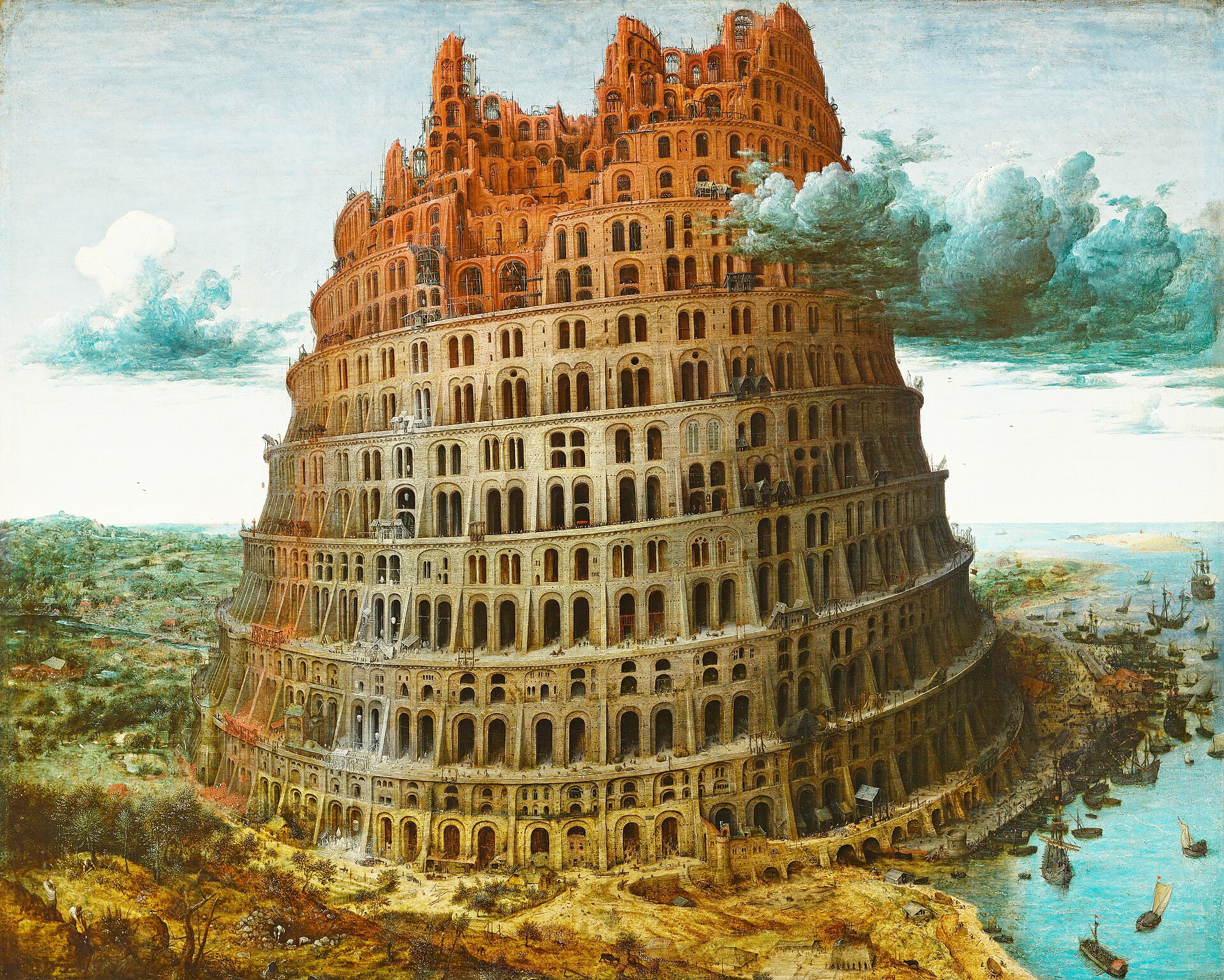
Table of Contents
The Burden Of Babylon
“The burden of Babylon, which Isaiah the son of Amoz did see.”
Isaiah 13:1
A new section of the book starts here, and it runs to chapter 23: a sequence of burdens against the nations, one after another. The word is worth pausing on. A burden is something heavy that has been laid on you and has to be carried — and Isaiah is the one carrying it. He does not announce these judgments the way a man reads out a sentence he agrees with. He hauls them.
And the first name on the list is the surprising one. In Isaiah’s lifetime the great power is Assyria. Assyria is the one whose armies are on the road, whose officers will stand at the conduit and shout in Hebrew, whose king is called the rod of mine anger two chapters back. Babylon at this point is a provincial city inside the Assyrian system, occasionally in revolt and regularly put down.
Isaiah opens his oracles against the nations by naming the empire that will not exist for another hundred years. He has already told Hezekiah what will eventually happen to the treasury — chapter 39 will have the ambassadors from Babylon walking through the storerooms — and the book is arranged so that the reader knows where all this is going long before the characters do.
The Day Of The LORD Is At Hand
“Howl ye; for the day of the LORD is at hand; it shall come as a destruction from the Almighty… Behold, the day of the LORD cometh, cruel both with wrath and fierce anger, to lay the land desolate: and he shall destroy the sinners thereof out of it. For the stars of heaven and the constellations thereof shall not give their light: the sun shall be darkened in his going forth, and the moon shall not cause her light to shine.”
Isaiah 13:6, 9, 10
Something has happened to the scale of the passage, and it happens fast.
Verse 1 announced an oracle against one city. By verse 5 the armies come from the end of heaven to destroy the whole land. By verse 11 God says I will punish the world for their evil. And by verse 13 the earth itself is going to remove out of her place. No sack of a Mesopotamian city, however thorough, darkens the sun.
This is the first signal that the chapter is doing two things at once, and it is not a trick of interpretation imposed from outside. It is in the text. Isaiah is describing the fall of a real city in 539 BC, and describing it in language that will not fit inside 539 BC.
The rest of Scripture picks up this vocabulary and uses it for the end. Joel had already made the day of the LORD his subject, with the same darkened sun and the same shaking heavens. Jesus quoted the imagery directly: “Immediately after the tribulation of those days shall the sun be darkened, and the moon shall not give her light, and the stars shall fall from heaven, and the powers of the heavens shall be shaken” (Matthew 24:29). John saw it opened as the sixth seal. When a prophet says the day of the LORD, he is naming a pattern that has happened in history repeatedly and will happen finally once.
One verse in the middle of it is quietly devastating: “I will make a man more precious than fine gold; even a man than the golden wedge of Ophir” (13:12). Not more precious in God’s estimation — He has always held that. More precious in the sense that there will hardly be any left. Gold from Ophir was the standard of scarcity in that world, and Isaiah says people will become rarer than that.
The Verses We Would Rather Skip
Two verses in this chapter are almost never read aloud, and a study that skipped them would not be honest.
“Their children also shall be dashed to pieces before their eyes; their houses shall be spoiled, and their wives ravished… Their bows also shall dash the young men to pieces; and they shall have no pity on the fruit of the womb; their eye shall not spare children.”
Isaiah 13:16, 18
Read what the verses are and are not. They are a description of what an ancient city looked like when it was taken, written in the flat vocabulary of someone who had seen the aftermath of such things. They are not instructions. Nobody in the passage is being told to do this; the Medes are not commanded to spare no children, they are described as men who will not. God does not improve the invaders He uses, and Isaiah has already said so plainly — Assyria meaneth not so (10:7), and was judged for the heart it brought to the job.
And the second thing to notice is that this is what Babylon did. The book of Kings records it, and Psalm 137 — written by someone who watched — ends by pronouncing the same thing back on Babylon in the same words. Isaiah is describing an empire receiving the treatment it invented.
That does not make the verses comfortable, and they should not be made comfortable. What they establish is the honesty of the book. Isaiah is not writing about war as a symbol. He is writing about what actually happens when the human race is left to run its own affairs at scale — and the day of the LORD, when it comes, is the end of exactly this. They shall not hurt nor destroy in all my holy mountain was two chapters ago, and this is the world it is a promise about.
Babylon, The Glory Of Kingdoms
“And Babylon, the glory of kingdoms, the beauty of the Chaldees’ excellency, shall be as when God overthrew Sodom and Gomorrah. It shall never be inhabited, neither shall it be dwelt in from generation to generation: neither shall the Arabian pitch tent there; neither shall the shepherds make their fold there.”
Isaiah 13:19, 20
Two details in this prophecy are more specific than they needed to be, and both came true.
The first is verse 17: Behold, I will stir up the Medes against them, which shall not regard silver. Isaiah names the nation, roughly a century and a half before it arrived, and names the one thing that made them dangerous — they could not be bought off. Babylon’s standard defense was money. It did not work.
The second is verse 20, and it is the harder claim. Plenty of cities have been sacked and rebuilt; Babylon herself had been sacked before. Isaiah says this one will not come back — never inhabited, not even a shepherd’s fold. And that is what happened, though not quickly. Babylon fell to Cyrus without a fight, remained a functioning city for centuries afterward, slowly lost its population, and eventually became what it still is: a ruin field in the desert. The prophecy is not that it would fall overnight. It is that it would never be a city again.
“But wild beasts of the desert shall lie there; and their houses shall be full of doleful creatures; and owls shall dwell there, and satyrs shall dance there. And the wild beasts of the islands shall cry in their desolate houses, and dragons in their pleasant palaces”
Isaiah 13:21, 22
Hold that picture, because John reuses it. When the second angel of Revelation announces the fall of the last Babylon, he describes the ruin in Isaiah’s exact terms: “Babylon the great is fallen, is fallen, and is become the habitation of devils, and the hold of every foul spirit, and a cage of every unclean and hateful bird” (Revelation 18:2). Empty palaces with things living in them. Revelation is not inventing a symbol; it is quoting this chapter, which is why reading Isaiah 13 first makes Revelation 18 legible.
Thou Shalt Take Up This Proverb
“And it shall come to pass in the day that the LORD shall give thee rest from thy sorrow, and from thy fear, and from the hard bondage wherein thou wast made to serve, That thou shalt take up this proverb against the king of Babylon, and say, How hath the oppressor ceased! the golden city ceased!”
Isaiah 14:3, 4
Now the form changes. What follows is a proverb — in Hebrew a mashal, here a taunt song, the kind of poem a liberated people sing about the man who used to own them. And the striking thing is who is given permission to sing it. God does not sing this over Babylon. He hands it to the ex-slaves and tells them the day is coming when they will be able to.
Notice the sequence in verse 3. First rest from thy sorrow, then from thy fear, then from the hard bondage. The bondage is named last, which is the right order psychologically. The chains come off first and the fear takes longer.
“The whole earth is at rest, and is quiet: they break forth into singing. Yea, the fir trees rejoice at thee, and the cedars of Lebanon, saying, Since thou art laid down, no feller is come up against us.”
Isaiah 14:7, 8
Even the trees are relieved. It is a joke, and a good one — the cedars of Lebanon, which every empire in that world logged for its palaces, noticing that nobody has come with an axe lately. But it is also the reversal of chapter 10, where God was the one felling the forest of empires. The axe has been put down, and the timber is talking about it.
Hell From Beneath Is Moved For Thee
“Hell from beneath is moved for thee to meet thee at thy coming: it stirreth up the dead for thee, even all the chief ones of the earth; it hath raised up from their thrones all the kings of the nations. All they shall speak and say unto thee, Art thou also become weak as we? art thou become like unto us? Thy pomp is brought down to the grave, and the noise of thy viols: the worm is spread under thee, and the worms cover thee.”
Isaiah 14:9-11
The word translated hell here is sheol, and verse 11 tells you plainly what Isaiah means by it: it is where the worms are. The same verse calls it the grave. This is not a place of conscious torment; it is the state of the dead, and the passage is a poem in which the dead kings are imagined sitting up.
And the imagined scene is savage. The other tyrants get off their thrones to greet him — a mock state reception, with the formal courtesy of equals — and the greeting is a question: Art thou also become weak as we? The one thing this man built his life on was that he was not like other men, and the first sentence spoken to him after death is that he is.
Thy pomp is brought down to the grave, and the noise of thy viols. The music went with him. Whatever the court orchestra had been playing has stopped, and what is spread under him instead of a couch is a worm. Isaiah is not being crude for effect; he is being exact. Everything a tyrant accumulates is composed entirely of other people’s deference, and it does not survive the man.
How Art Thou Fallen From Heaven
“How art thou fallen from heaven, O Lucifer, son of the morning! how art thou cut down to the ground, which didst weaken the nations!”
Isaiah 14:12
And then, in the middle of a funeral taunt about a Mesopotamian king, the poem lifts off the ground.
Everything before this verse could be said about a man. Kings die; empires end; the grave is impartial. But fallen from heaven is not a figure anyone in that world used for a defeated monarch, and what follows in verses 13 and 14 is not political ambition described in strong language. It is a stated intention to occupy the throne of God.
Is This Passage Really About Satan?
It is worth putting the objection at its strongest, because it is a fair one and it gets raised.
Verse 4 says the poem is a proverb against the king of Babylon. That is the stated subject, and nothing in the chapter announces a change of subject. The word Lucifer is not a name in the Hebrew at all: the word is helel, meaning shining one or day star, and Lucifer is simply what Jerome’s Latin called it — light-bearer — which the KJV then kept as though it were a proper noun. Anyone who tells you the Hebrew text contains the name Lucifer has been misinformed. And “Is this the man…?” in verse 16 says man.
Now the other side, which is stronger.
The claims outrun the claimant. No king of Babylon fell from heaven, and none of them proposed to set a throne above the stars of God. Ancient kings claimed a great deal — divine sonship, world rule, the favor of the gods — but the specific ambition in verses 13 and 14 is to displace the Most High in His own dwelling. Poetry exaggerates; it does not usually exaggerate into a different category of being.
Scripture does this twice, deliberately. Ezekiel builds an identical passage against the king of Tyre. It begins as a lamentation over a human ruler, and then says things no human ruler can be told: “Thou hast been in Eden the garden of God”, “Thou art the anointed cherub that covereth”, “Thou wast perfect in thy ways from the day that thou wast created, till iniquity was found in thee” (Ezekiel 28:13-15). Two prophets, two pagan kings, and in both cases the oracle opens out behind the king onto the power he is serving. One instance might be over-reading. Two, built the same way, is a method.
Jesus used the image of it. When the seventy came back reporting that the devils were subject to them, His answer was a single sentence: “I beheld Satan as lightning fall from heaven” (Luke 10:18). He is the one witness who was there, and the verb He chose is fall.
Revelation supplies the event itself. “And there was war in heaven: Michael and his angels fought against the dragon; and the dragon fought and his angels, And prevailed not; neither was their place found any more in heaven” (Revelation 12:7, 8). Isaiah gives the motive; John gives the war; Ezekiel gives the character before the fall.
Put together, the reading is not that Isaiah stopped talking about Babylon. It is that Isaiah is doing here what the whole book does everywhere — describing a near thing in terms that fit a larger one standing behind it, exactly as chapter 7’s child had a mother in Ahaz’s reign and a fulfilment seven centuries later. The king of Babylon is a real king. He is also, in this poem, the visible shape of something older, and Isaiah lets the poem run past him on purpose.
Ellen White reads it this way and is explicit about where she places it: “The prophet Isaiah, looking forward to the time of Satan’s overthrow, exclaims” (The Great Controversy, p. 659) — and then quotes verses 12 through 17 straight through. In Patriarchs and Prophets she opens the account of the origin of evil with Ezekiel 28 and Isaiah 14 side by side, and states the point of both in one sentence: “Sin originated with him who, next to Christ, had been most honored of God and was highest in power and glory among the inhabitants of heaven” (Patriarchs and Prophets, p. 35).
That Man Of Sin
There is one more reason the word man in verse 16 is not the obstacle it first appears to be, and it comes from Paul.
Writing to the Thessalonians about what has to happen before the day of Christ, he describes an ambition in the same terms Isaiah used, and in the same order.
“that day shall not come, except there come a falling away first, and that man of sin be revealed, the son of perdition; Who opposeth and exalteth himself above all that is called God, or that is worshipped; so that he as God sitteth in the temple of God, shewing himself that he is God.”
2 Thessalonians 2:3, 4
Set that against the five “I wills” and the overlap is hard to write off as coincidence. Isaiah’s figure says I will exalt my throne above the stars of God; Paul’s exalteth himself above all that is called God. Isaiah’s says I will sit also upon the mount of the congregation; Paul’s as God sitteth in the temple of God. Isaiah’s says I will be like the most High; Paul’s is shewing himself that he is God.
Three correspondences, in sequence — and the title Paul attaches to them is that man of sin.
One clarification has to be made carefully here, because it is easy to overshoot. Paul is not saying that Satan is a man. The man of sin is an earthly power: “The ‘man of sin,’ which is also styled ‘the mystery of iniquity,’ ‘the son of perdition,’ and ‘that wicked,’ represents the papacy” (The Great Controversy, p. 356). What Paul is describing is an institution on earth that took up the identical ambition — and that is precisely why his description reads like Isaiah’s. The original is in chapter 14. Everything since has been a copy.
Which brings the objection full circle. Scripture never shows us this rebellion standing on its own. It shows it in a king of Babylon, in a prince of Tyre, in a man of sin — and in the beast whose number John tells us to count, “for it is the number of a man” (Revelation 13:18). Four passages, and in every one of them a human figure stands in the foreground with the same ambition behind it.
So verse 16 is not evidence against the reading. It is the form the reading has always taken. The pride that began in heaven has never once appeared on this earth except housed in a man — which is exactly what makes it dangerous, and exactly why Isaiah could write a poem about a dead Babylonian king and have it be about something far older without ever changing the subject.
The Five I Wills
“For thou hast said in thine heart, I will ascend into heaven, I will exalt my throne above the stars of God: I will sit also upon the mount of the congregation, in the sides of the north: I will ascend above the heights of the clouds; I will be like the most High.”
Isaiah 14:13, 14
Five sentences, and every one of them begins with the same two words.
Before any of them, note where they were said: thou hast said in thine heart. Not proclaimed, not published, not moved as a resolution. The rebellion begins as an internal sentence that nobody else hears, and by the time anyone in heaven noticed anything wrong it had already been said five times.
I will ascend into heaven. He was already in heaven. That is the first strangeness in the list — the ambition is not to get somewhere he had never been, but to occupy it on different terms. He was there as a servant. He proposed to be there as a principal.
I will exalt my throne above the stars of God. He has a throne already, which means the position was not small; the covering cherub stood nearest the presence of God. The word is above. Nothing here is a complaint about being low. It is entirely about being under.
I will sit also upon the mount of the congregation. He wants the seat. In heaven’s assembly he had a place standing; the seat on that mountain belongs to one person, and it is not an ornament — it is where decisions are made.
I will ascend above the heights of the clouds. The clouds are the standing veil of God’s visible presence all through Scripture — the pillar, the cloud on Sinai, the glory that filled the temple, the cloud that receives Him out of their sight. To go above them is to have nothing left between yourself and the throne.
I will be like the most High. And this is the one that gives the whole thing away, because of what it does not say. He does not say I will be the Most High, and he does not say I will destroy the Most High. He says like. What he wanted was not to replace God but to be indistinguishable from Him in standing — the honor without the throne’s obligations, the position without the character that belongs to it.
It is also, in substance, what the serpent later offers Eve — not the same words, but the same offer: ye shall be as gods (Genesis 3:5). He sold in Eden the thing he had wanted in heaven, and it is the only thing he has ever had to sell.
Ellen White traces where that began, and the phrase she uses is worth remembering because it describes something that can happen to anybody: “Little by little Lucifer came to indulge the desire for self-exaltation” (Patriarchs and Prophets, p. 35). Not a decision. An indulgence, repeated, in a mind nobody else could see into.
In The Sides Of The North
One phrase in the third “I will” deserves its own moment: the mount of the congregation, in the sides of the north.
The psalmist uses the same direction for the same place: “Beautiful for situation, the joy of the whole earth, is mount Zion, on the sides of the north, the city of the great King” (Psalm 48:2). North, in the Hebrew imagination, is the direction of God’s throne — and the phrase the mount of the congregation names it as a place where a gathering meets. Heaven is not pictured as a solitary throne room. It is an assembly, with a mountain, and a seat at the head of it.
Which tells you something about what was actually lost. The sin was not a solitary ambition dreamed up in private and kept there. It was aimed at a chair in a meeting of created beings — it needed an audience, and it got one. A third of them, according to Revelation 12:4. Self-exaltation is never really about the self; it requires other people to see it.
They Shall Narrowly Look Upon Thee
“Yet thou shalt be brought down to hell, to the sides of the pit. They that see thee shall narrowly look upon thee, and consider thee, saying, Is this the man that made the earth to tremble, that did shake kingdoms; That made the world as a wilderness, and destroyed the cities thereof; that opened not the house of his prisoners?”
Isaiah 14:15-17
The sides of the north in verse 13; the sides of the pit in verse 15. Isaiah repeats the phrase on purpose. He got a location, and it was the opposite one.
And then the strangest verb in the chapter: they shall narrowly look upon thee. Not glance, not turn away, not gloat. They peer. They come close and study him, the way people examine something that does not match its description — and the sentence they arrive at is a question, asked four times over: Is this the man?
This is the moment the whole great controversy has been building toward, and it is not a battle. It is an inspection. The universe finally gets to look at the thing that has been ruining it, close up and in good light, with nothing left to hide behind — and what it sees is disappointingly small. He made the earth to tremble; there he is. That is all it was.
Notice the last item on the list, too, because it is not the one we would have chosen: that opened not the house of his prisoners. Of everything charged against him — shaken kingdoms, ruined cities, a world made a wilderness — the indictment ends on the doors he kept shut. He never let anybody go. It is the exact opposite of the Messiah’s own job description in chapter 61, which is to proclaim the opening of the prison to them that are bound.
Never Shalt Thou Be Any More
“All the kings of the nations, even all of them, lie in glory, every one in his own house. But thou art cast out of thy grave like an abominable branch… Thou shalt not be joined with them in burial, because thou hast destroyed thy land, and slain thy people: the seed of evildoers shall never be renowned.”
Isaiah 14:18-20
Every other king in the poem got a tomb. This one does not, and Isaiah calls him an abominable branch — a cut shoot thrown on the rubbish heap. The word sits three chapters after the Branch out of Jesse’s stump, and the contrast is not accidental. One shoot is planted and grows; the other is discarded.
Here is where this chapter carries real doctrinal weight, and it is one of the places Adventists differ from much of Christendom. Isaiah 14 does not describe an eternal career in a burning place. It describes an ending. Ezekiel says the same about the covering cherub in the plainest words in Scripture: “I will bring thee to ashes upon the earth in the sight of all them that behold thee… and never shalt thou be any more” (Ezekiel 28:18, 19).
Never shalt thou be any more. Not tortured forever in a corner of the universe God has to keep running for the purpose. Ashes, in front of everyone, and then a universe in which he is simply absent.
And that is the only ending consistent with the rest of the promise. If Isaiah 11 says nothing will hurt or destroy in all God’s holy mountain, and Revelation says the former things are passed away, then something has to actually pass away. An eternally burning hell would be the one thing left over from the old order — a permanent monument to the failure, in view forever. Scripture does not leave one.
Five Steps Down
There is one more passage that has to be read beside the five “I wills,” and Paul wrote it. He is not consciously answering Isaiah 14 — he is telling the Philippians how to treat each other — but the shape of what he writes is the exact inverse, step for step.
“Who, being in the form of God, thought it not robbery to be equal with God: But made himself of no reputation, and took upon him the form of a servant, and was made in the likeness of men: And being found in fashion as a man, he humbled himself, and became obedient unto death, even the death of the cross.”
Philippians 2:6-8
Set them side by side and the whole controversy is legible in two columns.
Lucifer, who was not equal with God, grasped at being like Him. Christ, who was in the form of God, thought it not robbery to be equal with God — and then went down. Made Himself of no reputation. Took the form of a servant, which was precisely the standing Lucifer found intolerable. Was made in the likeness of men, and having got that far, went further: humbled Himself, became obedient, and died — and not a dignified death either.
Five sentences upward, ending in a pit. Five steps downward, and then this: “Wherefore God also hath highly exalted him, and given him a name which is above every name” (Philippians 2:9).
The exaltation Lucifer tried to take, Christ was given — and the route to it turned out to run in the opposite direction from the one anybody would have guessed. This is not merely a moral about humility. It is the answer to the accusation. The charge in heaven was that God’s government served itself and that the highest place was worth seizing. The reply was not an argument. It was the person at the top of that government going all the way to the bottom of it, voluntarily, in public.
The LORD Hath Founded Zion
“The LORD of hosts hath sworn, saying, Surely as I have thought, so shall it come to pass; and as I have purposed, so shall it stand… This is the purpose that is purposed upon the whole earth: and this is the hand that is stretched out upon all the nations. For the LORD of hosts hath purposed, and who shall disannul it? and his hand is stretched out, and who shall turn it back?”
Isaiah 14:24, 26, 27
After the largest subject in the Bible, Isaiah comes straight back down to the news. Assyria will be broken in God’s land; Philistia should not celebrate too early; and the whole section is dated — in the year that king Ahaz died was this burden (14:28). The cosmic and the local are in the same chapter without a seam, which is how this prophet always works.
And the argument in verses 24 to 27 is one word: purposed. It appears four times. Against five sentences beginning I will, God sets a purpose He has sworn to, and asks the only question that matters about it — who shall disannul it? Nobody answers, because there is no answer. The five “I wills” were said in a heart. This was said under oath.
Then the chapter ends by asking what to tell foreign envoys who come round looking for allies against Assyria — a very ordinary diplomatic question, and one Ahaz had answered badly all his life.
“What shall one then answer the messengers of the nation? That the LORD hath founded Zion, and the poor of his people shall trust in it.”
Isaiah 14:32
That is the whole foreign policy, and it fits in one sentence. Not we have an army, not we have a treaty, not even we are righteous. The LORD founded this place, and the people with nothing are the ones who rely on it.
It is a deliberate closing note. The chapter began with a being who wanted a mountain he had not founded and a seat he had not been given. It ends with the poor of God’s people trusting a city they did not build. Between those two sentences is the entire difference between the two kingdoms — and Isaiah, having shown us the fall of the first, sets us down inside the second.
