A discouraged people are told to go and look at the quarry they came out of. Then they shout at God to wake up, and He answers by telling them to wake up — and by taking a cup out of their hand that somebody else will have to drink.
A study in Isaiah 51 · Arthur Baldwin · StandUp4Jesus.Org · 14 min read
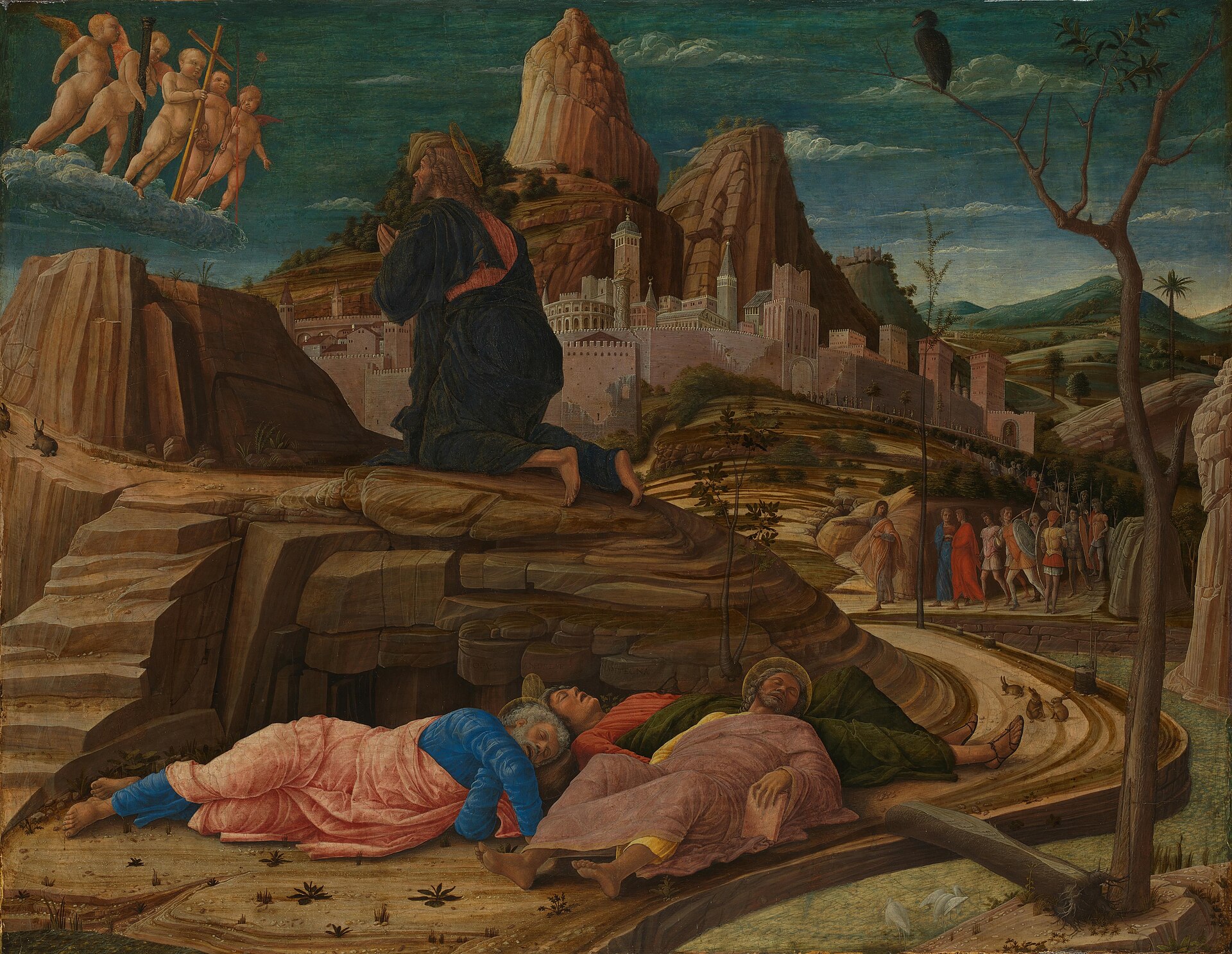
Table of Contents
Look Unto The Rock Whence Ye Are Hewn
“Hearken to me, ye that follow after righteousness, ye that seek the LORD: look unto the rock whence ye are hewn, and to the hole of the pit whence ye are digged. Look unto Abraham your father, and unto Sarah that bare you: for I called him alone, and blessed him, and increased him.”
Isaiah 51:1, 2
The chapter opens with a small, discouraged group being sent to look at a quarry.
It is not a flattering image. A quarry is a hole in the ground with the stone taken out of it, and God is telling them to go and stand at the edge of the pit they were cut from. But the point is arithmetic, and it is meant to steady them.
I called him alone. One man. One childless couple, well past the age, with no land and no descendants and nothing whatever to suggest a nation. Everyone reading this verse is the arithmetic result of that.
The comfort is not you are stronger than you feel. The comfort is that God has done this before starting from less. A group that is small enough to be discouraged by its own size is being told the founding figure was a demographic of one.
And Sarah is named. She very rarely is, in a list of ancestors, and here she is put in beside Abraham because she is the harder half of the story — the barrenness was hers, and it is barrenness that this chapter is addressing.
Then the promise, and it reaches all the way back past Abraham: “he will make her wilderness like Eden, and her desert like the garden of the LORD; joy and gladness shall be found therein, thanksgiving, and the voice of melody” (51:3). Not merely restored. Returned to the original.
The Heavens Shall Vanish Away Like Smoke
“Lift up your eyes to the heavens, and look upon the earth beneath: for the heavens shall vanish away like smoke, and the earth shall wax old like a garment, and they that dwell therein shall die in like manner: but my salvation shall be for ever, and my righteousness shall not be abolished.”
Isaiah 51:6
We use the sky as our figure for permanence. Isaiah uses it as his figure for the opposite.
Vanish away like smoke — there and then not there, with nothing left to mark it. Wax old like a garment — the slower ruin, the one you do not notice happening. Between them they cover both ways things end, suddenly and gradually, and both are said of the largest and most reliable objects anyone can point at.
Set against that: my salvation shall be for ever, and my righteousness shall not be abolished.
That is a reversal of everything instinct tells us. The stars are the temporary thing. The character of God is the permanent thing. And shall not be abolished is a legal word — it is what you say about a statute somebody has proposed repealing. Isaiah is answering a question nobody in his century was asking yet, and the answer would keep.
Fear Ye Not The Reproach Of Men
“Hearken unto me, ye that know righteousness, the people in whose heart is my law; fear ye not the reproach of men, neither be ye afraid of their revilings. For the moth shall eat them up like a garment, and the worm shall eat them like wool: but my righteousness shall be for ever, and my salvation from generation to generation.”
Isaiah 51:7, 8
Notice who is addressed: the people in whose heart is my law. Not the people who have the law in a book, or on a wall. Inside. That is the new covenant described six centuries before Jeremiah’s generation put a name to it, and it is the mark by which this audience is identified.
And what such people are warned about is not persecution. It is reproach and revilings — being thought badly of. Being laughed at. Isaiah puts that hazard in the same paragraph as the collapse of the heavens, because for most people, on most days, it is the more effective of the two.
“The great obstacle both to the acceptance and to the promulgation of truth is the fact that it involves inconvenience and reproach. This is the only argument against the truth which its advocates have never been able to refute.”
Ellen G. White · The Great Controversy, p. 460
That is exactly right, and it is worth admitting how right it is. Every other objection to a true doctrine can be answered from the Bible. You will look ridiculous cannot be answered at all, because it is usually accurate. Isaiah does not deny it either. He simply prices it: the moth shall eat them up like a garment.
The people whose opinion is currently unbearable are wool. Moths eat wool. And on the same page Ellen White gives the only workable rule: we should choose the right because it is right, and leave consequences with God.
Awake, Awake, O Arm Of The LORD
“Awake, awake, put on strength, O arm of the LORD; awake, as in the ancient days, in the generations of old. Art thou not it that hath cut Rahab, and wounded the dragon? Art thou not it which hath dried the sea, the waters of the great deep; that hath made the depths of the sea a way for the ransomed to pass over?”
Isaiah 51:9, 10
This is the people talking, and what they are doing is shouting at God to wake up.
It is a startling thing to find in Scripture and it is not rebuked. The prayer is impatient, it is close to accusing, and it is built entirely out of things God has actually done. Art thou not it? — twice. They are not asking Him to do something new. They are asking Him to be recognizably Himself again.
A word about Rahab, because it causes confusion. This is not the woman of Jericho who hid the spies; the names are unrelated in Hebrew. Rahab here is a poetic name for Egypt — the Psalmist uses it the same way in a list of nations: “I will make mention of Rahab and Babylon to them that know me: behold Philistia, and Tyre, with Ethiopia” (Psalm 87:4). Set beside Babylon, Philistia and Tyre, it is plainly a country.
And the dragon in the same line is the monster of the sea, which is what Egypt is called elsewhere in the prophets. So verse 9 and verse 10 are one event: the cutting of Rahab and the drying of the sea are the Exodus, described first as a battle and then as a road.
Which is why the prayer is better than it first sounds. They are not asking for a miracle in general. They are naming a specific thing God did, at a specific sea, and asking Him to do that.
Afraid Of A Man That Shall Die
“I, even I, am he that comforteth you: who art thou, that thou shouldest be afraid of a man that shall die, and of the son of man which shall be made as grass; And forgettest the LORD thy maker… and hast feared continually every day because of the fury of the oppressor, as if he were ready to destroy? and where is the fury of the oppressor?”
Isaiah 51:12, 13
God’s answer to the shouting is not a rebuke either. It is a sum.
On one side, a man that shall die — and Isaiah will not even grant him a name or a title, only the one fact that settles the matter. On the other side, the LORD thy maker, that hath stretched forth the heavens, and laid the foundations of the earth. The whole diagnosis of fear is in the middle of the sentence: and forgettest. Fear is not really an overestimate of the threat. It is an outage of memory about who else is in the room.
Then two details that make the verse unusually honest.
Hast feared continually every day. God notices the frequency, and He does not call it cowardice. He calls it exhausting.
As if he were ready to destroy. The tyrant was going to destroy them, at some point, in some way — but the fear ran every day, on a threat that had not arrived. That is the difference between danger and dread, and only one of them takes up the whole calendar.
Then the question that ends it, and it lands like a hand on the shoulder: and where is the fury of the oppressor? Gone. The men who occupied years of their fear are not in the room, and Isaiah asks them to notice that the fear outlasted the man.
Covered In The Shadow Of Mine Hand
“And I have put my words in thy mouth, and I have covered thee in the shadow of mine hand, that I may plant the heavens, and lay the foundations of the earth, and say unto Zion, Thou art my people.”
Isaiah 51:16
That phrase has been used once already in this book, two chapters ago, and it was said of the Servant: “in the shadow of his hand hath he hid me” (49:2). There it described the polished arrow kept in the quiver.
Here the same covering is given to the people. What was true of Him is now said of them, and with the same two halves — words in thy mouth, and hid in the shadow. Equipped and concealed at once.
And the purpose clause is enormous: that I may plant the heavens, and lay the foundations of the earth. A God who is in the middle of building a universe stops to put His hand over a frightened remnant. The scale of the two things in one sentence is the whole comfort.
Awake, Awake, O Jerusalem
“Awake, awake, stand up, O Jerusalem, which hast drunk at the hand of the LORD the cup of his fury; thou hast drunken the dregs of the cup of trembling, and wrung them out.”
Isaiah 51:17
Read that against verse 9 and the structure of the chapter opens up.
In verse 9 the people cried Awake, awake to the arm of the LORD. In verse 17 the LORD says Awake, awake back to Jerusalem. The same words, returned. It was never God who was asleep.
And the condition He wakes her out of is not slumber but stupor. Verse 21 names it exactly: thou afflicted, and drunken, but not with wine. There is a way of being knocked out by suffering that looks exactly like drunkenness — unsteady, unable to stand, not taking things in — and Isaiah says so without a trace of contempt. She is not being blamed for it. She is being woken from it.
Verse 18 is the loneliest line in the chapter: there is none to guide her among all the sons whom she hath brought forth; neither is there any that taketh her by the hand. She has children. Not one of them is holding her hand.
The Cup Of Trembling
“Thus saith thy Lord the LORD, and thy God that pleadeth the cause of his people, Behold, I have taken out of thine hand the cup of trembling, even the dregs of the cup of my fury; thou shalt no more drink it again.”
Isaiah 51:22
The cup is one of Scripture’s steadiest images for a portion measured out and handed to somebody. David uses it for a good portion — my cup runneth over. Here it is the other kind.
And it has been drunk to the bottom. Thou hast drunken the dregs of the cup of trembling, and wrung them out — not a sip, not most of it; the sediment at the bottom, and then the cup twisted to get the last of it. The psalmist uses the identical picture: “in the hand of the LORD there is a cup… but the dregs thereof, all the wicked of the earth shall wring them out, and drink them” (Psalm 75:8).
Now hear what God does with it. He does not dilute it. He does not tell her it was not as bad as she thought. He takes it out of her hand.
Thou shalt no more drink it again. That is not a promise of no more trouble — Isaiah is far too honest for that, and the rest of the book does not support it. It is a promise about this cup, the cup of the fury of God against sin, and it says she will never be handed it a second time.
Which raises the question the chapter does not answer, and the reason it does not is that the answer is two chapters away.
Where The Cup Went
A cup taken out of somebody’s hand has to go somewhere. It is not poured out on the ground; the whole force of the image is that it is full and that it is owed.
Seven centuries later a man knelt in an olive grove and used this exact noun.
“And he went a little further, and fell on his face, and prayed, saying, O my Father, if it be possible, let this cup pass from me: nevertheless not as I will, but as thou wilt.”
Matthew 26:39
He was not asking to be spared the nails. He had told them what was coming for months and had set His face to it like a flint. The thing He recoiled from in the garden was the cup — and Isaiah has already told us whose cup it was and where it had been.
An hour later, with a sword drawn beside Him, He had settled it: “the cup which my Father hath given me, shall I not drink it?” (John 18:11).
That is the whole transaction of the Bible in one object. It was in her hand. It was taken out. It was drunk by somebody else. And Isaiah 51:22 is the promise, Isaiah 53 is the mechanism, and Gethsemane is the night it changed hands.
Without Mixture
There is one more place the cup turns up, and it has to be faced, because Isaiah 51:23 already points at it: “But I will put it into the hand of them that afflict thee.”
“The same shall drink of the wine of the wrath of God, which is poured out without mixture into the cup of his indignation.”
Revelation 14:10
Without mixture is the phrase to slow down on. In the ancient world wine was normally served diluted; drinking it neat was a byword for excess. So the expression means undiluted — at full strength, with nothing added to soften it.
Which implies, by contrast, that up to that point it never has been at full strength. Every judgment in the history of the world has been tempered, and the prophets say so outright — “in wrath remember mercy” (Habakkuk 3:2) is a prayer God has answered every time it has been prayed.
“Already a few drops of God’s wrath have fallen upon the earth; but when the seven last plagues shall be poured out without mixture into the cup of His indignation, then it will be forever too late to repent and find shelter.”
Ellen G. White · Testimonies for the Church, vol. 5, p. 212
A few drops. Everything the world has ever called a judgment — the flood, the plagues on Egypt, the fall of Jerusalem, every catastrophe men have shaken their fists at heaven over — is described as spillage from a cup that has not been poured.
That should be said carefully and not enjoyed. But it is the reason the promise in verse 22 is worth anything at all. If there were no cup, taking it out of her hand would be an empty gesture. It is precisely because the thing is real, and full, and undiluted at the end, that removing it counts as salvation.
Ellen White gathers this chapter’s promises for the hardest hour God’s people will ever see, and quotes verses 11 to 16 and then 21 to 23 straight through, prefacing them with a sentence that is the chapter in miniature:
“The precious Saviour will send help just when we need it. The way to heaven is consecrated by His footprints. Every thorn that wounds our feet has wounded His. Every cross that we are called to bear He has borne before us.”
Ellen G. White · The Great Controversy, p. 633
Which is the answer to the shout of verse 9. They told the arm of the LORD to wake up and do again what it did at the Red Sea. He did something harder. He took the cup out of their hand, and then He drank it.
