Chapter 51 ended with the words “Thus far are the words of Jeremiah.” Chapter 52 is an appendix, a historical record added by the book’s editor, closely matching the end of 2 Kings. It tells again, plainly and without comment, how Jerusalem fell: the king’s flight, the burning of the temple, the great bronze pillars broken up and carried off, and the small numbers of people taken captive. Then, in the last four verses, something unexpected happens. Thirty-seven years into his captivity, the exiled King Jehoiachin is brought out of prison, given new clothes, and offered a seat at the king of Babylon’s table for the rest of his life. The book of judgment ends with a glimpse of grace.
A study in Jeremiah 52 · Arthur Baldwin · StandUp4Jesus.Org · 12 min read
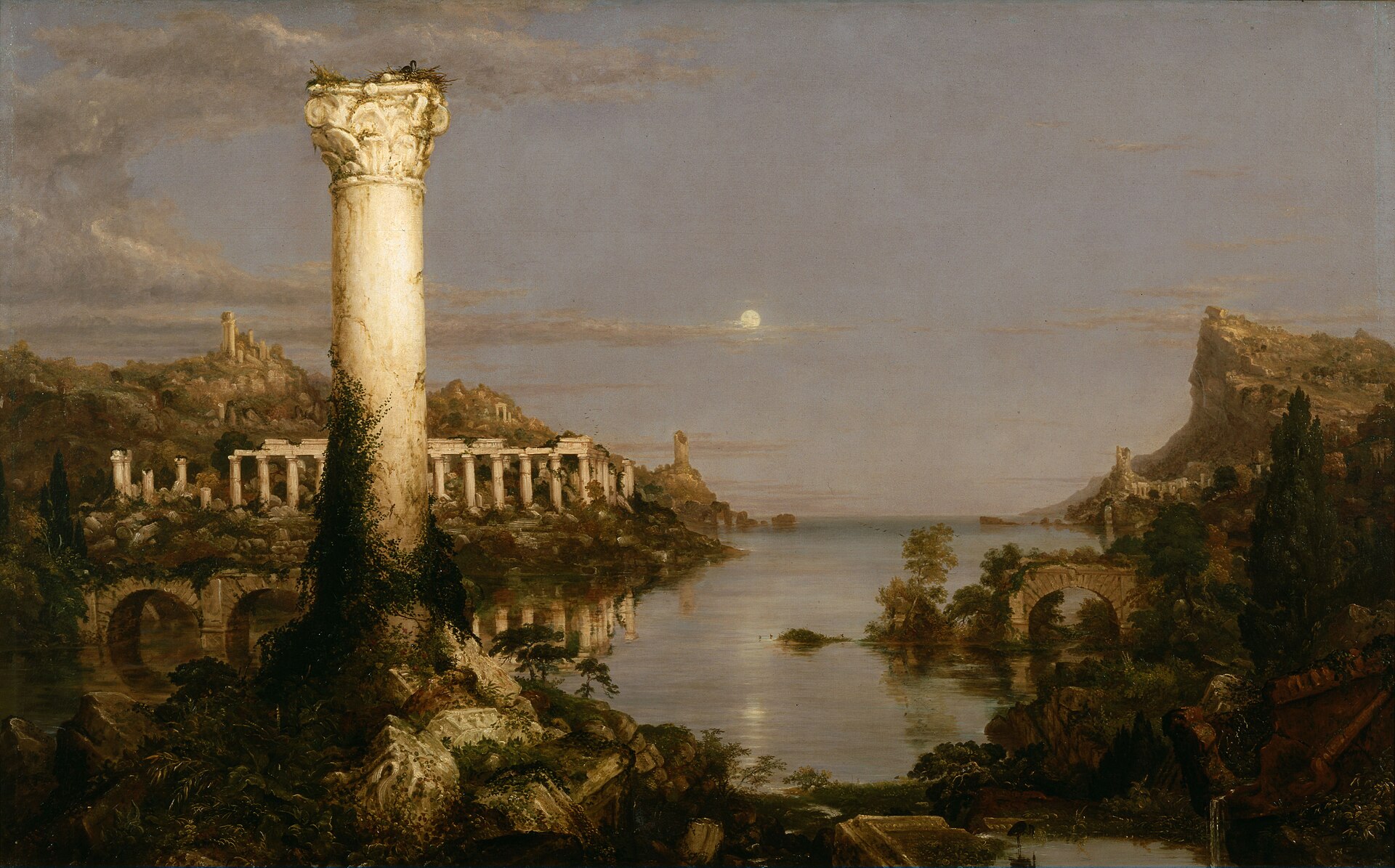
Why The Story Is Told Again
“Zedekiah was one and twenty years old when he began to reign, and he reigned eleven years in Jerusalem. And his mother’s name was Hamutal the daughter of Jeremiah of Libnah. And he did that which was evil in the eyes of the LORD, according to all that Jehoiakim had done.”
Jeremiah 52:1, 2
We have already read the fall of Jerusalem in chapter 39. Why tell it again? Because chapter 52 is the proof. For forty years Jeremiah had been mocked, beaten, imprisoned and called a liar for saying these things would happen. Chapter 52 simply sets down the record of what did happen, almost word for word as it appears in 2 Kings 24 and 25. There are no sermons here, no comment, no “I told you so.” The facts speak for themselves. Every word Jeremiah spoke had come true.
This is how God’s word works. “Heaven and earth shall pass away, but my words shall not pass away” (Matthew 24:35). Jeremiah’s book ends with history confirming prophecy, so that every later reader could know the God who spoke through him can be trusted.
The House Of The LORD Burned
“Now in the fifth month, in the tenth day of the month, which was the nineteenth year of Nebuchadrezzar king of Babylon, came Nebuzar-adan, captain of the guard, which served the king of Babylon, into Jerusalem, And burned the house of the LORD, and the king’s house; and all the houses of Jerusalem, and all the houses of the great men, burned he with fire: And all the army of the Chaldeans, that were with the captain of the guard, brake down all the walls of Jerusalem round about.”
Jeremiah 52:12-14
A month after the walls were breached, the Babylonian commander came to finish the work. He burned the temple Solomon had built, the royal palace, and every important house in the city. The walls were torn down.
“The beautiful temple that for more than four centuries had crowned the summit of Mount Zion was not spared by the Chaldeans.”
Ellen G. White · Prophets and Kings, p. 458
Years before, in his temple sermon, Jeremiah had warned the people not to trust in the building: “Trust ye not in lying words, saying, The temple of the LORD, The temple of the LORD, The temple of the LORD, are these” (7:4). They had believed God would never let His house be destroyed. But God is not bound to a building that His people have filled with idols. The presence of God was never in the stones; it was in a covenant relationship the people had broken.
The Pillars Measured, The Vessels Counted
“Also the pillars of brass that were in the house of the LORD, and the bases, and the brasen sea that was in the house of the LORD, the Chaldeans brake, and carried all the brass of them to Babylon.”
Jeremiah 52:17
The chapter lingers over the temple furnishings in surprising detail: the pots and shovels, the basins and bowls, and above all the two great bronze pillars. Each was eighteen cubits high, hollow, with a capital of five cubits decorated with a network of bronze pomegranates (52:21-23). There was so much bronze “the brass of all these vessels was without weight” (52:20). Nobody could weigh it.
Those pillars had names. When Solomon set them up at the temple entrance, “he set up the right pillar, and called the name thereof Jachin: and he set up the left pillar, and called the name thereof Boaz” (1 Kings 7:21). Jachin means “He will establish,” and Boaz is usually understood as “In Him is strength.” For nearly four hundred years these two pillars had stood at the door of God’s house as a sermon in bronze. Now they were broken up for scrap and hauled to Babylon. A nation that would not trust God’s strength lost even the monuments to it.
But the careful counting is also a quiet note of hope. Jeremiah had told the priests that the remaining vessels would be carried to Babylon, “and there shall they be until the day that I visit them, saith the LORD; then will I bring them up, and restore them to this place” (27:22). What God counts, He does not lose. Seventy years later, Cyrus sent the temple vessels home (Ezra 1:7-11), as we saw in The Yoke And The False Prophet.
Four Thousand And Six Hundred
“This is the people whom Nebuchadrezzar carried away captive: in the seventh year three thousand Jews and three and twenty: In the eighteenth year of Nebuchadrezzar he carried away captive from Jerusalem eight hundred thirty and two persons: In the three and twentieth year of Nebuchadrezzar Nebuzar-adan the captain of the guard carried away captive of the Jews seven hundred forty and five persons: all the persons were four thousand and six hundred.”
Jeremiah 52:28-30
These numbers are small, and probably count only the adult men, or a particular class of captives. (Second Kings gives larger figures for the deportation of 597 BC.) But even so, the point stands. The proud kingdom of Judah came down to a few thousand people walking to Babylon. Three separate deportations are listed, the last one some five years after Jerusalem fell, perhaps in reprisal for the murder of Gedaliah.
Yet God does His greatest work with remnants. A few thousand exiles, refined in Babylon, would become the people who returned, rebuilt the temple, and kept the Scriptures through the centuries until the Messiah came. God does not need large numbers. He needs faithful hearts.
He Lifted Up The Head Of Jehoiachin
“And it came to pass in the seven and thirtieth year of the captivity of Jehoiachin king of Judah, in the twelfth month, in the five and twentieth day of the month, that Evil-merodach king of Babylon in the first year of his reign lifted up the head of Jehoiachin king of Judah, and brought him forth out of prison, And spake kindly unto him, and set his throne above the throne of the kings that were with him in Babylon,”
Jeremiah 52:31, 32
Then comes the ending no one expected. Jehoiachin, also called Coniah, was the young king taken to Babylon after only three months on the throne. In chapter 22 God had said of him: “though Coniah the son of Jehoiakim king of Judah were the signet upon my right hand, yet would I pluck thee thence” (22:24). He had spent thirty-seven years as a prisoner. He was now about fifty-five years old.
Then Nebuchadnezzar died, and his son Evil-merodach (Amel-Marduk) came to the throne. In his first year, he “lifted up the head of Jehoiachin.” The phrase means to raise someone from disgrace to honour. He brought him out of prison, “spake kindly unto him,” and gave him a place of honour above the other captive kings in Babylon. Archaeologists have found clay tablets from Babylon listing rations of oil given to “Ya’ukin, king of the land of Yahud,” and his sons: Jehoiachin, recorded in Babylon’s own palace accounts.
A Seat At The King’s Table
“And changed his prison garments: and he did continually eat bread before him all the days of his life. And for his diet, there was a continual diet given him of the king of Babylon, every day a portion until the day of his death, all the days of his life.”
Jeremiah 52:33, 34
“And changed his prison garments.” The book of Jeremiah ends with a prisoner being given new clothes and a seat at the king’s table, with a daily portion provided “all the days of his life.” It is a small, quiet scene. It does not undo the judgment. Jehoiachin never went home, and he never ruled again. But the line of David was still alive, and it had been lifted out of the dungeon. God had not forgotten His promise to David.
Every part of this scene points beyond itself. It recalls David bringing lame Mephibosheth to his palace: “thou shalt eat bread at my table continually” (2 Samuel 9:7). It recalls the high priest Joshua in Zechariah’s vision: “Take away the filthy garments from him. And unto him he said, Behold, I have caused thine iniquity to pass from thee, and I will clothe thee with change of raiment” (Zechariah 3:4). And it recalls the prodigal son, met by his father: “Bring forth the best robe, and put it on him” (Luke 15:22).
“His own sins and those of his people were pardoned. Israel was clothed with ‘change of raiment’—the righteousness of Christ imputed to them.”
Ellen G. White · Prophets and Kings, p. 584
That is the gospel in a picture. We are all, like Jehoiachin, prisoners of our own and our fathers’ sins, with no right to the throne and no way out. And the King of heaven lifts up our heads, speaks kindly to us, takes off our prison clothes, and clothes us with “the garments of salvation” and “the robe of righteousness” (Isaiah 61:10). He gives us a place at His table, not for a day, but “all the days of” our “life,” and beyond.
So the long, hard book of Jeremiah ends not with a burned city but with an open prison door. The weeping prophet’s companion book, Lamentations, says it in words worth carrying away from all fifty-two chapters: “It is of the LORD’s mercies that we are not consumed, because his compassions fail not. They are new every morning: great is thy faithfulness” (Lamentations 3:22, 23).
