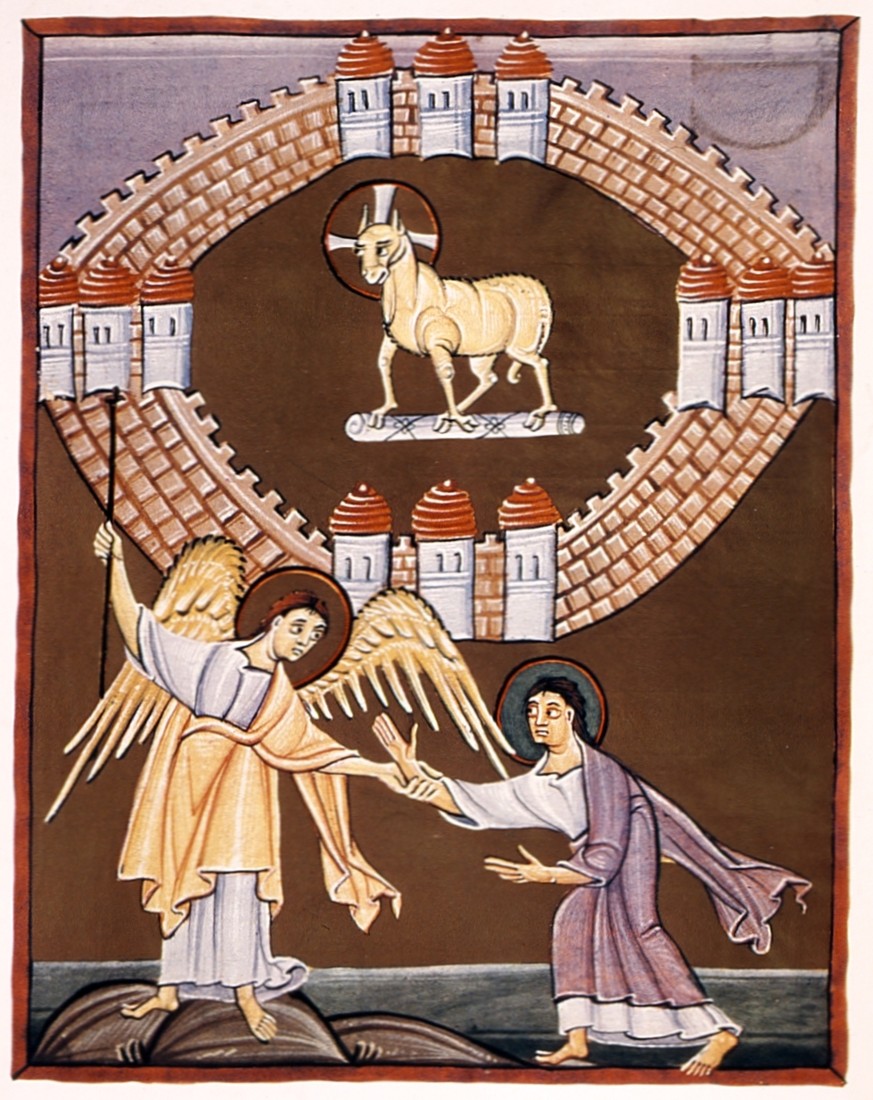
A river, a tree that fruits twelve times a year, and a face at last. The last chapter of the Bible ends the way the first one began — with a garden, a river and a tree — and then it turns round and asks you to come.
A Bible study on Revelation 22 · Arthur Baldwin · StandUp4Jesus.Org · 14 min read
Table of Contents
Sixty-five books lead here. The Bible opened with a garden, a river running out of it, and a tree of life in the middle — and closed the gate on all three by the end of Genesis 3. Revelation 22 opens them again, and this time nothing is guarded.
It is worth listing what comes back. A river. A tree of life. Fruit. The presence of God, walked with rather than hidden from. Work to do — his servants shall serve him. And a face to look at. Everything Genesis 3 took away is returned in Revelation 22, item for item, and one thing is added that Eden never had: the marks of a Lamb that was slain.
A Pure River, And A Tree
“And he shewed me a pure river of water of life, clear as crystal, proceeding out of the throne of God and of the Lamb.”
Revelation 22:1
The river comes out of the throne. Not past it, not near it — the source of the water and the seat of the government are the same place. Everything alive in that city is drinking from the authority that runs it.
Ezekiel was shown the same river coming out from under a temple threshold, getting deeper the further it ran, with trees on both banks whose leaf would not fade and whose fruit was for meat and medicine. Two prophets, six centuries apart, describing the same water. The study of that vision is at The LORD Is There.
“In the midst of the street of it, and on either side of the river, was there the tree of life, which bare twelve manner of fruits, and yielded her fruit every month: and the leaves of the tree were for the healing of the nations.”
Revelation 22:2
The tree Adam was barred from is the first promise made in this book. “To him that overcometh will I give to eat of the tree of life, which is in the midst of the paradise of God” — that was said to Ephesus, in chapter 2, and here it is being kept.
Every promise made to the seven churches is kept somewhere in these last chapters, and it is worth tracing once. Ephesus was promised the tree of life — here it is. Smyrna was promised no hurt from the second death; chapter 20 has just described it and the redeemed are not in it. Pergamos was promised a new name; verse 4 has His name on their foreheads. Thyatira was promised the morning star, and verse 16 says who that is. Sardis was promised white raiment and a name kept in the book of life. Philadelphia was promised to be a pillar in the temple and to go no more out — and this city has no temple, because God and the Lamb are the temple of it. Laodicea was promised a seat on the throne, and verse 5 says they shall reign for ever and ever. Seven promises, seven kept.
Two details are easy to hurry past. The tree bears every month, which means there is still time there — not an undifferentiated eternity but months, seasons, something to look forward to next. And the leaves of the tree were for the healing of the nations. Whatever the nations have been through, the last chapter of the Bible has a word for what happens to them, and the word is healing.
That word deserves emphasis, because it is the last thing anybody would predict at the end of a book like this one. After the seals and the trumpets and the plagues, the closing vision has a tree growing in the street whose leaves exist for the repair of nations.
They Shall See His Face
“And there shall be no more curse: but the throne of God and of the Lamb shall be in it; and his servants shall serve him: And they shall see his face; and his name shall be in their foreheads.”
Revelation 22:3, 4
Moses asked to see God’s face and was told plainly that no man could see it and live. Now it is listed among the ordinary features of the place, between serving Him and having His name on the forehead.
That forehead is the third one in this book. Chapter 7 sealed the servants of God there. Chapter 13 offered a mark there. Chapter 14 showed the Father’s name written there. The same square inch, the whole way through — and this is what it was always for.
There is no mark in this chapter, and no seal either. Both belonged to a time when there was still a decision to be made. What is on the forehead at the end is simply a name, worn the way a family name is worn.
There is no mark in this chapter, and no seal either. Both were needed while there was still a decision to make. What is on the forehead at the end is simply a name, worn the way a family name is worn.
And there is no more curse. Every consequence pronounced in Eden — the ground, the thorns, the sweat, the parting — struck out in four words.
And no night there (verse 5). Not because a lamp is kept burning, and not because the sun has been improved — “they need no candle, neither light of the sun; for the Lord God giveth them light.” The first thing God made in Genesis was light, before there was a sun to carry it. The last chapter goes back to the arrangement.
Behold, I Come Quickly
Three times in this chapter — verses 7, 12 and 20 — and each time in the first person. Behold, I come quickly.
People have made a difficulty of that word for nineteen centuries, and the difficulty is usually the wrong way round. It does not mean soon by a human calendar; it means suddenly, without a further warning, at speed once it starts. The delay a reader feels is the same delay chapter 6 gave the martyrs when they were told to rest a little season — and the same one the second angel’s message was flying through the sky to fill.
Then, in verse 10, the instruction that sets this book apart from Daniel’s:
“And he saith unto me, Seal not the sayings of the prophecy of this book: for the time is at hand.”
Revelation 22:10
Daniel was told to shut up the words and seal the book. John is told the opposite, in almost the same phrase, and the reason given is the difference in the date. Whatever else is true of Revelation, it was never meant to be a book nobody could read.
That is worth remembering by anyone who has been told Revelation is too difficult to bother with. The angel’s instruction is the opposite of difficulty: leave it open. And the blessing in verse 7 is on the one who keeps the sayings of it — not the one who decodes them.
Let Him Be Holy Still
“He that is unjust, let him be unjust still: and he which is filthy, let him be filthy still: and he that is righteous, let him be righteous still: and he that is holy, let him be holy still.”
Revelation 22:11
This is the hardest verse in the chapter and it is not a command. Nobody is being told to stay filthy. It is the sound of a decision being registered — the point at which what people have been becoming is what they have become.
The censer thrown down in chapter 8 was the same moment in a different picture. Probation does not close because God loses patience; it closes because everybody has answered. And notice that the verse runs in both directions with the same finality. The one who is holy is holy still, and nothing can undo that either.
It is also worth noticing where the verse sits. It is not at the end of the chapter. Three verses later comes whosoever will, and the invitation is still standing. Revelation refuses to let a reader close the book on the sentence about being filthy still.
The Spirit And The Bride Say, Come
“And the Spirit and the bride say, Come. And let him that heareth say, Come. And let him that is athirst come. And whosoever will, let him take the water of life freely.”
Revelation 22:17
Four comes in one verse, and watch how the invitation spreads.
It starts with the Spirit and the bride — God and His people saying it together, which is the whole of evangelism in five words. Then let him that heareth say, Come — anybody who has heard it is expected to repeat it, which means the invitation grows by one every time it lands. Then let him that is athirst come, which is the only qualification named. And finally whosoever will, which removes even that one.
And the water is free. The last offer in the Bible costs nothing, which is the same terms Isaiah advertised: “come ye, buy, and eat; yea, come, buy wine and milk without money and without price” (Isaiah 55:1).
It is worth sitting with what this verse does to the book. Revelation has shown seals, trumpets, beasts, plagues, a lake of fire and a city coming down out of heaven. Its final movement is not a threat and not a prediction. It is a door held open, by two voices, for anyone who is thirsty.
And the warning that follows in verses 18 and 19 — about adding to the words or taking away from them — is not a threat aimed at scholars. It stands guard over the invitation. A book that ends with a free offer of the water of life is a book whose text somebody would eventually want to edit.
The Bright And Morning Star
“I Jesus have sent mine angel to testify unto you these things in the churches. I am the root and the offspring of David, and the bright and morning star.”
Revelation 22:16
He signs it Himself, and the signature closes a circle opened twenty chapters earlier. Thyatira, the church in the longest darkness, was promised one thing above all the rest: “And I will give him the morning star” (Revelation 2:28). Here He says what that gift was. It was Himself.
The root and the offspring of David — both his ancestor and his descendant, which no ordinary man can be. And the bright and morning star, which rises last, lowest, and only when the night is nearly over.
There is one more thing in that verse. I Jesus have sent mine angel to testify unto you these things in the churches. The whole vision — the throne, the seals, the beasts, the city — was sent to the churches. Not to a committee of experts, and not to the future. To the seven congregations of chapters 2 and 3, with all their cooling love and their reputations and their lukewarmness, and to every congregation like them since.
Even So, Come, Lord Jesus
“He which testifieth these things saith, Surely I come quickly. Amen. Even so, come, Lord Jesus.”
Revelation 22:20
The last exchange in the Bible is two sentences long, and they answer each other. He says I come. The church says come. Nothing is negotiated and nothing is explained; the promise is made and it is accepted.
And the answer is in the plural of a church, not the singular of a scholar. Even so, come, Lord Jesus is the oldest recorded prayer of the Christian congregation — Paul wrote it in Aramaic at the end of a letter to Corinth, maranatha, and it had clearly been in use long before he did. The last words the Bible gives to the church are words it was already saying.
Then one more line, and it is not thunder: “The grace of our Lord Jesus Christ be with you all. Amen” (Revelation 22:21). The book of beasts and trumpets and lakes of fire ends on the word grace, addressed to you all.
What This Asks Of Us
At the end of a study like this one it is worth asking what the whole book was for, and chapter 22 answers it in the plainest terms available.
It was not written to frighten anybody. It ends with a river, a tree that fruits every month, leaves for healing, a face to see and a name to wear — and before any of that, in chapter 1, it opened with a blessing on whoever reads it out loud.
What it asks is small and it is repeated four times in a single verse. Come. And then, having come, say it to somebody else — let him that heareth say, Come. That is the entire assignment given to the church at the close of Scripture.
The bride has been getting ready since chapter 12, hunted through the wilderness, killed in the street, sealed before the winds, and finally dressed in linen she did not weave. At the end of it she is not asked to fight anything. She is asked to say one word, along with the Spirit, to anybody who is thirsty.
For anyone who has read all twenty-two of these studies, that is where it lands. Not in a calendar, not in a diagram of the beasts, and not in a plan for surviving the crisis. The book is a long argument that God is worth trusting, delivered to people who were struggling, and it ends by handing them one word to say to somebody else.
This completes the study of Revelation chapter by chapter. The whole series is gathered on the Revelation page.
