Isaiah opens with a lawsuit, not a sermon. Heaven and earth are called as witnesses, a nation is charged with knowing less than its own livestock, and God says He cannot bear the festivals He Himself commanded. Then, in the middle of the indictment, the court adjourns and the Judge makes an offer.
A study in Isaiah 1 · Arthur Baldwin · StandUp4Jesus.Org · 16 min read
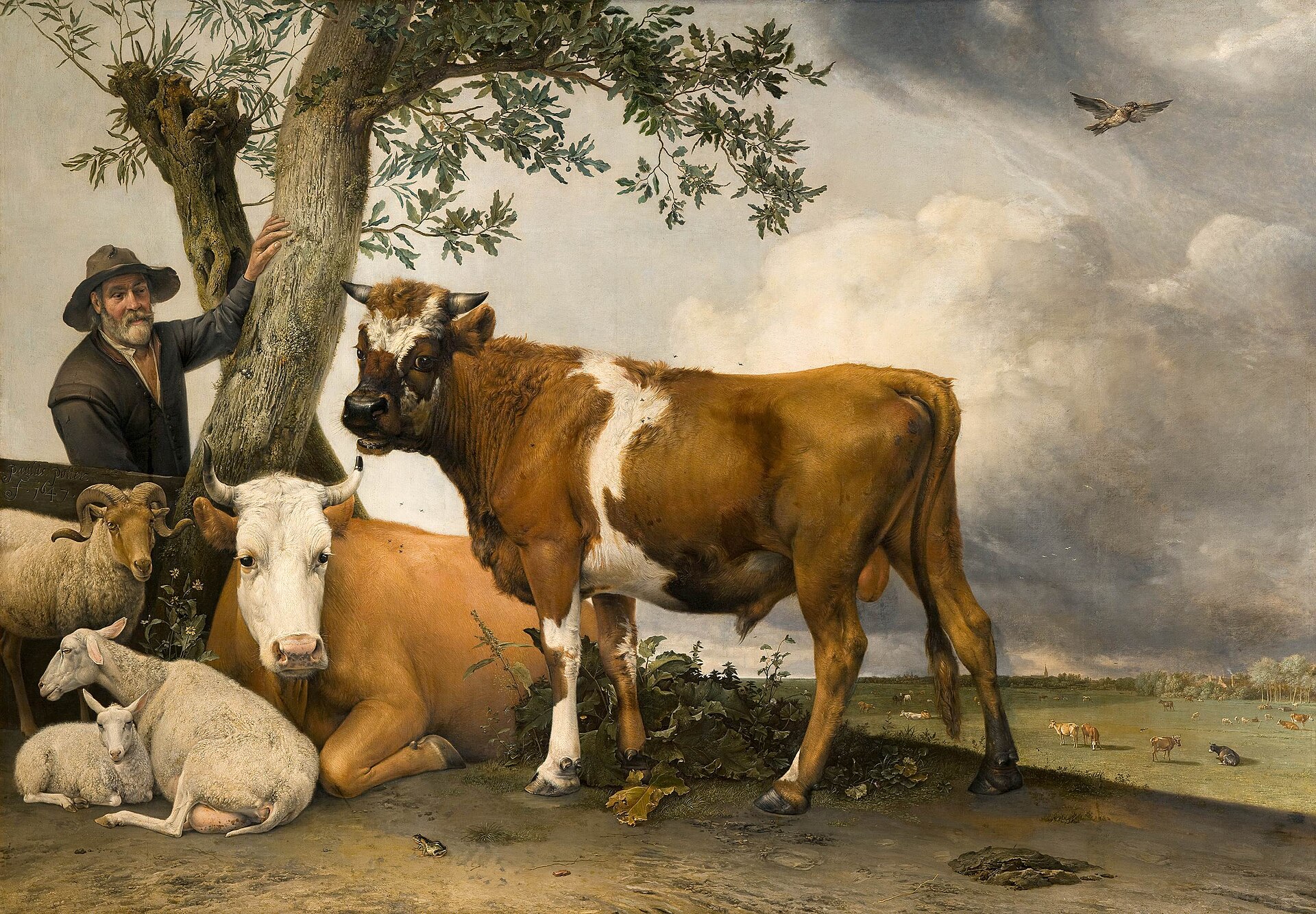
Table of Contents
Heaven And Earth Are Summoned
The book of Isaiah begins by telling you exactly how long its author worked and exactly who he worked for.
“The vision of Isaiah the son of Amoz, which he saw concerning Judah and Jerusalem in the days of Uzziah, Jotham, Ahaz, and Hezekiah, kings of Judah.”
Isaiah 1:1
Four kings. That is somewhere near sixty years of public ministry, spanning a good king who ended badly, a quiet king, a king who sacrificed his own son to a heathen god, and a king who was healed and then could not keep his mouth shut about his treasury. Isaiah watched the northern kingdom disappear. He watched an Assyrian army camp outside his own city wall. Whatever else this book is, it is not theory. The man had seen the things he is writing about.
And then, having named the kings, he does not address them. He addresses the universe.
“Hear, O heavens, and give ear, O earth: for the LORD hath spoken, I have nourished and brought up children, and they have rebelled against me.”
Isaiah 1:2
That opening is not a flourish. It is a legal formula, and Judah would have recognized it instantly. When Moses put the covenant before Israel he called the same two witnesses:
“Give ear, O ye heavens, and I will speak; and hear, O earth, the words of my mouth.”
Deuteronomy 32:1
A covenant was a contract, and a contract had witnesses. Heaven and earth had stood at the signing. Isaiah calls them back for the breach-of-contract hearing. This is why the chapter reads the way it does — the charges, the evidence, the verdict, the offer of settlement. It is a courtroom, and the reader has been seated in the gallery.
Notice, too, what the complaint actually is. Not that Judah broke a rule. That God raised these people — nourished them, brought them up — and they turned on Him. The first word out of the prosecution is the language of a parent, and the wound in it is personal.
The Ox Knows Its Owner
“The ox knoweth his owner, and the ass his master’s crib: but Israel doth not know, my people doth not consider.”
Isaiah 1:3
It is a deliberately humiliating comparison, and it is precise. An ox is not clever. But an ox knows who feeds it, and a donkey can find its own feeding trough in the dark. Neither animal has to reason its way there. The knowledge is worn in by daily dependence — this is where the food comes from, this is who I belong to.
Judah had lost exactly that. The second half of the verse gives two verbs, and they are not the same. Israel does not know, and God’s people do not consider. The first is ignorance. The second is the choice underneath it. To consider is to stop and put the facts together, and a person can decline to do that indefinitely while remaining perfectly well informed. Judah was not short of religion. Judah was short of attention.
That distinction runs through the whole chapter, and it is the reason the chapter is uncomfortable rather than merely historical. The people being charged here were in church.
From The Sole Of The Foot
Verses 5 and 6 change the picture from a courtroom to a sickbed, and the examination is head to foot.
“Why should ye be stricken any more? ye will revolt more and more: the whole head is sick, and the whole heart faint. From the sole of the foot even unto the head there is no soundness in it; but wounds, and bruises, and putrifying sores: they have not been closed, neither bound up, neither mollified with ointment.”
Isaiah 1:5, 6
The question in verse 5 is worth sitting with: why should ye be stricken any more? God is saying that further discipline has stopped working. The nation has absorbed blow after blow and simply hardened around each one. There is a point at which correction ceases to correct, and Judah had reached it.
Then the diagnosis, and it is the last clause that carries the weight. The wounds have not been closed, not bound up, not softened with oil. Nobody was treating any of it. A nation covered in untended injuries is not a nation without physicians — it is a nation that has decided the injuries are normal. And the political result was visible from any city wall:
“Your country is desolate, your cities are burned with fire: your land, strangers devour it in your presence… And the daughter of Zion is left as a cottage in a vineyard, as a lodge in a garden of cucumbers, as a besieged city.”
Isaiah 1:7, 8
The two images in verse 8 are homely and devastating. A cottage in a vineyard and a shelter in a cucumber field are both temporary huts — thrown up for one harvest, occupied by one watchman, abandoned when the season ends. Jerusalem, the city of the great King, is reduced to a shed left standing in an empty field. Ellen White notes that the prophet is pointing at the nation’s weakness on purpose, showing that its exposed position among the nations was the direct result of wickedness in high places (Prophets and Kings, p. 323).
And then verse 9, which is the first mercy in the book:
“Except the LORD of hosts had left unto us a very small remnant, we should have been as Sodom, and we should have been like unto Gomorrah.”
Isaiah 1:9
Not we would have become like Sodom. We should have been Sodom — that is what we already were, and the only thing standing between us and their ending was that God kept a few. The remnant in Isaiah is never a proud category. It is the reason the sentence was not carried out.
Ye Rulers Of Sodom
Having said in verse 9 that Judah narrowly escaped being Sodom, the prophet turns in verse 10 and addresses them by that name to their faces.
“Hear the word of the LORD, ye rulers of Sodom; give ear unto the law of our God, ye people of Gomorrah.”
Isaiah 1:10
These are the princes and the people of Jerusalem, the covenant city, being called by the names of the two towns God burned. It is the harshest address in the chapter, and it is aimed squarely at the leadership.
Ellen White describes the conditions that provoked it, and her summary is the hinge of the whole chapter:
“Princes in Israel were proving untrue to their trust; false prophets were arising with messages to lead astray; even some of the priests were teaching for hire. Yet the leaders in apostasy still kept up the forms of divine worship and claimed to be numbered among the people of God.”
Ellen G. White, Prophets and Kings, p. 322
Still kept up the forms. That is the situation Isaiah 1 is written into, and everything that follows only makes sense against it. The temple was busy. The calendar was observed. The offerings were coming in. And God is about to say what He thinks of all of it.
The Feasts God Commanded, And Could Not Bear
“To what purpose is the multitude of your sacrifices unto me? saith the LORD: I am full of the burnt offerings of rams, and the fat of fed beasts; and I delight not in the blood of bullocks, or of lambs, or of he goats. When ye come to appear before me, who hath required this at your hand, to tread my courts?”
Isaiah 1:11, 12
“Who hath required this at your hand?” is a stinging question, because the answer is: He did. Every one of those offerings is prescribed in Leviticus. God is not objecting to an invention. He is refusing His own appointments.
Verse 13 goes further, and it is the verse in this chapter people most often get stuck on:
“Bring no more vain oblations; incense is an abomination unto me; the new moons and sabbaths, the calling of assemblies, I cannot away with; it is iniquity, even the solemn meeting. Your new moons and your appointed feasts my soul hateth: they are a trouble unto me; I am weary to bear them.”
Isaiah 1:13, 14
Incense an abomination. Assemblies unbearable. Appointed feasts hated. And the whole list belongs to God — Leviticus 23 gathers the sacred calendar under one heading and calls it, twice over, my feasts:
“Concerning the feasts of the LORD, which ye shall proclaim to be holy convocations, even these are my feasts.”
Leviticus 23:2
So the shock of verse 14 is not that God is discarding something foreign. It is that He is weary of what He Himself instituted. The sentence to notice is I am weary to bear them — the offerings that were supposed to carry sin away have become a load God is carrying.
Because the verse names sabbaths and new moons, it is sometimes read as though God were canceling His own calendar here. The chapter itself does not permit that, for three reasons, and all three are on the page.
First, God states His reason, and it is not the day. Verse 15 gives it in seven words:
“And when ye spread forth your hands, I will hide mine eyes from you: yea, when ye make many prayers, I will not hear: your hands are full of blood.”
Isaiah 1:15
Hands spread in prayer, and blood on them. The problem is in the worshipper, and God says so directly.
Second, the remedy He prescribes is not to stop. If the observances themselves were the offense, verses 16 and 17 would say so. Instead they command washing, cleansing, and justice — repair the worshipper, and nothing is said about closing the temple.
Third, the same book ends with the Sabbath still being kept — not in Judah, but in the new earth, by everyone:
“And it shall come to pass, that from one new moon to another, and from one sabbath to another, shall all flesh come to worship before me, saith the LORD.”
Isaiah 66:23
An author who meant to abolish the sabbath in chapter 1 has forgotten it by chapter 66. The straightforward reading holds both: God rejects worship offered by unjust hands, and God keeps the appointments He made. Isaiah himself returns to this at length in chapter 58, where the fast God chooses turns out to be loosing bands of wickedness and feeding the hungry — and where the Sabbath, kept rightly, is called a delight.
Jeremiah puts the same principle even more bluntly a century later: “I spake not unto your fathers… concerning burnt offerings or sacrifices: But this thing commanded I them, saying, Obey my voice” (Jeremiah 7:22, 23). Not that the sacrifices were never given, but that they were never the point. They were the sign of a relationship. Detached from it, they are a smell in the air.
Wash You, Make You Clean
“Wash you, make you clean; put away the evil of your doings from before mine eyes; cease to do evil; Learn to do well; seek judgment, relieve the oppressed, judge the fatherless, plead for the widow.”
Isaiah 1:16, 17
Nine commands in two verses, and they turn on a hinge. The first four are subtraction — wash, clean, put away, cease. The last five are addition — learn, seek, relieve, judge, plead. Stopping is not the goal; it is the clearing of ground.
Learn to do well is the gentlest phrase in the chapter. It concedes that they do not know how, and that this is something a person acquires by practice rather than by resolve. God does not tell a nation of oppressors to feel differently. He tells them to take up specific cases.
And the cases are specific. The oppressed, the fatherless, the widow — in an agrarian society, the three categories of person with no legal muscle. A widow had no one to argue her case; an orphan had no one to hold his land. God does not ask for charity toward them. He asks for judgment — a fair hearing — which is precisely what verse 23 says the princes were selling to the highest bidder. The test of a nation’s religion is what happens to the person who cannot pay for justice.
Micah, prophesying in the same years, compressed the whole list into one line: “what doth the LORD require of thee, but to do justly, and to love mercy, and to walk humbly with thy God?” (Micah 6:8).
Come Now, And Let Us Reason Together
Everything so far has been prosecution. The nation is diseased, its worship is refused, its leaders are called Sodom. On any ordinary reading the next thing should be sentencing. Instead:
“Come now, and let us reason together, saith the LORD: though your sins be as scarlet, they shall be as white as snow; though they be red like crimson, they shall be as wool.”
Isaiah 1:18
The invitation keeps the courtroom language rather than dropping it. Let us reason together is what parties to a case do when they sit down to settle it. God does not withdraw the charges, and He does not pretend the evidence is thin. He proposes terms.
The colors are chosen with care. Scarlet and crimson were the fast dyes of the ancient world — the ones used precisely because they would not come out. That is the point of the promise. God is not offering to get out a stain that would probably have faded anyway; He names the two colors everybody knew were permanent, and says white as snow.
There is one more thread here, and it is easy to walk past. Three verses earlier the charge was your hands are full of blood. Now the sins are described as red. The stain God offers to remove is the one He has just finished describing, in the color He has just finished naming. This is not a general amnesty. It is addressed to these people, about this crime.
It is the verse Ellen White returns to more often than almost any other, and the reason she gives for its force is that it is not a description of what we are able to manage:
“It is not because He is unwilling to forgive that He turns from the transgressor; it is because the sinner refuses to make use of the abundant provisions of grace, that God is unable to deliver from sin.”
Ellen G. White, Prophets and Kings, p. 323
Willing And Obedient
“If ye be willing and obedient, ye shall eat the good of the land: But if ye refuse and rebel, ye shall be devoured with the sword: for the mouth of the LORD hath spoken it.”
Isaiah 1:19, 20
Two words on each side, and they are matched. Willing is answered by refuse; obedient is answered by rebel. Both pairs start in the will. A man is not carried into either outcome; he consents to it.
Willing comes first, and the order matters. Obedience that has not been consented to is only compliance, and compliance is exactly what the temple had been full of. The offer in verse 18 was extended to people who had been keeping the whole calendar. What God wanted was not more of that.
Thy Silver Is Become Dross
The last section of the chapter returns to the city, and the grief in it is unmistakable.
“How is the faithful city become an harlot! it was full of judgment; righteousness lodged in it; but now murderers. Thy silver is become dross, thy wine mixed with water.”
Isaiah 1:21, 22
Silver into dross, wine into water. Both are pictures of dilution rather than destruction — nothing has been smashed, the volume is the same, and the substance is gone. That is a more accurate description of institutional decline than anything violent would be. And verse 23 names the mechanism without ceremony: princes who love gifts and follow after rewards, and who therefore do not judge the fatherless, and never get round to the widow’s case.
Then comes the turn that makes this chapter gospel rather than obituary. God says He will deal with the dross — and the way He deals with it is by refining, not by scrapping the metal:
“And I will turn my hand upon thee, and purely purge away thy dross, and take away all thy tin: And I will restore thy judges as at the first, and thy counsellors as at the beginning: afterward thou shalt be called, The city of righteousness, the faithful city.”
Isaiah 1:25, 26
The furnace is not the end of the silver. It is how the silver is recovered. And the promised outcome answers the lament of verse 21 word for word: the faithful city that became a harlot shall be called the faithful city again. Isaiah will spend sixty-five more chapters showing how that is done, and at what cost.
The Oak And The Spark
The chapter closes on the people who will not come to the settlement, and it closes with fire.
“For they shall be ashamed of the oaks which ye have desired, and ye shall be confounded for the gardens that ye have chosen. For ye shall be as an oak whose leaf fadeth, and as a garden that hath no water. And the strong shall be as tow, and the maker of it as a spark, and they shall both burn together, and none shall quench them.”
Isaiah 1:29-31
The oaks and the gardens are not scenery. They were the sites of idolatrous worship, the sacred groves and planted enclosures Judah had adopted from its neighbors. The irony is exact: they chose trees and gardens, and they will become a tree with dying leaves and a garden with no water. What you worship is what you come to resemble.
The final image is stranger and worth reading slowly. Tow is the loose fibre left over from flax — the most flammable stuff in an ancient household. The strong man becomes tow, and the thing he made becomes the spark that lights him. Idolatry is not punished with an external fire here. The idol and its maker burn together, each supplying what the other needed.
Why This Chapter Stands First
Isaiah 1 is not chronologically first — the prophet’s call does not come until chapter 6. It stands at the front because it is the overture, and almost everything the book will do is sounded here in miniature.
- The covenant lawsuit opened in verse 2 runs through the oracles against the nations and reaches its verdict in chapters 24 to 27, where the charge is that the earth has “changed the ordinance, broken the everlasting covenant.”
- The remnant of verse 9 becomes one of Isaiah’s governing ideas, and gives his own son a name — Shear-jashub, a remnant shall return.
- Worship without justice, refused in verses 11 to 15, is taken up again at full length in chapter 58.
- Scarlet made white in verse 18 is left as a promise with no explanation of how. Chapter 53 supplies it.
- The faithful city restored in verse 26 opens out, in the last two chapters, into a new heavens and a new earth.
Read on its own, chapter 1 is an indictment with a startling offer in the middle of it. Read as the doorway to the book, it is the statement of a problem that takes sixty-six chapters and a crucified Servant to answer. The question God asks here — how can a people He raised come to know Him less than an ox knows its owner — is never treated as rhetorical. Isaiah answers it, slowly, and the answer has a name.
The next study takes up chapter 2, where the same city that has just been called Sodom is shown lifted above the hills, with the nations streaming up to it to be taught.
